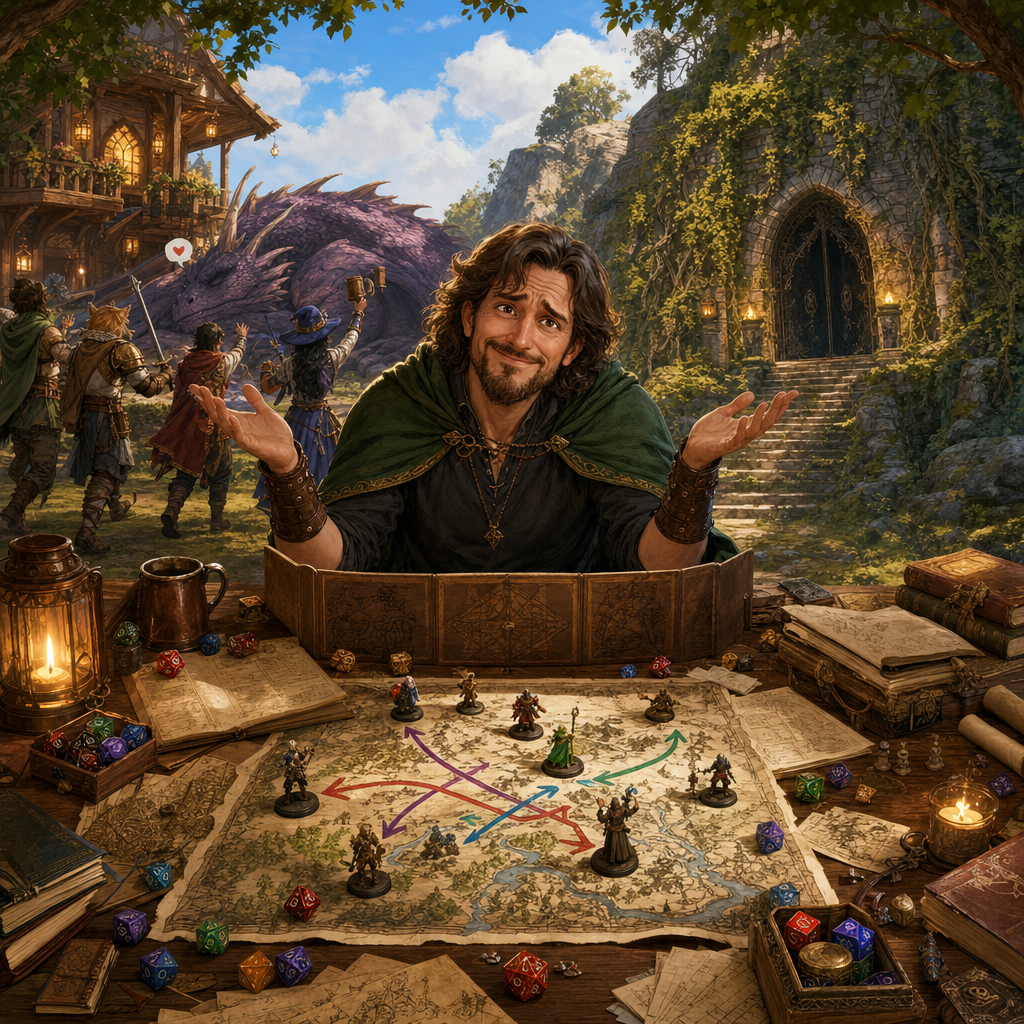
The Night My Players Adopted a Chicken Instead of Saving the Kingdom
I'm going to tell you about the time I spent three evenings building an intricate political conspiracy involving a corrupt magistrate, planted evidence, and a ticking clock. I had maps. I had handouts. I'd even named seventeen NPCs and given them motivations.
My players spent the entire session trying to steal a chicken from a background farmer because one of them wanted a "battle rooster."
The chicken's name is now Sir Cluckington. He has more backstory than my villain ever got. And honestly? That session was hilarious.
If you've ever experienced that sinking feeling when players skip your plot entirely, you're not alone. It's one of those universal DM experiences that sits somewhere between comedy and tragedy. But here's the thing I've learned from years of solo play and the occasional group session: when players skip your plot, they're not rejecting your work. They're telling you a story about what actually interests them.
Let's talk about what to do when players skip your plot and how to turn that moment from disaster into something better.
Why Players Skip Plots (And Why That's Actually Fine)
First, take a breath. Your prep wasn't wasted. Your players aren't trying to hurt you. They're just... being players.
Here's what's usually happening:
- They didn't recognize the hook. What seems obvious to you—the mysterious stranger, the ominous warning—might read as random NPC #47 to them.
- Something else caught their imagination. You mentioned an owlbear cub in passing, and now they want to open an owlbear sanctuary. That's just how player brains work.
- They're avoiding what feels like a railroad. If the plot feels too obviously "the thing we're supposed to do," some players will instinctively rebel.
- They're telling you what kind of game they want. If they keep avoiding combat-heavy plots to roleplay with shopkeepers, listen to that signal.
Back on the farm, I had a goat named Biscuit who would deliberately walk away from food if you tried to lead her to it. But leave the gate open and wander off? She'd follow you anywhere. Players are kind of like that goat. The more you push, the more they'll dig in their hooves.
Immediate Damage Control: What to Do in the Moment
So it's happening. Right now. Your players just walked past the haunted mansion to investigate a nearby creek. What do you actually do?
Don't Panic (or Show That You're Panicking)
Take a breath. Take a sip of water. Your poker face is your friend. The moment players sense you're desperately trying to herd them back on track, they'll scatter like chickens when you're trying to get them in the coop before dark. Trust me on this—I know from experience with actual chickens.
Ask Questions Instead of Railroading
Instead of saying "but the mansion is clearly more important," try: "What about the creek interests you?" or "What are you hoping to find?"
Sometimes they have a perfectly logical reason. Sometimes they're just following a vibe. Either way, you get information you can use.
Make Their Choice Matter
Whatever they decided to do instead—run with it. Put something in that creek. It doesn't have to be what you planned. It just has to be interesting enough to reward their initiative.
Maybe there's a water weird. Maybe there's a lost child's toy that leads to a small side quest. Maybe there's an old skeleton with a cryptic warning. Give them ten minutes of interesting content, and they'll trust you next time they go off-script.
The Long Game: Salvaging Your Actual Plot
Okay, but you still want them to eventually engage with the haunted mansion (or whatever your actual plot was). Here's how to make that happen without forcing it.
Make the Plot Come to Them
This is the big secret: if players won't go to the plot, bring the plot to the players.
That corrupt magistrate I mentioned earlier? When my players ignored the whole conspiracy, I had him show up at their favorite tavern, acting suspicious. Suddenly they were interested. Same content, different delivery method.
The haunted mansion can send ghosts into town. The missing prince can literally run into them while they're shopping. The evil cult can recruit that NPC they inexplicably love. Be flexible about where your content happens.
Recycle, Don't Rebuild
All that prep you did? Those NPC motivations, those encounters, those clever puzzles? They're not wasted. They're just in storage.
I have a notes file called "Good Stuff They Never Saw" that's basically a greatest-hits collection of plot elements I can drop into any session. That elaborate trap room? It works just as well in the cave system they did explore. That sympathetic villain speech? Any NPC can deliver it.
Nothing is truly wasted in D&D. It's all compost for future sessions.
Follow the Energy
Here's the thing about what to do when players skip your plot: sometimes you should just let them skip it. Permanently.
If your players are genuinely more excited about opening a tavern or investigating a minor mystery or befriending every stray animal they meet, that's valuable data. That's them telling you what game they actually want to play.
You can either fight that energy or harness it. Fighting it leads to frustrated players and a frustrated DM. Harnessing it leads to sessions where everyone's engaged and excited.
Some of my best solo sessions came from completely abandoning my planned adventure and following whatever random thread caught my imagination. The story about the ranger who became a monster negotiator instead of a monster hunter? That started because I got bored with my own combat-heavy plot.
Prevention: Making Plots Players Actually Want to Follow
Let's talk about making this happen less often in the first place.
Build Hooks With Multiple Entry Points
Instead of one obvious hook, give players three or four ways they might get interested:
- The mysterious stranger (for players who like intrigue)
- The promise of treasure (for players who like loot)
- The innocent person who needs help (for players who like heroics)
- The weird magical phenomenon (for players who like mystery)
When I'm generating NPCs now, I use Creature Forge AI's NPC generator and think about what different types of players would find interesting about each character. Not every NPC needs to appeal to everyone—but your major plot should have something for everybody.
Let Players Co-Create
Ask during session zero: "What kind of adventures interest you?" Then actually incorporate those answers.
If someone says they want political intrigue and you keep throwing dungeon crawls at them, you're setting yourself up for players who zone out during your carefully crafted plots.
Make the Stakes Personal
Generic "save the kingdom" plots are easy to skip. "Save the NPC you've been talking to for three sessions" is much harder to walk away from.
This is why that battle rooster became such a hit—the players invested in him. He was theirs. Once something matters personally to players, they'll follow that thread anywhere.
The Secret Upside: When Skipping the Plot Makes Better Stories
Here's something nobody tells new DMs: some of the best D&D sessions happen because players skipped your plot.
When players go off-script, they're often following genuine character motivations or creative impulses. That leads to emergent storytelling—the kind you can't plan, where everyone at the table is discovering what happens next together.
My character who adopted every animal she met? That started as me being silly when I was bored with my own dungeon crawl. But it turned into this whole thing about a ranger building a sanctuary, negotiating with territorial predators, and eventually having to defend her menagerie from poachers. That story was better than my original plot because it came from genuine interest instead of obligation.
If you're looking for creature inspiration when players inevitably derail into "let's befriend every monster we meet" territory, the Monster Mashup tool is genuinely fun for this. It's completely free, needs no sign-in, and just randomly combines real animals into weird hybrid concepts. I've used it to generate everything from "the wolf-shark that lives in the underground river" to "the eagle-mantis that the players inexplicably wanted to train." It's a pure random roller—no AI, just dice-style combinations—so even if you prefer building creatures by hand, it's great for breaking through creative blocks when you need something right now.
Knowing When to Let Go
Sometimes a plot just doesn't land. You tried bringing it to them. You tried different hooks. They're still not biting.
That's okay. Let it go.
Not every idea you have will resonate. Not every villain will feel threatening. Not every mystery will intrigue. That's not a failure—that's just how storytelling works when you're collaborating with other people.
Take what you learned (they didn't care about political conspiracies but they loved the shopkeeper NPC) and apply it to your next session. D&D is a living, evolving story. Every session teaches you something about what your particular group wants.
Your Plot Can Survive This (So Can You)
Look, I get it. You spent hours on that plot. You were excited about it. Watching players walk right past it feels personal.
But here's what I've learned from years of solo play and occasional group sessions, from farmhouse tables covered in dice to late-night coffee-fueled campaigns: the best D&D happens when you hold your plans loosely and your players tightly.
Your job isn't to make players follow your story. It's to help them tell theirs. Sometimes that means salvaging your plot. Sometimes it means letting it go. And sometimes it means sitting back and watching them adopt a chicken, knowing that this ridiculous moment will be the one they remember five years from now.
So what do you do when players skip your plot? You take a breath, grab your dice, and ask them what happens next. Because that's when the real magic starts.
And if you need help populating whatever weird direction they just went? Creature Forge AI can help you generate monsters, NPCs, and characters on the fly—you can even upload a photo of your actual pets or friends and turn them into D&D characters that genuinely look like them. It's been a lifesaver for those moments when I need something right now and my brain is blank. Because sometimes your players skip your plot to chase a random monster, and you need that monster to be interesting enough to justify the detour.
Trust your players. Trust yourself. And maybe keep a few chicken stat blocks handy, just in case.
===