The Bare Minimum to Start Playing D&D
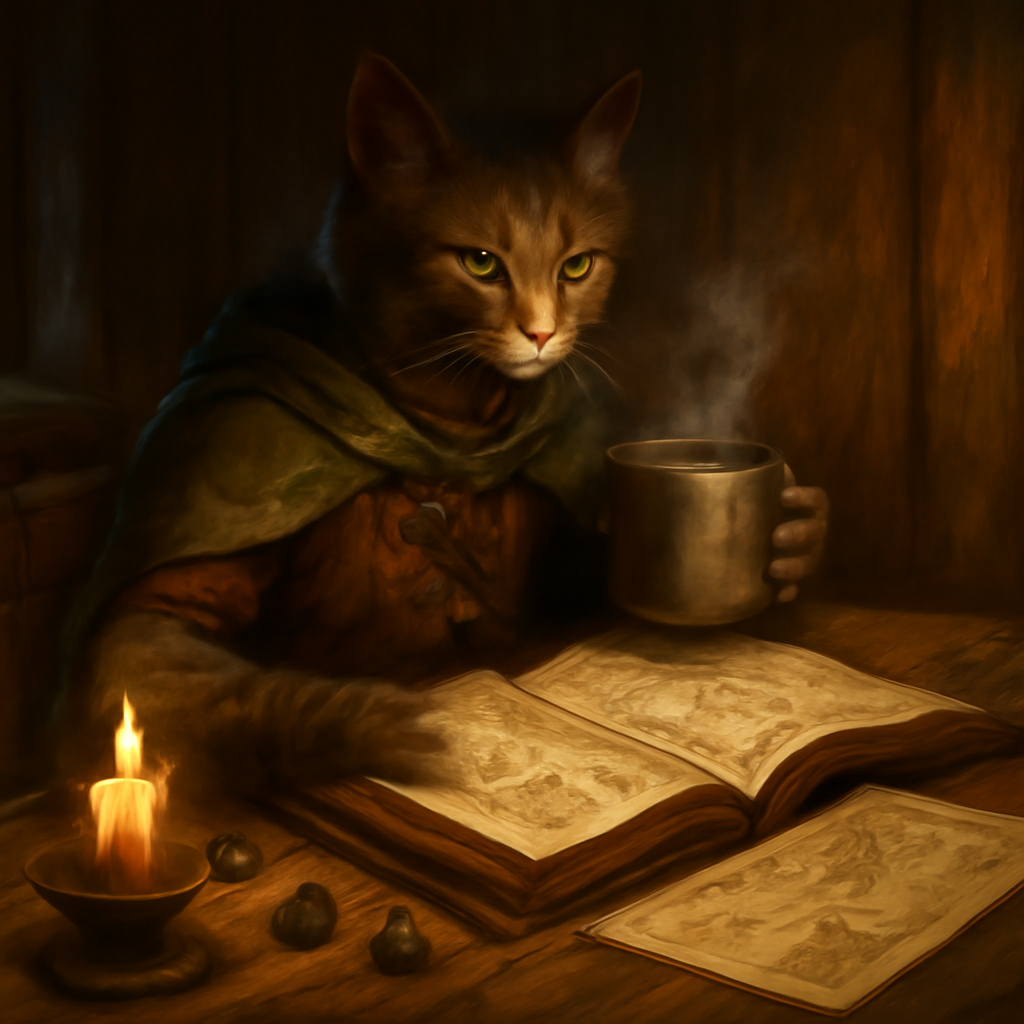
When I first decided to try Dungeons & Dragons, I was alone on my family's farm at 11 PM with a cup of coffee going cold and zero idea what I actually needed. I'd seen the memes, heard about the dice, but nobody tells you the honest truth: what do you need to play D&D depends entirely on how you want to play.
If you're jumping into a group with an experienced Dungeon Master, you need almost nothing. If you're going solo like I did—because your nearest game shop is forty miles away and your social circle thinks "natural twenty" is a kind of organic snack—you need a bit more. But here's the good news: it's still less than you think.
The Absolute Essentials
1. The Basic Rules (Free)
You don't need to buy anything to start. Wizards of the Coast offers the Basic Rules as a free PDF download. This gives you:
- Core gameplay mechanics
- Four classic classes (Fighter, Wizard, Cleric, Rogue)
- Four iconic races (Human, Elf, Dwarf, Halfling)
- Enough monsters and spells to run a campaign
I printed mine at the local library and three-hole-punched it into a binder. Looked like a high school science project. Worked perfectly.
2. Dice
You need a set of polyhedral dice—the weird-shaped ones. A standard set includes:
- d4 (four-sided pyramid)
- d6 (regular cube)
- d8 (eight-sided)
- d10 (ten-sided, you'll need two for percentile rolls)
- d12 (twelve-sided)
- d20 (the star of the show)
You can grab a set online for about five dollars. I bought mine at a comic shop that smelled like old carpet and possibility. If you're really strapped, there are free dice-roller apps, but rolling physical dice feels better. Trust me on this.
3. Something to Write On
You need a character sheet—a form that tracks your character's stats, abilities, equipment, and hit points. You can download official ones for free, print them, and fill them out with a pencil. Pencil, not pen. You'll be erasing.
I still use a cheap spiral notebook for campaign notes, NPC names, and sketches of monsters that definitely looked cooler in my head.
4. Imagination (and Maybe Snacks)
This sounds cheesy, but it's real. D&D is collaborative storytelling. You need to be willing to describe what your character does, react to situations, and make choices. If you're playing with a group, bring snacks. If you're playing solo, the snacks are just for you. I recommend something that doesn't leave dice-grease.
What You'll Probably Want Next
Once you've played a few sessions, you'll start wanting more options. Here's what most people upgrade to:
The Player's Handbook
This is the big one. The Player's Handbook (PHB) expands your options dramatically—more classes, more races, more spells, deeper rules. It's the difference between eating plain oatmeal and adding fruit, honey, and a splash of cream.
It's about $30-50 depending where you buy it. Worth every cent if you're serious about playing.
Miniatures and Maps (Optional but Fun)
Some groups love tactical combat on grid maps with miniatures representing each character and monster. I've used:
- Cheap plastic minis from board games
- Coins and buttons
- Hand-drawn tokens on cardboard
- My brother's old army men (the orc barbarian was a green plastic sergeant)
You can also play "theater of the mind" style—no maps, just descriptions. My solo games are 100% theater of the mind, mostly because my cat Biscuit kept knocking minis off the table.
A Good Character Generator
Here's where things get interesting. When I started playing solo, I spent hours creating NPCs and monsters for my character to interact with. Rolling stats, choosing abilities, writing backstories—it's half the fun, but it's also time-consuming.
That's when I found tools like Creature Forge AI's character generator. You can build fully statted D&D characters in minutes, and here's the part that sold me: you can upload a photo. I uploaded a picture of my border collie, Pepper, and got back a Tabaxi ranger with her exact coloring and a backstory about tracking lost livestock through enchanted forests. She became my character's companion for an entire campaign.
It's the kind of tool that makes solo play feel less lonely—suddenly your pets, your friends, even that one rooster that chased you across the yard as a kid can become part of your story.
What You Need for Solo Play Specifically
Solo D&D is its own beast. You're the player and you need some way to generate the world's responses. Here's what helps:
An Oracle or GM Emulator
These are systems that answer yes/no questions and generate random prompts. When you ask "Does the merchant have a healing potion?" you roll dice and consult a table. Popular options include:
- Mythic GM Emulator
- MUNE (free PDF)
- The Recluse solo toolkit
I use a mix of random tables and gut instinct. Sometimes I flip a coin. Sometimes I just decide what would make the story better.
Pre-Written Adventures
You can run official D&D modules solo by treating them like choose-your-own-adventure books. Lost Mine of Phandelver (included in the Starter Set) works great for this.
A Way to Generate NPCs and Monsters
This is critical. You need shopkeepers, quest-givers, bandits, wolves, goblins, dragon cultists—and you need them fast. I used to flip through the Monster Manual and scribble stats on index cards.
Now I use NPC generators that give me a full character in seconds—personality, motivations, stats, the works. It keeps the story moving instead of grinding to a halt while I figure out whether the blacksmith should have a Scottish accent or a vendetta against his brother.
What You Absolutely Don't Need
Let me save you some money and anxiety:
- A perfect group. You can play solo. You can play with one friend. You can play with randos online.
- Expensive miniatures. Pennies work fine.
- Every rulebook ever published. The PHB covers 95% of what you'll ever use.
- A fancy dice tower or leather dice bag. I keep mine in a cleaned-out salsa jar.
- Permission. You don't need to be "nerdy enough" or "experienced enough." Just start.
My First Real Session
I'll never forget my first real solo session. I rolled up a half-elf bard named Cora (loosely based on my aunt who played guitar at church). I gave her a lute, a dagger, and a fear of deep water. I used a random generator to create a starting quest: investigate disappearances near a fishing village.
I played for three hours. I met a grumpy fisherman NPC (whose personality I borrowed from my neighbor who complains about property lines). I fought giant crabs on a beach using nothing but the Basic Rules and a d20. I didn't optimize anything. I didn't "win." I just told a story, and it was one of the best nights I'd had in months.
That's what you need to play D&D: the willingness to try, a handful of dice, some basic rules, and the courage to see where the story takes you.
Start Small, Build As You Go
Here's my actual recommendation for someone brand new:
- Download the free Basic Rules
- Buy or borrow a dice set
- Create one character (pick Fighter if you're overwhelmed—they're straightforward and fun)
- Play one combat encounter against one goblin
- See how it feels
If you love it, buy the Player's Handbook. If you want to add companions or NPCs that feel personal, try uploading photos to Creature Forge AI and building characters that look like your actual pets or friends. If you want to DM for others, grab the Dungeon Master's Guide down the line.
But start small. Don't let perfect be the enemy of good enough.
You Already Have What Matters
The truth is, what you need to play D&D isn't a shopping list—it's curiosity. It's the part of you that wonders what happens next, that wants to roll dice and see if your character makes the jump or faceplants into the mud.
I started with a free PDF, library dice, and way too much coffee. I've been playing for years now, and some of my favorite sessions still happen at that same kitchen table, alone except for the dog snoring under my chair and the characters I've built—some from scratch, some inspired by the animals I grew up with, all of them real enough to matter.
If you're thinking about starting, don't wait for the perfect moment or the perfect group. Grab some dice. Roll up a character. Generate a monster to fight or a companion to travel with. See what happens.
The only thing you really need is the decision to begin.