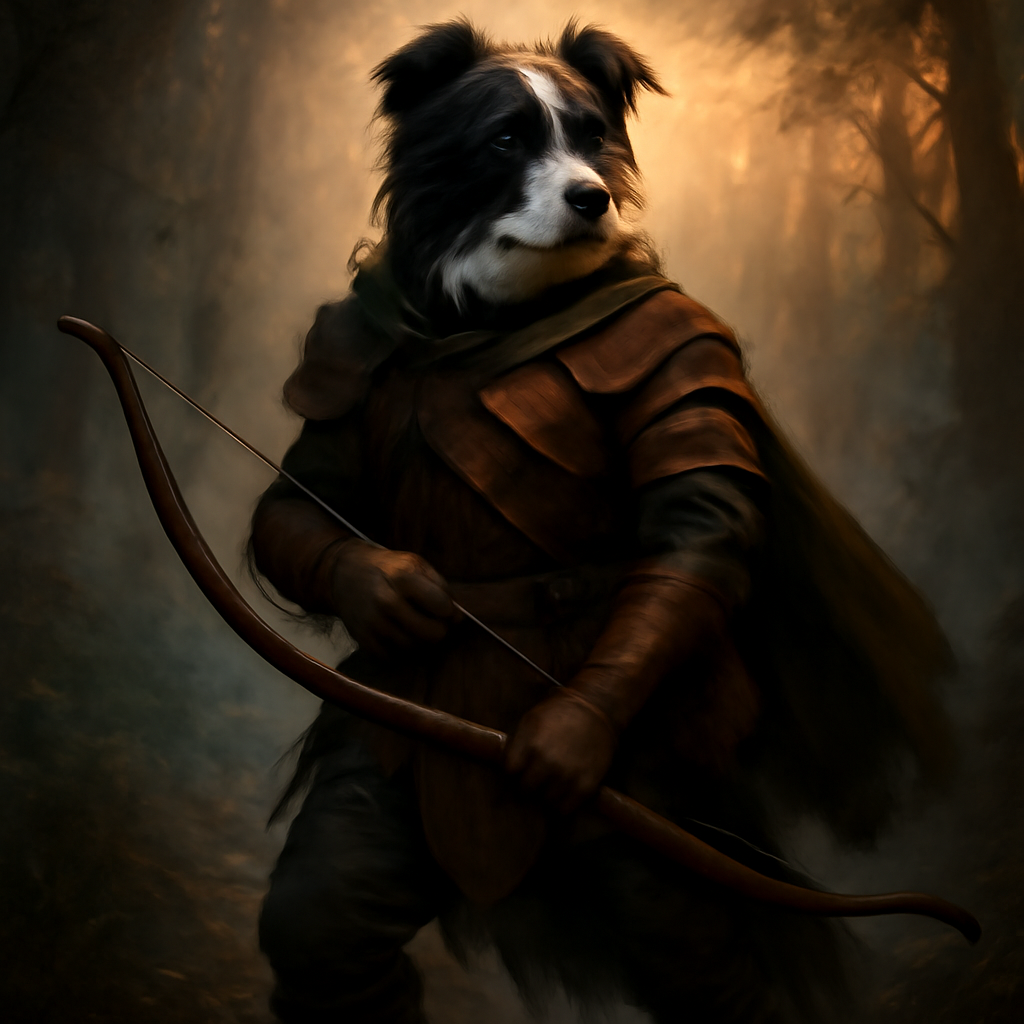
I was three cups of coffee deep into a solo campaign when it hit me: my border collie Keeper would make an absolutely terrible Ranger. Sure, he's got the energy and the herding instincts, but his Wisdom score would be in the gutter—this is a dog who once tried to herd a tractor. Still, the question stuck with me: what D&D class would my dog be?
Turns out, your dog's breed, personality, and ridiculous quirks translate almost perfectly into D&D classes. And the best part? You can actually turn them into a playable character with real stats, abilities, and a character sheet that looks like them. Here's how to figure out what class your dog would be—and why it matters for your next campaign.
Why Your Dog's Personality Matches D&D Classes
D&D classes aren't just about combat roles—they're about temperament, instincts, and how a character approaches problems. Dogs have distinct personalities shaped by breeding, training, and pure individual weirdness. A livestock guardian dog has the patience and protective instincts of a Paladin. A terrier has the chaotic energy and poor impulse control of a Barbarian. Once you start looking, the patterns are everywhere.
The trick is matching your dog's core traits to class features. Does your dog solve problems with brute force or clever maneuvering? Are they loyal to a fault or an independent operator? Do they thrive on routine or chaos?
Breed and Personality: The Starting Point
Some breeds practically announce their class at first glance:
- Golden Retrievers and Labs: Paladins or Clerics. Loyal, gentle, devoted to their party (family). They'd take a hit for you without thinking. High Charisma, decent Wisdom, probably too trusting.
- Border Collies and Shepherds: Rangers or Druids. Smart, task-oriented, hyper-aware of their environment. They're tracking everything, managing the "herd," and probably overthinking it.
- Terriers (any kind): Barbarians or Rogues. Pure chaos. They see a rat, they rage. They see a hole, they dig. High Dexterity, questionable Wisdom, zero chill.
- Huskies and Malamutes: Barbarians with a Chaotic Neutral alignment. Dramatic, stubborn, built for endurance. They'll argue with you mid-combat.
- Poodles: Wizards. Don't let the haircut fool you—poodles are smart, precise, and surprisingly athletic. High Intelligence, solid Dexterity.
- Beagles and Hounds: Rangers (Beast Master) or Bards. They follow their nose, they howl-sing constantly, and they're friendly with everyone. Wisdom for tracking, Charisma for being universally liked.
- Great Pyrenees or Anatolian Shepherds: Paladins or Fighters. Patient guardians who take their job seriously. They'll stand watch all night without complaint.
- Chihuahuas: Warlocks. Tiny, but they've clearly made a pact with something powerful and slightly sinister. High Charisma (through sheer force of personality), suspicious of strangers.
Looking Beyond Breed: Individual Quirks
Breed gives you a baseline, but your specific dog's weirdness is where the real character comes through. Keeper, my border collie, would technically be a Ranger—but his actual stat block would include "compulsively herds inanimate objects" and "Disadvantage on Wisdom saving throws involving food."
Energy Level and Combat Style
High-energy dogs lean toward martial classes—Fighters, Barbarians, Monks. They want to do something, preferably involving movement and physicality. Low-energy dogs might be Clerics or Wizards—supportive, thoughtful, conserving their spell slots (energy) for when it counts.
Independence vs. Pack Mentality
Does your dog need constant companionship, or are they fine doing their own thing? Pack-oriented dogs make great Paladins, Clerics, or Bards—classes that support the party. Independent dogs fit Rogues, Rangers, or Monks—they're effective solo operators.
Problem-Solving Approach
Smart dogs who figure out puzzles (how to open the gate, where you hid the treats) have high Intelligence or Wisdom—Wizard, Ranger, Druid territory. Dogs who just… keep trying the same thing louder? Barbarian. Definitely Barbarian.
Special Abilities Your Dog Already Has
Once you've picked a class, think about your dog's actual abilities and how they'd translate:
- Scent tracking: Survival proficiency, advantage on tracking checks
- Intimidating bark: Intimidation proficiency or a fear-based ability
- Digging: Burrowing speed or advantage on Investigation checks for buried objects
- Herding instinct: Ability to reposition allies (like a tactical support feature)
- Retrieval obsession: Never loses track of objects, advantage on retrieval-related tasks
- Protective instinct: Sentinel feat or reaction-based protection
- Zoomies: Short-term speed boost with exhaustion afterward (basically Action Surge)
Turning Your Dog Into an Actual Character
Here's where it gets fun. You can take this thought experiment and make it real. Creature Forge AI's character generator lets you upload a photo of your actual dog and generates a D&D character that looks like them—stats, abilities, fantasy art, the whole package. I uploaded a picture of Keeper and got back a Tabaxi Ranger with his exact black-and-white markings, standing upright with a bow. It was unsettling and perfect.
The tool converts your dog's physical features into fantasy beastfolk traits while keeping their essence. Your golden retriever becomes a noble Leonin Paladin. Your dachshund becomes a determined Halfling Fighter (because let's be honest, dachshunds have Halfling energy). Your mutt becomes exactly the kind of unique, scrappy adventurer you'd want in your party.
Building the Character Sheet
Once you know the class, fill in the details:
Ability Scores
Base these on observation. Athletic dogs get high Strength or Dexterity. Clever dogs get high Intelligence or Wisdom. Friendly dogs get high Charisma. Keeper's dump stat is absolutely Wisdom—he has never made a good decision regarding food in his life.
Background
Where did your dog "come from" in fantasy terms? A rescue dog might have the Urchin background. A purebred show dog could be a Noble. A farm dog is obviously a Folk Hero who's saved the chickens from predators countless times.
Alignment
Most dogs are some flavor of Good—they're loyal and loving. But the Lawful-Chaotic axis varies wildly. A dog who follows commands perfectly? Lawful Good. A dog who interprets "stay" as a suggestion? Chaotic Good. A cat-chasing terrier who's caused three neighborhood incidents? Chaotic Neutral.
Using Your Dog Character in a Campaign
You could play your dog-character in a one-shot for laughs, but honestly? A well-built dog character can be genuinely compelling. They're loyal, brave, and driven by simple, honest motivations: protect the pack, chase the threat, find the thing. In a game that often gets bogged down in complex intrigue, a character with clear, good-hearted goals is refreshing.
I ran Keeper as a Ranger in a solo session where he had to track a missing sheep through the woods (art imitating life). His high Survival score and scent-tracking ability made him perfect for it. His low Wisdom meant he got distracted by a rabbit twice. It was the most in-character session I've ever played.
The Joy of Turning Real Life Into Fantasy
There's something genuinely delightful about looking at your dog—snoring on the couch, dreaming about squirrels—and seeing a hero. D&D is about imagination, and imagining your loyal, goofy, beloved dog as a fantasy adventurer just… fits. It's why the question "what D&D class would my dog be" is so fun to answer—because the answer is always both ridiculous and somehow perfect.
Your nervous rescue mutt is a Rogue with a tragic backstory and trust issues. Your overconfident Corgi is a Fighter who refuses to acknowledge their size. Your ancient, wise senior dog is a Cleric who's seen some things and dispenses cryptic advice (mostly about nap locations).
If you're curious what your dog would actually look like as a D&D character—stats, art, abilities, and all—try Creature Forge AI's character generator. Upload their photo and see them transformed into the hero they've always been in your mind. Just be prepared: once you see your dog as a sword-wielding Paladin or a spell-slinging Druid, you can't unsee it.
And honestly? You won't want to.