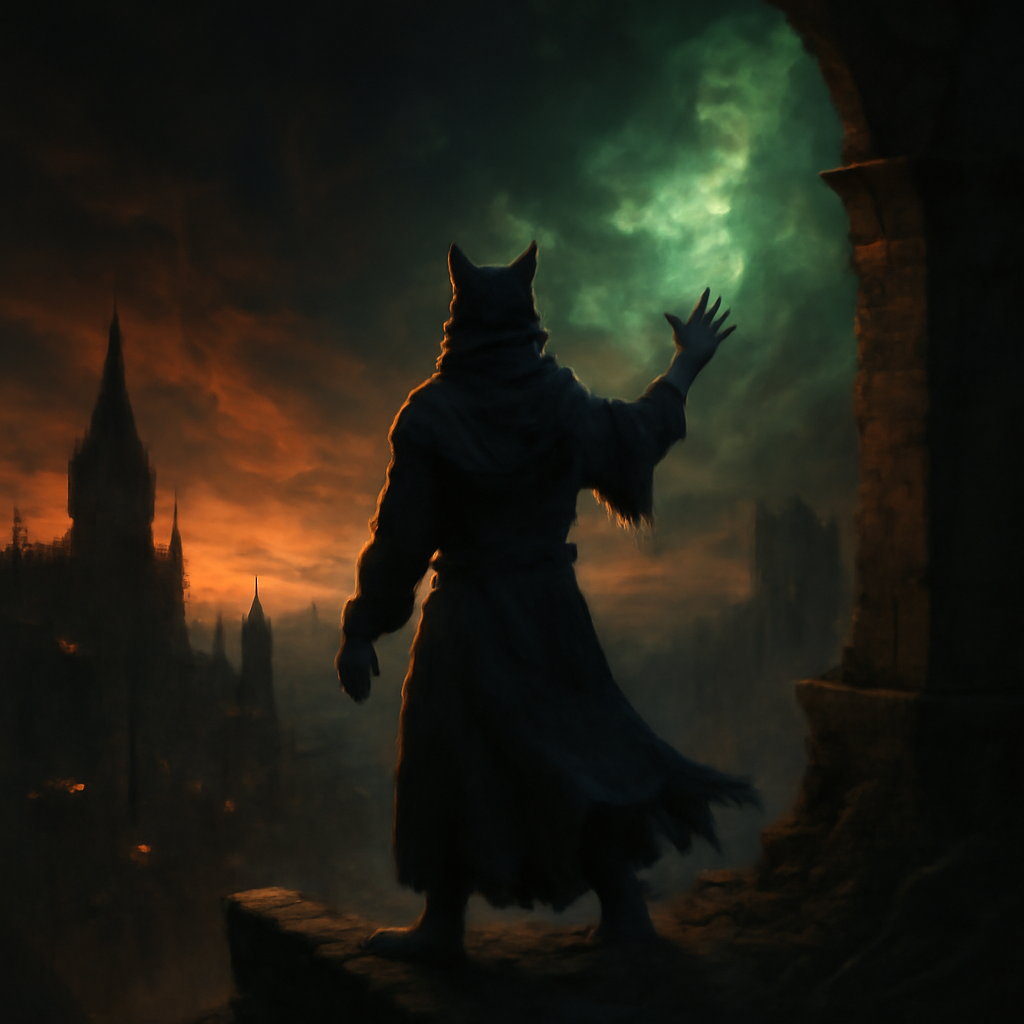
I'll be honest: the first villain I ever created for a solo campaign was a necromancer named Valdris the Eternal. He wanted to raise an undead army. He lived in a tower. He had a skull staff. I might as well have photocopied him from a generic fantasy novel. My border collie Murphy, sleeping at my feet while I scribbled stats at 2 AM, probably could have written something more original.
The thing is, finding compelling villain ideas for D&D campaigns isn't about being completely original—it's about being specific. A villain becomes memorable when they have a reason, a wound, a twisted logic that almost makes sense. When I finally started building antagonists with actual motivations beyond "I'm evil because the DM needs a bad guy," everything changed.
Why Most D&D Villains Fall Flat
Generic villains fail because they're obstacles, not characters. They exist to be defeated, not understood. Your players will forget "evil wizard number seven" the moment they loot his tower, but they'll remember the villain who made them hesitate before landing the killing blow.
The best villains believe they're right. They have goals your players might even sympathize with, even if their methods are monstrous. That moral complexity is where the real tension lives.
The Corrupted Protector
This villain was once a hero. Maybe they saved the kingdom. Maybe they're still trying to save it, but somewhere along the way, the methods became unforgivable.
Example: The Plague Warden
A former cleric who survived a devastating plague now believes the only way to prevent future outbreaks is through "controlled culling"—systematically eliminating anyone who shows even minor symptoms of illness. She's technically preventing epidemics. She's also murdering children who have seasonal colds.
- Motivation: Genuine desire to protect people from suffering she witnessed
- Twist: She keeps a list of everyone she's "saved" by killing their potentially infected loved ones
- Player hook: One PC's family member is on her next culling list
The Sympathetic Monster
Sometimes the villain isn't humanoid at all, but that doesn't mean they can't have depth. I once built an entire arc around a young dragon who was essentially a scared kid with city-destroying firepower.
The Grieving Hydra
A hydra whose swamp was destroyed by expansion-hungry nobles now attacks trade routes and villages—but only those connected to the lumber companies that clear-cut its home. It's not mindlessly destructive. It's targeted.
Your players will have to decide: is this monster evil, or is it the only thing standing between corporate greed and total environmental collapse? When you need to stat out unusual creatures like this, tools like Creature Forge AI's monster generator can help you quickly build something mechanically interesting while you focus on the storytelling.
The Villain Who's Already Won
Most campaigns have players working to stop the villain's plan. Flip that. The villain succeeded years ago. The world your players know is already the villain's world—they just don't realize it yet.
Example: The Beloved Emperor
The emperor who unified the warring kingdoms and brought unprecedented peace? He's a lich who killed the previous rulers and replaced them with simulacra he controls. The "peace" is enforced mind control. Anyone who questions the new order simply disappears, their memories scrubbed from their loved ones' minds.
The players aren't trying to prevent a catastrophe—they're trying to wake people up to one that already happened.
The Ideological Opposite
Create a villain who wants exactly what your party wants, but approaches it from the opposite philosophical direction.
If your party believes in free will and individual liberty, your villain believes in benevolent tyranny and forced utopia. If your party fights for tradition and the old ways, your villain is a radical reformer willing to burn everything down to build something new.
The Revolutionary
- A former slave who now leads a violent uprising against all nobility
- Her methods include executing children of nobles to "break the cycle"
- Your party's paladin might have sworn an oath to protect those same noble houses
- Neither side is entirely wrong
The Accidental Villain
Not every antagonist chose villainy. Some stumbled into it through ignorance, desperation, or a single moment of weakness that spiraled.
The Apprentice
A young wizard accidentally released something from a sealed vault while trying to prove herself to her master. Now she's desperately trying to cover it up, which means silencing witnesses, stealing magical components for a containment spell, and making increasingly dark choices to fix her mistake before anyone finds out.
She's not evil. She's terrified. But terrified people with magical power are incredibly dangerous.
The Sentient Condition
Here's where it gets weird, and I mean that as a compliment. What if your villain isn't a person at all, but a disease, a curse, or a magical phenomenon that has developed consciousness and goals?
The Laughing Plague
A magical disease that makes victims laugh uncontrollably until they die—except it's developed a distributed intelligence across all infected hosts. It doesn't want to kill everyone (dead hosts can't spread the disease), so it's trying to reach a "sustainable" infection rate. It even negotiates through its current hosts.
How do you kill something that exists in thousands of people simultaneously? How do you negotiate with a plague?
The Mirror Villain
This is my personal favorite, though it requires knowing your party well. The villain is who one of your PCs could become if they make the wrong choices.
If you have a warlock struggling with their patron's demands, show them another warlock who gave in completely—and how powerful and broken that made them. If you have a rogue with a tragic backstory, show them someone with an identical past who chose vengeance over healing.
When I uploaded a photo of my old rooster Hank into Creature Forge AI's character generator (that ornery bird deserved immortalization), I got this fierce Aarakocra warrior. I ended up using him as a mirror villain for a player's ranger—both protectors of their territory, but one had let paranoia turn protection into xenophobic violence.
Building Your Villain's Supporting Cast
No villain operates alone. The henchmen, lieutenants, and unwitting accomplices make your antagonist feel real.
Types of Supporters to Consider:
- The True Believer: Completely devoted to the villain's cause, often more extreme than the villain themselves
- The Pragmatist: Doesn't care about the ideology, benefits from the villain's success
- The Unwitting Pawn: Thinks they're helping the good guys
- The Trapped: Wants out but can't escape (blackmail, magical binding, hostages)
- The Rival: Serves the villain but constantly schemes to replace them
These supporting characters give your players opportunities for negotiation, information-gathering, and moral complexity. Not every encounter has to end in combat.
The Redeemable Versus the Irredeemable
Decide early: can this villain be saved, or are they too far gone? Both are valid choices, but the answer changes how you play them.
A redeemable villain shows cracks in their conviction. They hesitate. They have lines they won't cross, or regrets that surface in unguarded moments. They give players opportunities to reach them.
An irredeemable villain is committed. They've made their peace with what they are. They might be charismatic, even likable, but there's no saving them. Sometimes the kindest thing you can do is end their story.
The trick is signaling which type you're playing so your players don't waste sessions trying to redeem someone who can't be redeemed, or kill someone who could have been saved.
Practical Tips for Running Your Villain
Make Them Proactive
Your villain shouldn't wait in their lair for the party to show up. They have goals. They're working toward them whether or not the PCs interfere. Create a timeline of what the villain will accomplish if the players do nothing.
Give Them a Life Outside Villainy
What does your villain do on Tuesday afternoon? Do they have hobbies? Favorite foods? A pet they're genuinely kind to? These human details make them memorable. My corrupted paladin villain kept a garden. She grew nightshade and wolfsbane, sure, but she grew them beautifully.
Let Them Win Sometimes
If the villain never succeeds at anything, they're not threatening. Let them complete part of their plan. Let them escape when the players almost had them. Let them turn an NPC the party trusted. Victories make defeats meaningful.
Show the Consequences
Don't just tell players the villain is dangerous—show them the aftermath. The burned village. The orphaned children. The mass grave. The former hero who joined the villain's side because they lost hope.
Common Pitfalls to Avoid
- The invincible villain: If players can never touch them, they'll stop trying
- The stupid villain: Don't make them succeed only because they're reading the players' notes
- The monologuer: Long villain speeches are a cliché for a reason—they're boring
- The inconsistent villain: If they're ruthless in scene one and merciful in scene five without reason, players will notice
- The villain who's actually just you arguing with your players: Don't use villains as mouthpieces for your frustrations with player choices
Bringing It All Together
The best villain ideas for D&D campaigns aren't about being shocking or subversive for its own sake. They're about creating an antagonist who challenges your players not just mechanically, but emotionally and philosophically.
Your villain should make players argue with each other about the right course of action. They should make players question their own characters' motivations. They should be someone the party thinks about between sessions.
Start with a simple concept: what does this villain want, and why do they believe they're justified in wanting it? Build from there. Add personal history, connections to the PCs, concrete plans, and realistic supporters. Let them be competent, but not omniscient. Dangerous, but not invulnerable.
And if you need help bringing your villain's lieutenants, monstrous servants, or corrupted allies to life, Creature Forge AI can help you quickly generate the supporting cast with full stats and personality traits. You can even upload photos to create NPCs based on real people or pets—because sometimes the best inspiration comes from the ornery rooster who ruled your childhood farm.
The villain is the engine of your campaign's conflict. Build them with care, play them with conviction, and watch your players lean forward in their seats when that antagonist walks into the scene.
===IMAGEPROMPT=== A hooded figure stands at the edge of a crumbling tower overlooking a darkened kingdom, their back to the viewer, one hand raised as if commanding unseen forces—the sky split between twilight and an unnatural green glow, conveying ambiguity between savior and destroyer.