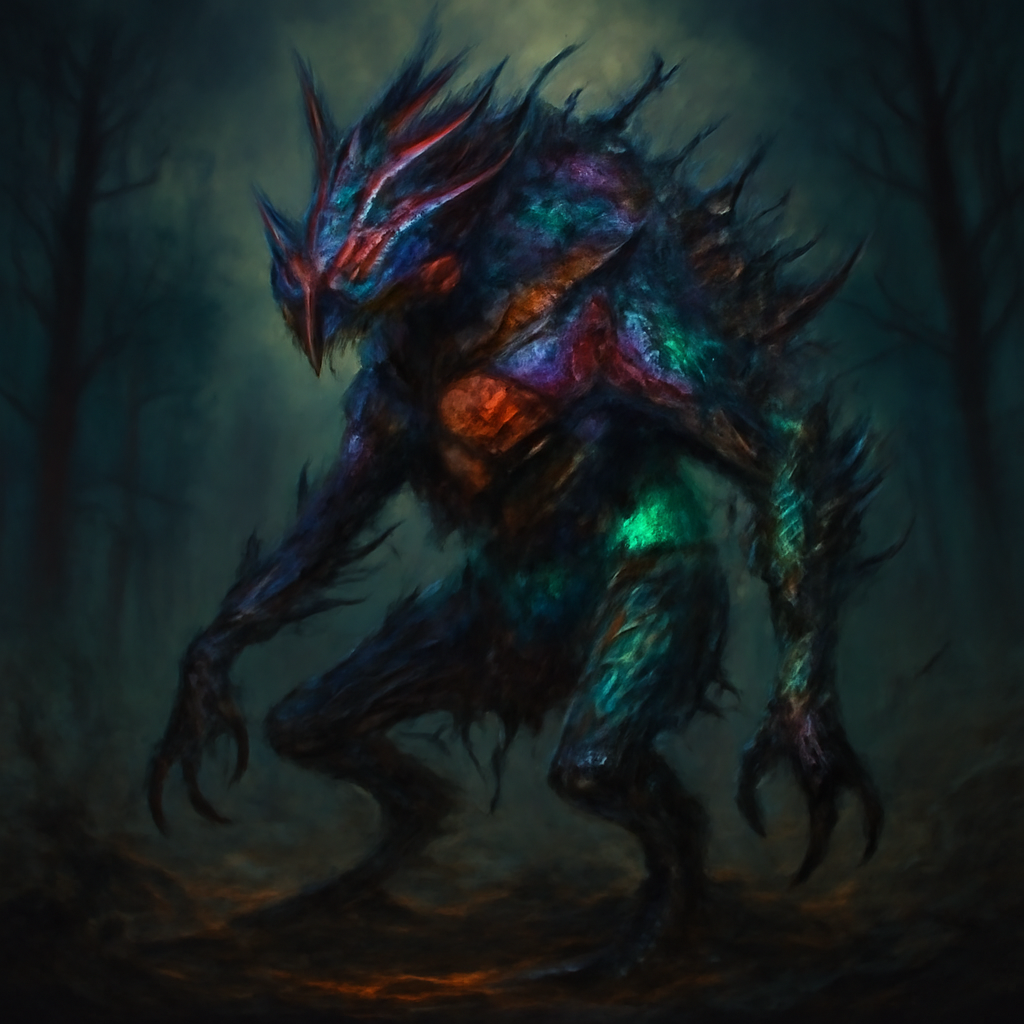
I've been running solo campaigns for years now—late nights with coffee going cold, dice tower clicking away, just me and my notebook. And I'll tell you what kills the magic faster than anything: predictable monsters. When you're creating unique monster ideas for D&D, you're not just filling a combat slot. You're building something your players will remember months later.
The problem? Most of us default to what's familiar. Another goblin ambush. Another troll under a bridge. I did it too, until one night I got desperate and started wondering what would happen if my goat Biscuit was actually a polymorphed archfey. That goat has more charisma than any NPC I've ever rolled, so why not?
Start With What Makes a Monster Actually Unique
Here's the thing about memorable monsters: they're not just stat blocks with different damage types. The unique monster ideas for D&D that stick in your players' minds have at least one of these elements:
- Unexpected biology: Something about how they move, feed, or exist breaks the normal rules
- Emotional hooks: They make players feel something other than "I attack"
- Tactical puzzles: Defeating them requires thinking, not just damage
- Environmental integration: They belong so perfectly to their setting that removing them would break the ecosystem
The Hybrid Method: Smash Two Concepts Together
This is my bread and butter. Take two things that don't belong together and force them to make sense. Not random nonsense—there has to be a logical (or magical) reason they merged.
Examples That Actually Work
- Mimic Swarm: Instead of one chest, it's hundreds of copper coins that assemble into different shapes. Players can't just hit it—they have to contain it or find the original coin.
- Ambulatory Garden: A walking ecosystem of carnivorous plants bound to an earth elemental's skeleton. Different plants activate on different turns. Fire damages it, but also spreads spores.
- Echo Beast: A predator that exists half a second in the past and half a second in the future simultaneously. You see three versions of it. Only one is real, and it changes every round.
- Grief Elemental: Born from a mass tragedy, it doesn't attack—it just makes you experience what it felt. Players must comfort it or find the source of the original trauma.
When I'm stuck for ideas, I literally pick two random pages from the Monster Manual and find a way to combine them. Rust monster plus will-o'-wisp? Now you've got a floating orb of light that corrodes metal from a distance, forcing your heavily-armored fighter to get creative.
Steal From Real Animals (Especially the Weird Ones)
Growing up on a farm taught me that real animals are stranger than most fantasy creatures. Chickens are tiny dinosaurs with concerning aggression levels. Goats have rectangular pupils and can climb almost anything. Horses can sleep standing up and will absolutely hold grudges.
Nature has already done the creative heavy lifting. You just need to scale it up and add magic:
- Pistol Shrimp → Sonic Crab: A horse-sized crustacean that snaps its claw to create a concussive blast (the real pistol shrimp creates cavitation bubbles that reach 4,700°C)
- Tardigrade → Void Bear: Nearly indestructible, can survive in any environment, enters stasis when damaged and heals completely
- Cordyceps Fungus → The Puppeteer: Infects humanoids and controls them, eventually fruiting from their bodies to spread spores
- Mantis Shrimp → Prism Mantis: Sees in 16 color receptors (we see 3), can detect invisible creatures, shatters armor with hammer-blow claws
The Photo Method: Turn Real Creatures Into Characters
This is where things get personal. I have a border collie named Scout who's too smart for his own good—he learned to open the gate latch in three days. So I wondered: what if he was a D&D character?
That's exactly what you can do with Creature Forge AI's character generator. Upload a photo of your pet, your friend, yourself—and it builds a complete fantasy character that actually looks like them. Scout became a Lupine ranger with the same intense stare and the same "I'm planning something" expression. Best NPC I ever ran.
But you can flip this for monsters too. Got a photo of something weird? A gnarled tree? A creepy rock formation? A taxidermied animal? Upload it to the monster generator and see what it builds. Sometimes the AI catches details you wouldn't have thought to include—the way bark peels, the asymmetry of real organisms, the uncanny quality of something that's almost but not quite right.
Give Your Monster a Weakness That Creates Story
Unique monster ideas for D&D aren't just about what makes them strong—it's about what makes them beatable in an interesting way. Vulnerabilities that require roleplay, not just different damage types.
Exploitable Weaknesses
- The Forgotten Name: A demon that grows weaker each time someone speaks its true name, but discovering that name is a quest in itself
- Sympathetic Damage: A construct linked to its creator—damage it, and you damage them. Players must choose between an easy fight and becoming murderers
- Music Box Heart: A mechanical beast powered by a specific melody. Play the song backwards and it shuts down. Good luck finding the sheet music.
- Sunlight Madness: Doesn't take damage from sun, but becomes docile and confused, allowing players to sneak past or redirect it
- Memory Eater's Hunger: It only attacks those who remember it. Write down that you saw it, and you forget. But then how do you warn others?
Build Monsters That Change the Battlefield
The most memorable fights I've run weren't about HP—they were about terrain and conditions shifting mid-combat. Your unique monster ideas for D&D should force players to adapt.
- Phase Scarab: Every three rounds, it pulls everyone into the Ethereal Plane for one round, where different rules apply and new threats emerge
- Gravity Maw: A floating mouth that reverses gravity in a 30-foot radius. Suddenly everyone's fighting on the ceiling and dropping is falling up.
- The Painted Beast: Exists as a mural until it attacks, pulling victims into the wall where they become part of the artwork
- Chronophage: Slows or accelerates time in zones around the battlefield. Some players take two turns while others skip rounds.
Monsters That Aren't Meant to Be Killed
Sometimes the most unique encounter is one where "I attack" is the wrong answer. These create the stories players tell for years:
- The Lighthouse Keeper: An ancient construct that maintains a beacon preventing far worse things from approaching. Kill it, and you've doomed the region.
- Migration Herd: Massive peaceful creatures passing through. They're not hostile, but they're also not stopping, and you're in their path.
- The Sleeping City: A creature so large an entire settlement was built on its back over centuries. It's waking up. Violence only makes it thrash.
- Living Prophecy: A creature that speaks only truth about the future. It knows when and how it dies. Players must decide if they fulfill that prophecy.
Making Unique Monsters That Feel Real
Here's what I've learned from hundreds of solo sessions: the difference between a forgettable monster and one that haunts your campaign is specificity. Generic doesn't stick. Details do.
Don't just say "it's big and scary." Tell me it leaves frost patterns on surfaces it touches, that those patterns are actually its written language, that locals have learned to read them as warnings. Don't just say "acidic slime"—tell me the acid smells like copper and old honey, and that smell lingers in the players' noses for hours after.
Give it a sound. A behavior. A reason it exists beyond "to fight the players." That grief elemental I mentioned earlier? It hums. A low, vibrating drone that sounds almost like a lullaby. Players in my solo campaigns have tried to comfort it, bargain with it, even join it in mourning before they considered violence.
Your Turn to Create
The best unique monster ideas for D&D come from personal experience and genuine curiosity. What scared you as a kid? What animal behavior fascinates you? What would happen if your own pet gained sentience and a character class?
Next time you need a monster, don't reach for the Monster Manual first. Look around your actual life. Take a photo of something interesting—your pet, a weird tree, an unusual rock formation—and see what Creature Forge AI makes of it. The photo-upload feature has surprised me more times than I can count, catching details and possibilities I wouldn't have seen on my own.
Or start with a feeling. What do you want your players to experience? Dread? Wonder? Confusion? Sympathy? Build backwards from there.
Your players have fought goblins a hundred times. They've memorized the stat blocks. They know the tactics. Give them something they've never seen before—something only you could create. That's where the real magic happens.