The Problem With Most "Unique" Characters
I've lost count of how many brooding orphan rogues I've created. Dark past? Check. Trust issues? Check. Mysterious scar? You bet. And every single one of them felt like a photocopy of a photocopy.
The truth about creating unique DnD characters isn't what most guides tell you. It's not about stacking weird multiclass builds or picking the most obscure race from Volo's Guide. I learned this the hard way, sitting at my kitchen table at midnight with cold coffee and a blank character sheet, trying to come up with something—anything—that felt real.
Then Biscuit headbutted the back door.
Biscuit is my goat. She's pushy, stubborn, has terrible timing, and somehow always knows when I'm trying to concentrate. And in that moment, watching her demand attention through the window, I realized something: she has more personality than half the characters I'd ever rolled.
What Actually Makes a Character Memorable
Unique DnD characters aren't about being weird for weird's sake. They're about specificity. It's the difference between "my character is brave" and "my character whistles the same three-note tune before every fight because her father used to whistle it in the barn before sunrise."
Here's what I mean:
- Generic: "He's a strong warrior who protects the innocent."
- Specific: "He's a farmhand-turned-fighter who still wakes at dawn out of habit and gets anxious in cities because there are too many people and not enough sky."
That second one? That's someone you can play. Someone you can hear. The details don't make him complicated—they make him real.
Mining Real Life for Character Gold
The best character inspiration isn't in the Player's Handbook. It's in the people and animals you actually know.
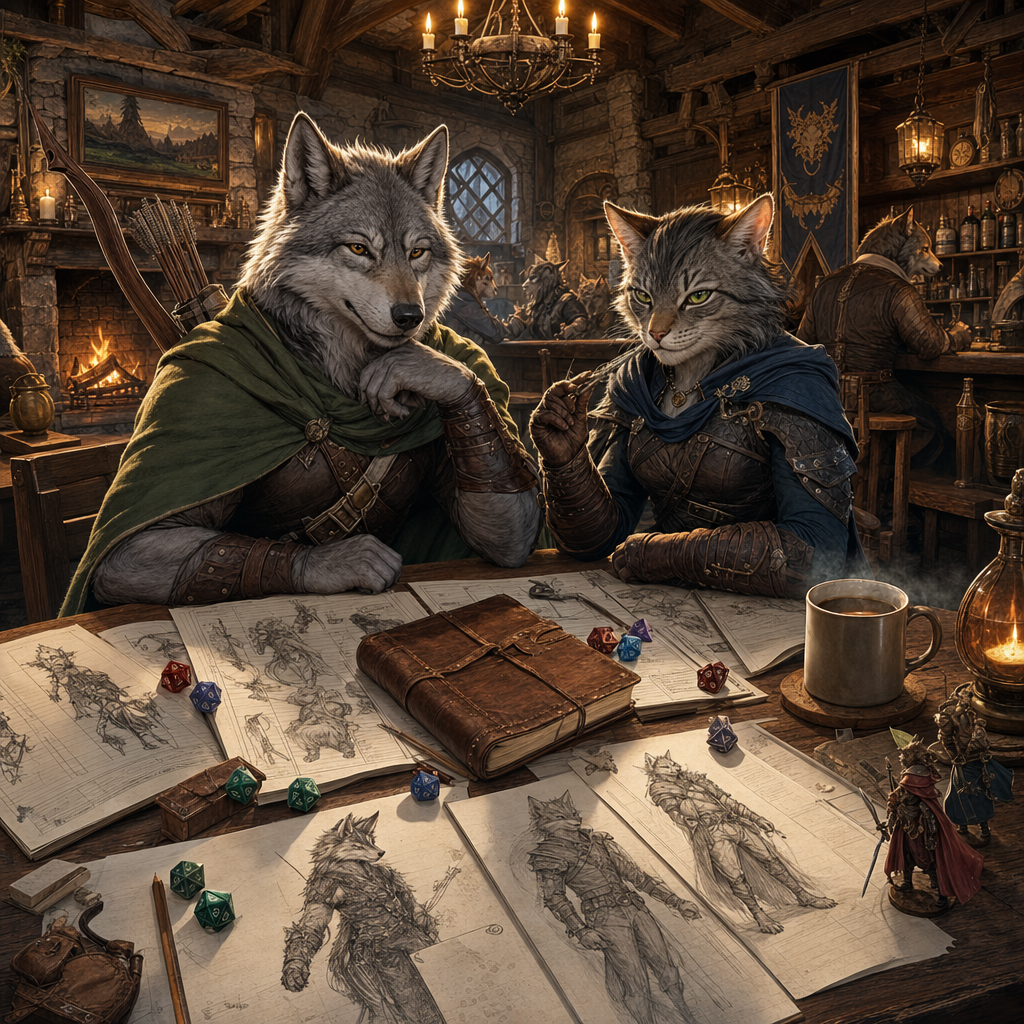
My border collie, Maggie, is brilliant and neurotic. She needs a job or she'll create one, usually involving rearranging everyone else's day around her schedule. So I uploaded a photo of her to Creature Forge AI's character generator, and it created a canine-folk ranger who was absolutely her—intense eyes, alert ears, that specific tilt of the head that means "I'm about to make this everyone's problem."
But the stats and appearance were just the starting point. The real magic came from translating Maggie's personality into game mechanics:
- She takes the first watch. Always. She doesn't trust anyone else to do it right.
- She counts things. Party members, supplies, enemies. It's compulsive.
- She's intensely loyal but suspicious of strangers.
- She herds. Even when there's nothing to herd. Especially then.
Suddenly I had a character with quirks that made sense, that drove decisions, that created friction and humor naturally.
The Power of Physical Details
Here's something I picked up from years of watching animals: personality lives in body language. The way my old horse, Duke, would pin his ears back when the farrier showed up. How the barn cat, Pepper, always had to touch you with one paw before settling down. How my grandmother held her coffee mug with both hands, like she was warming herself even in summer.
These tiny physical tells make unique DnD characters breathe:
- A wizard who cracks her knuckles before casting, every time
- A paladin who straightens other people's cloaks without asking
- A rogue who always sits facing the door, weight on his back foot
- A cleric who touches her holy symbol when she's nervous, like a worry stone
You don't need a tragic backstory. You need a character who feels like they exist when you're not looking at them.
Start With the Small Stuff
When I'm creating unique DnD characters now, I don't start with "what's their deal?" I start with:
- What do they do with their hands when they're thinking?
- What's their relationship with food? (Are they a fast eater, a slow savorer, someone who shares everything?)
- What's their worst habit?
- What do they always carry that has no practical use?
- What's something they're unreasonably good at that has nothing to do with their class?
I have a half-orc bard who juggles. Not for performance—he just does it while thinking, with whatever's nearby. Apples, daggers, rocks. He's dropped a lot of things. It's not a skill that's ever helped in combat. But it's his.
The "Why" Matters More Than the "What"
Anyone can make a tiefling warlock with a mysterious patron. But why did your tiefling make that pact?
Generic answer: "For power."
Specific answer: "Because she made a deathbed promise to her younger brother to keep him safe, and when he died anyway, she couldn't live with being that powerless again."
The second version gives you something to play. It tells you how she reacts when party members are in danger. It explains why she sometimes makes reckless calls. It creates a throughline.
Let Your Characters Surprise You
The most unique DnD characters I've played have been the ones who turned out different than I planned. I once rolled up a dwarven cleric who was supposed to be stoic and wise. But at the table, he kept making dad jokes. Terrible ones. It just... happened. And it was better than anything I'd written in his backstory.
Give yourself permission to discover your character as you play them. The best details often emerge in session one when you realize, "Oh, she would absolutely do that."
Tools That Actually Help
Look, I'm not precious about process. Sometimes you need a jumpstart. I've found Creature Forge AI's character builder genuinely useful, especially that feature where you can upload a photo of a real person or pet. There's something about starting with an actual face—even if it's your cranky rooster or your uncle who tells the same three stories—that grounds a character in reality.
But the tool gives you a framework. You still have to do the real work: figuring out how this person moves through the world, what they notice, what they ignore, what makes them laugh.
The Anti-Checklist Checklist
If you want to create truly unique DnD characters, here's my anti-advice advice:
- Don't try to make them cool. Cool is boring. Specific is interesting.
- Don't give them a tragic past unless you know exactly how it affects their present.
- Don't make them good at everything. Weaknesses create story.
- Do steal from real life shamelessly. Your weird uncle is a gold mine.
- Do give them opinions about mundane things. How they feel about rain matters.
- Do let them be wrong about stuff. Confidently wrong is even better.
- Do remember that "unique" doesn't mean "complicated." Simple and vivid beats complex and vague every time.
The Goat in the Room
Here's where I finally built Biscuit as a character. Satyr barbarian, obviously. But the details that made her work: she has to investigate every closed door, she's intensely food-motivated, she's suspicious of magic because she doesn't understand it, and she headbutts people she likes. Not in combat. Just... as a greeting.
Is she optimized? Absolutely not. Is she memorable? Ask anyone at my table.
The point isn't that you should make all your characters based on livestock (though honestly, it's been working for me). The point is that the most unique DnD characters come from observation, specificity, and a willingness to let personality trump optimization.
Your Turn
Stop trying to create the most original character concept in D&D history. Instead, think about someone you know—person, pet, doesn't matter—who has a strong personality. What makes them them? What would they do if they had a sword and a spell slot?
Or take the shortcut: grab a photo and see what Creature Forge AI does with it. Sometimes you need to see your border collie as a ranger or your cat as a rogue before the character clicks into place. The tool handles the technical stuff—race, class, stats, appearance. You handle the soul.
The most unique DnD characters aren't the ones with the wildest backstories. They're the ones who feel like they'd keep existing if you closed the campaign notes. The ones you can hear in your head. The ones who would absolutely have an opinion about breakfast.
Now if you'll excuse me, Biscuit is headbutting the door again. Some things never change.