I've rolled a lot of characters. Too many, probably. And for the longest time, they all sort of... blurred together. Another brooding rogue. Another noble paladin seeking redemption. Another wizard with a mysterious past and a penchant for fire spells.
It wasn't until I was sitting at my kitchen table one night—solo campaign, cup of coffee going cold, my border collie Maggie asleep at my feet—that I realized what was missing. None of these characters felt mine. They were templates. Functional, sure, but forgettable.
So I started experimenting with unique D&D character concepts that broke the mold. Not just mechanically interesting builds, but characters with hooks, quirks, and personalities that made them impossible to ignore. Here's what I've learned.
Start With "What If" Instead of "What Class"
Most of us build characters backwards. We pick a class, choose a race that synergizes well, then try to staple a personality onto the mechanical frame. It works, but it rarely produces anything memorable.
Instead, start with a "what if" question:
- What if a retired circus performer became a cleric after a divine vision mid-trapeze act?
- What if a character was raised by mimics and genuinely doesn't understand why people get upset when things aren't what they seem?
- What if your barbarian's rage comes from crippling social anxiety rather than battle fury?
- What if a warlock's patron is their overly critical grandmother who happens to be an archfey?
These questions create characters with built-in story hooks, unexpected motivations, and room for genuine development. The mechanics come second—and honestly, they're easier to figure out when you know who you're building.
Flip Expected Archetypes
One of the fastest routes to unique D&D character concepts is subverting what people expect. Take the core of a recognizable archetype and twist one critical element.
Examples of Archetype Flips:
- The Cowardly Paladin: Devoted to their oath and genuinely brave when it matters, but absolutely terrified of spiders, heights, and loud noises. They're not incompetent—they're just convinced they are.
- The Optimistic Necromancer: Raises undead because they believe everyone deserves a second chance, including corpses. Treats their skeletons like beloved pets. Names them things like "Mr. Tibbles."
- The Illiterate Wizard: Incredibly gifted with magic but can't read. Memorizes spells through diagrams, rhythm, and oral tradition. Gets very creative with spell components.
- The Pacifist Barbarian: Rages when allies are hurt, but refuses to kill. Grapples, disarms, and intimidates instead. Their "rage" is protective fury, not bloodlust.
These concepts work because they create immediate dramatic tension. The character wants something that conflicts with what they are—and that's where interesting roleplay lives.
Build Around a Relationship, Not a Stat Block
Some of the most memorable characters I've played weren't defined by their abilities—they were defined by their relationships.
Create a character whose entire concept revolves around someone else: a fighter who became an adventurer to fund their younger sibling's education. A ranger tracking the person who saved their life years ago, trying to repay the debt. A bard who's actually a talent scout for a famous theater troupe, constantly trying to recruit the party.
This works especially well if you're struggling with backstory. Instead of a sprawling novel about your character's past, anchor them to one relationship. Let that relationship ask questions: Why do you owe them? What happens if you find them? What if they don't want to be found?
Use Real Life as a Template
Here's where things got interesting for me. I was staring at Maggie—my border collie, the one who's outsmarted every fence I've ever built—and thought: what if she was a D&D character?
Not a pet. Not a companion. A character.
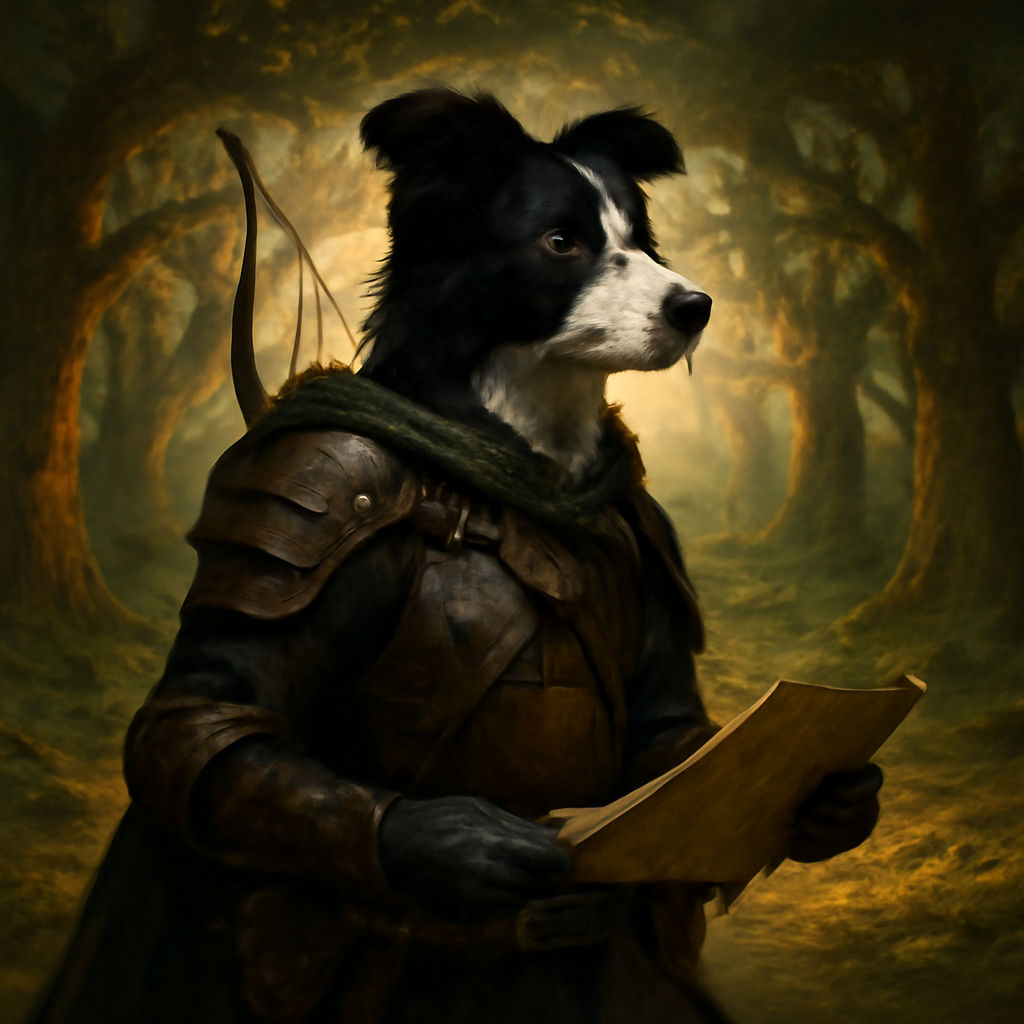
I grabbed my phone, took a photo of her mid-zoomie in the yard, and uploaded it to Creature Forge AI's character generator. Ten minutes later, I had a Tabaxi Ranger with her exact markings—black and white fur, intelligent eyes, that same alert-but-slightly-chaotic energy. The AI built her stats, gave her a background as a scout from the Windclaw Plains, and even suggested gear.
But the magic was in the details: she looked like Maggie. Same energy. Same personality, just translated into fantasy. I named her Magpie, gave her an obsession with herding party members during combat, and she became one of my favorite characters I've ever played.
You can do this with anyone. A friend who's always late becomes a chronically tardy wizard with time magic they can't quite control. Your grumpy uncle becomes a dwarf cleric who heals people while complaining the entire time. Your cat becomes a rogue who knocks important items off tables during tense negotiations.
Real people (and pets) have quirks, contradictions, and personalities that are already interesting. You don't have to invent everything from scratch.
Give Them an Obsession (That Isn't Heroism)
Most adventurers are motivated by heroism, gold, or revenge. Fine. Functional. Boring.
Give your character an obsession that has nothing to do with the main quest:
- A fighter who collects regional cheeses and critiques them in a small leather journal
- A druid who's writing a comprehensive field guide to edible fungi
- A warlock who's convinced they can invent a new musical instrument and won't stop trying
- A monk who's searching for the perfect dumpling recipe and will interrogate every chef they meet
These obsessions give you something to roleplay during downtime, create natural character moments, and make your character feel three-dimensional. Plus, they're fun. DMs love this stuff.
Embrace the Weird Multiclass
Multiclassing gets a bad rap—mostly because people do it for optimization. But weird, narratively-driven multiclass combinations can produce incredibly unique concepts.
Weird Multiclass Concepts:
- Barbarian/Bard: A skald who performs epic poetry in the middle of combat, their rage fueled by rhythm and verse
- Cleric/Rogue: A repentant thief trying to atone by serving a god of second chances, but old habits die hard
- Druid/Warlock: Made a pact with something in the woods. Not sure what. Possibly a tree. Possibly something pretending to be a tree.
- Monk/Wizard: Studies magic as a physical discipline, treating spellcasting like martial arts katas
The key is making the multiclass feel like a natural evolution of the character's story, not a mechanical patch. Ask: what happened that caused this shift? What does it say about who they're becoming?
Write Their Flaw First
Every character-creation guide tells you to write strengths, goals, ideals. Sure. But if you want a unique D&D character concept that feels real, start with their flaw.
Not "is sometimes greedy" or "has a temper." A real, inconvenient, story-generating flaw:
- Compulsively lies about small, irrelevant details (their favorite color, what they had for breakfast, their real name)
- Cannot resist a bet, no matter how stupid
- Believes they're cursed and interprets every minor inconvenience as evidence
- Apologizes constantly, even when they've done nothing wrong—especially to enemies
Flaws create conflict. Conflict creates story. A character who's good at everything and afraid of nothing is a statue, not a person.
Let Them Change
Here's the thing nobody tells you about character creation: your unique D&D character concepts don't have to be perfect on day one. In fact, they shouldn't be.
Some of my best characters started as half-formed ideas that evolved through play. That retired circus cleric? Started as a joke. Became the emotional heart of a two-year campaign. Magpie the Ranger? I thought she'd be a one-shot gag. She's now in her third adventure and has a detailed relationship with every NPC we've met.
Give yourself permission to discover who your character is by playing them. Adjust their voice. Let them surprise you. If something isn't working, change it. The goal isn't to build a museum exhibit—it's to create someone you're excited to step into every session.
Build Someone You'd Want at Your Table
The best unique character concepts share one thing: they make the game more fun for everyone.
They give other players opportunities to shine. They create moments the table will talk about for years. They're weird and specific and flawed and memorable—not because they're mechanically optimal, but because they feel alive.
If you're staring at a blank character sheet right now, start small. Think about someone you know—a person, a pet, a personality trait you find fascinating. Ask yourself: what if they existed in a world with magic? What would they want? What would terrify them?
Or go the route I did: grab a photo and let Creature Forge AI build the framework. You might be surprised what happens when you stop trying to invent everything from scratch and start with something—someone—real.
Either way, make someone you'd miss if they died. That's the standard. Everything else is just dice.