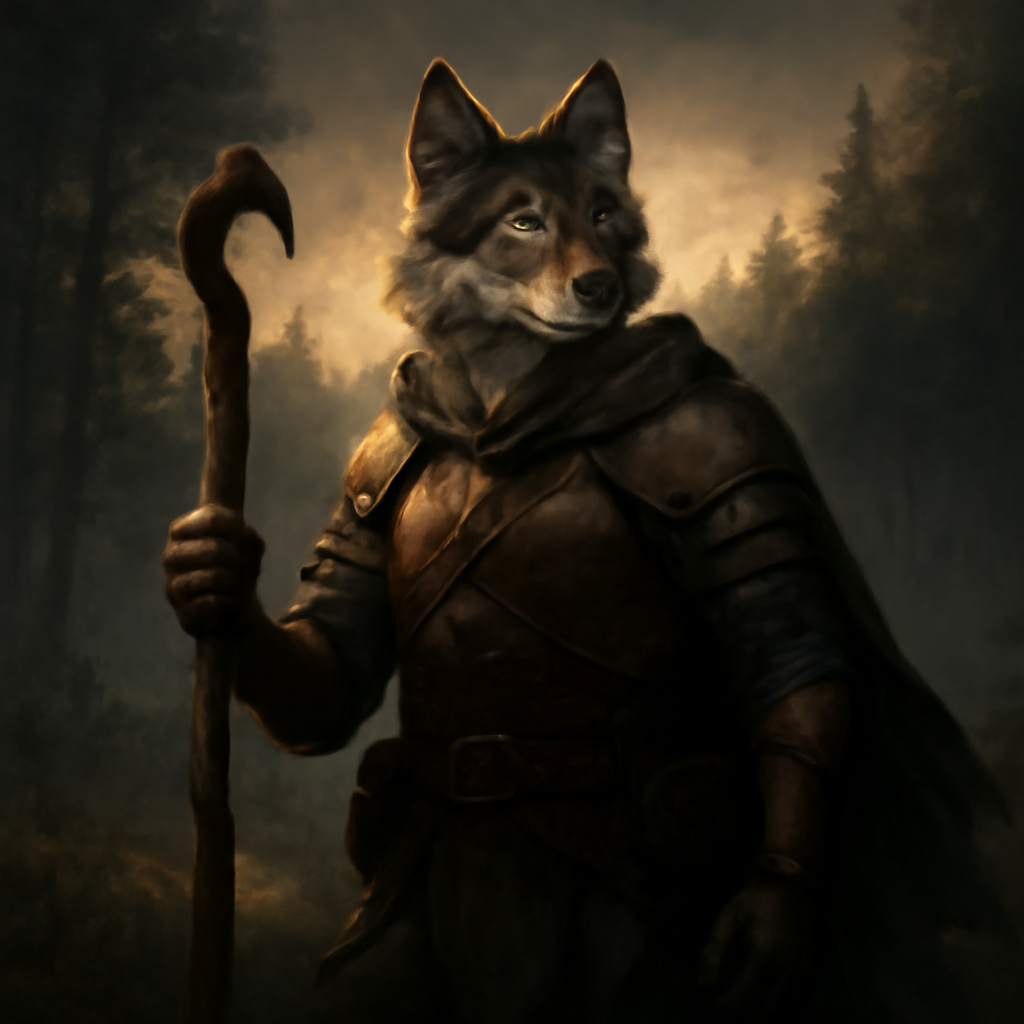
Why I Started Turning Dogs Into Fantasy Characters
I've been playing D&D solo for years now—late nights after farm work, coffee going cold, just me and my dice. And somewhere around campaign three, I realized something: the NPCs I cared about most weren't the ones I'd carefully statted out from scratch. They were the ones based on real creatures I knew.
My border collie Scout became a vigilant ranger who could track anything through three counties. Biscuit the goat (yes, really) became a stubborn druid with more wisdom than sense. But dogs—dogs translate to fantasy characters better than anything else I've tried. They've already got the personality, the loyalty, the distinct quirks. You're just giving them hands and a character sheet.
If you've ever wanted to turn a dog into a fantasy character—whether it's your own pet, a friend's dog, or just a breed you love—here's everything I've learned from doing it dozens of times.
Start With What Makes the Dog Unique
Don't start with stats. Start with personality and physical presence. Real dogs have something most randomly-generated characters lack: specificity.
Observe the Details
Before you touch a character sheet, spend some time really watching the dog you want to convert. Note:
- How do they move? Graceful and quick, or lumbering and powerful?
- What's their energy level? Hypervigilant or lazy until it matters?
- How do they interact with strangers versus family?
- What's their "job" or favorite activity?
- Any quirks? The head tilt, the specific bark, the way they demand attention?
My neighbor's Great Pyrenees, Bear, spends 90% of his time looking sleepy and uninterested. But the second something's wrong—a coyote near the chickens, a stranger on the property—he transforms into this unstoppable wall of protective fury. That's not just flavor text. That's a class feature waiting to happen.
Physical Traits Matter
Size, coat color, distinctive markings—these aren't just cosmetic. They inform how other characters will react and what roles make sense.
- A Corgi's short stature and surprising speed? Rogue or monk.
- A German Shepherd's alert intelligence? Ranger, paladin, or tactical fighter.
- A Beagle's nose-to-the-ground determination? Tracker, investigator, or wisdom-based caster.
- A Husky's dramatic expressiveness? Bard. Always bard.
Choosing Race and Class
Here's where you turn observation into mechanics. The goal isn't perfect optimization—it's capturing the essence of the dog in a way that works at the table.
Race: Beyond "Just Make Them a Wolf"
The obvious choice when you turn a dog into a fantasy character is to use a wolf-based race or the Shifter from Eberron. Those work great. But don't be afraid to get creative:
- Tabaxi for high-energy, acrobatic dogs (especially herding breeds)
- Firbolg for gentle giants like Newfoundlands or Bernese Mountain Dogs
- Halfling for small but brave breeds—the "big personality in a small package" types
- Goliath for mastiffs, Great Danes, and other powerful guardians
- Custom Lineage to build exactly what you need (my preferred method)
For Scout, my border collie, I used a modified Tabaxi. The speed boost and climbing ability captured her agility, and the cat-like precision actually fit better than wolf ancestry—she's a herder, not a hunter.
Class: Match Energy and Purpose
Think about what the dog does, not just what they look like:
- Ranger: Hunting dogs, tracking breeds, any dog with a "job" outdoors
- Fighter (Battle Master): Guard dogs, protection breeds, tactical thinkers
- Barbarian: The dog that goes from zero to sixty, raw power and loyalty
- Paladin: Service dogs, therapy dogs, breeds with an innate protective instinct
- Rogue: Small, quick, clever—the dogs who steal food and never get caught
- Druid: Dogs with a deep connection to nature, farm dogs, livestock guardians
- Monk: Agile, disciplined, focused—think greyhounds and whippets
- Bard: Attention-seekers, the dramatic ones, breeds known for "talking"
Building the Backstory
This is where the character becomes more than stats. Give them a history that honors the dog's real personality while fitting the fantasy world.
Keep the Core Relationship Dynamic
If the dog is loyal to a fault in real life, that loyalty should define their character motivation. If they're independent and stubborn, lean into that. The best fantasy characters I've made from dogs maintain that essential way of being that makes the dog recognizable.
Scout became a ranger who'd failed to protect her original pack (a herding tragedy that haunted her) and now traveled with the party as a second chance at keeping everyone safe. Same hypervigilant energy. Same need to know where everyone is at all times. Same guilt when someone gets hurt. It was Scout, just with a bow instead of a bark.
Sample Backstory Framework
Try this structure:
- Origin: Where did they come from? (Matches the dog's breed origin or your headcanon for them)
- Purpose: What were they meant to do? (Guardian, tracker, companion, worker)
- Turning Point: What sent them adventuring? (Loss, curiosity, duty, or just wanderlust)
- Current Drive: What keeps them going? (Protect, find, prove, return home)
Mechanics: Stats and Abilities
Now the practical stuff. How do you actually stat out a dog-based character?
Ability Score Priority
Based on what you've observed:
- Physical breeds (guard dogs, working dogs): STR or DEX primary, CON secondary
- Alert/intelligent breeds (herders, hunters): WIS primary, DEX secondary
- Social/expressive breeds: CHA primary (yes, really)
Don't dump Intelligence just because "dog." A smart dog is smarter than a lot of people. Scout had 14 INT—she earned it.
Skills That Make Sense
Pull from what dogs actually do:
- Perception (always—dogs notice everything)
- Survival (tracking, navigation)
- Athletics (physical breeds)
- Acrobatics (agile breeds)
- Insight (dogs read emotion better than most)
- Intimidation (guard dogs)
- Performance (the dramatic ones)
Special Abilities and Features
Work with your DM (or house-rule if you're solo like me) to add minor traits that capture dog-ness:
- Keen Hearing and Smell: Advantage on Perception checks (stolen from the wolf stat block)
- Pack Tactics: Advantage when an ally is adjacent to the target
- Loyal Guardian: Bonus action to impose disadvantage on an attack against an ally within 5 feet
- Tireless Tracker: Can follow a trail that's days old with a DC check
The Fastest Method I've Found
Here's the truth: I used to spend hours on this process. Then I discovered I could upload a photo of a real dog to Creature Forge AI's character generator and get a complete fantasy character that actually looks like the dog, with stats, backstory, and art in minutes.
It's become my go-to method when a player says "I want my dog in the campaign" or when I need an NPC fast. The photo-upload feature is wild—you put in a picture of your Border Collie, and it generates a Tabaxi ranger or a Shifter druid that genuinely captures the look and feel. I've used it for Scout, for Bear, for three different players' dogs.
You can adjust everything after—change the class, rewrite the backstory, tweak stats—but it gives you a 90% complete character in the time it used to take me to decide on a race.
Using Your Dog Character Effectively
Once you've built them, here's how to play them in a way that feels true to the source material.
Personality Beats
Give them recurring behaviors:
- A specific way they greet people (the head tilt, the excited bounce)
- A tell when they sense danger (ears up, hackles raised, low growl)
- How they show affection (leaning against allies, bringing "gifts," protective positioning)
- What breaks their focus (squirrels, food, specific sounds)
Dialogue Approach
Dogs don't talk like people. Even as fantasy characters, they should have a distinct voice:
- More direct, less abstract ("I smell blood" not "I sense danger")
- Present-focused ("The trail goes this way" not "We should strategize our approach")
- Emotionally honest ("I don't trust him" not diplomatic hedging)
- Occasionally distracted by sensory input mid-conversation
Combat Style
How does this dog fight?
- Protectors put themselves between threats and allies
- Herders control the battlefield, move enemies, create space
- Hunters focus single targets with relentless determination
- Small dogs fight scrappy and dirty, all speed and opportunism
Common Mistakes to Avoid
I've made all of these, so learn from my failures:
Making them too perfect. Dogs have flaws. Scout chased rabbits at terrible times. Bear fell asleep on watch. Your character should too.
Forgetting they're still a dog. They can have hands and wear armor, but they should still think like a dog. Don't lose that in the fantasy trappings.
Ignoring breed traits for optimization. A Great Dane should not have the same build as a Jack Russell. Embrace the differences.
Overdoing the "goodest boy" thing. Yes, dogs are loyal and loving. They're also stubborn, food-motivated, and sometimes make terrible decisions. Use it all.
Why This Works So Well
After years of solo play and a dozen dog-based characters, I've figured out why this approach creates more memorable NPCs and PCs than random generation:
Real dogs already have完整的人物弧线. They have history, personality, relationships, quirks—all the things we struggle to create from scratch. You're not inventing a character. You're translating one that already exists.
And in actual play? People remember them. Players remember Scout the hypervigilant border collie ranger more than they remember Thoradin the Optimized Fighter Build #47. There's something about that specificity, that rootedness in a real personality, that makes them stick.
Start With Your Own Dog (Or One You Love)
If you've never tried this before, start with a dog you know well. Your own pet, a childhood dog, your neighbor's escape artist. Someone with a personality you can close your eyes and see.
Build them from observation first, mechanics second. Let who they are determine what they can do, not the other way around.
And if you want a shortcut—or you're just curious what your dog would look like as a fantasy character—try uploading a photo to Creature Forge AI. I've spent plenty of late nights building characters the long way. Sometimes it's worth seeing what the tools can do in five minutes.
Either way, you'll end up with a character who feels real in a way that random generation never quite manages. Because they are real. They're just wearing different armor now.