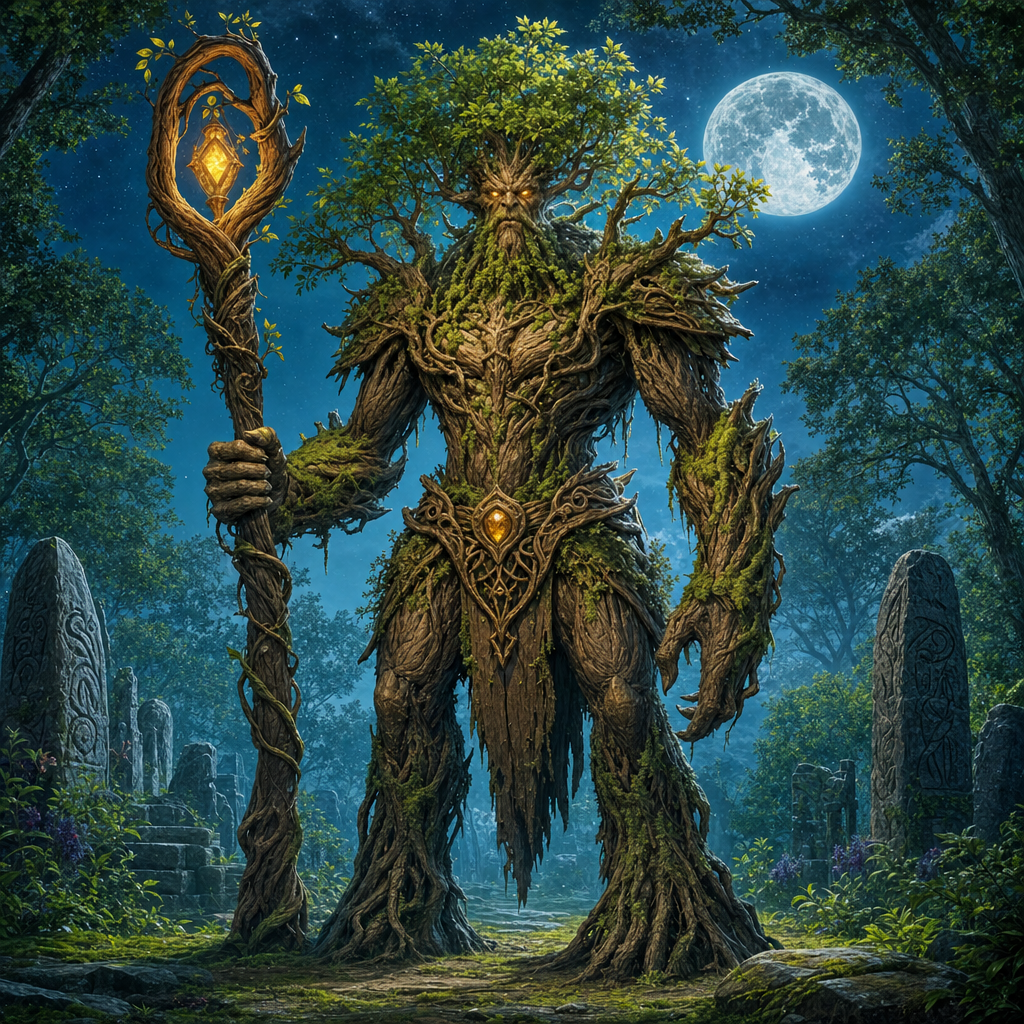
Why Play a Treant Character?
I rolled my first treant character on a Tuesday night after spending the entire day trying to relocate a stubborn oak sapling that had sprouted too close to the barn. Three hours of digging, and that thing refused to budge. Later that evening, coffee in hand and dice scattered across my kitchen table, I thought: what if a character had that same rooted, immovable presence? What if they carried centuries of memory in their rings?
That's when treant character ideas started making sense to me. Not as the slow-talking forest encounter your party avoids, but as a fully realized player character with motivations, flaws, and a perspective that spans generations. A treant sees the world differently than your average adventurer—they remember when the dungeon you're raiding was just a nobleman's summer home, when the "ancient" forest was a meadow.
Building a Treant Character That Feels Alive
The challenge with playing a treant isn't the mechanics—it's avoiding the trap of being a walking tree with no personality. Here's where good treant character ideas separate themselves from forgettable ones: specificity. What kind of tree are you? A gnarled oak with storm-broken branches? A graceful willow? A stubborn pine that survived a forest fire?
Physical Characteristics That Matter
Your treant's appearance tells their story before they speak. Consider these elements:
- Age indicators: How many rings do you have? Are you a sapling treant (50-100 years) or an ancient (800+)? Younger treants might be more impulsive, older ones more contemplative.
- Battle scars: That axe wound from a logging camp decades ago. Burn marks from a dragon's breath. Each scar is a memory.
- Symbiotic life: Do birds nest in your branches? Does moss cover your northern side? I once played a treant who had a family of squirrels living in a hollow—they served as his alarm system and occasional comic relief.
- Seasonal changes: Does your foliage shift with the seasons, or are you an evergreen? This affects how you're perceived in different regions.
Personality Beyond "Slow and Wise"
Yes, treants live for centuries. But that doesn't mean they're all patient forest sages. Some of the best treant character ideas I've seen subvert that expectation entirely:
The Impatient Sapling: Only 75 years old, practically a teenager by treant standards. Frustrated by how slowly other treants move and think. Wants to see the world NOW, not in another century.
The Corrupted Guardian: A treant whose forest was destroyed by industry or magic. Now bitter, possibly seeking revenge, struggling with the fact that their purpose—to protect—no longer exists.
The Urban Survivor: A treant who somehow ended up in a city park or noble's garden. They've adapted to civilization in strange ways—they understand commerce, enjoy theatrical performances, maybe even have opinions about architecture.
The Wandering Seed: A treant who was magically transplanted far from their home forest. They're trying to return, but the journey has changed them. They've seen deserts, mountains, coastlines—landscapes their kin can't imagine.
Mechanical Considerations for Treant PCs
Most DMs will work with you to balance a treant character, but here are practical starting points:
- Size: You're probably Large, which creates challenges in dungeons. Work with your DM on when you can compress yourself or how you navigate tight spaces.
- Speed: Treants are traditionally slow. Consider 20 feet per round, but maybe you can "root rush" as a special action—explosive movement followed by a round of being rooted in place.
- Natural armor: Your bark provides protection. Base AC of 16 + Dex modifier (max +2) feels reasonable.
- Vulnerabilities: Fire damage should be a real concern. It makes combat tenser and gives you a meaningful weakness.
- Languages: You definitely speak Sylvan. Common might be heavily accented or learned recently.
Treant Character Concepts to Steal
Here are five fully fleshed-out treant character ideas you can adapt:
1. Thornback the Reluctant Defender
Once the guardian of an ancient grove, Thornback failed to prevent its destruction during a war between kingdoms. The armies simply went around the forest, burning it as they left. Now Thornback wanders as a ranger, protecting individual travelers instead of places—because places can't be saved, but maybe people can be.
Hook: Haunted by failure, seeks redemption through small acts of protection.
2. Sapling Sue (Yes, Really)
A young treant druid who sprouted near a halfling village and was essentially raised by the community. She has a halfling name, loves pipeweed (it makes her leaves tingly), and her magic focuses on growth and harvest rather than combat. She's adventuring to see what else is out there beyond the village gardens.
Hook: Fish-out-of-water optimist who thinks every problem can be solved with friendship and fertilizer.
3. Ashroot
Survived a forest fire that killed every other treant in the grove. Now covered in charred bark, Ashroot is a warlock who made a pact with a fire elemental—not for revenge, but for understanding. They want to comprehend why fire exists, what it wants, whether destruction and creation are truly opposites.
Hook: Philosophical survivor seeking knowledge about their opposite element.
4. The Transplant
A treant who was magically moved to a noble's garden as a curiosity, then abandoned when the estate fell into ruin. They learned to survive in the city, trading bark-carvings and herbal remedies in exchange for water and soil nutrients. Now an urban ranger who knows every back alley and rooftop garden.
Hook: Street-smart treant who understands civilization better than nature.
5. Grandmother Willow (But Make It Dark)
An ancient treant cleric who has outlived seven forests. Each one was destroyed—logging, fire, blight, war. She's tired. Her healing magic is potent but her bedside manner is terrible. She adventures because staying in one place means watching it die eventually, and she's done with that.
Hook: Weary immortal who heals the party while complaining the entire time.
Bringing Your Treant to Life with Creature Forge AI
Here's something that would have saved me hours during that first treant build: I recently used Creature Forge AI's character generator to visualize a treant concept. What's wild is you can actually upload a photo—I used a picture of the old oak near the barn, the one with the split trunk—and the tool incorporated those specific features into the character design. The result looked like MY tree as an adventurer, complete with that distinctive branch pattern.
It's particularly useful for treants because the visual matters so much. You're not just describing "a tree person." You're describing the way specific bark textures catch light, how moss patterns suggest age and environment, whether your branches suggest strength or wisdom or chaos. The tool helps translate those botanical details into character art that actually looks like what you're imagining.
Roleplaying a Treant: The Small Details
Good treant character ideas succeed in the little moments:
- Time perception: You measure things in seasons, not days. "I haven't seen you in ages" means a decade to you.
- Physical quirks: You creak when you move. Your leaves rustle when you're anxious. You smell like forest floor after rain.
- Different priorities: You don't care about gold, but you'd fight a dragon for a bag of quality fertilizer or the location of an untouched grove.
- Communication style: Maybe you're blunt because you've seen too many short-lived races dance around the truth. Or maybe you're poetic, speaking in metaphors about roots and branches.
My goat Biscuit has more patience than most adventurers, but even he would struggle with a treant's sense of time. That's part of the fun—playing a character whose fundamental experience of reality differs from the party's creates natural tension and humor.
Making Combat Interesting
Treant characters can feel static in battle if you're not careful. Here are ways to keep combat dynamic:
- Terrain manipulation: You can cause roots to erupt, create difficult terrain, or entangle enemies. Your presence changes the battlefield.
- Environmental awareness: You sense vibrations through the ground. You know when something approaches before others do.
- Strategic positioning: You're slow but tough. Plant yourself where you're most needed and become an immovable obstacle.
- Creative attacks: Branch whips, root trips, seed projectiles, pollen clouds that obscure vision. You're a living Swiss Army knife.
Why Treant Characters Matter
At the end of the day, good treant character ideas work because they ask interesting questions. What does it mean to be rooted to something? How do you form relationships when you'll outlive everyone you meet? What's worth protecting when everything is temporary?
A well-played treant isn't just a tank with wooden armor. They're a perspective on time, mortality, and change that makes your party think differently about the world they're adventuring through. That dragon's hoard? Your character remembers when that dragon was born. That "ancient" temple? You were a sapling when they built it.
If you're looking to build a treant character that feels unique and grounded (pun absolutely intended), start with the specifics. Not just "a treant," but "the oak treant who survived the Fire of '87 and now travels with a family of ravens who nest in her branches." The details make the difference between a walking tree and a character worth remembering.
Ready to see your treant take shape? Head over to Creature Forge AI and bring your forest guardian to life. Whether you're uploading a photo of your favorite tree or building from scratch, it's time to let your character put down roots—metaphorically speaking, of course.