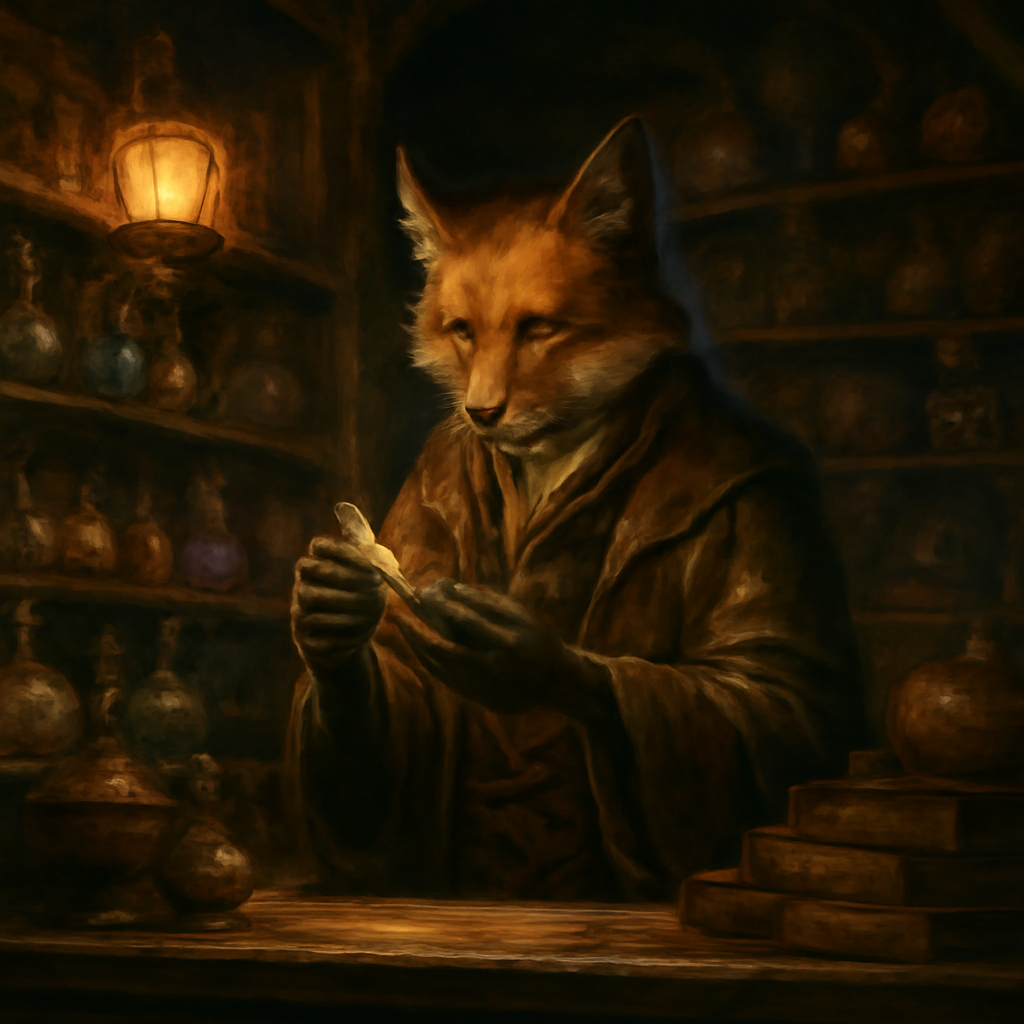
Why Your Shopkeepers Matter More Than You Think
I learned this lesson the hard way during a solo campaign last winter. I'd rolled up a half-elf ranger, wandered into town, and needed supplies. The shopkeeper I'd jotted down was literally named "Steve the Shopkeeper." No description. No personality. Just... Steve. My ranger bought rope, left, and I realized I'd just wasted fifteen minutes of perfectly good storytelling time on what amounted to a vending machine with a name tag.
That's when I started building shopkeeper NPC ideas for D&D that actually mattered. Merchants who had histories, quirks, secrets. Characters my solo adventurer—and later, when I finally convinced some friends to play, my whole party—would actually want to talk to. Because here's the truth: your players will interact with shopkeepers more than almost any other NPC type. Make them count.
The Core Elements of a Memorable Shopkeeper
Before we dive into specific shopkeeper NPC ideas for D&D, let's talk about what makes a merchant stick in your players' minds beyond the session.
A Distinctive Voice or Mannerism
You don't need a full accent (though go for it if that's your thing). A speech pattern, a catchphrase, a physical tic—something players can latch onto. One of my favorite NPCs was a potion seller who ended every sentence with "...or so I'm told" because she'd learned alchemy entirely from books and had never actually tested most of her own inventory. The party loved her specifically because of that nervous disclaimer.
A Secret or Complication
Every good shopkeeper has something going on beneath the surface. Maybe they're in debt. Maybe they're a retired adventurer. Maybe they're fencing stolen goods or running from a past identity. This secret doesn't need to dominate the interaction, but it should exist, ready to surface when your story needs it.
A Reason to Say No
The most boring merchant says yes to everything and has infinite stock. Give your shopkeeper limitations: "I can't sell you that—it's promised to someone else," or "I have the antidote, but I need something from you first." Scarcity creates story.
Eight Shopkeeper Concepts Ready to Drop Into Your Game
The Retired Adventurer Running a Pawn Shop
Marra Ironfoot used to delve dungeons. Now she runs a cramped shop full of "acquisitions" from her glory days. She'll sell you a +1 shortsword, but she'll also tell you exactly which owlbear she took it from and why you should never trust a contract written in Infernal. Her shop is equal parts armory and cautionary tale.
Hook: She recognizes an item the party is carrying and wants it back—not because it's valuable, but because it belonged to someone she lost.
The Alchemist Who Experiments on Customers
Fendril the Gnome offers potions at half price if you agree to describe the effects in detail afterward. He's mapping the limits of transmutation magic and needs data. Most potions work fine. Most. His shop smells like burnt sugar and regret.
Hook: A "failed" potion the party bought three sessions ago suddenly activates at the worst possible moment.
The Merchant With Revolutionary Sympathies
Outwardly, Kessa sells textiles and traveling supplies. Quietly, she moves messages and supplies for groups working against the local government. She'll offer the party a significant discount if they're willing to deliver a "package" to the next town. No questions asked. Definitely no questions.
Hook: The package is intercepted. Now the party has to decide whose side they're on.
The Cursed Shopkeeper Who Can't Leave
Old Merrick has run this general store for sixty years. Literally. He hasn't aged a day since a witch cursed him to "get what he wished for"—he'd wanted his business to last forever. Now it has. He's bound to the building, immortal but trapped, and desperately bored. He'll pay handsomely for entertainment: stories, books, anything to break the monotony.
Hook: He knows the solution to breaking his curse but needs the party to retrieve something from the witch's abandoned tower.
The Traveling Merchant Who's Always One Town Ahead
Somehow, Daro's Wondrous Wares is always in the next town the party visits. Different building, same cheerful proprietor, same impossible inventory. Daro himself is maddeningly vague about how he manages this. Teleportation? Twin siblings? A network of dopplegangers? He just smiles and asks if you need rope.
Hook: The party finds two Daros in the same town. One of them is an imposter, and the real Daro needs help.
The Blacksmith Paying Off a Devil's Contract
Torven forges the finest weapons in the region, but every tenth blade he makes belongs to someone else—part of an old contract he signed for his wife's life. He's counting down to freedom, but he's only three swords away, and he's terrified of what happens when the contract ends. Will the devil really let him go?
Hook: The party's commissioned weapon is number ten. The devil shows up to claim it mid-transaction.
The Herbalist Who Talks to Plants
Silbel's garden supplies half the region with medicinal herbs, and she insists the plants tell her what they want to be used for. She's not wrong—her remedies are eerily effective. She's also a bit strange, hosting tea parties for her foxglove and singing lullabies to the nightshade. The plants seem happier for it.
Hook: A corrupted plant in her garden starts whispering dark things. She needs the party to find out what's poisoning her soil.
The Bookshop Owner With a Forbidden Section
Maris runs a quiet bookshop filled with histories, poetry, and travelers' journals. She also has a locked back room she'll only open for customers she trusts—people who "understand that knowledge isn't inherently dangerous, only its application." Inside: spell scrolls, arcane research, books that aren't technically illegal but would raise uncomfortable questions.
Hook: Someone's been stealing from the forbidden section, and the stolen books are being used for blood magic.
Building Your Own: A Quick Framework
Can't find a pre-built concept that fits your campaign? Here's how I build shopkeeper NPCs on the fly:
- Start with the shop type: What do they sell? This determines who walks through their door and what problems they encounter.
- Add a personality quirk: One memorable detail. Obsessively clean. Compulsive liar. Collects porcelain frogs. Something.
- Give them a problem: Debt, blackmail, a missing shipment, a rival, a secret. Problems create plot hooks.
- Connect them to your world: How do they feel about the local government? The guild? The party's enemies? NPCs exist in context.
Making Them Visual (and Personal)
Here's where I'll share something that changed my whole approach to NPCs: I started uploading photos to Creature Forge AI's NPC generator and letting it build fantasy versions of real people and animals I knew. Last month, I uploaded a picture of my border collie Keeper—herding instinct so strong she tries to organize the chickens—and the generator created this brilliant Lupine merchant character with the same sharp, intelligent eyes and that distinctive black-and-white coat pattern.
Suddenly my shopkeeper wasn't just a stat block. She was Keeper, translated into a fantasy merchant who organized her inventory with obsessive precision and got genuinely distressed when customers didn't browse in the "correct" order. My players loved her immediately because she felt specific and real, not generic.
You can do this with any photo—a friend, a pet, a face that just strikes you. The tool handles the translation into fantasy species and adds the D&D stats, but the personality? That core of recognition? That's all still there.
Integrating Shopkeepers Into Your Story
The best shopkeeper NPCs aren't just flavor—they're functional story tools. Here's how to weave them in:
Information Brokers
Shopkeepers hear things. They see who's buying what. A blacksmith knows when someone's arming for war. An herbalist knows when someone's preparing poison. Let your merchants gossip, speculate, and share rumors that point toward your larger plot.
Quest Givers
Not every quest needs to come from a noble or a mysterious stranger. A shopkeeper with a missing shipment, a competitor undercutting prices through dark means, or a personal problem they can't solve themselves—these make perfect side quests that feel grounded in your world.
Moral Complications
The party needs healing potions. The only alchemist in town is raising prices because he knows they're desperate. Do they pay? Steal? Intimidate? How your players interact with merchants reveals character and creates consequences that ripple forward.
Recurring Touchstones
If your campaign involves travel, bring back the same merchants in different contexts. That potion seller they helped in town? She's now in the capital, more successful, and remembers the favor. That grumpy blacksmith? He's been conscripted to work for the enemy, and seeing him in chains hits different.
Common Pitfalls to Avoid
I've made every one of these mistakes, often in the same session:
- Don't make them all quirky: Sometimes you need a straightforward merchant who just sells rope. Save the eccentricity for shopkeepers who matter to your plot.
- Don't let them steal the spotlight: Your players are the heroes. Shopkeepers support, complicate, and enrich—they don't overshadow.
- Don't forget they're running a business: Even interesting NPCs need to make money. Let economic reality shape their decisions.
- Don't make every shop a plot hook: Sometimes a shop is just a shop, and that's fine. Not every merchant needs a tragic backstory.
Start Building Merchants Who Matter
Your next session probably includes a shopping scene. Maybe it's a quick supply run. Maybe it's the party finally spending that dragon hoard. Either way, you have a choice: make it memorable or make it a transaction.
Choose memorable. Choose shopkeepers with opinions, problems, and personalities. Choose NPCs your players will quote three campaigns from now.
And if you need a visual to match the personality you're imagining—or if you want to turn your impossibly photogenic cat into a traveling potion merchant (trust me, it works)—head over to Creature Forge AI. Upload a photo, get a fully-statted NPC that looks like someone real, and watch your players' faces when they realize the shopkeeper isn't just another faceless vendor.
Your campaign's merchants are waiting. Make them worth meeting.