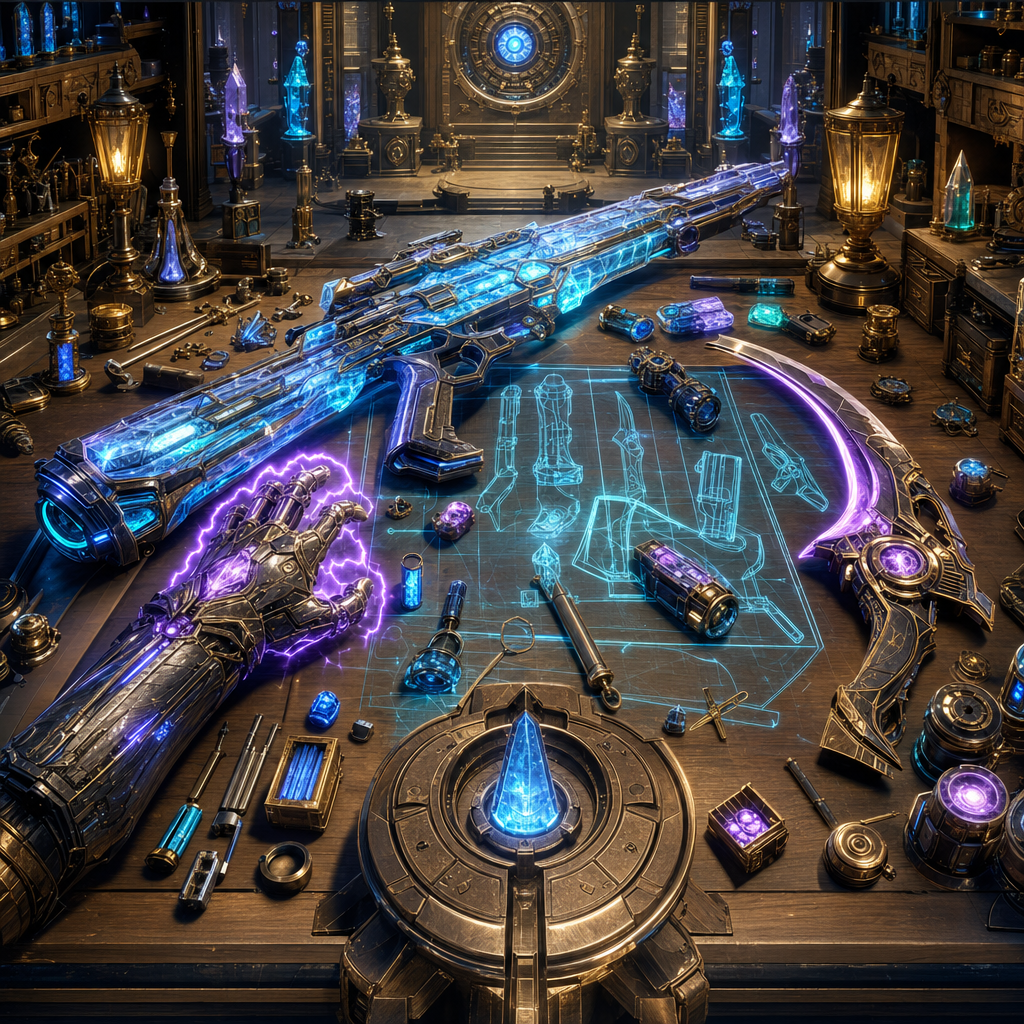
Why Most Sci-Fi Weapons Feel Like Reskinned Crossbows
I ran a sci-fi one-shot last year where I handed my solo character a "plasma rifle" and realized halfway through the first combat that it was just a longbow with different damage type. Same range, same mechanics, same tactical decisions. The only thing futuristic about it was the word "plasma."
That's the trap with sci-fi weapon ideas for RPG campaigns — we default to lasers and blasters because they're familiar, but we rarely think about what makes futuristic technology actually different from medieval armories. A good sci-fi weapon should change how players approach problems, create new tactical wrinkles, or reflect something meaningful about the setting's technology level.
Here's how to build sci-fi arsenals that feel genuinely fresh, starting with the design philosophy and moving into specific weapon concepts you can drop into your campaign tonight.
The Core Principle: Technology Changes More Than Damage
Before we get into specific sci-fi weapon ideas for RPG settings, start with this question: what does advanced technology let you do that crossbows and swords can't?
- Selective effects: A weapon that only harms organic matter, or only damages electronics
- Programmable behavior: Ammunition that changes function mid-flight based on target type
- Exotic energy states: Weapons that don't just deal damage but alter matter, time, or perception
- Symbiotic systems: Gear that learns, adapts, or requires a relationship with its user
- Moral complexity: Weapons with costs beyond ammunition — fuel sources that degrade the environment, psychic guns that drain memories
The best sci-fi weapons aren't just more powerful. They're weirder, and that weirdness creates story.
Weapons That Rewrite Combat Dynamics
Graviton Lance
This rifle doesn't fire projectiles — it fires localized gravity wells. On a hit, the target is pulled 10 feet toward the point of impact next round. Miss, and you've created a temporary gravity anchor point on the battlefield that affects everyone's movement for the next minute.
Suddenly your martial character is thinking about terrain control and zone denial. Suddenly missed shots aren't wasted — they're repositioning tools.
Chrono Blade
A melee weapon that exists a half-second ahead in time. When you swing, you see a ghostly afterimage of where the blade will be. Mechanically, you can choose to reroll one attack roll per encounter, representing your ability to adjust your strike based on seeing its future outcome.
The narrative weight of carrying a weapon that shows you fragments of possible futures? That's character development fuel.
Neural Disruptor
Deals psychic damage and forces an Intelligence save. On a failed save, the target forgets the last action they took. Not mind control — memory disruption. They don't know if they've already attacked, cast that spell, or drunk that healing potion.
This creates paranoia and confusion without the game-stopping complexity of full charm effects.
Weapons With Built-In Story Hooks
Symbiote Carbine
A living weapon bonded to your genetic code. It grows more accurate the longer you use it (track "bond points" that accumulate over sessions), but if someone else tries to fire it, the gun shrieks psychically and alerts you to the theft, no matter how far away you are.
I used this concept with my border collie's character — uploaded a photo to Creature Forge AI's character generator and built her as a lupine gunslinger whose rifle was literally bred from the same bio-foundry as her bloodline. The weapon wasn't just gear. It was family.
Echo Pistol
Fires a kinetic round that leaves a "save point" where it hits. Once per day, you can teleport back to the last surface your echo pistol struck. It's a weapon and an escape tool, but there's a catch: you can't control when enemies figure out the pattern and start camping your exit points.
Nanite Swarm Grenade
Throw it, and a cloud of microscopic machines spreads in a 15-foot radius. Everyone in the area must save or have their armor's AC reduced by 2 as the nanites disassemble non-organic materials. The swarm lasts three rounds, creating a zone where heavy armor becomes a liability.
Now your party's thinking about when to use this tactically — and your BBEG's robot enforcers just became way more interesting to fight.
Energy Types That Do More Than Recolor Damage
Stop thinking "fire damage" with a blue filter. Here are energy weapon variants that create genuinely different gameplay:
- Tachyon Beam: Deals force damage, but the target's speed is reduced by 10 feet until the end of their next turn. You're not just hurting them — you're making them slower through time.
- Entropy Cannon: Each hit ages the target. Track "decay points." At five points, non-magical equipment starts failing — weapons crack, armor rusts. Organic creatures gain one level of exhaustion.
- Quantum Disruptor: Roll damage twice and the target takes both results simultaneously — but only if they fail a Wisdom save to collapse the probability wave. Pass the save and they take neither. Schrödinger's damage roll.
- Psionic Resonator: Deals psychic damage equal to the number of conscious creatures within 30 feet of the target. The more crowded the battlefield, the deadlier this weapon becomes.
Modular Weapon Systems
Here's a mechanic I stole from video games and never looked back: weapons with hot-swappable firing modes.
Your plasma rifle isn't one gun. It's a platform with three settings you toggle as a bonus action:
- Beam Mode: Line attack, 60 feet, Dex save, fire damage
- Bolt Mode: Single target ranged attack, radiant damage, higher crit range
- Pulse Mode: 15-foot cone, thunder damage, pushes targets back 10 feet
Now every combat is a puzzle. Which mode fits this encounter? Your player's making meaningful choices every turn, not just rolling the same attack action.
The Costs of Using Futuristic Weapons
My favorite sci-fi weapon ideas for RPG campaigns are the ones with teeth — tools so powerful they come with consequences.
Void Rifle
Channels energy from a pocket dimension. Deals massive necrotic damage (3d10 at base) but every shot has a 10% chance of opening a brief rift. Roll a d10. On a 1, a minor aberration slips through and attacks the nearest creature — friend or foe.
High risk, high reward. Your players will love it and hate it in equal measure.
Memory Burn Pistol
Runs on your own memories as fuel. Each shot lets you add +1d6 psychic damage, but you must describe a specific memory your character loses permanently. Started the campaign with a detailed backstory? This weapon slowly erases it, creating organic character evolution as the person they were fades.
Stellar Core Cannon
A shoulder-mounted weapon that fires condensed starfire. Devastating area damage — but it vents superheated plasma as exhaust. Everyone within 10 feet of you when you fire takes 2d6 fire damage. Your own party becomes a positioning puzzle.
Making Weird Weapons Mechanically Functional
Here's the trick: you can flavor anything as futuristic without breaking your system's math. Take a standard weapon template, keep the damage dice and range, then add one unique rider effect that's useful but not overpowered.
For example, start with a heavy crossbow (1d10 piercing, loading, range 100/400). Reskin it as an electromagnetic rail rifle and add: "On a critical hit, the target must succeed on a Constitution save or be stunned until the end of your next turn as the electromagnetic pulse disrupts their nervous system."
Same base power level, but now it feels like sci-fi tech and creates memorable moments when that crit finally lands.
If you want to speed up the weapon creation process entirely, tools like Creature Forge AI's Item Forge let you generate balanced homebrew items fast — just describe the concept and the system handles the stat-block math. I've used it to prototype weird weapon ideas before committing them to a campaign document.
Weapons as World-Building
The best part of developing sci-fi weapon ideas for RPG settings? Every gun tells a story about your universe.
If every military uses kinetic slug-throwers, that implies energy shields aren't widespread. If plasma weapons are common but tightly regulated, there's a political reason. If your setting has "gene-locked" weapons that only fire for specific bloodlines, congratulations — you've just created a caste system with built-in adventure hooks.
That nanite grenade from earlier? It exists because this universe has weaponized nanotechnology, which means there are probably nanite-based healing systems too. And black market nanite reprogramming labs. And anti-nanite religious movements.
One weapon idea spirals into an entire setting layer.
Where to Go From Here
My coffee's gone cold and my notebook's full of half-finished weapon sketches — graviton whips, probability guns, singularity mines. That's how this always goes. You start with "I need a cool laser pistol" and end up three hours deep in speculative technology rabbit holes.
The thing about sci-fi weapon ideas for RPG campaigns is they're only as good as the situations you put them in. That echo pistol becomes legendary when your rogue uses it to escape a collapsing space station and ends up teleporting into a cell block full of prisoners who've been waiting decades for someone to shoot that exact wall.
Start with one weird weapon. Give it to an NPC first so you can test the mechanics without risking player frustration. Let your players see what it does before they loot it. Then watch them theory-craft battle plans around gear that actually does something interesting.
And if you need a starting point for building characters or NPCs to wield these futuristic arsenals, Creature Forge AI makes it stupidly easy — you can even upload a photo of your actual dog, cat, or that one friend who always plays rogues and turn them into a beastfolk mercenary with a symbiote rifle and a bad attitude. Because the best sci-fi campaigns aren't just about cool weapons. They're about cool characters using them in ways you never saw coming.
Now go bolt a gravity generator to a sword and see what happens.