I've run the same quest hook approximately two hundred times: an innkeeper gestures vaguely at a bulletin board. The party reads a notice. They take the job. It works, but nobody remembers it three sessions later.
The best quest giver ideas for D&D aren't about complexity—they're about personality. A memorable NPC doesn't need a tragic backstory or twelve pages of notes. They need one detail that sticks. I figured this out the hard way during a solo campaign when I realized my border collie, Scout, staring at me while I worked had more presence than the forgettable merchant I'd just invented.
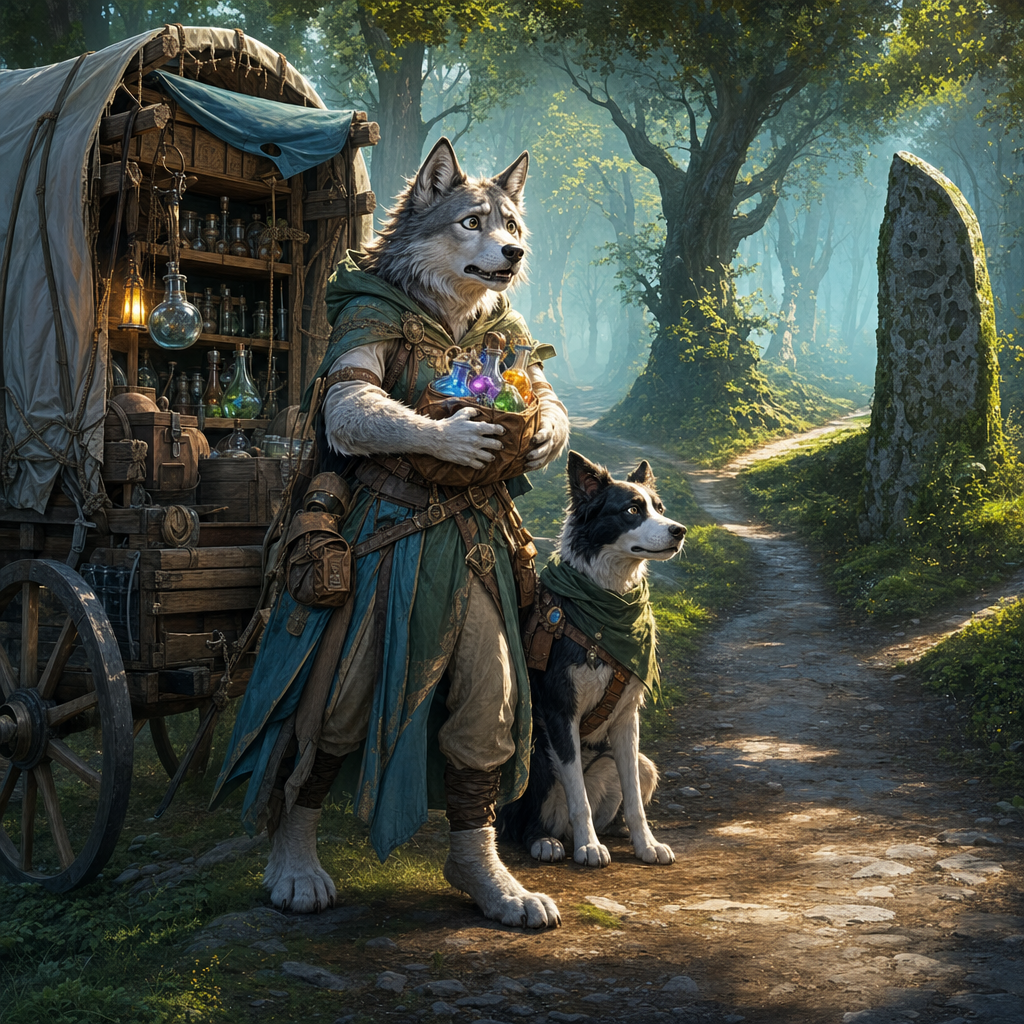
So I rebuilt the merchant. Gave him Scout's nervous energy, that head-tilting intensity, the way she'd drop a ball at my feet and wait. Suddenly I had a quest giver who mattered: a courier who wouldn't stop pacing, who'd literally place the quest item in the party's hands and refuse to leave until they acknowledged it. My players still quote him.
Here are quest giver ideas that work—tested in solo play, refined at tables, and guaranteed to be more interesting than another innkeeper.
The Non-Human Quest Givers Nobody Expects
Animals make exceptional quest givers if you're willing to get weird with it. Not talking animals necessarily—though those work too—but creatures whose behavior becomes the hook.
The Persistent Familiar
A wizard's familiar that outlived its master. It can't speak Common, but it keeps trying to lead the party somewhere. Maybe it's a raven dropping the same torn map fragment at their feet. Maybe it's a cat that appears in every town they visit, always staring at the same type of building. The quest isn't given through words—it's given through obsessive, undeniable pattern.
The Beast With Proof
A dog limping into camp with an arrow in its side—and a noble's signet ring on its collar. A horse that gallops into town riderless, saddlebags full of blood-stained correspondence. The animal can't explain, but the evidence strapped to it tells a story your players will want to finish.
I used this one after watching my goat Biscuit get her head stuck in a fence for the third time that week. Gave an NPCquest-giver the same energy: a messenger goat that kept headbutting a specific door until the party investigated. Turned out the occupant had been replaced by a doppelganger. The goat knew. Animals always know.
The Photo-Translated Companion
If you want to build a quest giver that actually looks like your real pet, Creature Forge AI's character generator lets you upload a photo and get a fully-statted D&D character. I ran Scout through it once—got a Tabaxi ranger with her exact coloring and that same "I will stare at you until you do what I want" energy. Gave her a quest about finding a lost caravan. Worked perfectly.
Quest Givers Who Can't Speak (But Should)
Some of the best quest hooks come from NPCs who can't communicate normally. The barrier becomes the intrigue.
The Haunted Portrait
A painting in an estate sale. The subject's eyes follow the party. At night, if they're alone with it, the figure in the painting mouths words. No sound. Just frantic, silent lip-reading puzzles. The quest is figuring out what they're trying to say—and why they're trapped.
The Cursed Accountant
An NPC who can only speak in perfect rhyme due to a fey curse. They're trying to report a crime, negotiate a contract, or warn about a threat—but everything comes out in couplets. Important details get lost in meter. The party has to parse truth from forced rhyme scheme. Bonus: players will absolutely remember the tax collector who couldn't stop rhyming "audit" with "fraudit."
The Child With Gaps
A young NPC who witnessed something traumatic. They'll talk, but certain words make them freeze—they literally cannot say "fire" or "north tower" or whatever the trigger is. The party has to piece together the quest from what's missing. What can't this kid say? Why? And who cursed them into silence?
Quest Givers Hiding In Plain Sight
The bestquest giver ideas for D&D often disguise the hook until the party's already invested.
The Merchant With Wrong Goods
A traveling seller whose inventory doesn't match their story. They claim to sell pottery but their cart's full of weapons. They say they're headed east but their wagon wheels are caked in red northern clay. The party notices the discrepancy. The merchant notices them noticing. Now it's a conversation—and maybe a quest involving what they're really transporting.
The Prisoner Who Helps
An NPC in the town jail who has information the party needs. They'll trade it—but only if the party completes a task. Not an escape. Something weirder: deliver a message, retrieve an item from their now-occupied home, check if their cat is still alive. The quest comes from someone with no leverage except knowledge.
The Retired Adventurer Who Won't Shut Up
An old fighter in the tavern corner, telling the same story for the fortieth time. Except this time, the details are different. Last week the dragon was green. Today it's black. Last week the treasure was in the mountains. Today it's in the swamp. Either they're lying, or something's changing the past. Either way, the party's going to investigate.
Quest Givers Who Make It Personal
The quest hooks players remember are the ones that feel aimed directly at them.
The Copycat
An NPC who's clearly copying one of the PCs. Same class, similar backstory, asking questions that feel too targeted. Are they a fan? A spy? A future echo? The quest becomes figuring out why this person exists—and it's inherently personal to your player.
The Employer Who Tested Them
The party completes a small job—escorts a merchant, clears rats, whatever. A week later, that NPC contacts them again. "You passed. The rats were fake. I needed to see if you were trustworthy before I told you about the real problem." The initial quest was the interview. Now comes the actual job.
The NPC From Their Backstory
Players write backstories full of siblings, mentors, rivals, and old friends. Use them. Have that estranged brother show up needing help. Have the childhood rival appear, now working for the villain. The quest matters more because it's tangled in history the player already cares about.
Building Quest Givers That Stick
Here's what actually makes a quest giver memorable:
- One strong detail: A nervous tic, a verbal pattern, a visual marker. The courier who paces. The merchant with the wrong goods. The goat that headbutts doors. Pick one thing and commit.
- A reason to care: Desperation, humor, mystery, or connection to a PC. Give your players an emotional angle—even if it's just "this NPC is funny."
- A complication: They can't speak normally, or they're lying, or they're cursed, or they're the party's test. Simple delivery is fine, but complications create stories.
- Consequences for refusal: Not every quest giver should accept "no," and not every "no" should be safe. Maybe the haunted portrait starts appearing in their rooms. Maybe the persistent familiar follows them for weeks. Maybe the prisoner sells the information to someone else.
If you want to skip the manual NPC building and get straight to playable characters—especially if you've got a pet or person you want to translate into D&D—try the NPC generator at Creature Forge AI. Upload a photo, get a character that actually looks like them, complete with personality traits that match. I've used it for everything from Scout the border collie to my nephew's dwarf barbarian phase. Saves hours of stat-building and gives you something concrete to hand your players.
The Tavern Board Still Works—When It Doesn't
Look, I'm not saying never use a bulletin board. I'm saying make it weird when you do.
The notice is written in a child's handwriting. The notice is burned at the edges. The notice appears on the board every morning no matter how many times they take it down. The notice offers a reward the party knows nobody in this town could afford. The paper itself is the hook—not just what's written on it.
Or skip the paper entirely. Have an NPC standing next to the board, watching to see who reads which notice. Have the board itself be a mimic. Have the last quest-taker's blood still on the parchment.
Suddenly the tavern board isn't boring. It's a problem.
Your Players Will Remember the Weird Ones
Three years later, my solo campaign players still talk about the goat. Not the lich they fought. Not the dragon they bargained with. The goat that wouldn't stop headbutting a door because something was wrong.
That's the power of a good quest giver. It's not about the quest—it's about the person (or animal, or portrait, or cursed accountant) delivering it. Give them one unforgettable detail. Make the party work for the information. Let the hook feel personal, strange, or urgent.
And if you're stuck, think about the animals in your life. I guarantee your cat has more personality than the last innkeeper you invented. Translate that. Build from there. Or just upload a photo to Creature Forge AI and let it do the work—either way, your players will thank you for the NPC they'll actually remember.