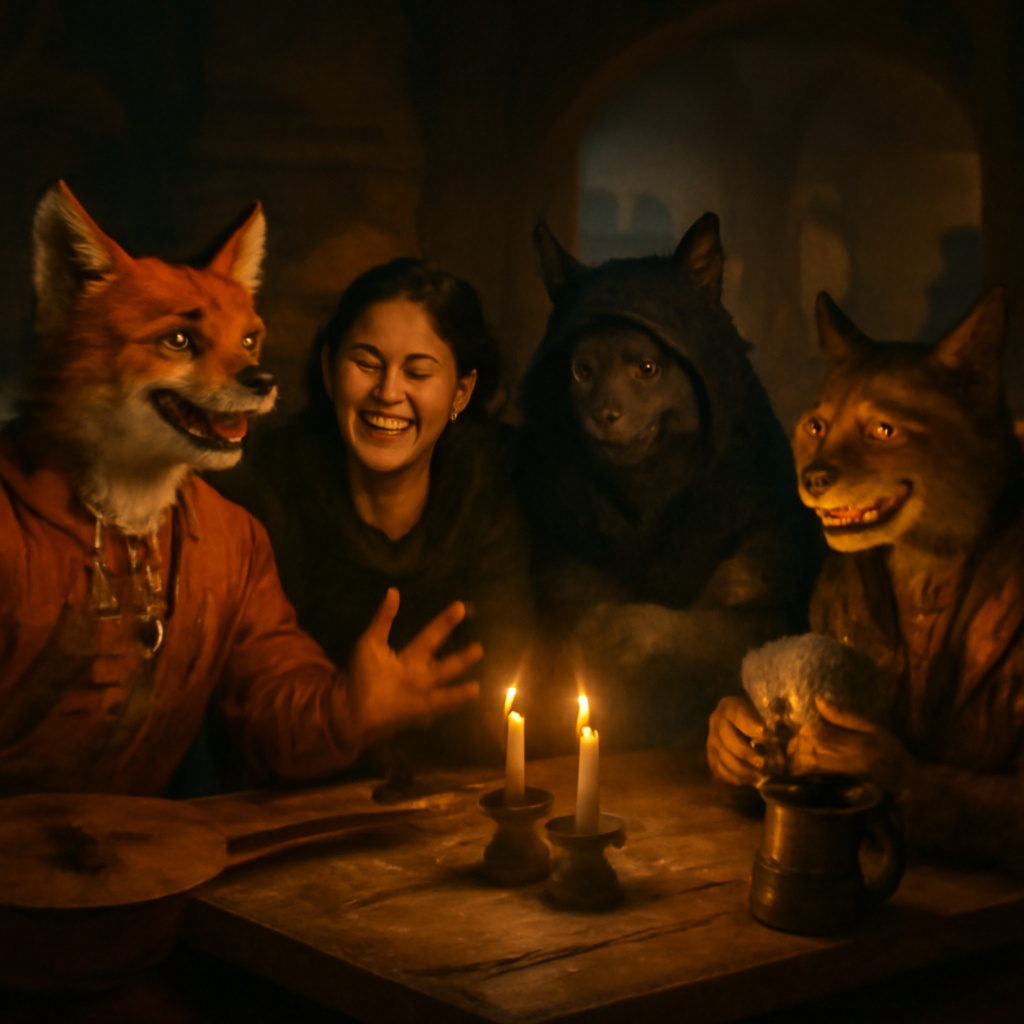
I'll never forget the first time I put a real person in my D&D game. It was my neighbor Tom, a retired mailman who'd never heard of tabletop RPGs but had strong opinions about everything from fence posts to the correct way to stack hay bales. I turned him into Thomir the Steadfast, a dwarf cleric with an inexplicable obsession with proper mail delivery routes through the Underdark. My solo campaign became about 400% funnier overnight.
If you've ever wanted to put a real person in your D&D game, you're tapping into one of the hobby's most delightful traditions. It's not just about stats and abilities — it's about capturing someone's essence, their mannerisms, their weird habits, and watching your table light up when they recognize exactly who you're channeling.
Why Real People Make the Best Characters
Here's the thing about invented NPCs: they can feel flat. You give them a name, a voice, maybe a quirk or two, but they often fade into the background noise of your campaign. Real people? They come pre-loaded with decades of personality.
Your college roommate who never met a problem they couldn't solve with enthusiasm and duct tape. Your grandmother who somehow makes criticism sound like a compliment. That coworker who takes forty-five minutes to tell a five-minute story. These people are characters in the truest sense.
When you base an NPC on someone real, you already know:
- How they'd react under pressure
- What makes them laugh or roll their eyes
- Their speech patterns and favorite phrases
- The contradictions that make them human
- Stories and moments you can adapt into quests
You're not creating from scratch. You're translating.
The Art of Character Translation
Turning a real person into a D&D character isn't about perfect replication. It's about finding the fantasy version of who they are. Ask yourself: if this person existed in a world with magic and dragons, who would they become?
Start with Personality, Not Stats
Don't begin with class selection. Start with their core traits. Is your friend cautious or impulsive? Do they lead or support? Are they handy with tools, quick with words, or impossible to shake?
My cousin Sarah is the kind of person who'll spot a problem everyone else missed, then fix it with whatever's lying around while explaining seventeen other things she noticed. That's not a class — that's an approach. She became a ranger/artificer who couldn't walk past a broken wagon wheel without commentary.
Match Class to Essence, Not Job
Your accountant friend doesn't have to be a wizard counting spell slots. Maybe their meticulous nature makes them a perfectionist monk. Maybe their ability to find money nobody else knew existed makes them a rogue with absurdly high Investigation.
Look for the spirit behind what they do:
- The friend who always knows a guy? Bard.
- The one who'll fight your battles before you even ask? Paladin or barbarian.
- The person who knows everything about three hyperspecific topics? Wizard, but make those topics weird.
- Your deeply skeptical, seen-it-all sibling? Cleric of a trickster god or warlock with buyer's remorse.
Capture Their Voice
This is where real people shine. You don't have to invent speech patterns — you've heard them a thousand times. Does your dad end every statement with "just saying"? Does your friend somehow turn every conversation into a story about their dog?
Write down three phrases they use constantly. Give your character those exact verbal tics. Your players will catch it immediately, and it'll feel right in a way generic NPC dialogue never does.
Building the Character Sheet
Now comes the mechanical translation. This is where you turn observation into numbers.
Ability Scores That Fit
You're not building an optimized adventurer. You're building this specific person with a sword or spellbook.
Think about their strengths:
- Strength: Not just muscles — can they push through when things get hard?
- Dexterity: Are they clumsy or graceful? Quick-fingered or all thumbs?
- Constitution: Do they power through illness or complain about hangnails for three days?
- Intelligence: Book smart, street smart, or confidently wrong about most things?
- Wisdom: Do they notice subtext? Read rooms? Or miss every social cue?
- Charisma: Magnetic, awkward, polarizing, forgettable?
My neighbor Tom? 10 Strength, 8 Dexterity, 16 Constitution (man never got sick), 12 Intelligence, 14 Wisdom, 11 Charisma. Not heroic. Just... Tom, but with healing spells.
Skills and Proficiencies
This is where you get specific. What are they actually good at?
Give them proficiency in skills that match their real competencies. Your friend who gardens gets Nature and Survival. Your sibling who can talk anyone into anything gets Persuasion and Deception. The guy who knows every band from 1987? Performance and History, absolutely.
Flaws Make It Real
Perfect characters are boring. Real people are wonderfully, specifically flawed.
Does your person:
- Refuse to admit when they're wrong?
- Trust too easily or not at all?
- Lose track of time when they're focused?
- Give unsolicited advice constantly?
- Collect things they'll "definitely use later"?
Those quirks become character flaws in D&D. They're what make players remember this NPC six months later.
When You Want Them to Look Right Too
Here's where things get interesting. You can describe your character all day, but there's something powerful about showing your players exactly who you mean.
I used to sketch terrible stick figures in my solo campaign notes, trying to capture what Thomir looked like. Then I discovered you could actually put a real person in your D&D game visually, not just mechanically.
With Creature Forge AI's character generator, you can upload an actual photo of someone and watch the tool build a fantasy character that genuinely looks like them. It's honestly a little spooky how well it works. I uploaded a picture of Tom in his mail carrier uniform, specified dwarf cleric, and got back Thomir — complete with Tom's exact "I've seen your nonsense before" expression.
It makes the translation complete. Your players see the character and think "wait, is that...?" And you get to grin and nod.
Using Real People as NPCs vs. PCs
There's a difference between building someone as an NPC in your campaign versus creating them as a potential player character.
As NPCs
You have total control. Make them quest-givers, shopkeepers, rivals, allies, or comic relief. You can exaggerate their traits for effect. You can put them in situations the real person would never encounter and play out how they'd react.
Just remember: NPCs based on real people should enhance your story, not overtake it. They're supporting cast, not the main character (unless your campaign is specifically about them, which could be hilarious).
As Player Characters
If you're creating a character based on yourself or building one for a player based on who they are, dial back the exaggeration. You want them to feel heroic, not mocked. Play up their strengths. Give them room to grow beyond their real-world limitations.
My border collie Murphy became a Tabaxi monk in one of my campaigns — same energy, same intensity, same laser focus, but with thumbs and ki points. I didn't make him a joke. I made him capable, because that's how I see him. Same approach works for people.
Getting Permission (The Overlooked Step)
Look, if you're running a solo game, put whoever you want in there. It's your story. But if you're DMing for a group, especially if you're using someone as a major NPC or — god forbid — a villain, maybe give them a heads up.
Most people are flattered. Some people are weird about it. Read your room. My friend absolutely loved being a chaotic neutral bard who accidentally started three separate wars. Tom appreciated Thomir but requested he not die stupidly. Fair enough.
The Inside Jokes Write Themselves
Here's the payoff: every session becomes layered with meaning. When Thomir insists the party take the "proper route" through the dungeon instead of the shortcut, your players groan because they know. When Sarah's character stops mid-battle to point out the structural instability of the fortress, it's funny because it's true.
These characters create moments you can't plan. Your players start predicting what the NPC will do based on who they're modeled after. They're right half the time. It's collaborative storytelling in a way that purely invented NPCs rarely achieve.
Make Your Campaign Personal
At the end of the day, putting real people in your D&D game is about connection. It's about bringing the people you care about into the stories you love. It's about honoring the things that make them them — even if that means giving your skeptical cousin a spellbook and watching them complain about fireball's spell component costs.
Your campaign world doesn't have to be populated entirely by strangers you invented at 2 AM. It can be full of people you actually know, translated into fantasy, doing the kinds of things you've always imagined they'd do with a sword and a sense of adventure.
If you want to try it — really put a real person in your D&D game with both stats and visuals — Creature Forge AI's character generator makes it almost too easy. Upload a photo, describe the vibe, and watch someone you know become someone you can roll initiative with.
Just maybe warn Tom first. He's still not entirely sure why he's a dwarf.