Why Make a D&D Character From a Photo?
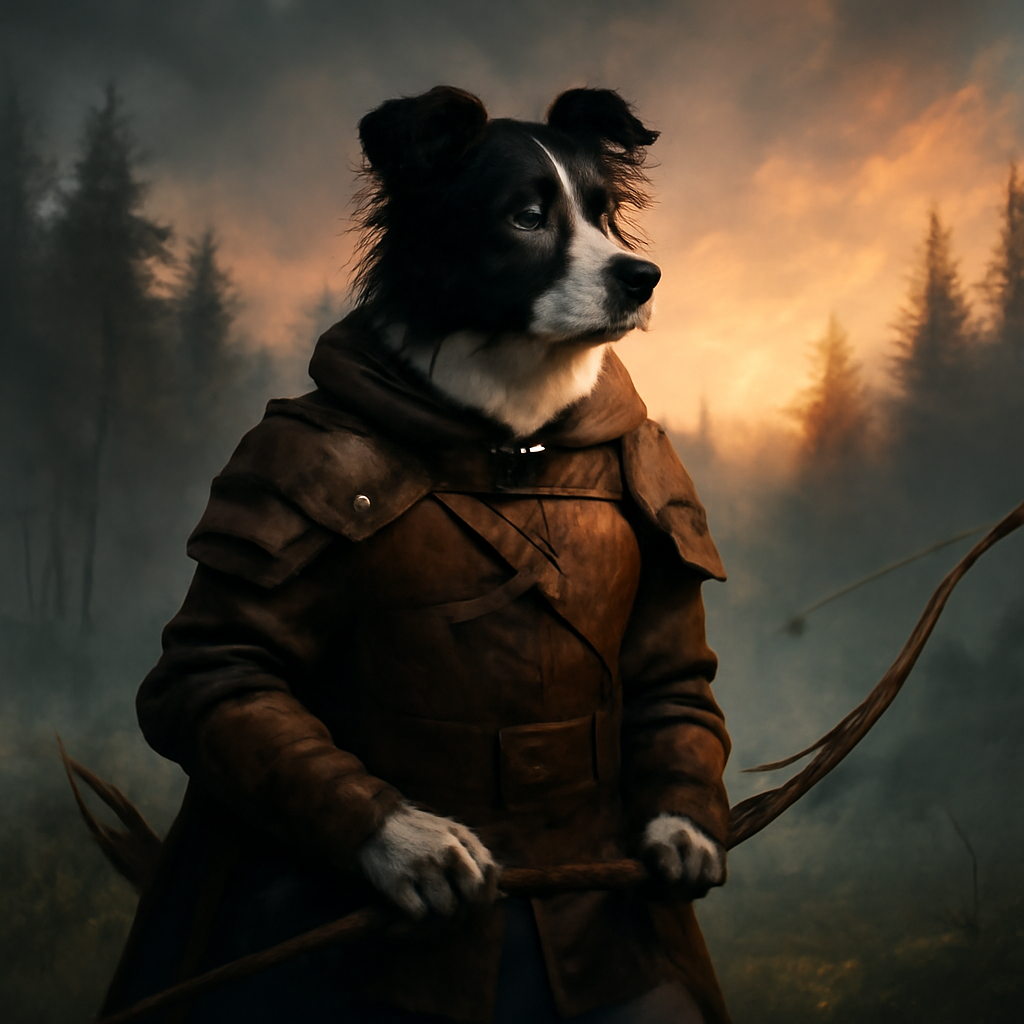
I spent an embarrassing amount of time last week trying to describe my border collie's eyes to my solo campaign journal. You know the look—that specific "I'm smarter than you and we both know it" stare that Pepper gives me when I'm ten minutes late with dinner. I wanted to capture that exact energy for a ranger NPC, but words weren't cutting it.
Then I remembered you can actually make a D&D character from a photo now. Not just generate a random fantasy portrait—I mean upload a picture of a real face and get back a character that genuinely looks like them. When I tried it with Pepper's photo, I got a Tabaxi ranger with her distinctive markings, that intelligent expression, and somehow even her skeptical eyebrow arch translated into the fantasy version.
It's become my new favorite way to build characters that feel real, because they're based on faces I already know and love.
The Problem With Generic Character Art
We've all been there. You spend two hours crafting the perfect backstory, getting the stats just right, figuring out personality quirks and character flaws. Then you google "half-elf rogue art" and scroll through seventeen pages of generic hooded figures that could be literally anyone.
Generic fantasy art is beautiful, sure. But it doesn't capture YOUR character. It doesn't have your best friend's crooked smile or your cat's judgmental stare or that one photo of your dad from the seventies that screams "warlock multiclass."
When you make a D&D character from a photo, you're starting with something specific. A real face. Real personality already baked in. The fantasy version becomes an echo of someone you know, which makes them infinitely easier to roleplay and remember.
How to Actually Do This
The technical answer is simpler than you'd think. Here's the basic process:
Step 1: Pick Your Photo
You want a clear, well-lit photo where you can see the face straight-on. Phone photos work fine—I've used everything from professional pet portraits to that one selfie from 2019 where the lighting accidentally made me look ethereal.
Best subjects:
- Pets (especially dogs and cats—they translate beautifully into Tabaxi, Lupine, or custom beast races)
- Friends who've given you permission (never surprise someone by making them a D&D character without asking first, that's weird)
- Yourself, if you want to play as a fantasy version of you
- Historical photos—I once made my grandmother's 1940s portrait into a glamorous elf bard
Step 2: Choose Your Fantasy Race
This is where it gets fun. That photo of your golden retriever? Could be a noble Leonin paladin. Could be a cheerful Lupine bard. The facial features stay recognizable, but the fantasy race changes everything about how they'll function in your world.
Think about personality first. My goat Biscuit has more charisma than any NPC I've ever rolled, so when I made him into a character, I went with a Satyr warlock. The horns were already there, and the "charming but will absolutely headbutt you" energy translated perfectly.
Step 3: Use a Tool That Actually Does This
You can't just throw a photo into a standard character generator and hope for the best. Most generators create random faces from scratch. What you need is something that actually analyzes your uploaded photo and builds a fantasy character that maintains those recognizable features.
Creature Forge AI's character generator does exactly this—you upload your photo, pick your race and class, and it generates a fantasy version that actually looks like your starting image. Face shape, expression, distinctive features, all translated into D&D art.
I'm not going to pretend there aren't other AI art tools out there, but most require you to describe what you want in text prompts. That's fine if you're starting from imagination, but terrible if you're trying to capture one specific face. The photo-upload feature solves that problem completely.
What You Get (And What to Do With It)
When you make a D&D character from a photo, you're not just getting art. You're getting a complete character sheet:
- Character portrait that actually resembles your photo subject
- Full 5e stats (ability scores, saving throws, skills)
- Starting equipment appropriate for their class
- Personality traits and backstory hooks you can customize
The backstory part surprised me. When I uploaded Pepper's photo and selected "ranger," the generator suggested she might be a scout who'd spent years tracking lost travelers through mountain passes. That wasn't in the photo—but somehow it fit the vibe perfectly. I kept some of it, changed other parts, and ended up with an NPC my solo campaign couldn't function without.
Farm Animals Make Incredible Characters
Growing up on a farm gave me an unfair advantage in character creation. Every animal you meet has distinct personality—chickens are paranoid rogues, horses are noble and occasionally dramatic paladins, goats are chaotic neutral and cannot be trusted with plot-critical information.
I've been making D&D characters from photos of our farm animals for months now, and it's changed how I think about NPCs completely. They're not random names in my notebook anymore. They're Biscuit the warlock goat, who made a pact because he was bored. They're Henrietta the chicken ranger, who's survived three fox attacks and has the scars to prove it. They're Copper the draft horse, a fighter who's patient until she isn't.
Each one started with a photo I took on my phone. Now they're part of my campaign world, with personalities I don't have to invent because I already know these animals. I know how Biscuit reacts when he's annoyed (he plots). I know Henrietta's suspicious of everyone (she's a chicken, it's genetic). That knowledge makes them easier to roleplay than any character I've ever tried to build from scratch.
The Specificity Advantage
Here's what I've learned: specific details make better characters. "A grumpy old fighter" is generic. "A grumpy old fighter with my grandfather's exact expression when someone suggests a shortcut" is a character I can hear in my head.
When you base a character on a real photo, you get those specific details automatically. The way someone's eyes crinkle. The set of their jaw. That one eyebrow that's slightly higher than the other. In fantasy form, these details become personality cues that make your character instantly recognizable and easier to play.
Tips for Better Results
After making way too many photo-based characters (my campaign world is 40% farm animals at this point), here's what actually works:
Photo Quality Matters
Use the best photo you have. Good lighting, clear focus, face visible. You're not going to get great results from that blurry concert photo from 2015, no matter how much you love it.
Expression Translates
If your pet looks skeptical in the photo, their character will too. If your friend is mid-laugh, you'll get a cheerful character. Pick a photo with the expression you want your character to have—that's part of their personality.
Don't Fight the Face
I tried to make my cat (round face, perpetually annoyed) into a wise and gentle cleric. It looked wrong. When I remade her as a wizard who's irritated by everyone's incompetence, it clicked immediately. Let the face tell you who the character should be.
Customize After Generation
The generated character is a starting point. Maybe they suggested your golden retriever is a paladin, but you know in your heart she's a barbarian who thinks she's a paladin. Change it. The art gives you the face—you give them the story.
Beyond Pets: Other Great Photo Sources
While I'm clearly obsessed with turning farm animals into NPCs, you can make a D&D character from a photo of literally anyone:
- Historical figures: That famous portrait of Ada Lovelace? Definitely an artificer.
- Renaissance paintings: Public domain art makes excellent source material for nobles and court NPCs.
- Your actual party: With permission, create fantasy versions of your real players as backup characters or in-world reputation portraits.
- Yourself at different ages: Child-you, teen-you, and current-you as three different adventurers in the same family.
Why This Actually Matters for Your Game
Look, you can run a perfectly good campaign with text descriptions and no art at all. I did it for years with just a notebook and dice. But there's something about seeing a character's face that makes them real in a different way.
When you make a D&D character from a photo—especially a photo of someone or something you know—you're building on existing emotional connection. You already care about that face. You already know that personality. The fantasy version inherits all of that, which means you're starting with depth instead of having to construct it from nothing.
For solo players especially, this is gold. You need NPCs who feel alive when you're the only person at the table. Basing them on real faces (even animal faces) gives them weight. When Pepper the ranger shows up in my campaign notes, I can hear her voice because I know the real dog. I know how she moves, how she thinks, when she'd be skeptical and when she'd trust someone.
That's not something you can fake with random generation. It's the difference between an NPC who exists on paper and one who feels like they're actually sitting across the table from you.
Try It Yourself
Next time you're building a character or NPC and you think, "I wish they looked like [specific person/pet]"—try it. Grab a photo, upload it to a character generator that actually handles photos, and see what happens.
Worst case, you get a funny fantasy portrait of your cat and a story to tell. Best case, you create a character who feels more real than anything you've ever tried to describe in text alone.
I've got three new NPCs this week, all based on chickens. One's a rogue, naturally. One's a warlock who made a pact with something she probably shouldn't have. The third is a barbarian, because if you've ever seen a broody hen defend her nest, you know exactly what I mean.
Your turn. Make a D&D character from a photo of whatever's sitting next to you right now. You might surprise yourself with who they become.