The Night I Almost Killed My Solo Character With Rats
I still remember my first solo campaign character — a cocky half-elf ranger who thought he was destined for greatness. I rolled up a random encounter in an abandoned barn: giant rats. Just rats, right? How hard could it be?
Turns out, very hard when you're level one, alone, and the rats get pack tactics. My ranger limped out of that barn with 2 hit points and a newfound respect for low level monsters. That night taught me something crucial: the creatures you throw at early-level parties aren't just speed bumps on the way to fighting dragons. They're the foundation of how players learn to think, strategize, and respect the world you're building.
Low level monsters deserve more credit than they get. They're not boring — they're essential. And picking the right ones makes the difference between a campaign that hooks your players and one where everyone dies to stirges in session two.
What Makes a Good Low Level Monster?
After years of solo play and plenty of dead characters, I've developed a few criteria for what makes a low level monster actually work at the table:
- Survivable but scary — It should threaten the party without one-shotting the wizard
- Teaches something — Combat tactics, environmental awareness, or creative thinking
- Has personality — Even a goblin can be memorable if you give it quirks
- Scales naturally — You can add more without breaking encounter math
- Makes narrative sense — Fits the world and the story you're telling
The sweet spot for truly low level play is CR 1/8 to CR 2, depending on party size and composition. Anything higher and you're risking a character death that feels cheap rather than earned.
My Go-To Low Level Monsters (And Why They Work)
Goblins: The Perfect Training Wheels
Goblins get a bad rap for being overused, but there's a reason they're the default starter enemy. They're smart enough to use tactics, weak enough that a good hit drops them, and cowardly enough to retreat or surrender. That last part is crucial — giving your party a chance to roleplay with a captured goblin teaches them that not every encounter ends with everyone dead on the floor.
Plus, goblins travel in packs naturally, so you can tune difficulty on the fly. Four goblins too easy? Next time there are six. And a hidden archer. And one riding a wolf.
Wolves: Nature's Perfect Encounter Design
I grew up around working dogs on our farm — border collies, mostly, who'd coordinate to move stubborn goats without any visible communication. Watching them work was like watching a tactical squad. Wolves in D&D capture that same feeling.
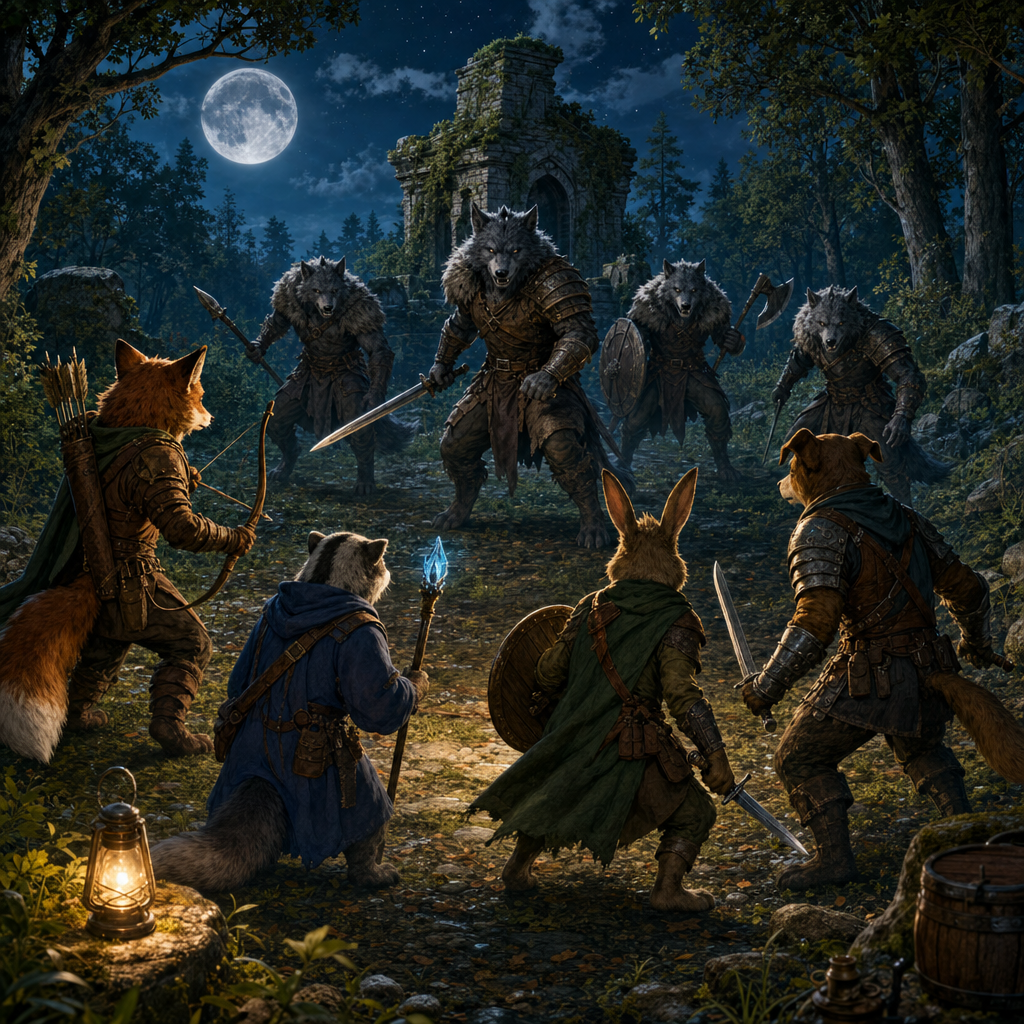
With pack tactics and a decent movement speed, wolves teach parties about positioning and focus fire. They're threatening enough to matter but not so deadly that one bad roll ends the session. And narratively? Everyone understands wolves. You don't need to explain why they're in the forest or why they're hunting the party.
Skeletons: The Thinking Player's Undead
Skeletons are my secret weapon for low level undead encounters. Unlike zombies, they're not damage sponges. Unlike shadows, they won't permanently drain your strength. They're just animated bones that used to be people, which opens up all kinds of storytelling possibilities.
I love using skeletons because they force parties to think about why they're fighting. These used to be farmers, soldiers, townsfolk. Smart players start asking questions. Who animated them? Why here? What were they guarding?
Giant Animals: When Regular Animals Aren't Quite Enough
Giant spiders, giant rats, giant frogs — the "giant" prefix is doing a lot of work in early D&D. These creatures hit that perfect balance where they're dangerous enough to threaten a level 1 party but still make narrative sense. Of course the abandoned mine has giant rats. Of course the swamp has giant frogs. The world feels consistent.
The giant spider in particular is a masterclass in low level encounter design. Web attack to restrain, climb speed for three-dimensional tactics, and just enough hit points that it doesn't drop to one magic missile. Plus, everyone's at least a little uncomfortable around spiders. Free atmosphere.
The Monsters I Avoid at Low Levels
Some creatures look fine on paper but turn into party-killers in practice:
- Shadows — Strength drain is brutal at level 1-2 and can effectively remove a character from multiple sessions
- Swarms — Resistance to weapon damage when the party has no area effects is just frustrating
- Intellect Devourers — I don't care what the CR says, body-snatching the wizard in session one is a war crime
- Any creature with multi-attack — At low levels, this often means "I hit you twice and you're unconscious"
Save these for when the party has actual resources to handle them. Your level 2 party will thank you.
Adding Personality Without Adding CR
Here's where low level monsters really shine: they're simple enough that you can layer personality on top without breaking anything mechanically. That goblin isn't just a goblin — he's Snik, and he's only here because his boss Grix promised him a magic sword. He doesn't want to fight. He wants to go home.
Suddenly your players aren't just rolling attack rolls. They're negotiating. They're problem-solving. They're learning that the world is more than a series of combat encounters.
I've been using Creature Forge AI's NPC generator lately to flesh out even my monster encounters. You wouldn't think a bandit needs a full personality, but when your party captures him instead of killing him, having actual motivations and quirks already written out saves you from having to improvise everything on the spot. The tool lets you add details that make even a basic thug feel like a real person — or in my case, helps me remember which goblin was which when my notes just say "goblin 3."
Scaling Encounters Up (Without Scaling Deadliness)
Sometimes your party breezes through an encounter you expected to be challenging. Happens to everyone. The trick with low level monsters is that you can adjust mid-fight without it feeling cheap:
- Reinforcements arrive from the next room
- One enemy flees and returns with help
- A hidden enemy (archer, caster, ambusher) reveals itself
- Environmental complications — fire spreads, roof collapses, alarm bells ring
The key is telegraphing. If goblin reinforcements arrive, the goblins should have been yelling for help. If the ceiling collapses, there should have been warning cracks and dust. Your party should feel like they could have prevented or anticipated the complication, not like you're punishing them for playing well.
When to Graduate Beyond Low Level Monsters
Around level 4-5, traditional low level monsters stop being interesting challenges. Goblins become nuisances. Wolves are speedbumps. This is natural and good — it shows your party they've grown in power.
But you don't have to abandon these creatures entirely. They just need context:
- A goblin clan led by a hobgoblin warlord
- Dire wolves, not regular wolves
- Skeletons animated by a necromancer who's actively controlling them
- Environmental dangers that make simple fights complex
The monsters become part of a larger threat rather than the threat themselves. That goblin scout isn't dangerous because of his stats — he's dangerous because if he escapes, he'll warn the fortress and your ambush plan falls apart.
Creating Your Own Low Level Threats
Not every campaign needs strictly by-the-book monsters. Some of my favorite early encounters have been homebrewed creatures that fit the specific story I'm telling. My border collie Murphy has more personality than most NPCs I've written — when I uploaded his photo to Creature Forge AI's character generator, the tool created a loyal scout character that actually looked like him, down to the mismatched ear flop. That character became a recurring ally in my solo campaign.
The same principle works for monsters. Take a real animal, adjust it slightly for your world, and suddenly you have something that feels fresh but still comprehensible. When creating custom low level monsters, I stick to these guidelines:
- Hit points between 10-30
- AC between 11-15
- One special ability at most
- Attack bonus no higher than +5
- Damage that averages 1d6+2 or less
Keep it simple. Complexity at low levels overwhelms players and bogs down combat.
The Real Purpose of Low Level Monsters
Here's what I've learned from all those solo campaigns and dead characters: low level monsters aren't about the stats. They're about teaching your players (and yourself) how to play the game you want to play.
Do you want tactical, miniatures-heavy combat? Use creatures with interesting positioning mechanics. Want roleplay-heavy sessions? Use intelligent creatures who can talk and negotiate. Want exploration and mystery? Use creatures that hint at larger threats and deeper stories.
Those giant rats in the barn weren't just trying to kill my ranger. They were showing me what kind of world I was building — dangerous, unforgiving, but ultimately fair. Every low level monster you choose is doing the same work, whether you realize it or not.
Building Better Early Adventures
The best low level encounters combine multiple elements. Not just goblins — goblins and wolves they've befriended. Not just spiders — spiders in a web-filled room where movement is difficult. Not just bandits — bandits defending something they believe in.
Layer your encounters with terrain, objectives, and consequences beyond "kill all the monsters." Maybe the goblins will surrender if their leader falls. Maybe the spiders flee if you destroy their egg sac. Maybe the bandits are desperate farmers pushed off their land by a corrupt noble.
Suddenly your low level monsters become entry points into the larger campaign. The world feels connected. Your players' choices matter. And that level 2 combat against basic enemies becomes a story they'll reference twenty sessions later.
Start Strong
Low level play sets expectations for everything that follows. Choose monsters that challenge your party's tactics, not just their hit points. Give even basic enemies personality and motivation. Scale difficulty through numbers and environment rather than inflated stats. And remember that a well-designed goblin encounter can be more memorable than a mediocre dragon fight.
If you're building encounters for a new campaign and want to skip straight to creatures with built-in personality and tactics, Creature Forge AI can generate fully-stated monsters balanced for any level, complete with lore and suggested tactics. It's saved me hours of work and eliminated those "wait, what's this creature's motivation again?" moments mid-session.
Your early-level party deserves monsters that do more than fill time between important fights. Give them creatures that teach, challenge, and surprise. Even if it's just rats in a barn.
Trust me, those rats will be more memorable than you think.
===IMAGEPROMPT=== A young adventuring party faces off against a pack of wolves in a moonlit forest clearing, weapons drawn but uncertain. The wolves circle cautiously, eyes gleaming, clearly dangerous but not overwhelming. The scene captures tension and possibility rather than doom — this is a winnable fight that matters.