Why Most Low Level D&D Encounters Fall Flat
I remember my first solo campaign. Late night, third cup of coffee, level 1 ranger tracking through a pine forest I'd sketched on graph paper. I rolled for a random encounter and got... wolves. Again. For the third session in a row.
Here's the truth about low level monsters D&D encounters: it's not that wolves or bandits are bad choices. It's that we default to them without thinking about what makes a level 1-3 encounter actually interesting. Your players are fragile as wet paper at this stage. Three good hits and someone's making death saves. But that doesn't mean the encounters should be forgettable.
After running dozens of early-level sessions — mostly solo, occasionally dragging friends into my basement — I've learned that the best low-level monsters aren't just mechanically appropriate. They've got personality, they create situations, and they make players feel clever when they win.
The Sweet Spot: CR 1/4 to CR 1
For a party of four level 1 characters, you're looking at creatures in the CR 1/4 to CR 1 range. Maybe one CR 2 if you're feeling spicy and you've got healing potions on deck. But raw numbers don't tell the whole story.
What matters is the encounter context. A single goblin in an open field? Boring. That same goblin with two friends, hidden in underbrush, with an escape route through a narrow ravine your fighter can't squeeze through? Now we're talking.
My Go-To Low Level Monsters
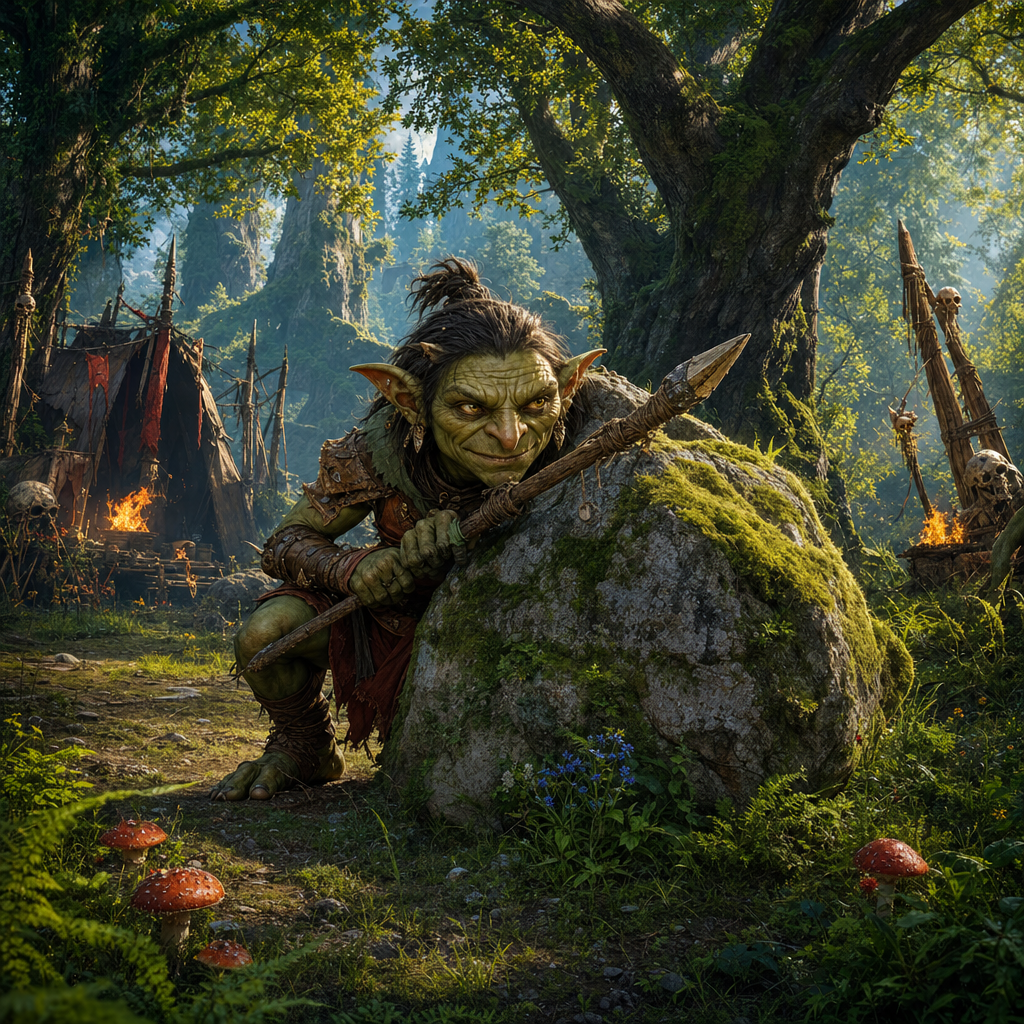
- Goblins (CR 1/4): The Swiss Army knife of low-level encounters. Cowardly, cunning, obsessed with shiny objects. Give them names. Make them bicker. Let one surrender and beg to join the party.
- Kobolds (CR 1/8): Even better than goblins if you use terrain. They're smart enough to set traps and dumb enough to spring them accidentally.
- Giant Rats (CR 1/8): Sounds generic until you describe them properly — dog-sized, dripping with sewer water, eyes reflecting torchlight. Put them in enclosed spaces where the barbarian can't swing properly.
- Stirges (CR 1/8): Flying mosquitoes that attach and drain blood. Terrifying to new players, satisfying to swat, and they create that "oh god get it off me" panic.
- Twig Blights (CR 1/8): Animated brambles that look like dead brush until they move. Perfect for that first "the forest is hostile" moment.
- Animated Armor (CR 1): A classic that never gets old. The clattering sound, the empty helmet turning toward you — pure D&D atmosphere.
- Cultists (CR 1/8): Humans are underrated at low levels. They talk, they plead, they can surrender and provide information. A hooded figure chanting in the dark hits different than another animal attack.
The Photo-Inspired Monster Trick
Here's something I started doing last year that changed everything: I take photos of real animals around the farm and build monsters from them. My border collie, Pepper, became a fey hound guardian. Biscuit the goat — who has more charisma than any NPC I've ever rolled — inspired a satyr trickster.
I discovered Creature Forge AI's monster generator lets you actually upload a photo and it builds the stat block around what it sees. I uploaded a picture of the barn owl that nests in our rafters, and it created this gorgeous owlbear variant with the same coloring and piercing stare. Suddenly my random forest encounter had a face I recognized, and it felt real in a way pure imagination sometimes doesn't.
For low-level parties, this is gold. You can take a photo of your cranky cat, turn it into a displacer beast kitten, and scale it down to CR 1/2. It's got the personality already built in.
Building Encounters With Consequences
The biggest mistake I see with low level monsters D&D encounters is treating them like speed bumps. Fight happens, monsters die, move on. But at level 1-3, your players don't have the resources to treat combat as casual.
Every Encounter Should Offer Choices
Before you roll initiative, ask yourself: can the players avoid this fight? Can they negotiate? Sneak past? Bribe? Set a trap instead of charging in?
I ran a session where the party encountered a giant spider (CR 1) in a cave. Instead of just "roll initiative," I described eggs in webbing behind it. The druid immediately understood — this was a mother protecting her nest. They backed out slowly, found another route, and felt brilliant for it. The spider never attacked, but the threat was there, real and tense.
Terrain Is Your Secret Weapon
A wolf in an open meadow is a CR 1/4 punching bag. That same wolf in thick fog, where it has advantage on attacks and players can barely see ten feet? Suddenly it's terrifying.
Low-level encounters work best when the environment matters:
- Narrow bridges: Only one character can engage at a time. Ranged attackers shine.
- Burning buildings: The kobolds are easy, but can you rescue the trapped NPCs before the roof collapses?
- Slippery ice: Movement becomes a puzzle. Dexterity saves matter.
- Dense forest: Vision limited. Ambush mechanics. Goblins hiding behind every tree.
- Rushing water: Cross the stream while stirges dive-bomb you. Fall in and you're swept downstream.
Personality Over Power
Biscuit taught me this. He's a goat. He eats everything, headbutts the fence when he wants attention, and once ate an entire page of my session notes. He's memorable because he does specific, weird things.
Your low-level monsters need that same energy. Don't just run "three bandits." Run:
- Jax the Tall, who's afraid of dogs and will flee if the ranger's companion growls
- Mae Shortknife, who keeps trying to convince the others to surrender
- Big Roderick, who's actually in charge and will negotiate if things go south
Give monsters quirks. A zombie that keeps dropping its own arm and picking it back up. A giant rat that's clearly someone's escaped familiar and has a tiny collar. A goblin who speaks broken Common and really, really wants to trade for the wizard's hat.
Scaling Difficulty Without Overwhelming
For level 1 parties, I follow this formula: one encounter should drain about 25-30% of the party's resources. That means spell slots, hit points, healing potions, and special abilities. If every fight is a near-death experience, players get anxious. If nothing challenges them, they get bored.
Signs You've Calibrated Right
- At least one character drops below half hit points
- Someone uses a class feature or spell they were saving
- The party discusses tactics during or after the fight
- Players feel relief when it's over, not frustration
Signs You've Gone Too Hard
- Multiple characters making death saves in the first encounter
- Players stop describing cool actions and just call out mechanics
- The mood shifts from fun tension to genuine stress
- Someone quietly starts reading the character creation rules again
My Favorite Low-Level Monster Combinations
Single monsters are fine, but smart pairings create memorable fights:
The Swarm: Eight giant rats (CR 1/8 each). Individually weak, collectively scary. Forces area damage and crowd control. Players feel awesome using Burning Hands or Thunderwave.
The Sniper Setup: Two goblins in melee, one goblin boss with a shortbow on high ground. Teaches players to control the battlefield and focus fire.
The Guardian: One animated armor (CR 1) protecting a sealed door. Simple, atmospheric, and lets you hint at greater threats beyond without overwhelming level 1s.
The Infestation: Six stirges in a dark cave. Low health but the "attach and drain" mechanic creates panic. Great for teaching action economy.
The Ambush: Four kobolds with pack tactics, hidden in thick brush. Demonstrates the importance of stealth, perception, and terrain awareness.
When to Break the CR Rules
Sometimes — occasionally — you want to show a level 1 party something truly dangerous. Not to fight. Just to see. To understand that the world has threats they can't handle yet.
I once had my solo ranger spot a young dragon (CR 4) in the distance while traveling. It didn't attack. It didn't even notice her. It was just there, massive and real, hunting something across a valley. That moment of "I am very small in this world" stayed with that character for the whole campaign.
The key: make escape obvious. Don't punish players for being smart enough to run.
Building Your Monster Roster
If you're prepping for a low-level campaign, I keep a "stable" of about 12-15 go-to creatures. I write up little personality notes for each, maybe sketch them or find art that fits my vision. Creature Forge AI's monster generator has become my shortcut for this — especially when I want something that looks like a specific animal or has a particular vibe.
Last month I needed a "forest guardian" type encounter for level 2s. I uploaded a photo from a hiking trip — this massive elk we'd seen at dawn, breath steaming in cold air. The generator built a fey elk creature with nature magic and protective instincts. Scaled to CR 1, it became this perfect "respect nature or else" encounter that the party still talks about.
Start Building Encounters That Matter
Low-level D&D doesn't have to mean low-stakes or boring fights. Your players are at their most vulnerable, yes, but also their most creative. They don't have the spell slots to nuke everything or the hit points to tank damage. They have to think.
Give them monsters worth thinking about. Creatures with personality, context, and consequences. Use terrain. Offer choices. Let them run when they need to and feel brilliant when they win.
And if you're stuck for ideas? Try this: grab a photo of your pet, your neighbor's weird chicken, that raccoon you saw last week. Upload it to Creature Forge AI and see what kind of low-level monster it becomes. I guarantee it'll be more interesting than your fifth pack of wolves.
Because the best low level monsters D&D has to offer aren't the ones from the book you've memorized. They're the ones your players will remember years from now, the ones that felt dangerous and real and alive. Build those. Your level 1 party deserves them.