Why Insect-Based D&D Races Deserve More Love
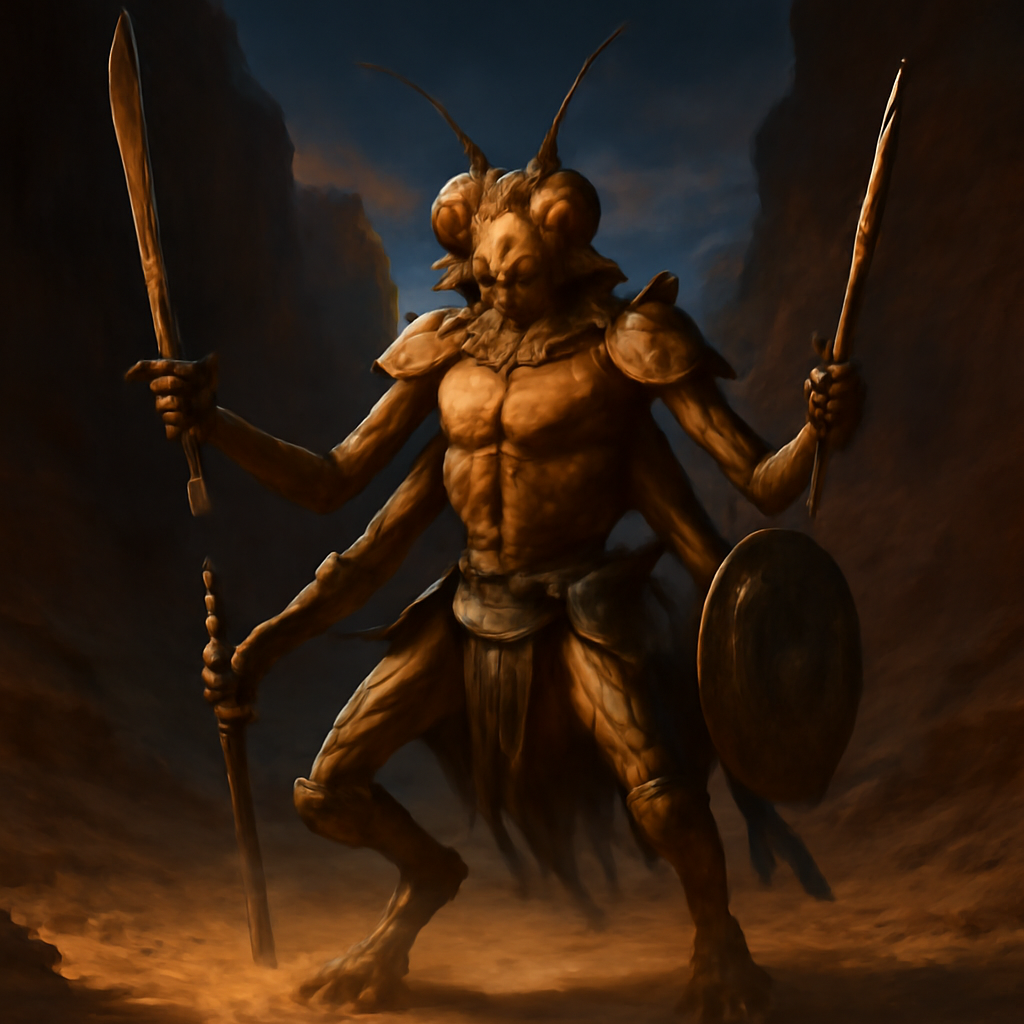
I'll be honest: for the longest time, I thought insect-based D&D races were weird. Too alien. Too hard to roleplay. Then I found a praying mantis in the barn one morning—perched on a fence post, absolutely still, watching me with those unblinking compound eyes—and something clicked. That perfect predatory patience. That otherworldly grace. I uploaded a photo to Creature Forge AI's character generator just to see what would happen, and ended up with a four-armed mantis monk that became my favorite solo campaign character for three months straight.
Insect-based D&D races aren't just novelty picks. They bring genuinely unique mechanics, fascinating roleplay opportunities, and a perspective that forces you to think differently about how characters move through the world. Whether you're playing official content like the Thri-kreen or homebrewing a beetle paladin, these chitinous adventurers add texture to your table that mammalian races simply can't match.
Official Insect Races: What's Already Out There
Fifth edition has given us a handful of official insect-based options, though they're scattered across various sourcebooks and often overlooked.
Thri-kreen (The Classic Choice)
The Thri-kreen are D&D's poster children for insect races—mantis-like humanoids with four arms, natural armor, and the ability to go without sleep. They showed up in Spelljammer: Adventures in Space and Dark Sun settings, and they're legitimately powerful. That extra set of arms means you can wield multiple weapons or hold a shield while casting spells. Their Chameleon Carapace gives you advantage on Stealth checks, and their sleepless trait means you're always alert during long rests.
Roleplay-wise, Thri-kreen come from cultures that don't sleep and communicate partly through pheromones. They think in terms of the hunt, the clutch, the hive. That's rich material if you lean into it—but it also means you need to decide how "alien" you want to play them. Are they fully integrated into humanoid society, or do they still think meat is best served raw and fresh?
Other Insect Options
While Thri-kreen are the most developed, other sources have hinted at insect possibilities. Some DMs allow reflavored races—playing a Locathah as a water beetle, for instance, or using Simic Hybrid to build a custom insect character with the right combination of traits. It's not quite the same as dedicated insect races, but it shows there's appetite for more arthropod representation at the table.
Homebrewing Your Own Insect-Based Races
This is where things get really fun. The insect kingdom offers thousands of templates, each with distinct abilities that translate beautifully into game mechanics. Here's how to approach building your own.
Start With Real Insect Traits
The best homebrew races feel grounded in something real. Look at what actual insects do:
- Beetles: Incredible strength relative to size, hard shells, some species can fly
- Ants: Colony coordination, pheromone communication, relentless workers
- Fireflies: Bioluminescence for signaling and attraction
- Butterflies/Moths: Metamorphosis, flight, some species are toxic
- Spiders: Web-spinning, wall-climbing, venomous bites (yes, I know they're arachnids, not insects—but they fit the aesthetic)
- Dragonflies: Incredible aerial mobility, 360-degree vision, ambush predators
Pick two or three defining traits and translate them into racial features. A beetle-folk might get +2 Strength, natural armor, and a limited fly speed. Ant-folk could have advantage on checks made to coordinate with allies or communicate silently. Keep it focused—you're not trying to replicate every trait, just capture the essence.
Balance Against Official Races
The trap with insect races is overloading them with "cool" abilities until they're overpowered. Use official races as your benchmark. Most give you:
- Two ability score increases (usually +2/+1)
- One or two ribbon abilities (flavor, minor utility)
- One solid mechanical feature (darkvision, a special attack, resistance to something)
Stick to that formula. If you're giving your firefly-folk a light-producing ability and flight, maybe dial back the ability score increases or make the flight limited (like Aarakocra before Monsters of the Multiverse).
Don't Forget the Weird
Insects are weird. They taste with their feet. They have exoskeletons that molt. Some of them eat their mates. You don't have to get that dark or specific, but lean into the alienness. Maybe your moth-folk are drawn to sources of magic like moths to flame. Maybe your beetle warriors can smell fear—literally, as a pheromone. These quirks make characters memorable.
Roleplay Tips for Insect Characters
Mechanics are easy compared to roleplay. How do you make an insect character feel genuinely different without falling into "I'm so random" territory?
Body Language Is Different
Insects don't smile. They don't raise eyebrows. Their body language involves antennae twitching, mandible clicking, wing buzzing. When your Thri-kreen is curious, describe their head tilting at an unnatural angle. When your beetle paladin is angry, maybe their wing casings rattle. Small details sell the concept.
Cultural Perspective Matters
Think about what it means to come from a hive or colony species. Individualism might be a learned behavior, not instinctive. Your ant-folk cleric might refer to themselves as "we" because they're used to thinking as part of a collective. Your dragonfly ranger might have trouble understanding why humanoids mate for life when dragonflies meet, reproduce, and part ways within hours.
On the flip side, not every insect race needs to be collectivist. Mantises are solitary hunters. So are many beetles. Use real insect behavior as a starting point, then decide where your character aligns or breaks from those patterns.
Play With Communication
Many insects communicate through pheromones, vibrations, or light patterns. Even if your character speaks Common, consider adding layers. Maybe they unconsciously release calming pheromones when they're trying to persuade someone. Maybe they tap their foot in a specific rhythm when they're nervous—not a conscious choice, just what their species does. These tics make interactions richer.
Turning Real Insects Into Characters
Here's something I've started doing lately: whenever I see an interesting insect—a luna moth on the porch light, a stag beetle my goat Biscuit was investigating, even the bumblebees working the clover—I snap a photo and run it through Creature Forge AI. The tool lets you upload actual images and generates a character that captures the look and feel of what you photographed.
That praying mantis from the barn became a way of the open hand monk with the patient defense feature maxed out. A bumblebee I photographed near the garden turned into a wild magic sorcerer—fuzzy, chaotic, and somehow both adorable and dangerous. The photo-upload feature is honestly the secret weapon here. You get a character that looks like the creature you're inspired by, complete with stat blocks and personality traits that actually make sense.
It's faster than homebrewing from scratch, and the results have that "official sourcebook" polish. I've used it for NPCs too—an ant merchant who deals in spices, a firefly bard who runs an underground tavern lit only by her own glow. The variety is endless, and you're not starting from a blank page.
Adventure Hooks for Insect Campaigns
Insect-based D&D races open up narrative possibilities that don't work as well with standard fantasy species. Consider:
- The Metamorphosis Quest: A butterfly-folk PC must complete a dangerous pilgrimage before they can undergo their final transformation into their adult form.
- Hive Mind Corruption: An ant colony's psychic network has been compromised by an aboleth. The party must sever the connection before the entire colony becomes thralls.
- The Swarm Treaty: Multiple insect kingdoms (beetles, ants, wasps) are negotiating peace after centuries of territorial war. The party serves as neutral mediators—or saboteurs.
- Molt Vulnerability: An NPC ally is about to molt their exoskeleton, leaving them defenseless for 24 hours. The party must protect them from assassins who know exactly when they'll be vulnerable.
These hooks play directly into insect biology and culture. They feel specific and grounded instead of generic.
Common Pitfalls to Avoid
I've seen insect characters go sideways in a few predictable ways. Here's what to watch for:
- Making them too monstrous: Yes, insects are alien, but your character still needs to function in a party. If they can't communicate or refuse to cooperate, that's not interesting—it's just disruptive.
- Forgetting they're people: Even if they have compound eyes and mandibles, they have hopes, fears, and personality. Don't let the novelty overshadow character development.
- Overexplaining the biology: You don't need to detail their digestive system or reproductive cycle unless it's genuinely relevant. A light touch goes further than a textbook.
- Ignoring setting integration: How does the world react to insect people? Are they common, rare, feared, respected? Make sure you and your DM are on the same page.
Why This Matters for Your Table
At the end of the day, insect-based D&D races do something important: they expand what "adventurer" can mean. Not every hero needs to be a human variant with slightly different ears. Not every party needs to look like a Renaissance fair.
There's something deeply satisfying about a party that includes a mantis monk, a dwarf fighter, a tiefling warlock, and a firefly bard. It signals that your world is big and strange and full of stories that don't fit the standard template. It gives players permission to get weird, to experiment, to bring something to the table they've never seen before.
And honestly? After months of running insect characters in solo campaigns, I can't imagine going back to all-mammal parties. There's too much richness here. Too much personality hiding under those exoskeletons.
Build Your Own Today
If you're curious about insect races but don't want to spend hours balancing homebrew stats, give Creature Forge AI a try. Upload a photo of any insect that catches your eye—a beetle, a butterfly, that weird bug you found under a rock—and let the generator build you a character that actually captures their look and essence. It's the fastest way I've found to go from "neat idea" to "fully playable character" without losing that spark of inspiration.
Your table deserves more than the same six races cycling through every campaign. Bring the chitinous, the compound-eyed, the beautifully alien to your next session. I promise: your goat will understand.