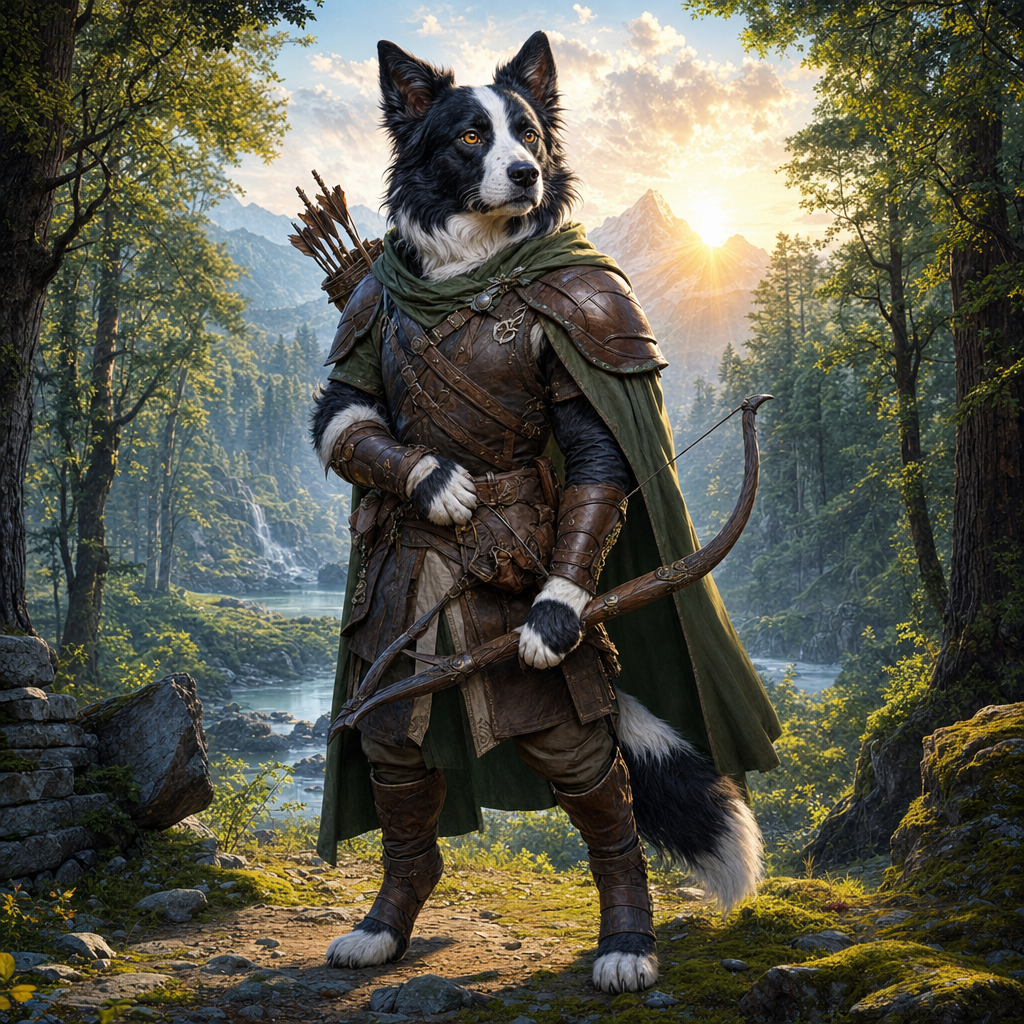
I've statted my border collie three times now. The first attempt was a ranger that didn't feel quite right. The second was a druid that came closer. The third time, I finally nailed it—and she became one of my favorite characters in a solo campaign that ran for six months. If you've ever looked at your pet and thought "they'd make an incredible D&D character," you're not alone. Learning how to stat your pet in D&D is part mechanics, part observation, and part love letter to the animal you know better than most people.
The truth is, your pets already have stats. You just haven't written them down yet.
Start With What You Know: Observation Over Optimization
Before you crack open the Player's Handbook, spend a day watching your pet. Not in a creepy way—just notice things. How do they move? What gets their attention? What are they afraid of? My dog Keeper could spot a rabbit from a hundred yards but would lose his mind if you moved a chair. High Wisdom, terrible Intelligence. That's a stat block right there.
Write down five traits:
- One physical strength (speed, agility, bite force, climbing ability)
- One personality quirk (stubborn, friendly, suspicious, playful)
- One skill they're genuinely good at (hunting, herding, finding things, guarding)
- One fear or weakness (loud noises, water, being alone)
- One thing that makes them unique (a scar, a habit, a specific behavior only you notice)
These become the foundation. The mechanics follow the character—never the other way around.
Pick the Right Class (It's Not Always Obvious)
Everyone assumes dogs are rangers or fighters. Cats are rogues. Horses are paladins. Sometimes that's true. Sometimes your cat is a warlock who made a pact with the entity behind the couch, and your guinea pig is a bard with inexplicable Charisma.
Think about how your pet approaches problems:
- Rangers: Trackers, hunters, animals that patrol and protect territory
- Rogues: Sneaky, curious, opportunistic—anything that steals food or hides under furniture
- Barbarians: High energy, emotion-driven, the ones who go zero to sixty when excited
- Druids: Intuitive, connected to routines and natural rhythms, gentle unless provoked
- Fighters: Loyal, brave, straightforward—no tricks, just heart and muscle
- Clerics: Caretakers, the ones who check on you when you're sad, protectors of the household
My goat Biscuit would have been a monk. She was small, impossibly fast, and could headbutt with surgical precision. Dexterity and Wisdom through the roof. Charisma of 6.
Multi-Classing for Complex Personalities
If your pet defies a single class, lean into it. A dog that guards the house but also gently leads lost animals back home? Fighter/Cleric. A cat that hunts with deadly efficiency but also performs elaborate rituals before eating? Ranger/Wizard. Don't force simplicity where it doesn't exist.
Assign Ability Scores That Feel True
Here's where people get too technical. You don't need point-buy perfection. You need scores that make you smile when you read them because they're so obviously correct.
Start with these questions:
- Strength: Can they physically overpower things? Move heavy objects? (A mastiff: yes. A parakeet: no.)
- Dexterity: Are they fast, nimble, coordinated? (Cats: obviously. Bulldogs: less so.)
- Constitution: Can they endure discomfort, cold, long days, minor injuries without complaint?
- Intelligence: Do they problem-solve or just bulldoze through life on instinct?
- Wisdom: Are they perceptive, aware, good at reading situations?
- Charisma: Do people/animals gravitate toward them, or do they create drama wherever they go?
My border collie had 16 Wisdom, 14 Dexterity, 12 Constitution, 10 Strength, 8 Intelligence, and 7 Charisma. She was brilliant at her job and terrible with strangers. Perfect.
Choose Skills and Proficiencies From Real Behavior
This is the fun part. What is your pet genuinely, objectively good at?
Real examples from animals I've known:
- Perception and Survival (any outdoor dog, most cats)
- Stealth (cats, small animals, anything that ambushes)
- Athletics (high-energy dogs, goats, horses)
- Intimidation (roosters, geese, any animal with unreasonable confidence)
- Performance (pets that do tricks, dramatic animals, attention-seekers)
- Animal Handling (dogs that calm other animals, horses that lead herds)
Pick three or four. If you're using standard D&D rules, that's about right for a level one character.
Personality and Alignment: The Soul of the Stat Block
Alignment gets a bad rap, but for pets it's perfect. Most animals are some flavor of Neutral—they're not philosophizing about good and evil, they're living in the moment. But the Good/Evil and Lawful/Chaotic axes? Those tell you everything.
Examples:
- Lawful Good: The dog that herds children away from danger
- Chaotic Good: The cat that brings you dead mice as gifts
- Neutral Good: The horse that tolerates everyone and causes no trouble
- Lawful Neutral: The dog that follows the same route every walk, no exceptions
- True Neutral: Most livestock, just vibing
- Chaotic Neutral: Any animal that knocks things off tables for fun
I've never met an evil pet, but I've met Chaotic Neutral roosters that came close.
Special Abilities: The Signature Moves
Every pet has one thing they do better than anyone expects. That's a special ability.
For my dog, it was "Uncanny Awareness." Once per short rest, she could automatically detect hidden creatures within 60 feet. In gameplay terms, it was a Wisdom saving throw she couldn't fail. In real life, it was her stopping dead on a trail because a deer was hiding in brush I couldn't even see.
Other ideas:
- Loyal Defender: Advantage on attacks against anyone who hurt an ally in the last round
- Escape Artist: Advantage on checks to escape grapples or restraints (perfect for cats)
- Infectious Energy: Allies within 10 feet gain +5 to movement speed (high-energy dogs)
- Stubborn Will: Advantage on saves against being frightened or charmed
Make it mechanically useful but emotionally true.
Use Tools That Do the Heavy Lifting
Here's the thing: you can do all this by hand, or you can use something like Creature Forge AI's character generator and actually see your pet as a fantasy hero. The tool lets you upload a photo of your real animal and generates a full character sheet with stats, abilities, and art that looks like them. I uploaded a picture of my border collie, selected "Ranger," added a few personality notes, and got back a character I'd have spent hours building manually.
It's not about skipping the creative work—it's about spending your time on the story instead of the math.
Playtest and Adjust
Run your pet character through a session. Solo play works great for this. Put them in situations and see if the stats feel right. If your cat rogue gets caught sneaking every time, bump their Stealth or Dexterity. If your dog barbarian feels too fragile, add HP or increase Constitution.
The goal isn't balance. It's recognition. You should be able to read the character sheet and think, "yes, that's exactly who they are."
Why This Matters
I know how this sounds. I know statting your pet in D&D seems like peak nerdy nonsense. But here's what actually happens: you end up with a character you care about in a way you don't care about randos from a table. You protect them harder. You make different choices. Their victories mean something.
And when you're playing solo at midnight with a cup of coffee and a notebook, and your dog-turned-ranger saves the day because you gave them the exact abilities your real dog has? That's magic. That's why we play.
If you've been thinking about turning your pet into a D&D character, stop thinking. Do it. Start with observation, build from what you know, and don't worry about perfection. Your pet is already extraordinary. All you're doing is writing it down.
Try Creature Forge AI if you want to see them come to life as actual fantasy art. Upload a photo, pick a class, and let the tool handle the details while you focus on the story. Your border collie deserves to be a hero. So does your cat, your horse, your inexplicably brave guinea pig. Make it happen.