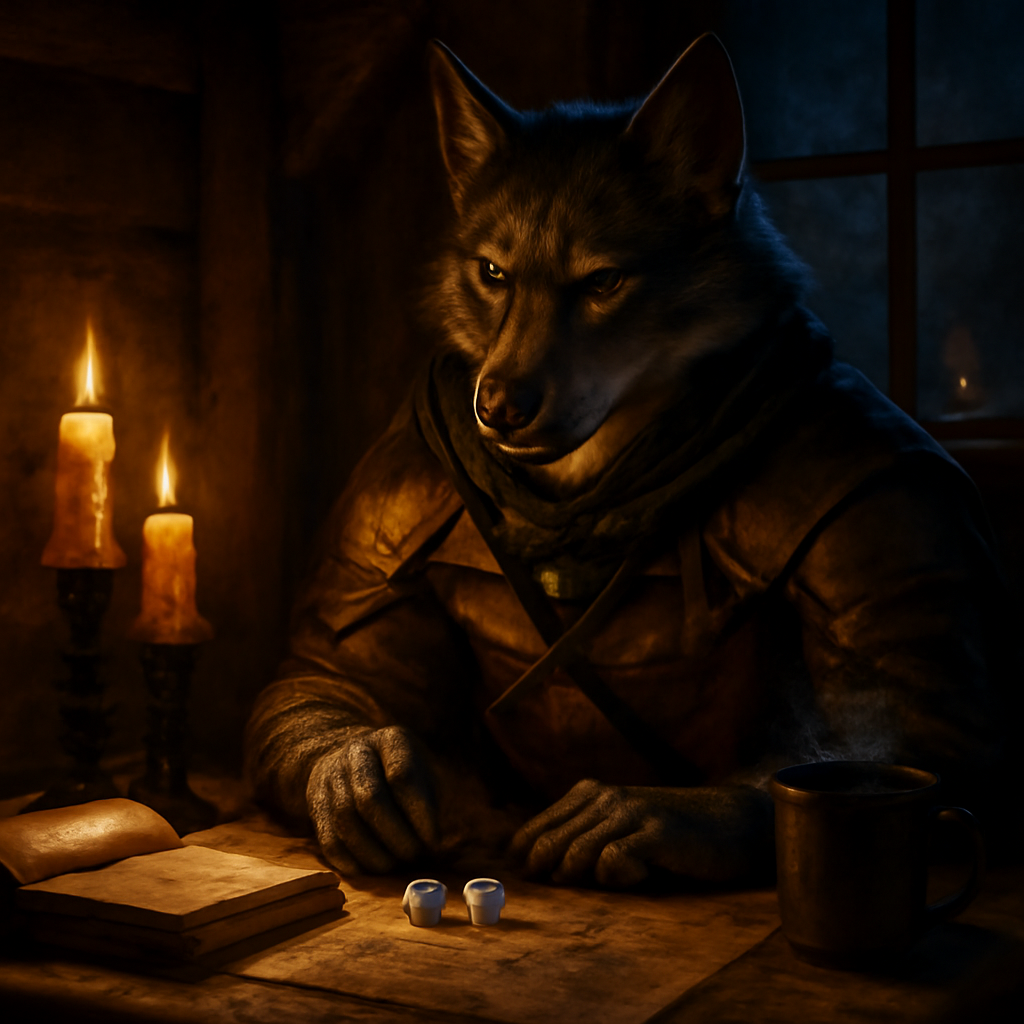
You Don't Need a Party to Play D&D
I discovered Dungeons & Dragons the way most people don't: alone, at 11 PM, sitting at my kitchen table after a long day of farm chores. No group. No dungeon master. Just me, a player's handbook I'd borrowed from the library, a set of dice I'd ordered online, and the quiet company of my border collie asleep under the table.
The idea that you need four friends, a dedicated DM, and weekly scheduling miracles to start playing D&D with no group is one of the biggest myths in tabletop gaming. The truth? Solo play is not only possible—it's one of the most rewarding ways to experience the game.
Here's everything I learned about how to start playing D&D when you're flying solo.
Why Solo D&D Actually Works
When I tell people I play D&D alone, they look at me like I just said I host dinner parties for my chickens. But solo play has real advantages:
- You play on your schedule. No coordinating five adults' calendars. If you want to play at midnight on a Tuesday, you play at midnight on a Tuesday.
- You control the pace. Spend three sessions in one tavern if you want. Skip the combat encounters you're not feeling. Linger on the parts you love.
- It's deeply personal. Your character's story becomes genuinely yours. Every choice matters because there's no party dynamic to dilute it.
- It builds your storytelling skills. You learn to think like both a player and a DM, which makes you better at group play when you eventually find one.
My first solo character was a ranger I modeled after my dog, Scout—loyal, perceptive, terrible at staying out of trouble. I spent weeks developing her backstory, her quirks, the way she'd react to different situations. That kind of deep character work is harder to achieve when you're splitting attention with four other players.
Start With Character Creation
The first step in how to start playing D&D with no group is the same as with a group: create a character you actually care about.
Don't stress about optimization or party balance. You're not filling a role. Pick a class that sounds fun, a race that sparks your imagination, and build a personality that feels real to you.
One thing that helped me: I uploaded a photo of Scout to Creature Forge AI's character generator. It created a Lupine ranger that actually looked like her—the same intelligent eyes, the same alert stance. Suddenly my character wasn't just stats on paper. She was real. Having that visual anchor made every decision I rolled for her feel more meaningful.
Keep It Simple at First
Use the basic rules available free from Wizards of the Coast. Don't overwhelm yourself with every supplement and sourcebook. Start with:
- A fighter, rogue, or cleric (straightforward mechanics)
- Human or dwarf (fewer special abilities to track)
- A simple backstory (orphan, soldier, wanderer—something flexible)
Complexity comes later. Right now you're just learning to walk.
Choose Your Solo Play Style
There are several ways to actually run a solo campaign. Here are the main approaches:
1. Solo Adventures and Modules
Published solo adventures exist specifically for one player, one character. They include decision trees, random encounter tables, and built-in DM guidance. Good options include:
- D&D Solo Adventure: Blizzard Pass
- Four Against Darkness (designed for solo/co-op play)
- Scarlet Heroes (adapts standard adventures for solo play)
These give you structure without requiring a DM. You read sections, make choices, roll dice, and follow the outcomes.
2. Oracle Systems and Mythic GME
This is what I use most. An oracle system like Mythic Game Master Emulator lets you ask yes/no questions and generates unexpected story twists. Instead of "the innkeeper is friendly," you roll to find out. Sometimes you get surprises—the innkeeper is too friendly and definitely hiding something.
It sounds weird until you try it. Then it feels like collaborative storytelling with your subconscious.
3. AI Dungeon Masters
Tools like AI Dungeon or ChatGPT can act as your DM, generating descriptions, NPCs, and plot developments on the fly. The quality varies—sometimes brilliant, sometimes nonsensical—but it's getting better constantly.
4. Journaling and Freeform Play
The simplest method: just play. Make decisions, roll for outcomes, write what happens. Use random tables from the DMG for encounters, treasure, and complications. This requires the most imagination but offers the most freedom.
My own campaigns are a mix—journaling with occasional oracle checks and random tables when I need inspiration. Some nights I generate an NPC using Creature Forge AI, especially when I need someone with a distinct personality fast. Last week I needed a suspicious merchant and got a perfectly sketchy Kenku trader with trust issues. Saved me twenty minutes of brainstorming.
Set Up Your Solo Play Space
This matters more than you'd think. Create a small ritual that signals "game time." For me, it's:
- A specific notebook (graph paper, leather cover—it feels important)
- My dice set in a wooden bowl
- Coffee in my "adventure mug" (yes, I have one)
- Instrumental music (no lyrics to distract)
- Phone on silent
You're teaching your brain that this time and space are for imagination. Small details help.
Your First Session: Keep It Small
Don't start with "save the world from ancient evil." Start with:
- Your character arrives in a small town
- They need money/supplies/information
- They hear about a local problem (missing livestock, haunted mill, bandits on the road)
- They investigate
That's it. A simple hook, a contained problem, a chance to roll some dice and see what happens.
My first session with Scout the ranger: she arrived in a village, overheard that something was killing chickens at night, offered to help. I spent two hours tracking clues, rolling perception checks, and ultimately discovering a juvenile owlbear (which I'd randomly generated) that was just hungry and confused, not evil. Scout managed to lure it back to the forest with food instead of fighting it.
It was small. It was simple. It felt real.
Combat and Challenges Solo
Yes, you can run combat alone. Here's how:
Use fewer enemies (1-2 instead of 4-5). Run them simply—monsters do the obvious tactical thing, not complex strategies. Use average damage instead of rolling for every attack to speed things up.
For ability checks and saves, set DCs ahead of time or use the standard ones from the rulebook. Don't fudge rolls. If you fail, you fail. That's where interesting stories come from.
The owlbear encounter? Scout failed her initial Animal Handling check. The owlbear charged. She barely survived the first hit. Had to completely change tactics. That failure made the eventual success matter.
Keeping the Story Moving
The hardest part of solo D&D is maintaining momentum. Here's what helps:
- End sessions on a decision point. "Do you follow the suspicious merchant or investigate the old temple?" You'll be eager to return.
- Use random tables liberally. When you're stuck, roll for a complication, an NPC reaction, or a random encounter. Let the dice decide.
- Keep a campaign log. Bullet points of what happened. You'll forget details faster than you think.
- Embrace weird outcomes. If the dice tell a strange story, follow it. That's where magic happens.
Tools That Actually Help
You don't need much, but these tools make solo play easier:
- Donjon generators (dungeons, towns, NPCs—all free)
- Notion or Obsidian (for organizing your campaign notes)
- Creature Forge AI (when you need monsters or characters fast, especially if you want visuals that feel personal)
- Fantasy name generators (because coming up with names on the spot is harder than you think)
- A random table collection (search "OSR random tables" for hundreds)
When You're Ready to Expand
Solo play doesn't mean staying solo forever. It's often a gateway. Once you've played alone for a while, you:
- Understand the rules better
- Know what kind of game you enjoy
- Have confidence to join an online group or local game store session
- Might even feel ready to DM for others
I still play solo most of the time. But I also joined a monthly online game, and I DM'd my first one-shot last month for three friends who were curious. None of that would have happened without those late nights at my kitchen table, just me and Scout and a handful of dice.
Start Tonight
You don't need permission, a group, or perfect conditions to start playing D&D. You need a character, some dice, and a willingness to see where the story goes.
If you're stuck on character creation or want something that feels real and personal, try uploading a photo of your pet or even yourself to Creature Forge AI. There's something powerful about seeing your companion or your own face transformed into a fantasy adventurer. It makes the game feel less like pretend and more like possibility.
The game is waiting. The only group you need is the one in your imagination.
Roll for initiative.