You're Not Just a Human With Ears
The first time I tried to roleplay a beastfolk character, I made the classic mistake: I played a tabaxi rogue exactly like a human rogue who happened to have fur. She moved like a person. She thought like a person. She reacted to danger, food, and strangers with perfectly human logic.
It wasn't until I started paying attention to the barn cats on my family's farm—the way they'd freeze mid-step at a distant sound, the way they'd rub their faces on fence posts to mark territory, the way they'd bring me half-dead mice like trophies—that I realized I was missing the entire point of playing a beastfolk character. These characters aren't cosmetic choices. They're opportunities to explore a different lens on the world.
If you want to know how to roleplay a beastfolk character with real depth and personality, you need to start with the animal, not the stat block.
Start With Instincts, Not Logic
Humans are logic-driven. We see a dark hallway, we think "that might be dangerous," and we proceed cautiously with reasoned caution. Animals? They react. A predator character might feel their hackles rise, a prey species might freeze or bolt before conscious thought kicks in.
This doesn't mean your beastfolk character is stupid or irrational. It means their first response comes from somewhere older than words. A lupine character hears a howl in the distance and feels compelled to answer before they even decide if it's strategic. A rabbitfolk notices an exit in every room automatically. A bear-folk gets irritable when they're hungry in a way that's more than just "I'd like lunch"—it's a physical discomfort that colors every interaction.
Practical Instinct Examples
- Predator species (cats, wolves, eagles): Track movement with your eyes. Notice the weakest member of a group. Feel satisfaction from a successful hunt or ambush, even in non-combat situations.
- Prey species (rabbits, deer, mice): Check exits. Startle at sudden noises. Trust your gut when something feels wrong—you're literally built to detect threats.
- Scavengers (ravens, raccoons, hyenas): Notice shiny objects. Feel drawn to investigate strange things. Comfortable with death and decay in ways others aren't.
- Herd/pack animals: Uneasy when alone. Protective of your group to an irrational degree. Seek hierarchy and structure instinctively.
Senses Shape Your World
This is where roleplaying a beastfolk character gets really fun. Your senses aren't just mechanical bonuses—they're how you experience the game world.
A character with a strong sense of smell doesn't just "detect enemies nearby." They smell the blacksmith's coal-smoke on the suspicious merchant's cloak. They know their companions by scent as much as sight. They find the tavern's stew nauseating because they can smell every individual ingredient, including the questionable meat.
I once played a solo campaign with a lupine ranger who tracked a kidnapped child through a crowded city entirely by scent. I described how she had to filter through layers—yesterday's fish market, this morning's bread deliveries, the sharp tang of fear-sweat. It turned a simple skill check into storytelling.
Playing Different Senses
- Smell: Describe characters and places by their scent. Recognize people in darkness. Feel overwhelmed in perfume shops or cities.
- Hearing: React to sounds others miss. Find loud taverns physically painful. Navigate in darkness by echolocation or sound-mapping.
- Night vision: Describe how torches and daylight are too much, how you prefer dusk, how you see in shades of gray and silver.
- Keen sight: Notice facial expressions from across a room. Track flying birds. Read lips.
Body Language Isn't Human
Humans smile to show friendliness. We nod. We shake hands. Your beastfolk character? They might express the same emotions completely differently.
A catfolk character shows affection by slowly blinking at someone. They might head-bump a trusted companion. When they're angry, their tail lashes—but when they're hunting or focused, it goes completely still. A dog-folk character wags when happy but also when nervous or uncertain. A bird-folk might fluff their feathers when proud or threatened, preen when content.
I had a goat named Biscuit growing up who'd stand on his hind legs and challenge you head-on if he thought you had food. That weird, pushy confidence? I gave it to a satyr NPC in one of my games, and suddenly he felt real—not threatening, just unapologetically himself, demanding attention with his whole body.
Non-Human Communication
- Describe ear positions: forward (interested), back (angry/scared), swiveling (alert)
- Tail language: high (confident), low (uncertain), bushy (frightened), wagging (varies by species)
- Posture: crouching before pouncing, circling before sitting, exposing throat/belly as trust
- Grooming behavior: licking a wound, preening feathers, scratching with a back leg
- Scent-marking: rubbing against doorways, people, objects to claim them
Food, Sleep, and Comfort
Beastfolk characters don't have human comfort needs. A catfolk might nap a dozen times a day in sunbeams—and be genuinely grumpy without them. A bear-folk eats huge meals and then doesn't want food for hours. A rabbitfolk might actually need to eat small amounts constantly and gets anxious if they can't.
One of my favorite character quirks was a tabaxi wizard who'd stop mid-conversation to groom herself if she got nervous. It was her self-soothing behavior. Other characters learned that if she started licking her paw, she was processing something difficult.
Think about:
- What food appeals to your species? (Raw vs. cooked, meat vs. plants, prey vs. carrion)
- How do you sleep? (Curled up, in high places, in a den, in a pile with others)
- What makes you comfortable? (Warmth, darkness, grooming, the sound of others breathing)
- What's irritating? (Wrong temperature, unfamiliar smells, lack of personal space/too much space)
Personality, Not Stereotype
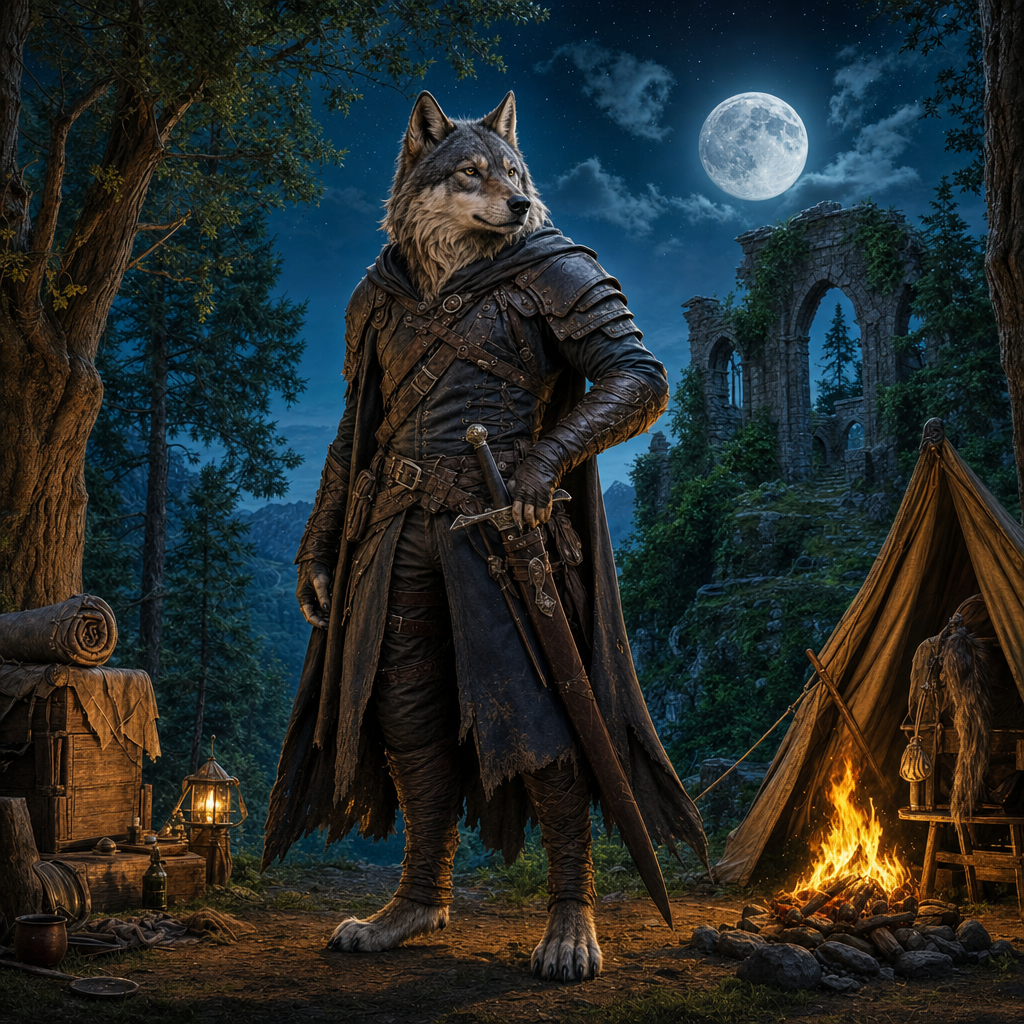
Here's the thing: just because you're playing a wolf-folk doesn't mean you have to be a brooding loner. You can play a cheerful, optimistic lupine who loves meeting new people. The instincts are there—the pack loyalty, the howl response, the nose-first worldview—but personality is individual.
I've known barn cats that acted like dogs: friendly, loyal, following you everywhere. I've known dogs that acted like cats: aloof, independent, only affectionate on their own terms. Real animals have personalities that don't always match their species stereotype. Your character should too.
The trick is to know the baseline (what's typical for your species) and then decide where your specific character diverges. A rabbitfolk who's not skittish is interesting because we expect them to be—and they have to actively work against their own instincts. That's drama. That's character development.
Use Your Character's Animal as Inspiration
If you're stuck on how to make your beastfolk character feel real, spend time with the actual animal (if possible) or watch videos of them. Not cute compilations—watch hunting behavior, social behavior, how they move through space, how they react to threats.
Better yet? If you've got a pet or a photo of an animal you love, Creature Forge AI lets you upload that photo and generate a D&D character that actually looks like them. I uploaded a picture of my border collie Mix once, just to see what would happen, and got back this intense herding-dog ranger with the same intelligent, focused eyes. It was uncanny—and it gave me so many ideas for how to play her. That herding instinct became protective strategy. Her need to keep the group together became a personality trait. Her energy level explained why she always volunteered for watch.
Starting with a real animal's face and build makes the character feel grounded. You're not inventing from scratch—you're translating something that already exists into fantasy.
Small Moments Matter
The best beastfolk roleplay happens in the small, unplanned moments:
- Your catfolk stretches—really stretches, back arched, claws out—after a long rest
- Your rabbitfolk thumps a foot when nervous
- Your corvid-folk collects shiny coins even when the party's trying to be practical about loot
- Your wolf-folk howls at the moon without thinking, then looks embarrassed
- Your bear-folk gets genuinely grumpy in winter and wants to just... stop for a few months
These aren't mechanical advantages. They're character. They make your beastfolk feel like a person shaped by their animal nature, not a human wearing a costume.
Let the Character Surprise You
One thing I've learned from solo play: the best characters are the ones who do things you didn't plan. You set up the instincts, the senses, the body language—and then you let them react naturally. Your timid rabbitfolk might surprise everyone (including you) by standing their ground when a friend is threatened. Your proud leonin might show unexpected gentleness with a child.
The animal foundation gives you tools. The personality gives you choices. The roleplay happens when those two things interact in the moment.
Tools to Bring Your Beastfolk to Life
If you want to skip straight to a fully-realized character—complete with art, stats, and personality that fits—Creature Forge AI builds beastfolk characters fast. You can describe what you want, or upload a photo of a real animal (or person, or weird pet) and watch it turn into something playable. I've used it for one-shots, for NPCs, for that "I need a backup character by tomorrow" panic. It's especially good at capturing specific breeds and features—like the difference between a sleek catfolk based on a Siamese vs. a scrappy tabby.
The point isn't to replace your creativity. It's to give you a foundation so you can focus on the roleplay—the stuff that makes your beastfolk character memorable at the table.
You've Got This
Learning how to roleplay a beastfolk character is less about rules and more about observation. Watch animals. Think about how senses and instincts shape experience. Give your character body language that isn't human. Let them be individuals with personalities, not stereotypes.
And when in doubt? Ask yourself: what would this animal do? Then let your character make the choice—humanoid hands, humanoid intelligence, but with that animal heart beating underneath.
Your table will feel the difference. I promise.