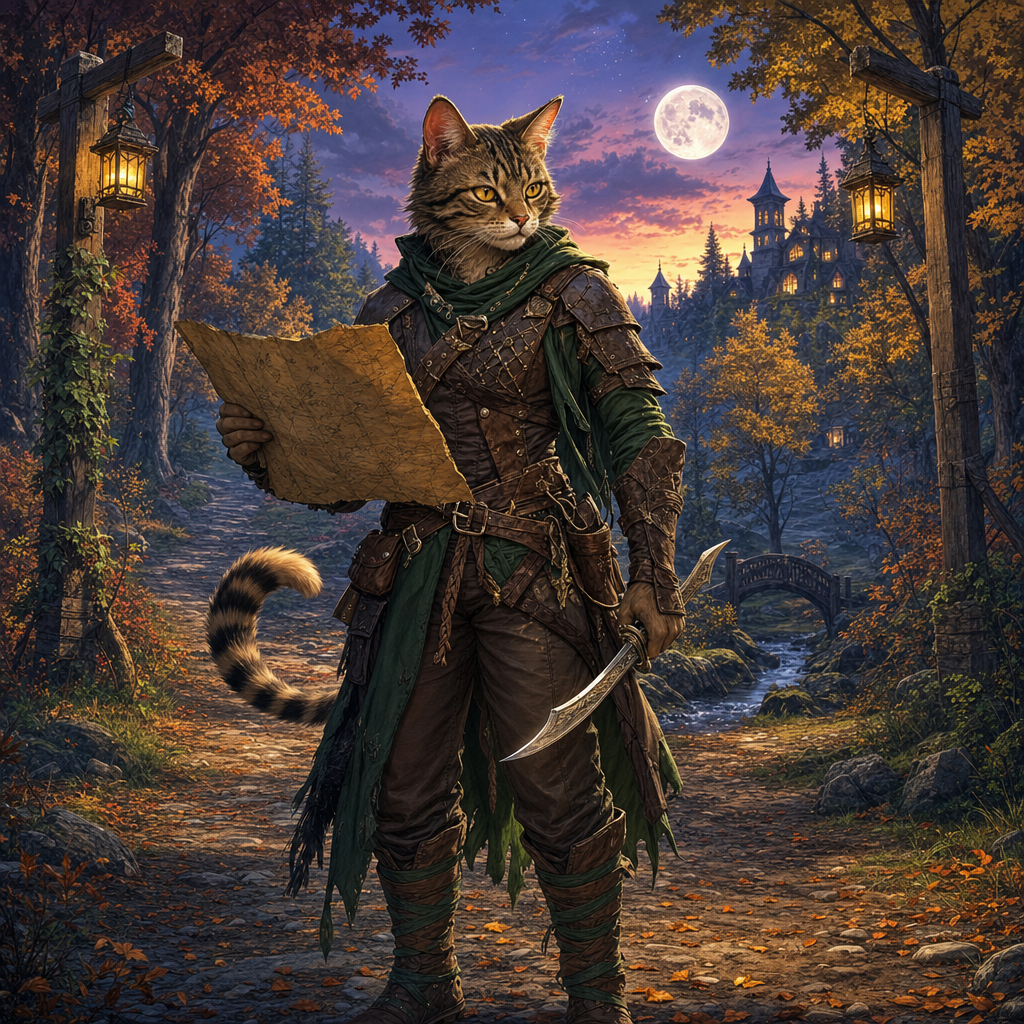
I'll be honest: the first time I tried to play a non-human character in D&D, I panicked. I'd rolled up this kenku ranger—loved the concept on paper—but the second we started playing, I realized I had no idea what I was doing. How does a bird person think? Do they tilt their head when confused? Can they laugh, or just mimic laughter? I spent the entire first session second-guessing every choice.
If you've ever stared at a dragonborn, tabaxi, or aaracokra character sheet and wondered how to actually play a non-human character in D&D without it feeling forced or fake, you're not alone. The good news? It's way more approachable than it seems once you stop overthinking it.
Start With One Core Trait (Not a Costume)
Here's where most people go wrong: they treat their non-human character like a human wearing a costume. They think "dragonborn" and immediately start doing a growly voice and describing every action as FIERCE and DRACONIC. That gets exhausting fast—for you and everyone at the table.
Instead, pick one core trait that feels natural to you and let that anchor the character. Not a gimmick. Not a voice. A trait.
- For a tabaxi: Maybe they're constantly distracted by shiny objects or movement. Not in an annoying way—just a consistent, subtle detail.
- For a dragonborn: Maybe they value honor and directness above all else. They don't lie, they don't hint—they say what they mean.
- For a kenku: Maybe they collect phrases from people they admire and repeat them in moments of stress, like a verbal comfort blanket.
- For an aaracokra: Maybe they're deeply uncomfortable in enclosed spaces and always position themselves near exits or windows.
You're not trying to become the creature. You're finding one thread that makes them feel distinct without requiring you to perform every second.
Ground Them in Specific Sensory Details
Non-human characters experience the world differently, and that's where the magic happens. You don't need to describe every sensation—just pepper in a few specific ones that remind everyone (including you) that this character isn't human.
When I finally figured out my kenku ranger, I started describing the world through sound. Not constantly—just once or twice a session. "I hear the creak of the floorboard before I see the guard." "The wind through the canyon sounds like a warning." It made the character feel real without me having to squawk every five minutes.
Sensory Hooks by Race:
- Tabaxi: Describe texture (rough stone, soft fabric), reflexes (ears swiveling toward sound), or the urge to stretch after sitting too long.
- Dragonborn: Temperature. They might feel the cold more acutely, or relish the heat of a forge. Mention how their breath smells faintly of their draconic ancestry.
- Aaracokra: Wind direction, air currents, the claustrophobia of low ceilings. They might perch instead of sit.
- Tortle: Weight. They're slow but steady. Describe the deliberate way they move, the comfort of retreating into their shell.
- Lizardfolk: Practicality. They see the world in terms of utility and survival—no sentimentality, just function.
You don't need all of these every session. Just one or two moments where you remind the table—and yourself—that this character's perspective is different.
Don't Ignore Their Culture (But Don't Let It Define Them)
Every non-human race in D&D comes with cultural baggage. Dragonborn have clans. Tabaxi are wanderers. Kenku are cursed. It's tempting to either lean hard into that lore or ignore it completely.
The sweet spot? Acknowledge it, then complicate it.
Maybe your dragonborn does care about honor—but they define it differently than their clan does, which is why they left. Maybe your tabaxi is curious and restless—but they're starting to realize that constant wandering is actually running away from something.
Give your character a relationship with their culture. Not a rejection. Not blind adherence. A relationship. That's where interesting characters live.
Use Physicality (Even at a Virtual Table)
You don't need to method-act, but small physical gestures can make a huge difference—even over Discord or Roll20. Tilt your head when your aaracokra is confused. Narrow your eyes when your tabaxi spots something interesting. Sit up straighter when your dragonborn is making a formal declaration.
I had a player once who played a bugbear, and whenever the bugbear was thinking, the player would slowly scratch their jaw. It was subtle, but it made the character feel present in a way that pure dialogue never could.
Let Other Characters React
One underrated trick: let NPCs and other PCs remind the table that your character isn't human. You don't have to do all the work yourself.
If you're playing a dragonborn, the bartender might instinctively take a half-step back when you approach. If you're a tabaxi, a shopkeeper might nervously watch their shelves. If you're a kenku, people might get unsettled when you mimic their voice perfectly.
Talk to your DM about this. It's a small thing, but it reinforces your character's non-humanness without you having to constantly announce it.
Create Real Stakes in Your Backstory
Here's where a lot of non-human characters fall flat: their backstory is just lore. "I'm a dragonborn from the northern clans." Okay. So what?
Make it personal. Make it hurt.
- Your dragonborn's clan exiled them—not for a crime, but for showing mercy. Now they're caught between two definitions of honor.
- Your tabaxi made a promise to someone they loved, and wandering the world is the only way they know to keep it.
- Your kenku's curse feels like a prison, and they're obsessed with finding their original voice—even though they have no idea what it sounded like.
Non-human doesn't mean alien. It means different angle on the same human emotions. Guilt. Loss. Hope. Revenge. Ground your character in something real, and the scales or feathers become window dressing.
Tools to Help You Build Non-Human Characters
If you're staring at a blank character sheet and need a creative jumpstart, there are tools that can help. I've had good luck with Creature Forge AI's character generator—you can upload a photo of a pet or even a person and it'll build a full fantasy character that actually looks like them. I uploaded a picture of my border collie once, just messing around, and it came back with this scrappy tabaxi scout with the same alert eyes and twitchy energy. Gave me a whole personality to work from.
And if you're hunting for a unique character concept or just stuck in creative quicksand, try the Monster Mashup tool. It's completely free, needs no sign-in, and doesn't use AI—it's a pure random roller that combines real animals (living and extinct) into hybrid creature ideas. Hit the button a few times and you'll get combinations like "Mantis + Thylacine" or "Octopus + Bison" that can spark a totally original character concept. It's the kind of thing that breaks you out of "I guess I'll play another elf" mode.
My Kenku Finally Clicked
That kenku ranger I mentioned earlier? The one I panicked over? I figured him out eventually. I stopped trying to perform bird and started thinking about what it would actually feel like to have no voice of your own. To only be able to echo others.
So I made him a collector. He'd hear a phrase he liked—something brave, something kind, something true—and he'd save it. Then, in the right moment, he'd give it back. Not mockery. A gift. It turned the curse into something almost tender.
The other players loved it. And I stopped dreading his turns.
Final Thoughts: You're Not Trying to Be Perfect
Here's the thing about playing a non-human character in D&D: you're not auditioning for a nature documentary. You're playing a game with friends. The goal isn't biological accuracy or lore-perfect roleplay. The goal is to create a character who feels distinct and interesting without exhausting yourself in the process.
Pick one anchor trait. Add a few sensory details. Give them real emotional stakes. Let the table help you. That's it. The rest will come.
And if you're still stuck? Go roll up something weird in Creature Forge AI and see where it takes you. Sometimes the best characters come from the concepts you'd never think of on your own.
Now go play that dragonborn. They're waiting.