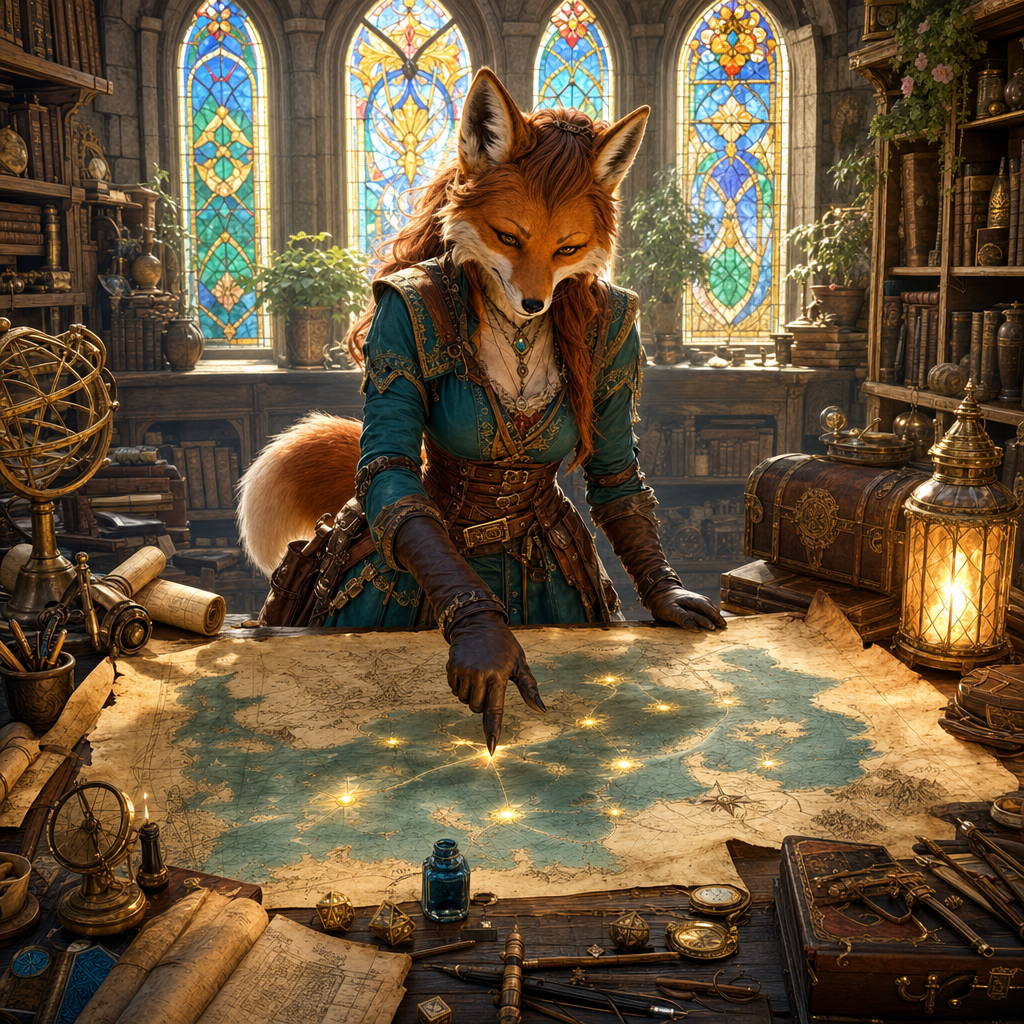
I'll be honest: I've named more fantasy cities than I care to admit while sitting at my kitchen table at midnight, half a pot of coffee gone, desperately trying to finish a map before my next solo session. And for years, I did it wrong. I'd slap together syllables that sounded vaguely fantasy-ish—"Kaldremor" or "Thysselwyn"—and call it a day. Then I'd forget the name by next week.
Learning how to name a fantasy city properly changed everything. Not because I became some linguistic genius, but because I started thinking about cities as places instead of just words on a map. Once you understand that, naming becomes less about creativity and more about storytelling.
Start With What the City Actually Is
Before you worry about syllables or language roots, ask yourself: what is this place? Not metaphorically—literally. Is it a mining town clinging to a mountainside? A river port where three trade routes meet? A fortress city that's never fallen?
The best fantasy city names grow from geography, history, or function. Real cities do this constantly. York was a Roman fort. Lancaster was a fort on the River Lune. Detroit is French for "the strait." Fantasy cities work the same way.
Here's what to consider:
- Location features: rivers, mountains, forests, coastlines
- What it produces or trades: grain, iron, salt, magical reagents
- Its founding story: who built it and why
- Who lives there now: predominantly human? Multiracial? A Dwarven enclave?
When I was building a city for my solo campaign last year, I started with function: it was a waystation where mountain traders met plains caravans. I literally wrote "crossing place" in my notes. That became "Crosshaven," which became "Crosfen" after I remembered the region had marshes. Functional, simple, memorable.
Use Real-World Linguistic Patterns
You don't need to invent a constructed language to name a fantasy city convincingly. You just need to borrow patterns from real ones. English place names alone give you a treasure trove:
- -ton, -town: settlement (Riverton, Shadowtown)
- -ford: river crossing (Stagford, Ironford)
- -ham, -holm: homestead or island (Oakenham, Mistholm)
- -bury, -borough: fortified place (Thornbury, Ravenborough)
- -by, -wick: farm or village (Ashby, Saltwick)
- -mere, -lake: body of water (Deepmere, Silverlake)
These suffixes tell you what a place is. Combine them with a descriptive word—color, animal, resource, founder's name—and you've got an instant city that sounds real.
Other languages offer different flavors. Spanish and Italian endings (-ora, -ina, -anza) create flowing, romantic names. Germanic compounds (Eisenberg, Schwarzwald) sound strong and grounded. Welsh patterns with double consonants (Llanfair, Dolgellau) feel ancient and magical.
Mix and Match for Flavor
Don't be afraid to blend linguistic roots in a single region. Real geography does this—especially in places with layered history. Your Elvish city might have a Dwarven name because they conquered it centuries ago. Your human port might use Halfling words because that's who settled it first.
This isn't sloppy worldbuilding. It's realistic worldbuilding. Languages collide, borrow, and evolve. Let your city names show that history.
Three Practical Naming Methods
When you're actually sitting down to name cities, here are three approaches that work:
1. The Compound Method
Take two simple words that describe the place and combine them. This is how you get names like Whiterun, Redwater, Blackmarsh. It's straightforward, memorable, and immediately tells players something about the location.
Formula: [Descriptor] + [Place Type]
Examples: Goldmeadow, Stonekeep, Crowshaven, Brightwater, Thornwall
2. The Historical Method
Name it after a person, event, or legend. Kings, founders, battles, saints, ancient creatures—anything that gives it narrative weight.
Formula: [Proper Name] + [Suffix]
Examples: Aldric's Ford (became Aldford), Mara's Rest (became Mararest), Dragonfall, Queenscross
3. The Translation Method
Decide what the city would be called in Common, then run it through a linguistic filter. "Freehold" becomes "Vrijhaven" with Dutch influence. "New Port" becomes "Portonuevo" with Spanish. "Winterhome" becomes "Vinterhjem" with Norse.
This works especially well for non-human cities. Decide what the city means, then make it sound Elvish, Dwarvish, or Orcish by adjusting the phonetics.
What to Avoid
Some naming choices will trip you up. I learned this the hard way after creating "Khy'zaroth" for a city I could never remember how to spell or pronounce:
- Apostrophes and excessive consonants: They look cool on paper. They're murder at the table. "Khy'zaroth" became "that K city" in my notes.
- Names that are too similar: Don't put Alderton, Aldermere, and Aldwick on the same map. Your players will mix them up constantly.
- Meanings that contradict the setting: Don't name your desert trading post "Greenwater" unless there's a very good reason it's called that despite the irony.
- Unpronounceable combinations: If you can't say it out loud easily, your players won't either. Test every name by speaking it.
Make It Sound Like People Live There
Here's the thing about how to name a fantasy city that I wish I'd understood earlier: cities aren't named by fantasy authors. They're named by people who live in them. Farmers. Traders. Soldiers. Folks who shorten everything because they're busy.
That means your cities should have nicknames, abbreviations, and local slang. The official name might be "Port Meridian," but everyone calls it "the Port" or "Meri." Your players will do this naturally anyway—lean into it. Give them the formal name and the casual one.
This is where character comes in. I've been using Creature Forge AI's NPC generator lately to populate my cities with locals, and it's helped me think about names from the ground up. When you're creating an innkeeper or a city guard, you start imagining how they'd actually refer to their home. That street vendor isn't saying "Welcome to Thornborough-upon-Wyvern." She's saying "Welcome to Thornborough" or just "the Thorn."
Let the Name Grow With the City
Cities change. They get conquered, renamed, rebuilt. Their original meaning gets forgotten or twisted. This is worldbuilding gold.
Maybe your city was "Ravenwatch" when it was a border fortress, but now it's a peaceful trade hub and everyone calls it "the Watch." Maybe "Kingsford" was named for a long-dead king, but locals have corrupted it to "Kinford" over centuries. Maybe the Elvish name is "Taer Lómin," but humans can't pronounce it so they call it "Tailorman" and now that's on all the maps.
These layers make places feel real. They show time passing. They give your players something to discover.
A Personal Example
I grew up on a farm where we named everything—animals, fields, equipment, that one stubborn gate that never latched right. We had a goat named Biscuit who had more personality than some PCs I've played. When I started building fantasy cities, I brought that same practicality. I stopped trying to sound impressive and started naming things the way actual people would.
One of my favorite cities started as "the wet crossing" in my notes because the ford was always muddy. That became Wetford, which felt too on-the-nose, so I aged it: Whetford. Like someone had mumbled it for three generations until the original meaning blurred. Now when players ask about the name, I tell them scholars argue about it. Some say it's from "whetstone" because of the river rocks. Others say it's a corruption of "wheat ford" from when grain barges crossed there. Nobody knows for sure—just like real etymology.
That uncertainty makes it feel alive.
Tools and Resources
Sometimes you need inspiration or a starting point. Here's what helps:
- Real-world atlases: Flip through maps of medieval England, Norway, Spain, Japan. Notice patterns. Borrow shamelessly.
- Fantasy name generators: Use them for components, not final names. Take the first half of one result and the second half of another.
- Historical placename databases: Search "etymology of English placenames" and you'll find lists showing exactly how real names were built.
- Your own campaign notes: Look at what you've already named. Keep the same linguistic flavor for the region.
And honestly? Sometimes the best tool is just walking away. I've solved more naming problems doing barn chores than sitting at my desk. Your brain keeps working on it while you're occupied with something else.
Test It at the Table
The ultimate test of a city name is whether your players remember it. If you say "You arrive in Thornhaven" and three sessions later they refer to it as "that place with the inn," the name didn't stick. If they start using it naturally—"Should we head back to Thornhaven?" or "I want to send a letter to my contact in Thornhaven"—you nailed it.
Pay attention to which names land and which don't. You'll start noticing patterns in what works for your table. Some groups love elaborate Elvish names. Others want punchy two-syllable towns they can remember instantly. Adjust accordingly.
Bring Your Cities to Life
Learning how to name a fantasy city is really about learning to see cities as living places with histories, people, and reasons for existing. The name should be the tip of that iceberg—the part that shows above water while everything else gives it weight.
Whether you're running a published campaign or building a world from scratch, taking time to name your cities thoughtfully pays off. Players notice. They remember. They start caring about places instead of just passing through them.
And if you want those cities filled with memorable characters who feel just as real? I've been having a blast with Creature Forge AI's character generator. You can even upload photos—I turned my border collie into a Lupine ranger for my solo campaign, and it's absurdly perfect. The tool builds complete stat blocks, personality traits, and backstories that fit right into your world.
Give your cities good names. Fill them with interesting people. Watch your players fall in love with your world, one memorable location at a time.