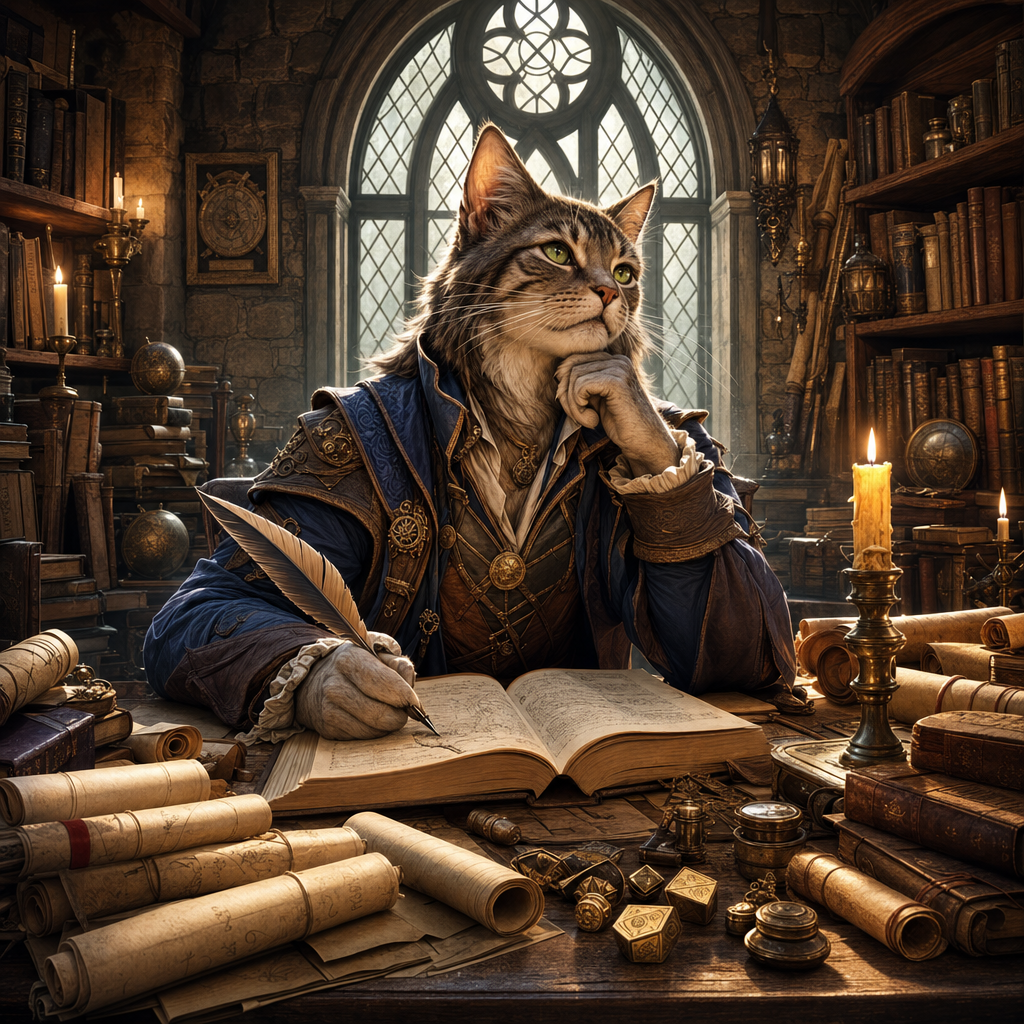
The Blank Character Sheet Stare
I've been there more times than I'd like to admit. Stats rolled, class picked, backstory sketched out in my notebook—and then I hit the name field and freeze. How do you name a D&D character in a way that feels right? Something that doesn't sound like you just mashed your keyboard or borrowed from the nearest fantasy novel?
Last year, I was building a ranger for a solo campaign I'd been planning for weeks. Everything was ready except the name. I sat at my kitchen table past midnight, coffee going cold, cycling through name generators until they all blurred together. Finally, I glanced out the window at my old border collie Thistle sleeping on the porch, and it clicked—Thistle Thornwhisper. A ranger who moved quietly through the woods, sharp when needed, loyal to a fault. The name fit because it came from somewhere real.
That's the secret, really. The best character names don't come from trying too hard. They come from knowing your character first, then finding the name that already fits them.
Start With Your Character's Core
Before you even think about syllables or fantasy phonetics, answer these three questions:
- What's their role? A sneaky halfling rogue needs a different name than a towering dragonborn paladin.
- Where are they from? A character raised in a desert trade city won't have the same naming conventions as one from a frozen northern clan.
- What's their vibe? Serious and brooding? Playful and chaotic? Your name should hint at personality.
I built a cleric once—quiet, thoughtful, always three steps behind the party because she was examining moss. I named her Moss. Just Moss. It wasn't fancy, but it was her. Sometimes simple is exactly right.
The Sound Matters More Than You Think
Say the name out loud. Does it feel awkward in your mouth? Does it sound like your character? Hard consonants (K, T, G) feel sharp and strong—good for warriors and rogues. Softer sounds (L, M, S) flow better for casters, healers, diplomats.
Compare: Krak Ironjaw versus Selene Moonwhisper. You immediately know which one's swinging a greataxe and which one's casting moonbeam.
Steal From Your Own Life (Seriously)
This is my go-to trick, and it's never let me down. Look around your actual life for inspiration:
- Pets. I've turned three dogs, two cats, and one extremely stubborn goat named Biscuit into D&D characters. Biscuit became a dwarven cleric with more charisma than sense. It worked perfectly.
- Places. Street names, towns you've visited, landmarks near where you grew up. My ranger's last name—Thornwhisper—came from a hiking trail back home called Whispering Thorns.
- People. Not full names (that gets weird), but first names of people you knew growing up, teachers, distant relatives. Twist them slightly. My great-aunt Coraline became Corenna, a half-elf bard with a sharp tongue and a soft heart.
The beauty of this approach? The name already means something to you. It carries weight without effort. And if you really want to bring a character to life, you can even upload a photo of a real person or pet to Creature Forge AI and generate a full fantasy character that actually looks like them—complete with stats, abilities, and artwork. I did this with my old cat Pepper, and seeing her transformed into a sleek tabaxi rogue was ridiculously satisfying.
Cultural Hooks: Let the World Name Them
D&D's built-in cultures have naming conventions baked right into the Player's Handbook. Use them. They're there for a reason.
Quick Cultural Naming Guide
- Dwarves: Solid, earthy, clan-focused. First name + clan name (Thorin Ironfist, Baela Stoneheart).
- Elves: Flowing, melodic, nature-inspired. Often two parts that sound poetic together (Aelindor, Miravelle, Thalion).
- Halflings: Warm, friendly, often doubled sounds or nickname-like (Bilbo, Rosie, Pippin). They feel like people you'd meet at a farmer's market.
- Orcs: Guttural, short, punchy. Heavy on consonants (Grok, Thrakka, Urzog).
- Tieflings: Virtue names or infernal-sounding names. Either dramatic concepts (Hope, Sorrow, Vengeance) or dark and exotic (Malice, Scorn, Zariel).
Don't ignore these patterns. They give your character instant context. A dwarf named Silverleaf is going to raise eyebrows—maybe that's interesting, maybe it's confusing. Know the rules before you break them.
When Generators Actually Help
Look, I've burned hours in name generators. Most are forgettable. But they're useful for one specific thing: sound combinations you wouldn't think of yourself.
Here's how I use them without falling into the random-gibberish trap:
- Generate 20-30 names quickly.
- Scan for interesting parts—a prefix you like, a suffix that sounds right.
- Frankenstein your favorite pieces together.
- Adjust until it feels like a real name, not a random string.
I found "Kaelith" in a generator once, but it felt too sharp for my character—a gentle firbolg druid. I softened it to Kaeleth, and suddenly it fit. One letter made all the difference.
The Two-Name Balance
If you're stuck between two names you like, combine them or use one as a first name and one as a nickname. A character named Edric "Ash" Thornwell has built-in flavor—you can imagine how he got that nickname, and it gives other players something easy to call him in the heat of a battle.
Names With Built-In Story
The best character names hint at backstory without explaining it. They make the DM curious.
- Contradictions: A massive goliath barbarian named Whisper. A tiny gnome fighter called Titan. The contrast is instant intrigue.
- Titles earned: Names like "the Burned," "Farsight," or "Oathkeeper" suggest a history. What happened? Players will ask.
- Lost names: A character who doesn't remember their real name and goes by something circumstantial—Stray, Ember, Scar. Built-in mystery.
I played a warlock once who only went by Carrion. No last name, no explanation. Just Carrion. It made every NPC uncomfortable, which was exactly the vibe I wanted. The name did half the roleplay work for me.
Test It at the Table
Here's the real test: imagine your DM saying the name out loud a hundred times over the next six months. Does it still sound good? Is it easy to say? Will your party shorten it to a nickname anyway?
If your character's name is Thorzilanthranomaxus, I promise you, they're going to be "Thor" by session two. Maybe just start with Thor.
Also—and I learned this the hard way—avoid names that sound too much like other players' characters. I once played in a group with Kellen, Kellan, and Kylan. Combat was a nightmare. "Kellen, you're up!" "Which one?" Every. Single. Round.
When the Name Comes Last
Sometimes you need to play a session or two before the right name clicks. That's fine. Start with a placeholder—something simple and functional—and let the character grow into their real name. I've had characters go three sessions as "the ranger" before a moment in-game made their name obvious.
A rogue in one of my solo campaigns spent two weeks as "Red" (she had red hair, I'm not fancy) until she crept through a burning building to save a kid and came out covered in soot and ash. After that, she was Cinder. The name earned itself.
Your Character, Your Name
Here's the thing I always come back to: there's no wrong way to name a D&D character as long as it feels right to you. The name should make you excited to play them. It should fit in your mouth comfortably and make you smile when you write it at the top of your character sheet.
My goat Biscuit has more charisma than most NPCs I've ever written, and naming a cleric after him made me love that character in a way a "proper" fantasy name never would have. If you're stuck, look around. Use what's real. Twist it into something magical.
And if you want to skip the guesswork entirely and see your character fully realized—backstory, stats, and artwork that actually captures who they are—try Creature Forge AI. Upload a photo, describe your concept, and let it build something that feels like yours. I've used it for every character I've made in the last year, and it's changed how I prep for games. The names it suggests are solid, but more than that, seeing the character visualized makes the name feel right.
Now stop staring at that blank name field and go play. Your half-orc bard with a heart of gold and a terrible singing voice is waiting.