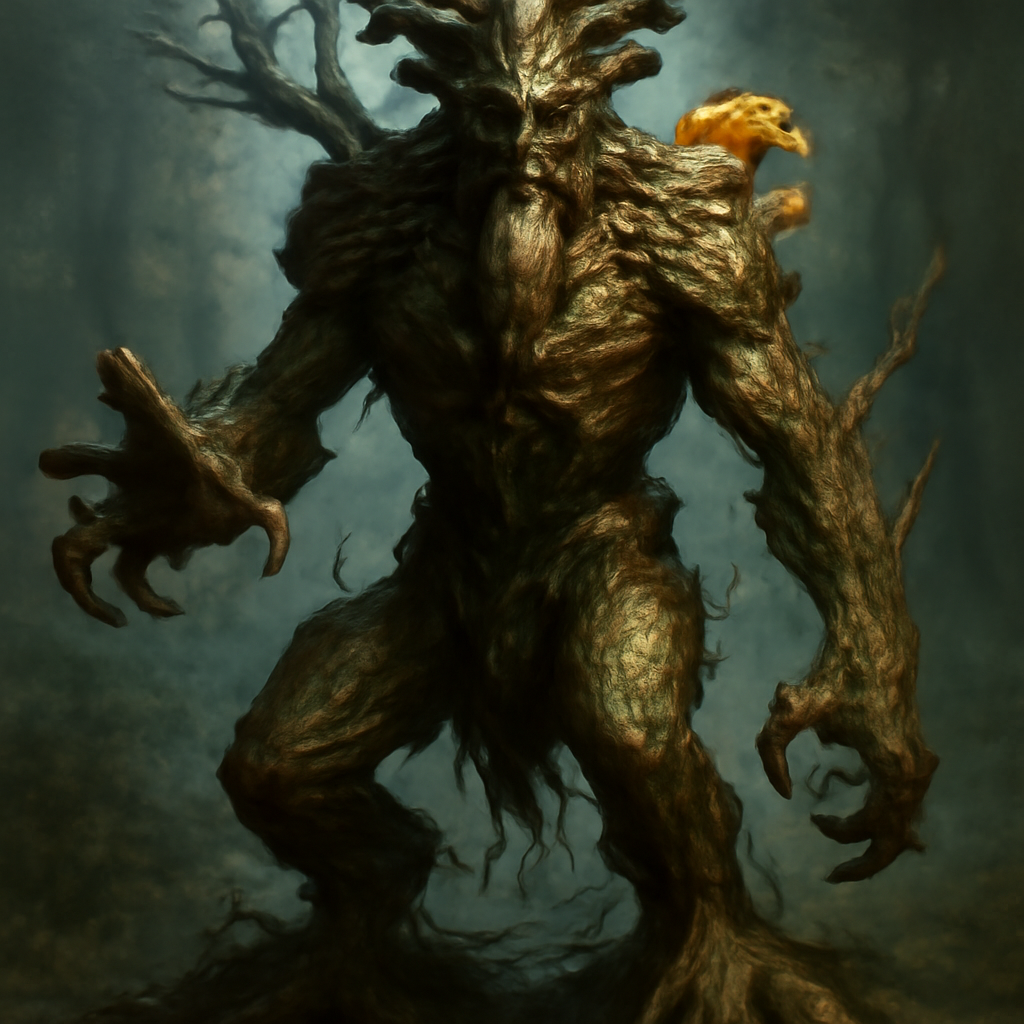
Why Plant Creatures Hit Different
I'll be honest: the first time I tried to make a plant creature in D&D, I just reskinned a zombie and called it a "vine walker." It shuffled. It groaned. It had all the personality of wet compost. My solo session that night lasted about fifteen minutes before I closed my notebook and went to check on the chickens.
Plant creatures deserve better than that. They're not just mobile terrain or discount undead. When you learn how to make a plant creature in D&D that feels genuinely alive—weird, alien, purposeful—you tap into something primal. These things photosynthesize. They don't have blood. They might not even have brains in the way we understand them. That's the fun part.
Start With Biology (Yes, Really)
Before you touch a stat block, ask yourself: what does this thing actually do in its ecosystem? Not in combat. In life.
Real plants are hunters, parasites, symbionts, and architects. Venus flytraps digest insects. Strangler figs choke out host trees. Mycorrhizal fungi trade nutrients with tree roots in underground networks. Your plant creature should have a job in the world that informs everything else.
Three Ecological Roles to Build From
- The Guardian: Protects a sacred grove, ancient ruin, or magical ley line. Territorial, patient, almost architectural. Think treants or awakened shrubs with actual stakes.
- The Parasite: Spreads through hosts—animals, humanoids, other plants. Creeping vines, spore infections, seedpod implantation. Deeply unsettling when played right.
- The Symbiont: Lives in balance with another species. Maybe it protects pixies who pollinate it, or it feeds on the dreams of sleeping creatures without killing them. Strange bargains make for memorable encounters.
Once you know its ecological niche, the mechanics almost write themselves.
Core Abilities That Feel Botanical
Generic "slam" attacks are boring. Your plant creature should fight like a plant. Here are the abilities I return to again and again when building botanical threats:
Photosynthetic Regeneration
This one's a no-brainer. In bright light (especially sunlight), the creature regains hit points at the start of its turn. Maybe 5 HP per turn for a CR 3-5 creature, scaling up from there. Suddenly your players are thinking tactically about light sources, enclosed spaces, and time of day. I once ran a thorn guardian that my solo character had to drag into a cave to actually kill. Made the fight twice as interesting.
Root Network Awareness
If the creature is connected to roots or fungal mycelium, it can sense vibrations through the ground within 60 feet. It can't be surprised by creatures touching the earth. Tremorsense is the mechanical term, but flavor it as a living alarm system. Players learn real fast to watch where they step.
Spore Burst (Recharge 5-6)
On its turn, the creature releases a cloud of spores in a 15-foot radius. Constitution saving throw (DC based on CR). On a fail, targets are poisoned until the end of their next turn, or they take poison damage, or (and this is the fun one) they're infected with a slow-growing seed that will sprout unless removed with lesser restoration. Spores give you so many narrative hooks.
Thorn Volley or Vine Lash
Ranged attacks for plant creatures feel right. Thorns launched like darts (1d6 piercing + 1d4 poison). Vines that grapple at range (contested Athletics/Acrobatics check, 10-foot reach). The key is making them feel different from arrows or tentacles. Thorns lodge in armor. Vines constrict slowly. Describe the sensation.
False Appearance
While motionless, the creature is indistinguishable from a normal plant. This is straight from the official shambling mound and awakened shrub stat blocks, and it's brilliant. Ambush predators. Living traps. The rogue reaches for what looks like a healing herb and the "herb" grabs back.
Turning a Real Plant Into a D&D Threat
Here's where it gets personal. Last summer, my goat Biscuit got tangled in a blackberry thicket and came out looking like he'd lost a bar fight. Those thorns were vicious—hooked, layered, relentless. That night I sat down with my coffee and notebook and statted out a Thornwall Lurker, a CR 4 plant creature that uses barbed entanglement and bleeding thorns. Every attack that hits causes ongoing bleed damage (1d4 per turn) until a Medicine check or healing spell. It's become one of my favorite "guard dog" encounters for druid groves.
The trick is to study real plants you know—the ones you've touched, smelled, cleared from a fence line. Kudzu that chokes everything it touches becomes a creeping vine horror. Milkweed with its toxic sap becomes a spore-spitter with necrotic damage. Sunflowers that track the sun become a hivemind guardian that always knows where you are.
If you want to skip the from-scratch work, you can always use a tool like Creature Forge AI's monster generator. I've used it when I need a plant creature fast and want to see what combination of abilities the system suggests. You'd be surprised how often it nails the vibe on the first try.
Personality and Intelligence (Or Lack Thereof)
Not all plant creatures need to talk. In fact, most shouldn't. But they can still have personality.
Low Intelligence, High Wisdom
A shambling mound might have Intelligence 5 but Wisdom 14. It doesn't think in words, but it knows when the forest is threatened. It remembers the ranger who helped it once. It avoids fire instinctively and retreats to water when hurt. Play that alien awareness. Describe how it pauses, sways, listens to something the party can't hear.
Hivemind Fungal Colonies
If you're building a fungal creature (myconids, spore servants, custom mushroom horrors), consider making it part of a network. Damage one, and the others know. Kill the central node, and the rest become confused or dormant. Suddenly your plant encounter is a puzzle and a fight.
Awakened Plants With Agendas
If you're using the awaken spell as backstory, your plant creature has Intelligence 10 and can speak one language. Now you've got a whole different kind of encounter. What does a 300-year-old oak want? What promises did the druid who awakened it make? What does it think of the loggers moving into the valley? Give it stakes. Make it tragic or noble or bitter.
Sample Plant Creature: The Briarveil Stalker
Here's a quick CR 3 plant creature I use when I need something between "wandering shrub" and "full treant":
Briarveil Stalker (CR 3, Medium plant, neutral)
- AC 14 (natural armor)
- HP 52 (8d8 + 16)
- Speed 20 ft., climb 20 ft.
- STR 14, DEX 12, CON 15, INT 5, WIS 13, CHA 6
- Damage Resistances: bludgeoning, piercing from nonmagical attacks
- Damage Vulnerabilities: fire
- Senses: tremorsense 30 ft., passive Perception 11
Abilities:
- False Appearance: While motionless, indistinguishable from a thorny thicket.
- Photosynthesis: Regains 5 HP at the start of its turn if in bright light and has at least 1 HP.
Actions:
- Multiattack: Two thorn lash attacks.
- Thorn Lash: Melee weapon attack, +4 to hit, reach 10 ft., one target. Hit: 6 (1d8 + 2) slashing damage plus 3 (1d6) poison damage.
- Entangling Briars (Recharge 5-6): Vines erupt in a 15-foot radius. Dex save DC 13 or be restrained. Escape DC 13 Athletics or Acrobatics. Vines have AC 12, 15 HP, and wither if dealt fire damage.
It's simple, but it works. The tremorsense makes it hard to sneak past. The fire vulnerability gives players a clear tactic. The entangling briars turn the battlefield into a puzzle. And the photosynthesis means smart players will try to end the fight fast or drag it into shade.
Bringing It All Together
When you sit down to make a plant creature in D&D, you're not just building a stat block. You're asking: What would it be like if this living thing could fight back? What if the forest noticed you? What if the garden had teeth?
Start with real botany—how the thing grows, spreads, survives. Give it abilities that reflect that biology. Decide whether it's smart, instinctive, or something in between. And then playtest the hell out of it. Run it solo. Throw it at your party. See what sticks.
If you want a shortcut—or just a second opinion on your custom build—Creature Forge AI can generate plant creatures (and pretty much anything else) with full stat blocks, lore, and even custom art. I've used it when I'm stuck on a concept or need something right now for tonight's session. It's especially handy when you want to iterate fast—generate three versions, pick the best bits from each, and Frankenstein them into something perfect.
The point is this: plant creatures can be weird, memorable, and tactically interesting. They don't have to be filler encounters or palette-swapped zombies. Give them purpose. Give them teeth. And watch your players realize that the forest was never on their side to begin with.