Why Most D&D Characters Are Instantly Forgettable
I've played a lot of solo D&D. Late nights, terrible coffee, rolling dice against myself just to see what happens. And I've learned something the hard way: how to make a memorable D&D character has almost nothing to do with your stats, your class, or how many languages you speak.
It's about the stuff you can't quantify on a character sheet.
Case in point: I once rolled up a Half-Orc Barbarian with a perfect stat array. Strength 18. Constitution 16. Optimized for combat. I named him Gruk. He lasted three sessions before I forgot he existed. Compare that to Cornelius, my Halfling Bard with a Charisma of 10 who collected rocks he thought were "lucky" and hummed the same off-key tune when he was nervous. I still think about Cornelius. I could tell you what his voice sounded like.
That's the difference.
Start With One Specific, Weird Thing
Memorable D&D characters don't need elaborate twelve-page backstories. They need one detail you can picture. Something specific enough that when someone mentions it two months later, everyone at the table goes, "Oh yeah, THAT guy."
Here's what works:
- A physical quirk: She taps her knife against her boot three times before every fight. He always smells faintly of burnt sage. She refuses to make eye contact when lying.
- A verbal tic: Ends every sentence with "...theoretically." Refers to herself in the third person. Uses nautical terms even though she's never seen the ocean.
- An odd habit: Collects buttons. Writes everything down backwards. Always eats dessert first.
- A small contradiction: A brutal fighter who's terrified of moths. A stoic paladin who ugly-cries at weddings. A con artist who can't lie to children.
I grew up on a farm with more animals than people, and I learned early that personality beats pedigree. My goat Biscuit had more charisma than most NPCs I've ever rolled. She'd headbutt the feed bucket if you were ten seconds late, but she'd also sleep with her head in your lap if you sat still long enough. She was specific. She was memorable. Your character should be too.
Give Them a Voice You Can Hear
This is the secret sauce. If you can't hear your character's voice in your head, neither can anyone else.
You don't need to do accents (though they help). You need to know:
- Do they talk fast or slow?
- Do they use big words or short ones?
- What's their go-to phrase when they're stressed?
- Do they interrupt people or wait their turn?
- What do they sound like when they laugh?
Read their dialogue out loud before the session. If it sounds like it could come from any character, rewrite it. Cornelius, my rock-collecting Bard, always phrased things as questions when he was unsure. "We're going into the dungeon now? With the spiders? The big ones?" It made him feel real.
The Posture Test
Here's a weird trick that works: imagine your character standing in a doorway. How do they stand? Arms crossed? Hands in pockets? Leaning on the frame? Weight on one hip? If you can picture their physical presence, you're halfway there.
Build Relationships, Not Just Backstory
A ten-page tragic backstory about your character's dead family doesn't make them memorable. You know what does? The way they interact with the party's Cleric. The inside joke they have with the Rogue. The NPC shopkeeper they always overpay because they remind them of someone.
Relationships create memory.
Before your first session, ask yourself:
- Who in the party does my character trust most, and why?
- Who drives them crazy?
- What's one thing they'd never tell the group?
- Who do they go to for advice?
The best characters I've ever played had messy, complicated dynamics with the rest of the party. They weren't lone wolves or tragic orphans operating in a vacuum. They were woven into the story because they were woven into other people's lives.
Make Them Want Something Small
Big goals are fine. "Avenge my village" or "find the legendary artifact" or whatever. But memorable characters also want something small and immediate. Something you can roleplay in every session.
Examples that have worked at my table:
- Wants to try food from every town they visit
- Is writing a book and interviews everyone they meet
- Sends letters home to a younger sibling
- Is trying to learn a new language and practices badly with strangers
- Collects one specific thing (coins, flowers, stories about ghosts)
- Is trying to prove they're braver than they actually are
These tiny, recurring goals give you something to do in roleplay moments. They make your character feel alive between the combat encounters.
Let Them Fail at Something
Perfect characters are boring. Characters who are bad at something—especially something unexpected—stick with you.
The Wizard with an Intelligence of 18 who can't remember anyone's name. The Rogue with Sleight of Hand +9 who's a terrible liar. The Paladin who's brave in battle but terrified of public speaking. The Fighter who's illiterate and deeply embarrassed about it.
Flaws make characters human. Or, you know, human-ish. Even if they're a Dragonborn.
The "But Actually" Trick
Take your character's class or race stereotype and add "but actually" to it. Dwarves love ale and mining—but actually, yours is a teetotaler who's terrified of enclosed spaces. Elves are graceful and refined—but actually, yours is clumsy and swears like a sailor. This instantly makes them more interesting.
Bring Your Character to Life Visually
Here's where it gets fun. I spent years describing characters in words, hoping the table could picture them. Then I discovered you can actually see them.
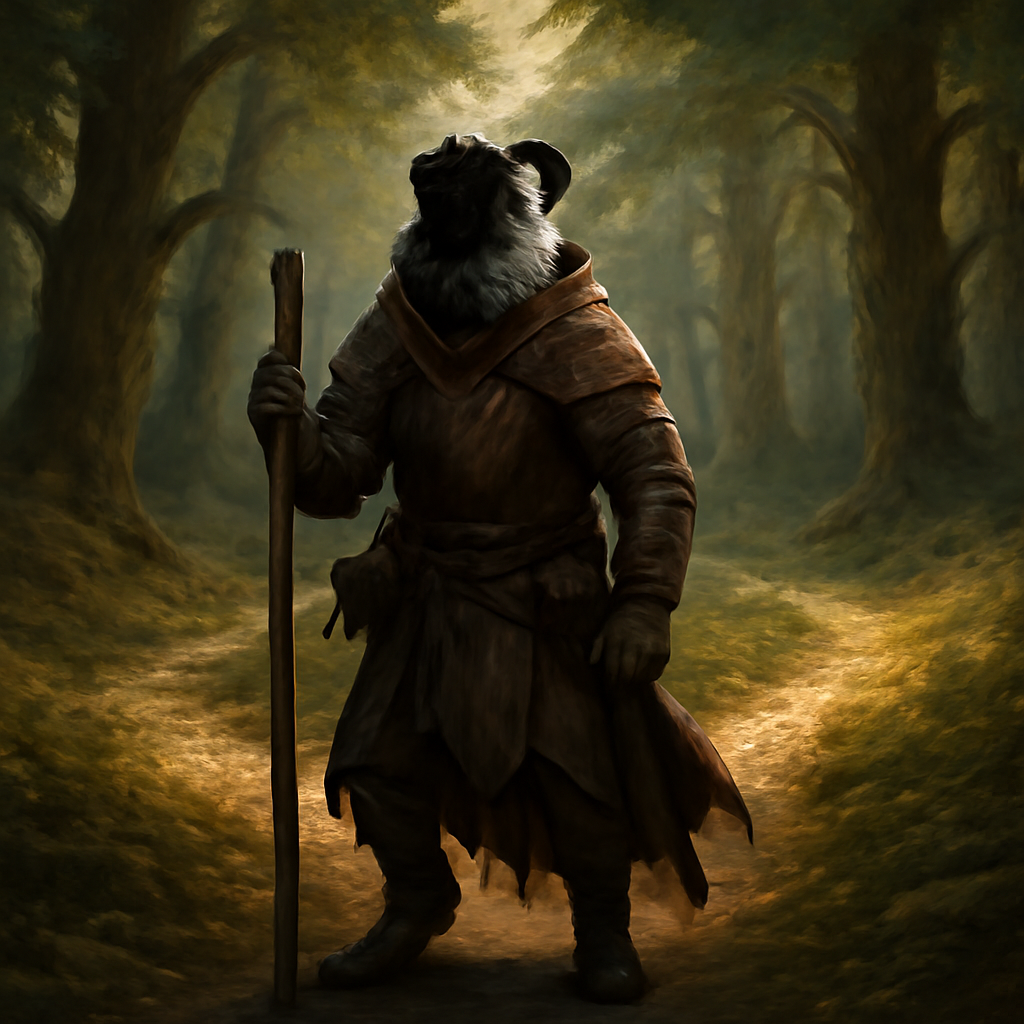
I used Creature Forge AI's character generator to build out Marigold, a Tabaxi Ranger based loosely on my border collie from back home. Uploaded a photo, tweaked a few details, and suddenly she existed. Not as a stat block, but as a person I could see. It changed how I played her. When you can see your character's face, you remember who they are.
The tool's especially good for that photo upload feature—you can base a character on a real pet or person and get something that actually looks like them, just... fantasy-ified. It's the same trick artists use for creating believable characters: start with something real.
Give Them a Secret
Not a world-ending secret. Not "I'm secretly the chosen one." Just something they haven't told the party yet. Something that could come up naturally.
Maybe they're sending half their gold home to support a sick parent. Maybe they lied about why they left their hometown. Maybe they're in debt to someone dangerous. Maybe they can't swim and are desperately hoping no one notices.
Secrets create tension. Tension creates memorable moments. And when that secret finally comes out—either by choice or by accident—you get a scene the table will talk about for months.
Play Them Like They Could Die Tomorrow
This is the hardest one, but it's the most important.
Memorable characters take risks. They make mistakes. They do things that aren't optimal because it's what they would do, not what the player would do. They're not precious. They're alive.
I've had characters die. It sucks. But the ones I remember most are the ones who went out doing something that made sense for who they were. Cornelius, my rock-collecting Bard, jumped into a river to save a kid even though his Strength was 8 and he was wearing chain mail. Stupid? Absolutely. Memorable? You bet.
If you're too afraid to let your character make bad choices, they'll never make interesting ones either.
The Real Secret
Here's the truth I've learned from hundreds of hours rolling dice alone in my kitchen: memorable characters are specific characters.
Not "a rogue." A rogue who files her nails with her dagger and calls everyone "sweetheart" in a way that's vaguely threatening.
Not "a paladin." A paladin who prays out loud every morning, even when it annoys the party, and who leaves coins on every grave he passes.
The more specific you get, the more real they become. And the more real they become, the more everyone at the table—including you—will remember them.
Try It Yourself
Building a memorable D&D character is part creativity, part bravery, and part just paying attention to the tiny details that make people (or animals, or imaginary adventurers) who they are.
If you're looking for a way to bring that character to life visually, check out Creature Forge AI. Upload a photo, play with the details, and see what happens when your imagination gets a face. Sometimes seeing them makes all the difference.
Now go make a character worth remembering.