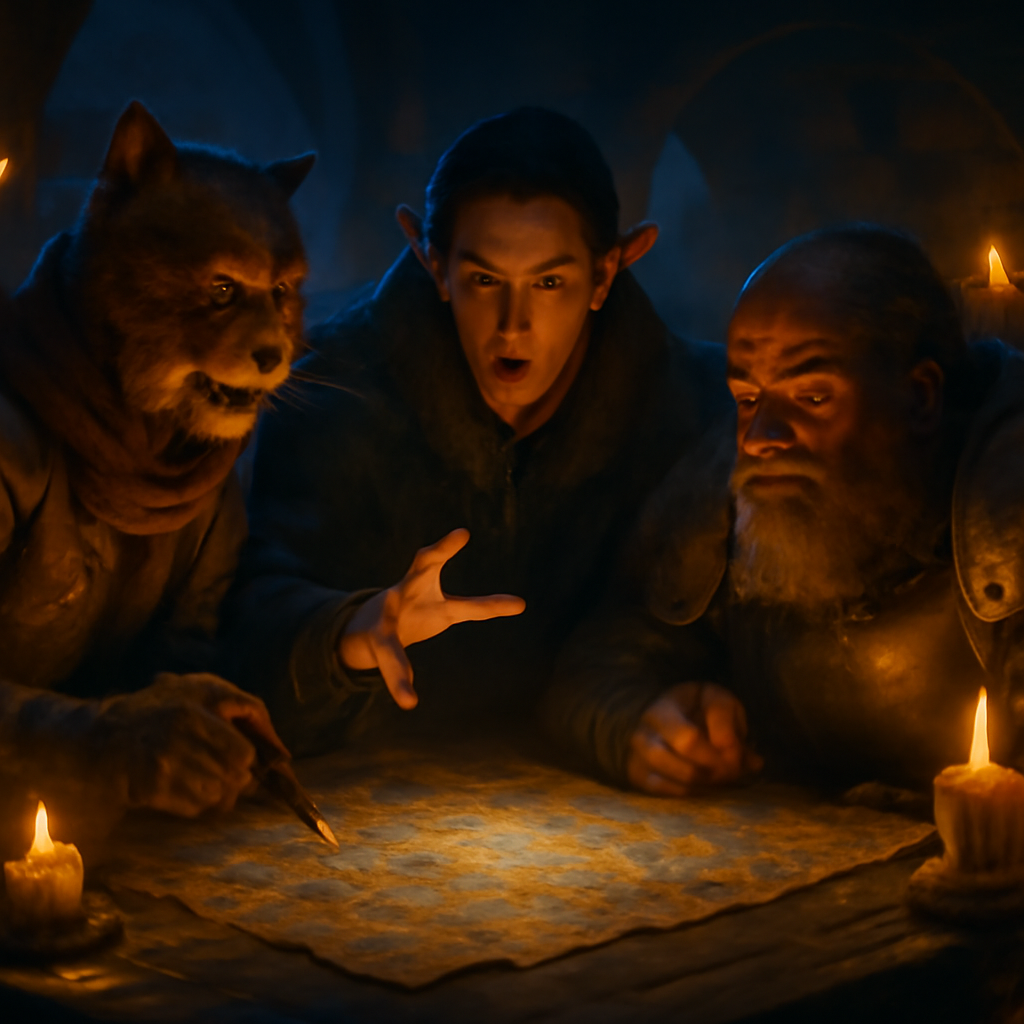
Why Player Engagement Matters More Than Perfect Prep
I learned how to keep players engaged in D&D the hard way: during a solo campaign where my only audience was my border collie, Scout, who kept wandering off mid-session to investigate the chickens outside. If I couldn't hold the attention of a dog who literally lived with me, how was I going to engage actual players at a table?
The truth is, engagement isn't about flawless world-building or theatrical voices (though those help). It's about making your players feel like their choices matter, their characters have stakes, and the story couldn't happen without them. That's it. Everything else is seasoning.
Start With Hooks That Connect to Character Backstories
Generic quests kill engagement faster than a failed death save. "The mayor needs you to clear rats from the tavern basement" works exactly once—if you're lucky. What works every time? Personal stakes.
Before your campaign starts, mine those character backstories for gold. Did the rogue mention a missing sister? That sister's wanted poster shows up on a tavern wall. Did the cleric swear an oath to their deity? That deity sends an omen—cryptic, unsettling, impossible to ignore.
Make It Personal, Make It Urgent
- Tie quests to backstory: The villain isn't just evil—he's the one who burned down the fighter's village.
- Create ticking clocks: The kidnapped NPC isn't just missing; the ransom note says you have three days.
- Reward curiosity: When a player asks about that weird symbol, don't say "you don't know." Say "make a History check" and give them something juicy.
I once ran a campaign where I uploaded a photo of my actual goat, Biscuit, into Creature Forge AI's NPC generator and turned her into a stubborn Caprid merchant who sold cursed potions. My players became obsessed with this NPC because she had personality—cranky, suspicious, prone to headbutting anyone who questioned her prices. That's the power of a character that feels alive.
Give Every Player a Moment to Shine
Nothing kills engagement faster than one player dominating every scene while others check their phones. Your job as DM is to create opportunities for everyone to be the hero—even if it's just for five minutes.
Spotlight Rotation Strategies
- Design encounters for different skills: Not every challenge is combat. Include social encounters for the bard, traps for the rogue, ancient texts for the wizard.
- Ask directly: "Ranger, you've been tracking this creature for hours—what do you notice that the others miss?"
- Use downtime: Between big adventures, give each player a solo scene. The cleric gets a vision. The warlock's patron makes contact. The barbarian arm-wrestles the town champion.
Watch your quieter players. When they lean forward or open their mouth to speak, pause and give them space. Sometimes engagement isn't loud—it's the player who's been waiting for the right moment to act.
Let Choices Have Real Consequences
Nothing says "your decisions don't matter" like a DM who railroads the story back to their planned plot no matter what players do. If your players burn down the tavern, the town guard comes after them. If they befriend the goblin scout instead of killing him, he becomes a recurring ally. If they ignore the missing villagers quest, those villagers stay missing—or worse.
The Illusion of Choice vs. Real Agency
Here's the trick: you can plan a general direction without railroading. Prepare situations, not solutions. Know what the villain wants and what happens if the players don't stop them. Then let the chaos unfold.
I ran a solo session once where I'd planned for my character to infiltrate a corrupt noble's mansion through the servant's entrance. Instead, I (playing a half-orc barbarian I'd generated who looked suspiciously like my old horse, Dancer—long story) just walked up to the front door and challenged the guards to a drinking contest. It worked. The story got better because I abandoned the plan.
Use NPCs as Story Glue
Memorable NPCs are engagement rocket fuel. Not every shopkeeper needs a tragic backstory, but your recurring NPCs should feel like real people with wants, flaws, and opinions about the party.
Building NPCs Players Actually Remember
- Give them a distinctive trait: A verbal tic, an unusual appearance, a weird habit. The blacksmith who only speaks in questions. The innkeeper who's always knitting tiny sweaters for her cat.
- Make them reactive: NPCs should respond to what the party does. If the players saved the merchant's caravan last session, she gives them a discount and spreads word of their heroism.
- Let them have secrets: The friendly tavern owner? Maybe she's a retired adventurer who still has her +2 longsword hidden behind the bar.
When I need an NPC fast, I use Creature Forge AI. The photo-upload feature is genuinely wild—I've turned my barn cat into a Tabaxi information broker, my nephew into a young wizard's apprentice, and yes, more than one farm animal into memorable fantasy NPCs. It gives me a full stat block, personality traits, and a character portrait that actually looks like the original photo. Saves me hours and gives me NPCs my players get attached to.
Vary Your Pacing and Encounter Types
If every session is a dungeon crawl or every session is political intrigue, players burn out. Engagement thrives on variety.
The Three-Act Session Structure
This isn't a hard rule, but it's a useful framework:
- Hook/Setup (15-20 min): Start with something immediate. A fight breaks out. A messenger arrives. A mysterious figure watches from the shadows.
- Exploration/Development (60-90 min): This is your investigation, roleplay, problem-solving phase. Let it breathe.
- Climax/Payoff (30-45 min): Big combat, dramatic confrontation, major revelation. End on a moment that makes them excited for next session.
Mix in unexpected moments. A tense negotiation suddenly interrupted by an assassination attempt. A brutal combat that ends when the enemy surrenders and begs for mercy. Players stay engaged when they can't predict what's coming.
Handle Distractions Without Being a Tyrant
Look, phones happen. Side conversations happen. Sometimes a player has a rough day and zones out. You're not running a military operation.
That said, if the whole table is disengaged, that's feedback. Maybe the current scene is dragging. Maybe you need to skip ahead. "You spend three days traveling through the forest" is better than roleplaying every campfire conversation when nothing's happening.
Gentle Engagement Techniques
- Address wandering attention by involving them: "Rogue, while the wizard is negotiating, what are you doing?"
- Take a break: Seriously. A 10-minute break every 90 minutes keeps energy up.
- Check in out-of-game: If someone's consistently disengaged, ask privately if they're still having fun or if something about the campaign isn't working for them.
End Sessions on Cliffhangers and Callbacks
The last five minutes of your session determine whether your players spend the next week thinking about the campaign or forgetting it exists.
End on a question, a choice, or a revelation. The door opens to reveal an unexpected face. A PC receives a mysterious package. An NPC they trusted is seen meeting with the villain. Give them something to speculate about between sessions.
Also: bring back old details. That random farmer they helped six sessions ago? He shows up to return the favor. That weird gemstone they found in the goblin cave? Turns out it's a key. Players love feeling like their past choices mattered.
Try Tools That Make Your Life Easier
I'll be honest: running D&D is work. Good work, fun work, but work. Anything that saves you prep time means more energy for the actual session.
That's why I keep Creature Forge AI bookmarked. Need a unique monster for a random encounter? Generated in seconds. Need a full party of NPCs for that merchant caravan? Done. And the photo-upload feature means I can populate my world with characters that feel personal and distinct without spending an hour on each one.
The best part? My players don't know or care that I generated that Lupine bounty hunter in under a minute. They just remember the character was cool and the fight was tense.
The Real Secret: You Care, So They Care
Here's what I figured out during those solo sessions with Scout as my only audience: how to keep players engaged in D&D starts with your own engagement. If you're excited about the world, the NPCs, the story—that energy is contagious.
You don't need to be a professional voice actor or a master improviser. You need to care about the story you're all telling together, make space for your players to surprise you, and remember that the point is fun. Not perfect plot arcs. Not flawless rulings. Just good, collaborative fun.
Your players can tell when you're invested. They can also tell when you're phoning it in or forcing them down a predetermined path. Be present, be flexible, and treat their characters like they matter—because they do.
And hey, if you need help building a world full of memorable creatures and NPCs that look like your actual pets or friends? Try Creature Forge AI. It won't run your game for you, but it'll save you hours of prep so you can focus on what matters: keeping your players on the edge of their seats, dice in hand, ready for whatever comes next.