Why Ending a D&D Campaign Matters More Than You Think
I've started seventeen D&D campaigns in my life. I've finished four. That ratio haunts me every time I sit down with my dice and coffee at midnight, ready to play another session of whatever solo adventure I'm running that week. Learning how to end a D&D campaign properly took me years, dozens of fizzled storylines, and one particularly memorable finale involving my border collie Sage—but I'll get to that.
The truth is, most campaigns don't end. They fade. Sessions get harder to schedule, the story loses momentum, and one day you realize it's been three months since anyone mentioned the ancient lich threatening the realm. But when you do stick the landing? When you give your story a real ending? That campaign lives forever.
Here's what I've learned about crafting campaign finales that actually deliver.
Know Your Ending Before You Need It
This sounds obvious, but it's the mistake I made for years. I'd start campaigns with cool premises—a city built inside a petrified dragon, a world where magic is outlawed, a kingdom where animals can speak—and just… hope the ending would reveal itself. It never did.
The campaigns I've successfully finished all had one thing in common: I knew the shape of the ending from the beginning. Not every detail, but the emotional core. Would this be a story about sacrifice? Triumph? Bittersweet victory? Transformation?
Three Questions to Ask Early
- What does victory look like? Define it specifically. "Defeat the bad guy" isn't enough. Does defeating them save the kingdom, or doom it? Do the characters become heroes, or do they fade into legend as mysterious figures no one quite remembers?
- What will the characters lose? Every great ending has a cost. Figure out what your players (or you, if playing solo) are willing to sacrifice for the win.
- What changes forever? The world after the campaign should be fundamentally different than before. If nothing permanent changes, the story doesn't feel finished.
The Three-Act Structure for Campaign Endings
Most campaigns that fizzle do so because the ending just… happens. The final session feels like any other session, just with a bigger monster. Here's the structure I use now:
Act One: The Calm Before (2-3 Sessions Before the End)
This is your characters' last chance to be themselves before everything changes. Let them have quiet moments. Visit the tavern where it all started. Check in with NPCs they haven't seen in months. I usually dedicate one full session to this—no combat, just roleplay and preparation.
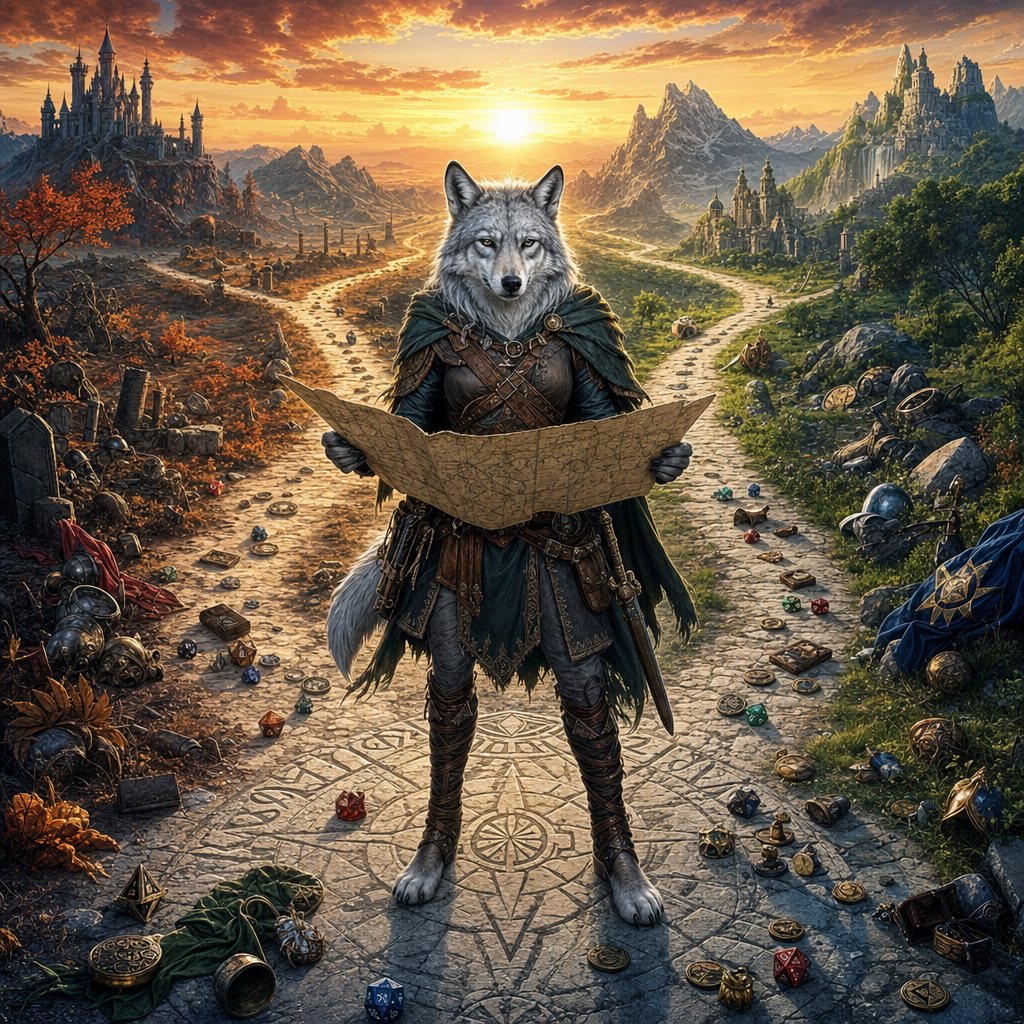
In my most successful solo campaign, I spent an entire evening writing letters from my character to every NPC who'd mattered along the way. My ranger, a Tabaxi I'd created using Creature Forge AI's character builder (I'd uploaded a photo of Sage, and the tool gave me this incredible warrior with her exact coloring and those intelligent eyes), wrote to the halfling innkeeper who'd hired her for her first job. To the rival who'd become a friend. To the mentor who'd died in Act Two.
None of those letters affected the "plot," but they made the ending mean something.
Act Two: The Point of No Return (1-2 Sessions Before the End)
This is where you cross the threshold. The characters make the choice that commits them to the finale. Maybe they open the sealed door. Maybe they reject the villain's final offer. Maybe they split the party and each group takes a different path.
The key: make it a choice, not an inevitability. Give them a way out. Then let them choose to go forward anyway.
Act Three: The Finale Itself
Your final session should feel different from every other session. Here's how:
- Start with a recap. Remind everyone (or yourself) how far the characters have come. Name the victories and losses. Make the journey visible.
- Make the final challenge personal. The villain should target what the characters care about, not just their hit points. Use the relationships you've built, the choices they've made, the NPCs they've saved (or failed to save).
- Allow for unexpected solutions. The best endings I've run have come from players thinking sideways. Don't lock yourself into "you must defeat the boss in combat." Maybe they convince the villain. Maybe they sacrifice the MacGuffin. Stay flexible.
- Give every character a moment. Even in solo play, each aspect of your character should shine. The fighter fights, yes, but also let the part of them that loves their sister have a moment. Let their fear of fire matter. Let the flaw they've carried since Session One become relevant.
The Epilogue: Don't Skip This
Here's where most DMs fumble, even when they've run a great finale. They end on the big moment—the dragon falls, the kingdom is saved, roll credits. But that's not an ending. That's just a stopping point.
Take time for the epilogue. Show what happens after. Where do the characters go? What do they do with their victory (or their failure)? Who remembers them?
I structure epilogues like this:
- Immediate aftermath (same session): What happens in the hours after the climax? Who survives? What's the first thing they say to each other?
- Near future (same session or next): Days or weeks later. The kingdom celebrates, or mourns, or rebuilds. What role do the characters play in that?
- Far future (if you want to get fancy): Years later. A narrator describes what became of each character. Did the ranger return to her forest? Did the paladin start a new order? Did anyone remember their names?
In my Sage campaign, I wrote a final scene set twenty years later. An old adventurer in a tavern telling the story of "the warrior who looked like a wolf" to a group of young listeners. Half the details were wrong—legends always are—but the heart of it was true. She'd been brave. She'd saved people. She'd mattered.
I cried writing it, alone at my kitchen table at one in the morning. That's how I knew I'd ended it right.
Common Ending Pitfalls (and How to Avoid Them)
The Fizzle
What it looks like: Sessions get further apart, enthusiasm wanes, and eventually everyone just stops mentioning the campaign.
How to avoid it: Set an end date early. Tell your players (or tell yourself, if solo), "This campaign will run for six months," or "We're playing until we resolve the succession crisis." Deadlines create urgency.
The Rushed Ending
What it looks like: You realize the campaign needs to end (someone's moving, interest is fading), so you cram three acts of story into one frantic session.
How to avoid it: If you need to end early, be honest about it. Skip to the ending you planned, even if it means hand-waving some middle content. A rushed but complete ending beats no ending at all.
The False Ending
What it looks like: The campaign reaches a natural stopping point, but no one's quite sure if it's over. So you keep playing, but the magic's gone.
How to avoid it: Name the ending out loud. Say, "This is our last session," or "This is the epilogue." Give everyone permission to treat it as finished.
The DM-Only Ending
What it looks like: The DM has a specific ending in mind and railroads the party toward it, ignoring player agency.
How to avoid it: Know your ending's shape, not its details. You might know "someone will sacrifice themselves," but let the players decide who and how. The best endings surprise even the DM.
Special Considerations for Solo Play
Solo players have unique challenges when it comes to endings. There's no one else to bounce ideas off, no other players to create unexpected moments. But there are advantages, too.
You control the pacing completely. If a scene needs three hours, take three hours. If you need to stop and think about what your character would do, there's no pressure to keep things moving.
You can be more experimental. I've ended solo campaigns with my character dying, or retiring, or choosing to stay in the fantasy world instead of returning home. Endings that might frustrate a group can be deeply satisfying when it's just you and your story.
Use tools to help populate your finale. One thing I love about solo play is building out the world of the ending. I'll use NPC generators to create the crowds at the victory celebration, the mourners at the funeral, the soldiers who fought beside my character in that final battle. It makes the world feel lived-in, even when I'm playing alone.
The Emotional Architecture of a Good Ending
Here's something I learned from finishing exactly four campaigns out of seventeen attempts: good endings aren't about plot. They're about emotion.
Your finale should make the players (or you) feel something. Relief. Pride. Loss. Bittersweetness. Joy. Grief. Ideally several of those at once. If your ending is just "we won" or "we lost," you haven't gone deep enough.
Ask yourself: What do I want to feel when this is over? Then structure your ending to create that feeling.
My Sage campaign ended with victory—the corruption was cleansed from the forest, the ancient evil was banished—but the cost was that my character could never return to her human life. She'd become something else, something wild and eternal. The forest needed a guardian, and she chose to become it.
I wanted to feel bittersweet triumph, and I did. I still do, thinking about it now.
After the Ending: What Comes Next
When a campaign ends well, there's this strange emptiness. You've spent months (or years) with these characters, and now they're done. The story is finished. It's a good feeling, but it's also a loss.
Let yourself feel that. Don't immediately jump into the next campaign. Take a week, or a month. Think about what worked, what didn't, what you'd do differently.
Then, when you're ready, start again. Take what you learned and build something new.
Craft Endings Worth Remembering
The campaigns I remember—really remember, the ones that still make me smile or ache years later—aren't the ones with the coolest monsters or the most intricate plots. They're the ones that ended. That gave me closure. That let me say goodbye to characters who'd become real to me.
Learning how to end a D&D campaign is learning how to honor a story. It's harder than starting one, but it's also more rewarding. Every campaign that fizzles is a tiny heartbreak. Every campaign that reaches a real ending is a triumph.
So plan your endings. Structure your finales. Give your characters (and yourself) the closure they deserve. And when you're building the NPCs and creatures that will populate that final act, tools like Creature Forge AI can help bring your vision to life—whether you're creating the ancient dragon for the final battle or turning your own beloved pet into a character worthy of legend.
The ending is where stories become unforgettable. Make yours count.