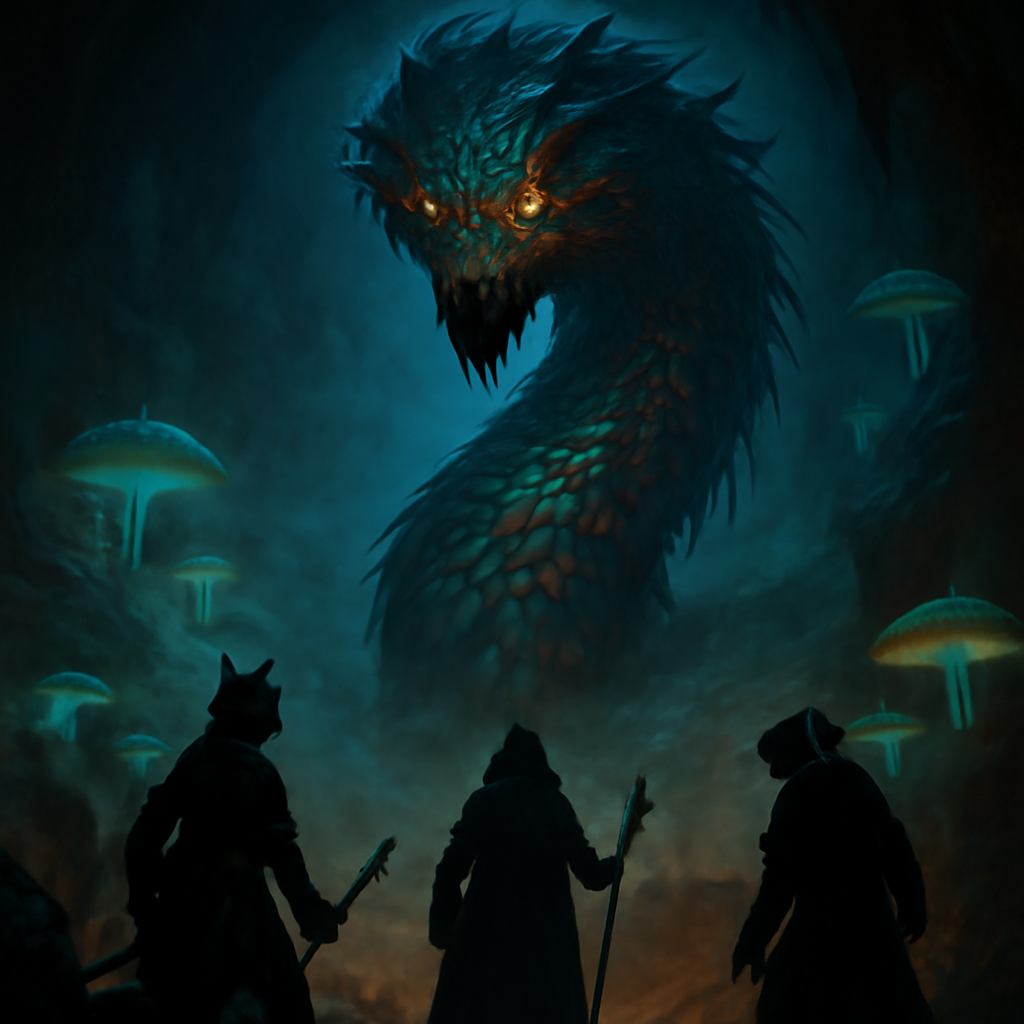
Why Bother Creating Your Own Monsters?
Look, the Monster Manual is great. I've used it countless times during my late-night solo campaigns when I'm too tired to think creatively. But here's the thing about creating your own D&D monster: it makes your world yours. Your players can't Google it. They can't predict its abilities. And when you build something truly unique, they remember it long after the campaign ends.
I learned this the hard way when I tried to turn my old farm rooster, Sergeant Cluckles, into a recurring villain for a solo campaign. He was ornery in real life, so I figured why not make him ornery in-game? That first attempt was a mess—just a chicken with too much HP. But once I learned how to create a D&D monster properly, complete with abilities that reflected his actual personality? Pure gold.
Start With Concept, Not Stats
Most people dive straight into CR calculations and damage dice. Don't. Start with the story.
Ask yourself:
- What role does this creature play in your world?
- What do players feel when they encounter it? (Fear? Curiosity? Pity?)
- What makes it different from every other monster they've fought?
- Does it have a personality, or is it pure instinct?
Maybe you're building an ambush predator that lurks in marshes. Maybe it's a guardian bound to an ancient temple. Maybe—and this is where it gets fun—it's based on your actual pet or a person you know. That border collie who herds everything that moves? Perfect basis for a telepathic pack hunter. Your friend who talks too much at parties? Excellent inspiration for a fey creature that distracts adventurers with endless riddles.
The Power of Personal Inspiration
Here's something wild: you can actually upload a photo and generate a creature that looks like your real-life inspiration. I did this with a picture of Biscuit, my goat, and got back a satyr-like creature with her exact coloring and that same judgmental expression she gives me when I'm late with breakfast. Gave it abilities based on her real behavior—stubborn, surprisingly strong, impossible to intimidate. My solo sessions have never been the same.
Building the Stat Block: The Actual Numbers
Now we get technical. A proper monster needs these core elements:
Challenge Rating and Hit Points
CR tells you what level party can handle this thing. A CR 1 creature is appropriate for four level-1 characters. A CR 10 creature will wreck that same party.
Hit points scale with CR. Quick reference:
- CR 0-1: 7-50 HP
- CR 2-5: 36-150 HP
- CR 6-10: 100-250 HP
- CR 11-15: 200-350 HP
- CR 16+: 300+ HP
Don't obsess over perfection here. Err on the side of slightly less HP—dead players aren't having fun, and you can always add more monsters mid-combat if the fight's too easy.
Armor Class and Defenses
AC determines how hard the creature is to hit. Most monsters sit between AC 10-20, with 13-15 being the sweet spot for low-to-mid CR.
Consider:
- Natural armor (thick hide, scales)
- Dexterity (dodgy and quick)
- Magic effects (mage armor, shield spell)
Also think about resistances, immunities, and vulnerabilities. A fire elemental should resist fire but maybe take extra cold damage. Undead are typically immune to poison. These details make combat tactical instead of just "I swing my sword again."
Attributes and Saves
Your monster needs the six ability scores: Strength, Dexterity, Constitution, Intelligence, Wisdom, Charisma. These don't have to be balanced—a shambling zombie has high Strength and Constitution but terrible Intelligence and Charisma.
Give your monster proficiency in 2-3 saving throws and 2-4 skills that match its concept. A forest stalker? Proficient in Stealth and Perception. A scholarly lich? History, Arcana, Investigation.
Abilities: Where Monsters Get Interesting
This is where you move from "generic stat block" to "holy crap, what IS that thing?"
Actions and Attacks
Most monsters get a Multiattack feature that lets them make 2-3 attacks per turn. Damage should scale with CR:
- CR 1-4: 1d6 to 2d6 + modifier
- CR 5-10: 2d8 to 3d8 + modifier
- CR 11-16: 3d10 to 4d10 + modifier
- CR 17+: 4d12+ or multiple dice types
But damage isn't everything. Add riders to attacks: poison, paralysis, grappling, pushing, pulling. Sergeant Cluckles, my rooster-turned-villain, had a "Fury Peck" that could blind opponents on a failed save. Because if you've ever been on the receiving end of an angry rooster, you know that's accurate.
Special Traits and Legendary Actions
Passive abilities that are always "on" make monsters memorable:
- Pack Tactics: Advantage when an ally is nearby
- Magic Resistance: Advantage on saves against spells
- Regeneration: Heals X HP per turn unless specific damage type
- Ambusher: Advantage on attacks against surprised creatures
For CR 11+ monsters, consider Legendary Actions—extra actions they can take at the end of other creatures' turns. This keeps big bads relevant in action economy and prevents them from getting overwhelmed by action-rich player parties.
Lore and Ecology: Make It Feel Real
Stats are mechanical. Lore is emotional. Answer these questions:
- Where does this creature live?
- What does it eat?
- How does it reproduce?
- What are its natural predators or prey?
- Does it have culture, language, or social structure?
A creature that hunts in packs behaves differently from a solitary ambush predator. One that's intelligent enough to speak might negotiate or set traps. One that's territorial might flee if wounded rather than fight to the death.
This depth transforms a stat block into an encounter your players talk about for sessions afterward.
Playtesting: The Real Teacher
Your first version will be wrong. That's fine. Solo play is perfect for this—throw your monster against a mock party and see what happens.
Too easy? Add HP, boost damage, or give it an extra ability.
Too hard? Lower AC, reduce HP, or limit how often it can use its strongest ability.
I've rebalanced Sergeant Cluckles at least four times. He started as a CR 2, somehow became a CR 5 nightmare that could TPK a level-7 party, and finally settled into a comfortable CR 3 recurring miniboss. Each iteration taught me something about action economy and damage output.
Tools That Do the Heavy Lifting
Let's be honest: creating a D&D monster from absolute scratch takes time you might not have. I've spent entire evenings building one creature, only to realize I needed three more for next session.
This is where modern tools shine. You can generate fully-stated creatures in minutes, complete with balanced stats, thematic abilities, and even artwork. And here's the kicker: if you upload a photo—your cat, your dog, that weird bird that nests in your barn—the generator builds a creature that actually looks like them. It's not just a random goblin. It's your creature, pulled from your actual life into your campaign world.
I've used this for NPCs too. Uploaded a photo of my brother, got back a dwarf merchant with his exact beard and skeptical expression. The NPC generator even gave him personality traits that matched: stubborn, loyal, terrible at telling jokes. Absolutely perfect.
Advanced Techniques: Lair Actions and Regional Effects
Once you're comfortable with basic monster creation, try these advanced features:
Lair Actions: Environmental effects that trigger on initiative count 20. The dragon's lair fills with smoke. The swamp hag summons grasping vines. These actions make the terrain itself part of the encounter.
Regional Effects: Long-term changes the monster's presence causes. A vampire's castle is perpetually shrouded in fog. A corrupted treant turns the forest dark and hostile. These effects tell players they're approaching something powerful before combat even starts.
Common Mistakes to Avoid
After countless hours building creatures—some successful, many not—here's what I've learned to avoid:
- Too many abilities: Three interesting abilities beat ten mediocre ones. Players can't track a novel's worth of mechanics mid-combat.
- Ignoring action economy: A solo monster needs Legendary Actions or it'll get steamrolled by four PCs each taking actions every round.
- Forgetting movement: Flying, swimming, burrowing, climbing—mobility creates tactical depth.
- Same-type damage only: Mix physical and magical damage types so different party members get moments to shine.
- No clear weakness: Every monster should have something players can exploit through clever play.
Your Monster Is Waiting
Creating a D&D monster is part math, part storytelling, and part channeling whatever weird inspiration strikes you at midnight. Maybe it's a creature from folklore. Maybe it's a twisted version of something from nature. Maybe it's your actual pet with fangs and an attitude problem.
The technical side—CR, HP, AC, damage—gets easier with practice. The creative side? That's where you make something players remember long after the campaign ends. Something that feels like it belongs in your world because you built it specifically for your world.
If you want to skip the spreadsheet phase and jump straight to the fun part, try Creature Forge AI. Upload a photo, describe your concept, and get back a fully-playable creature complete with balanced stats and artwork. It's like having a monster-design assistant who actually understands what makes a creature memorable.
Now go build something that'll make your players nervous. They'll thank you for it later. Probably. Eventually. After they stop complaining about how their characters almost died.