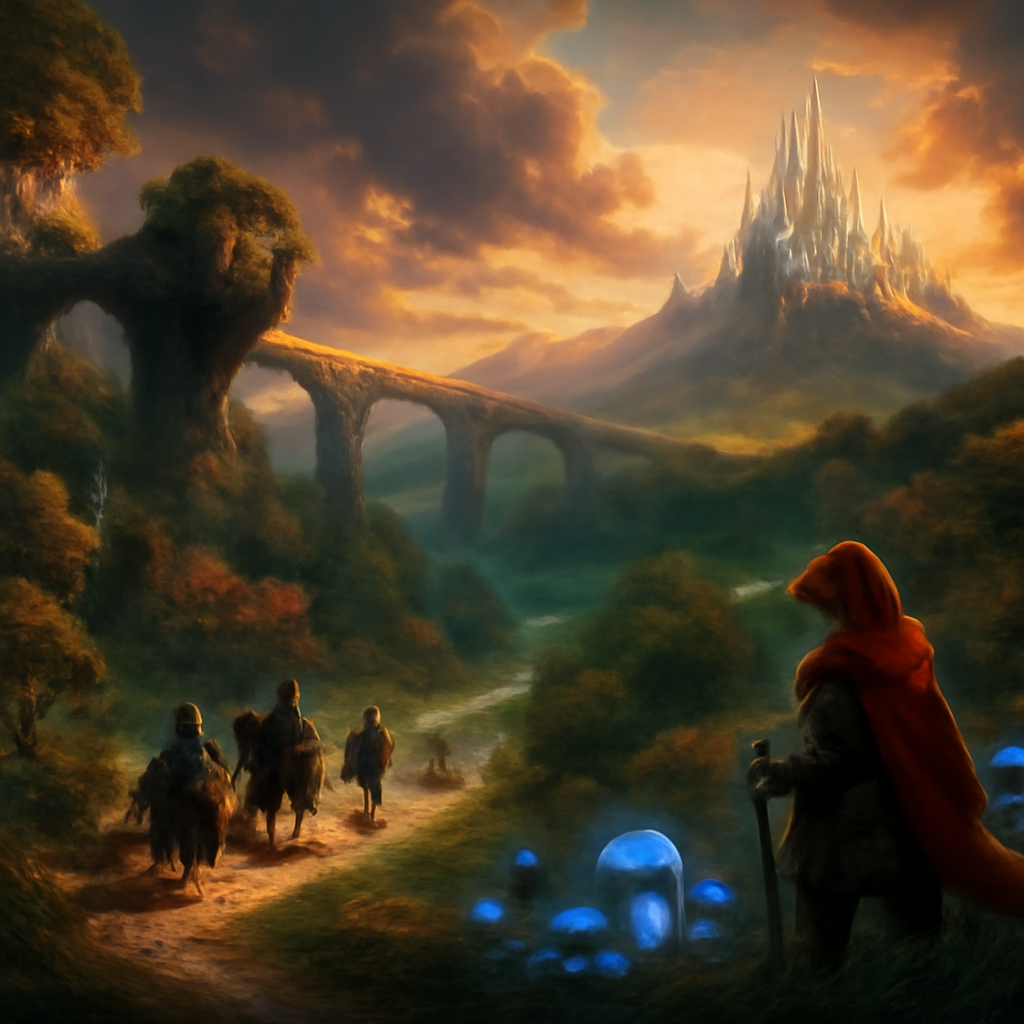
Start Small, Dream Big
When I first tried to figure out how to build a fantasy world for D&D, I did what most of us do: I opened seventeen browser tabs about pantheons, drew a continent the size of Asia, and invented a magic system with four subsystems. Three weeks later, my players asked, "So where's the nearest tavern?" and I panicked because I'd spent zero time on the actual village they were standing in.
Here's what I wish someone had told me then: your fantasy world doesn't need to be complete before session one. It needs to be interesting where your players are right now, and flexible enough to grow with them.
The best approach? Start with a single location—a town, a valley, a crossroads—and build outward as your story demands it. My most successful solo campaign began in a farming village called Millbrook (named, obviously, after the creek that ran through our property). I knew the mill, the inn, the blacksmith, and one weird detail: the miller's daughter had vanished three months ago, and nobody talked about it. That was enough for session one. The rest grew organically.
Ground Your World in Sensory Details
Worldbuilding isn't about cataloging every historical dynasty. It's about making players feel like they're somewhere real. The smell of salt air and rotting fish in a harbor town. The way torch smoke clings to the low ceiling of a goblin warren. The sound of wind howling through a mountain pass.
I grew up on a farm, and one thing you learn fast: places have texture. Our barn smelled like hay and leather and something faintly sour from the goat pen. In winter, the chicken coop was the warmest building on the property. When I build a D&D village now, I think about what it smells like, what sounds carry at night, what the weather does to the roads.
The Five-Sense Test
For any important location, ask yourself:
- Sight: What's the first thing someone notices walking in?
- Sound: Is it quiet? Busy? What's the ambient noise?
- Smell: Every place has a smell. Use it.
- Touch: Temperature, texture, humidity—these ground players in the moment.
- Taste: What do people eat here? What do they drink? (This one's more optional but great for tavern scenes.)
When you describe a location with even two or three of these, it stops being a bullet point on a map and starts being a place.
Build Culture Through the Mundane
Forget elaborate festivals and prophecies for a minute. How do people in your world say hello? What do they eat for breakfast? Who do they blame when something goes wrong?
In Millbrook, people left bread heels on their doorsteps at night for "the Dustfoot"—a local spirit that was either helpful or mischievous depending on who you asked. I made that up on the spot when a player asked an NPC about local customs, and it became a recurring thread. Later, the Dustfoot turned out to be a reclusive gnome illusionist living in the woods. Perfect.
Small cultural details make your world feel lived-in:
- A gesture that means different things in different regions
- A common idiom or curse ("windblown fool," "stonebrain," "blessed by crows")
- A food that's everywhere in one place and unheard of ten miles away
- A superstition that characters actually follow
These details don't need pages of backstory. They just need to exist and show up naturally in play.
Let Geography Drive Conflict
Here's a worldbuilding hack: terrain creates story. A mountain range isn't just scenery—it's a barrier that shapes trade routes, isolates cultures, and hides things. A river isn't just water—it's a border, a resource people fight over, a highway for commerce and invasion.
When you're deciding how to build a fantasy world for D&D, start with a simple map and ask: what does this geography make inevitable?
Questions to Ask Your Map
- Where's the fresh water? (People settle near it. Wars are fought over it.)
- What's the easiest route between two important places? (That's where bandits set up. That's where merchants get rich.)
- What terrain is dangerous to cross? (That's where monsters thrive. That's where secrets hide.)
- Where are the natural choke points? (Castles, toll bridges, ambush sites.)
You don't need to know the GDP of every kingdom. You need to know why two kingdoms are arguing about a mountain pass, and what happens if your players take a shortcut through the Thornwood.
Populate Your World With Creatures That Matter
Monsters and NPCs aren't just stat blocks. They're the life of your world. A well-placed creature can define a region's entire identity. The swamp has hags. The northern peaks have reclusive Aarakocra monks. The trade road has a toll troll who's surprisingly reasonable if you bring him poetry.
This is where tools like Creature Forge AI shine. Instead of flipping through the Monster Manual for the fortieth time, you can generate custom creatures that fit your world's vibe exactly. Need a fungal horror for your underdark region? A celestial guardian for your sacred grove? Done.
Better yet—and this is my favorite trick—you can upload a photo of a real pet or person and turn them into a fully-stated D&D character. I uploaded a picture of my border collie, Rue, and got a Lupine ranger with her exact markings and an uncanny knack for herding goblins. She became a recurring NPC in my campaign, and now my players ask about her every session. That's the kind of personal touch that makes a world feel yours.
Don't Worldbuild in a Vacuum
Here's the thing about building a fantasy world for D&D: your players will break it. And that's good.
They'll ask questions you haven't thought of. They'll want to visit the place you mentioned as a throwaway detail. They'll adopt an NPC you invented on the spot and make them the emotional core of the campaign.
Let them. The best worldbuilding is collaborative. When a player says, "Does this town have a library?" don't just say yes or no—ask them what they're hoping to find. Build together. My players once decided that Millbrook's blacksmith was secretly a retired adventurer. I hadn't planned that, but I ran with it, and he became a quest-giver and a father figure to the party's rogue.
Leave gaps in your world. Leave mysteries. Leave room for your players to make it theirs.
The Secret: Depth Over Breadth
You don't need a Silmarillion. You need three things:
- A compelling starting location with hooks your players care about
- A handful of NPCs with goals, personalities, and secrets
- One or two immediate threats that feel real and urgent
Everything else—your cosmology, your ancient wars, your royal lineages—can come later, if it becomes relevant. I've run two-year campaigns where nobody ever asked about the pantheon. I've also had campaigns where the creation myth became central to the plot. You can't predict what will matter. So build what's in front of you, and trust that the rest will come.
Give Every Place a Secret
This is my personal worldbuilding rule: every location, no matter how small, gets one weird thing. A statue that cries at midnight. A well that echoes back your words in a different voice. A cat that all the locals swear is older than the village itself.
These secrets don't need to be plot-critical. They just need to make your players lean in and say, "Wait, what?"
In Millbrook, there was a stone marker at the crossroads with a name carved in it that nobody recognized. For six sessions, it was just set dressing. Then a player cast Speak with Dead on it as a joke, and I had to come up with who it was on the spot. Turned out it was the miller's daughter. The whole campaign pivoted. That's the magic of leaving hooks everywhere.
Tools That Actually Help
Worldbuilding doesn't have to be a solo slog through endless spreadsheets. If you're stuck on creatures, generate custom monsters that fit your setting's flavor. If you need a memorable NPC fast, try the NPC generator—personality, motivation, and stat block all in one.
And if you want to bring something personal into your world—your dog, your kid, that friend who always says they'll join the campaign but never does—upload their photo and turn them into a character. It's weirdly powerful to see someone you know translated into fantasy form, standing next to your party in full adventuring gear.
Start Building Tonight
You don't need months of prep. You don't need a setting bible. You need a starting point, a handful of sensory details, and the willingness to let your world grow messy and surprising and alive.
Pick one location. Name three NPCs. Invent one mystery. That's your world. Everything else is just sessions you haven't played yet.
And if you need help populating that world with creatures, characters, and faces that feel real? Try Creature Forge AI. Upload a photo, hit generate, and watch your world come to life—one unforgettable character at a time.