The Night I Almost Killed Everyone With Goblins
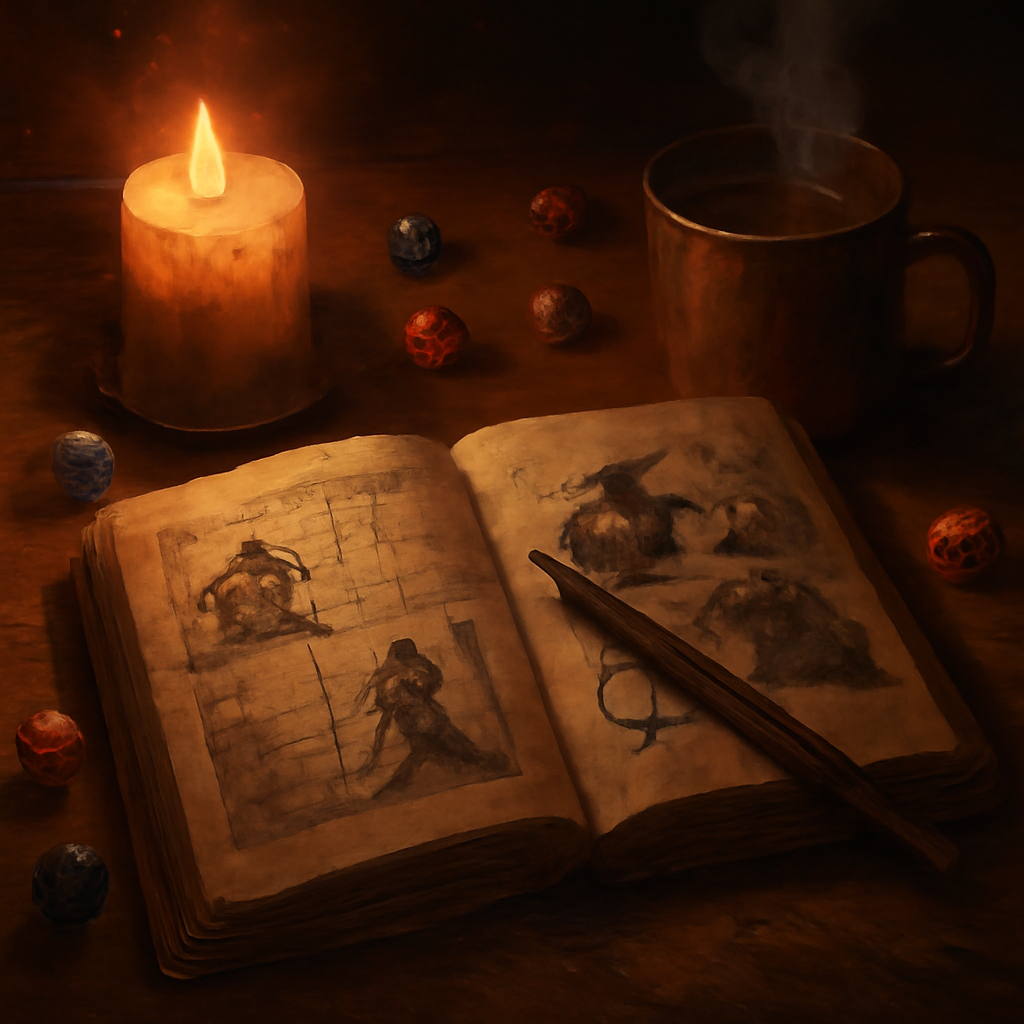
Let me tell you about the time I learned how to balance a D&D encounter the hard way. I was running a solo campaign at my kitchen table—just me, a pot of coffee that had gone cold hours ago, and a party of four level-two adventurers I'd been steering through a goblin warren. I figured eight goblins would be a fun challenge. The math said it was "Medium" difficulty. The math lied.
What I didn't account for was action economy, terrain chokepoints, and the fact that goblins with shortbows can absolutely shred a party before they even get into melee range. My poor wizard—who I'd lovingly modeled after my border collie Scout's nervous energy and surprising cleverness—went down in round two. The fighter lasted three rounds. It was a bloodbath, and not the fun kind.
That night taught me something important: balancing encounters isn't just about Challenge Rating math. It's about understanding the moving parts that turn a fight from "exciting" to "catastrophic." Here's what I've learned since then.
Start With CR, But Don't Stop There
Challenge Rating is your baseline, not your bible. The Dungeon Master's Guide provides those handy encounter-building tables that estimate difficulty based on party level and the total XP of monsters you throw at them. Use them. They're genuinely helpful for getting in the ballpark.
But here's where most DMs (myself included) trip up: CR assumes your party is at full resources, has average optimization, and fights in a neutral environment. In reality, your party probably burned their best spells two rooms ago, your barbarian player built for roleplay over combat effectiveness, and you're fighting in a 10-foot-wide corridor where only two people can engage at once.
The Three Variables That Matter More Than CR
- Action economy: Five goblins get five attacks per round. One ogre gets one. Even if the XP math says they're equivalent, the goblins are probably more dangerous.
- Terrain and positioning: High ground, cover, narrow passages, environmental hazards—all of these matter more than most stat blocks.
- Player resources: A fresh party can handle "Deadly" encounters. An exhausted party might struggle with "Easy" ones.
Action Economy Is Everything
This is the big one. If you take nothing else from this article, understand that action economy—who gets to do things each round—determines fight difficulty more than any other single factor.
A party of four characters gets four actions, four bonus actions, and four reactions per round. If they're fighting one giant monster, that monster gets one action, one bonus action, and one reaction. The party can nova-burn it down before it gets to do much of anything interesting. That dragon you spent hours statting out? Dead in three rounds, and nobody felt threatened.
The solution: give your boss monsters legendary actions, lair actions, or minions. Even low-CR minions create threat simply by increasing the number of things happening each round. That ancient red dragon becomes terrifying when it's accompanied by four kobold servants who can shove, grapple, or provide the Help action.
The Minion Rule of Thumb
For every solo monster above CR 5 that you want to feel epic, add 2-4 creatures at least three CR lower. These minions shouldn't be damage-dealers—they're there to create tactical complexity, waste player actions, and make the battlefield feel chaotic.
Build Encounters in Waves
Static encounters are boring. Smart monsters don't all stand in one room waiting to be murdered. They patrol, respond to noise, call for reinforcements, and retreat when outmatched.
Instead of placing all eight bandits in one room, start with four. When the fight's been going for two or three rounds, have the other four burst through the door, alerted by the sounds of combat. Suddenly your "Medium" encounter feels dynamic and dangerous without technically changing the math at all.
This approach also gives you an adjustment dial mid-combat. If your party is dominating, the reinforcements arrive quickly. If they're struggling, maybe those reinforcements got delayed, or maybe they're wounded from a previous skirmish. You're not fudging dice—you're being a responsive storyteller.
Terrain Is a Free Difficulty Modifier
An empty 30-by-30 room is a tactical wasteland. Add some furniture, elevation changes, or environmental hazards and suddenly the same encounter becomes three times more interesting.
Consider these terrain elements:
- Cover: Half-cover and three-quarters cover make ranged enemies significantly more dangerous and force melee characters to move strategically.
- Elevation: Height advantage grants attack bonuses and makes ranged attackers more threatening. Those goblins on a ledge are suddenly a real problem.
- Hazards: Pits, fire, water, magical darkness, or unstable ground give players and enemies tactical options beyond "hit it with my sword."
- Chokepoints: Narrow passages favor defenders and create tough decisions about positioning.
- Escape routes: Multiple exits make encounters feel less like cage matches and more like real battles where morale matters.
I started drawing actual maps after my goblin disaster, even for solo play. Just rough sketches on graph paper—an overturned table here, a support pillar there, a pile of crates that someone could duck behind. It changed everything.
Remember That Monsters Are Smart (Usually)
Unless you're fighting oozes or zombies, your enemies should act intelligently. They focus fire on the wizard. They use the terrain. They grapple the fighter and dash away with the cleric. They surrender when they're outmatched.
Intelligent monsters make encounters harder without adding a single point of CR. A group of hobgoblins fighting in formation with shield walls and ranged support is vastly more dangerous than the same hobgoblins Leroy Jenkins-ing into melee.
On the flip side, using tactics also makes your players feel clever when they counter them. When your party disrupts the enemy's formation, separates their healer, or uses terrain to negate an advantage, they've earned that victory through good play—not because you went easy on them.
Test Encounters in Your Head (or On Paper)
Before you run an encounter, mentally simulate a few rounds. Not every turn, just the broad strokes. What does round one look like? Where are the enemies? What's the party's likely response? When does the fight get desperate?
I do this during my solo sessions all the time—I'll literally play both sides for a round or two to see how it feels. If my party is dropping enemies too fast, I know I need to add a complication. If they're getting overwhelmed immediately, I can dial it back before anyone actually dies.
You're looking for a fight that lasts 3-5 rounds, creates at least one "oh no" moment, and leaves the party feeling like they earned their victory. Anything shorter feels anticlimactic. Anything longer becomes a slog.
Use Tools That Actually Help
Here's where I'm going to be honest with you: building balanced encounters gets way easier when you have good tools. I spent years scribbling monster stats on index cards and trying to remember which creatures had Pack Tactics and which ones had Magic Resistance.
These days I use Creature Forge AI to generate custom monsters that fit exactly what I need for an encounter. Need a mid-level spellcaster that won't outshine the party's wizard but still feels threatening? Done. Want a beast that's thematically perfect for a forest ambush and has a stat block that won't require you to flip through three books mid-combat? Also done.
The real game-changer for me has been uploading photos to create NPCs and creatures. Remember Scout, my border collie who inspired that ill-fated wizard? I uploaded his photo and the tool created a surprisingly perfect Tabaxi scout character—alert, quick on his feet, with abilities that actually matched his personality. It's become my favorite way to populate encounters with characters that feel personal and real.
Know When to Adjust on the Fly
Sometimes you miscalculate. It happens to everyone. The encounter you thought would be "Hard" turns out to be "Oh God Everyone's Dying." When that happens, you have options:
- Have enemies flee when they're bloodied
- Reduce enemy hit points on the fly (they don't need to have maximum HP)
- Introduce a complication that levels the playing field—a cave-in that separates some enemies, an NPC ally who arrives at a dramatic moment, an environmental hazard that damages everyone equally
- Let enemies make tactically poor decisions—split their attention, waste actions on ineffective tactics, or focus on the tank instead of the squishy casters
The goal isn't to perfectly balance every encounter like a scales-of-justice mini-game. It's to create tension, give players meaningful choices, and make victories feel earned. Sometimes that means adjusting the plan when the dice tell an unexpected story.
Balance Doesn't Mean Fair
Here's a final thought that took me years to internalize: balanced encounters don't have to be fair fights. Sometimes the most balanced encounter is one where the party is outmatched and needs to run, negotiate, or get creative.
My best combats have been the ones where my players realized they couldn't win through straight combat and had to improvise. They collapsed a ceiling, convinced enemies to turn on each other, or used environmental storytelling to find a monster's weakness. Those fights were wildly unbalanced by CR math, but perfectly balanced for creating memorable moments.
The true measure of encounter balance isn't whether the numbers add up. It's whether your players leaned forward in their seats, made tough decisions, and talked about the fight afterward.
Start Building Better Encounters Today
Balancing encounters is part math, part psychology, part improvisation. Start with CR calculations to get in the ballpark, then adjust for action economy, terrain, and tactics. Test your encounters mentally before running them. And don't be afraid to adjust on the fly when the dice tell you that your carefully balanced fight is going sideways.
Most importantly, give yourself permission to learn through failure. That goblin ambush that nearly TPK'd my solo party taught me more about encounter design than any number of theoretical guides. Every fight you run—whether it's too easy, too hard, or just right—teaches you something about what works at your table.
If you want to speed up the process and stop spending three hours statting out custom creatures for every encounter, try Creature Forge AI. Generate monsters that fit your exact needs, create NPCs on the fly, and if you're feeling adventurous, upload a photo of your actual pet or friend and turn them into a character. Because sometimes the best encounters are the ones that feel personally meaningful—even if that means your childhood cat is now a Leonin paladin with a grudge against mice.
Now go forth and create some fights that challenge your players without destroying them. And maybe keep a backup plan in your back pocket, just in case.