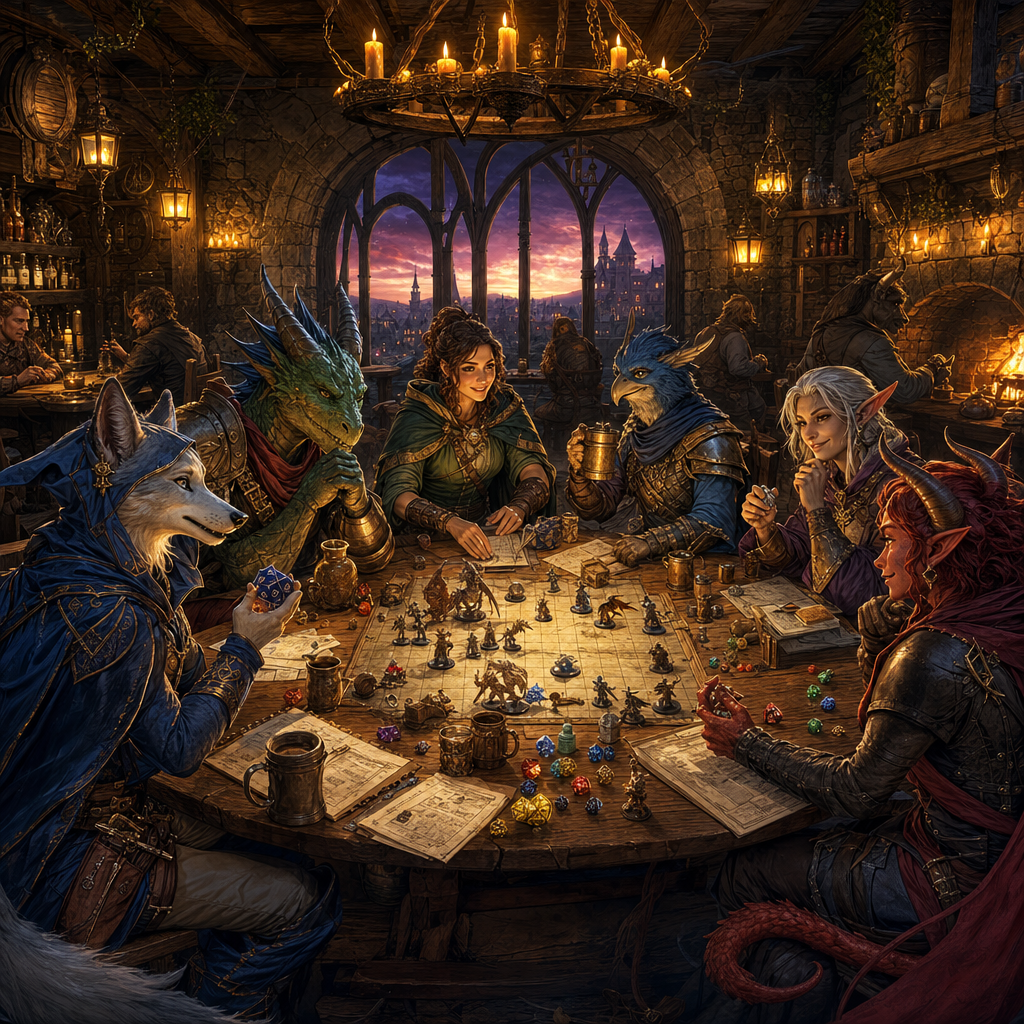
If you're new to Dungeons & Dragons — or trying to convince skeptical friends to join your first session — one of the first questions that comes up is simple: how long does a D&D session take? The short answer? Most sessions run between three and four hours. But like everything in D&D, the real answer is: it depends.
I learned this the hard way during my first solo campaign. I'd just finished evening chores on the farm — feeding the goats, closing up the chicken coop, dodging Biscuit (my goat, who has more charisma than any NPC I've ever rolled). I sat down with my dice, a fresh pot of coffee, and a single dungeon encounter I figured would take maybe an hour. Four hours later, I was still at the kitchen table, completely lost in the story. Turns out, time moves differently when you're deciding whether your ranger trusts the mysterious stranger at the crossroads.
The Standard D&D Session Length
Most organized D&D groups — whether playing in person or online — aim for three to four hours per session. This has become the unofficial standard for a few good reasons:
- It's long enough to accomplish something meaningful. You can clear a dungeon level, resolve a major roleplay conflict, or survive a challenging combat encounter without feeling rushed.
- It fits into real-world schedules. People have jobs, families, and obligations. A three-hour evening session (say, 7 PM to 10 PM) works for most adults.
- It prevents burnout. Both players and DMs can sustain focus and energy for three to four hours without the game feeling like a slog.
That said, plenty of groups play shorter or longer sessions depending on their needs, and both approaches can work beautifully.
Short Sessions (1-2 Hours)
Short sessions are underrated. They're perfect for:
- Solo play. When you're running your own adventure, you control the pacing. A focused hour can cover a lot of ground — a single combat, a meaningful NPC conversation, or exploring one location.
- Lunch break games. Some groups meet during lunch hours at work or school. You'd be surprised how much story you can fit into 90 minutes when everyone's focused.
- Families with young kids. Shorter sessions keep attention spans engaged and make it easier to play regularly.
- Online games with scheduling conflicts. Sometimes an hour is all you can get six people to commit to, and that's fine.
The trick with short sessions is focused goals. Don't try to run a sprawling dungeon crawl. Instead, aim for one clear objective: "Tonight we're interrogating the captured goblin" or "We're exploring the haunted mill." You'd be amazed what you can accomplish when you're not trying to do everything at once.
Long Sessions (5-8+ Hours)
On the other end of the spectrum, some groups love marathon sessions. These work well for:
- One-shots. A single self-contained adventure designed to start and finish in one sitting often needs 5-6 hours to feel complete.
- Special occasion games. Birthday sessions, holiday campaigns, or "season finale" moments where you want to let the story breathe.
- Convention games or weekend retreats. When your group is all together for a rare weekend, why not dive deep?
The challenge with long sessions is stamina. By hour six, even the most enthusiastic players start losing focus. Combat takes longer. Jokes get sillier (not always a bad thing). Decision-making slows down. If you're planning a marathon session, build in a meal break and maybe a short walk. Trust me — your players will thank you, and the quality of your game will stay strong.
What Actually Affects Session Length?
Here's what really determines how long your D&D session takes:
1. Combat vs. Roleplay
Combat encounters eat time. A single challenging battle can easily take 60-90 minutes once you account for initiative tracking, turn order, spell effects, and that one player who takes five minutes to decide what their character does. Roleplay-heavy sessions — negotiating with a noble, investigating a mystery, exploring a new city — can move faster or slower depending on your group's style.
2. Group Size
Four players? You can move quickly. Seven players? Everything takes longer. More voices at the table means more debate, more side conversations, and more time per combat round. There's no "wrong" group size, but it absolutely affects pacing.
3. DM Prep and Style
A DM with detailed maps, pre-rolled encounters, and organized notes keeps things moving. A DM who improvises everything might spend time flipping through books or thinking through consequences. Neither approach is better — they just create different rhythms.
4. Player Experience
New players need time to learn rules, look up spells, and build confidence with roleplay. Experienced players often move faster through mechanics but might spend more time on tactical discussions or character moments. Both are valid. Both take time.
5. The Story You're Telling
A tense dungeon crawl where every room might contain danger naturally takes longer than a quick shopping trip in town. Plan accordingly.
How to Find Your Group's Perfect Length
The best session length is the one your actual group can sustain. Here's how to find it:
- Start with three hours and adjust. Use your first few sessions to gauge energy levels. Are people checking phones by hour two? Cut back. Still going strong at hour four? Extend.
- Check in with your players. Literally ask them: "How's this session length feeling?" You might be surprised by the answers.
- Be consistent. Once you find a length that works, stick with it. Consistency helps everyone plan and builds a sustainable habit.
- End on purpose, not exhaustion. The best sessions end on a cliffhanger or natural story beat, not because everyone's too tired to continue.
Tools to Make Your Sessions Run Smoothly
Whether you're planning a quick one-hour session or an epic eight-hour marathon, having the right prep tools makes a massive difference. When I'm building encounters for my solo campaigns, I use Creature Forge AI's monster generator to quickly create unique enemies that fit the story I'm telling. The real game-changer? You can upload a photo of a real animal or person and turn them into a fully-statted D&D character or creature.
I once uploaded a picture of my border collie, Magpie, and got a canine ranger with her exact coloring and personality traits — loyal to a fault, incredibly perceptive, prone to herding the other party members. It saved me hours of character building and gave me an NPC I was genuinely excited to roleplay. That's time I could spend actually playing instead of prep-wrestling with stat blocks.
One-Shots vs. Campaign Sessions
It's worth noting that one-shot adventures and ongoing campaign sessions have different time needs:
One-shots typically need 4-6 hours because you're telling a complete story from introduction to climax to resolution. You can't leave threads hanging — it all has to wrap up tonight. Build in extra time for character creation if your players are making new characters specifically for this adventure.
Campaign sessions can be shorter because you're building toward long-term goals. Not every session needs a dramatic boss fight. Sometimes you're just gathering information, leveling up, or repositioning for the next big story beat. This is where that sweet spot of 3-4 hours really shines.
My Honest Take
After hundreds of solo sessions and dozens of group games, here's what I've learned: the "right" length is whatever keeps everyone wanting to come back next week. I've had incredible two-hour sessions that felt complete and satisfying. I've also had six-hour marathons that flew by like minutes. The length matters less than the quality of the time you're spending together.
Don't stress about matching what you see on actual-play streams. Those are produced shows with professional performers and editing. Your game doesn't need to look like that. It just needs to be fun for the people at your table.
If you're running your first session, start with three hours. Set a timer if you need to. Plan one combat encounter, one roleplay scene, and one exploration or puzzle moment. That's plenty. You can always add more once you know your group's rhythm.
Ready to Prep Your Next Session?
The hardest part of any D&D session — regardless of length — is often the prep work. Building interesting NPCs, creating balanced encounters, and designing creatures that actually surprise your players takes real time. That's exactly why tools like Creature Forge AI exist: to give you back that time so you can focus on the storytelling part you actually enjoy.
Whether you're planning a quick weeknight session or an all-day gaming marathon, having a few unique, ready-to-play characters and monsters in your back pocket changes everything. Try uploading a photo of your pet, your friend, or even yourself — see what kind of fantasy character emerges. You might just find your next campaign's most memorable NPC.
Now go roll some dice. However long your session runs, make it count.