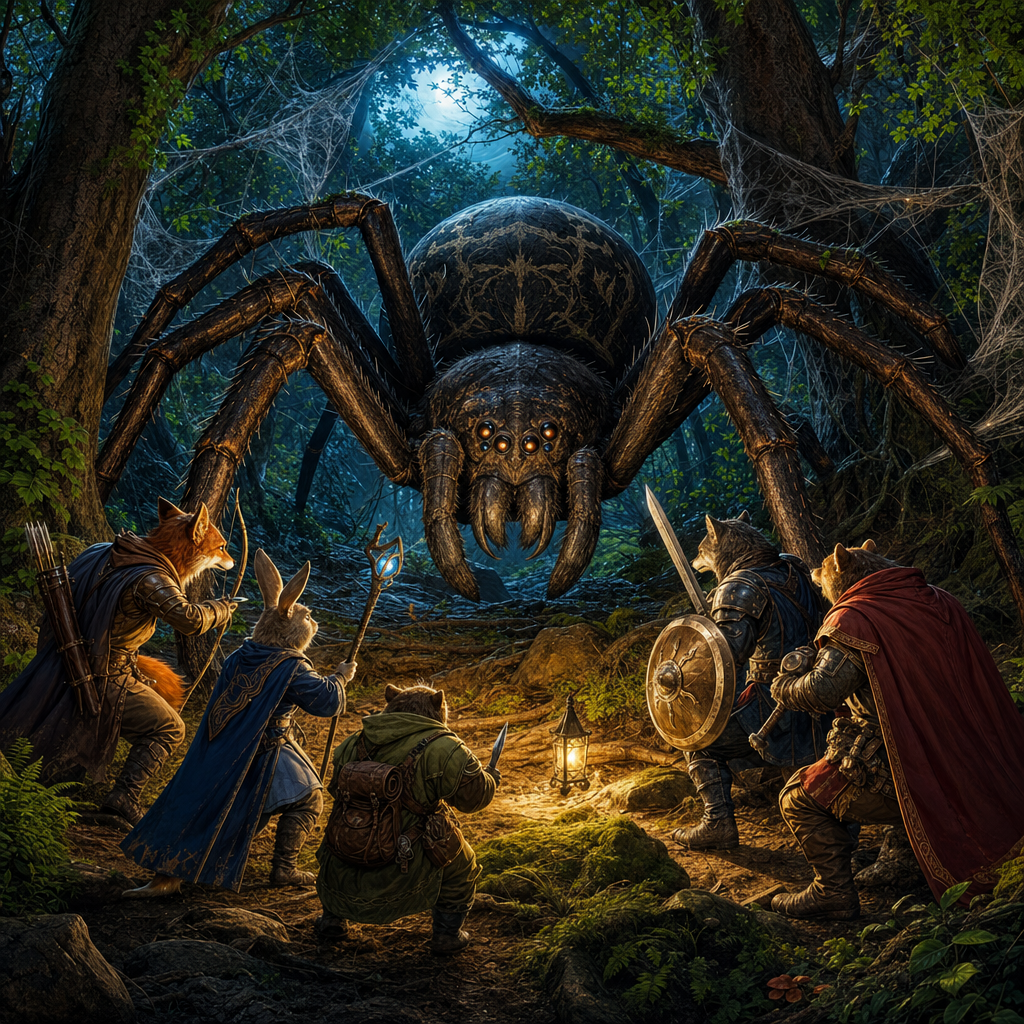
I'll be honest: the first time I threw giant insects at my solo campaign, it felt lazy. I was tired, it was late, and I just grabbed "giant spider" off a random encounter table because it fit the CR and the forest setting. My ranger tracked it, killed it in three rounds, and I moved on thinking nothing of it.
Then a month later, I did it again—but this time I committed. I described the way the giant centipede's legs clicked against stone. How its antennae twitched when it sensed vibration. How it didn't just attack—it pursued, flowing over obstacles like water. That encounter lives in my head rent-free. The giant insects dnd stat blocks come alive when you treat them like actual alien predators instead of just hit-point sacks with legs.
Why Giant Insects Work (When They Work)
Giant insects occupy a weird space in D&D's monster roster. They're not glamorous. Nobody's going to commission fan art of a heroic battle against a giant wasp. But they solve specific problems that dragons and demons can't.
First, they're ecologically plausible. A nest of giant ants makes sense near a myconid colony or a wizard's tower leaking wild magic. They don't need lairs or treasure hoards or grand motivations. They're just there, doing bug things at terrifying scale.
Second, they bring visceral, personal horror. Everyone's had a close encounter with a spider or a wasp. Scaling that up to horse-sized taps into primal discomfort in a way that a purple worm or an owlbear can't quite match. The familiar made monstrous hits different.
Third, they're mechanically versatile. Need a stealth encounter? Giant spiders with web sense. Want swarm tactics? Giant ants with coordinated pack behavior. Low-CR flying threat? Giant wasps. They fill niches without feeling like reskinned wolves.
The Giant Insects Worth Using
Not all giant bugs are created equal. Here's what actually plays well:
Giant Spider (CR 1)
The workhorse. Web attack, spider climb, blindsight. It's a complete encounter in one stat block. Use them in caves, abandoned buildings, or dense forests where their webbing creates three-dimensional terrain. Pro tip: describe the web strands catching light before the spider appears. Build dread.
Giant Centipede (CR 1/4)
Underrated. That poison damage adds up, and they can squeeze through tight spaces. I use them in dungeon crawls where the walls become threats. Nothing says "this ruin is old and wrong" like centipedes the length of a man emerging from cracks in the masonry.
Giant Wasp (CR 1/2)
Flying, stinging, and just fast enough to be annoying. They're perfect for outdoor encounters where melee characters can't easily retaliate. Bonus: their nests make excellent environmental hazards. Players learn real fast not to cast fireball near a paper structure the size of a cottage.
Giant Scorpion (CR 3)
The big sibling. Two attacks, decent HP, and that grapple-plus-sting combo punishes single targets. I've used them as desert guardians and underdark patrol creatures. They're smart enough to ambush from sand or rubble, turning terrain into a weapon.
Ankheg (CR 2)
Technically not in every "giant insects" list since it's a monstrosity, but it feels like a giant beetle-cricket hybrid, and that acid spray is a party-shaker. They burrow, they ambush from below, and they make farmland or grassland encounters memorable. I once built an entire session around farmers losing livestock to something that hunted from underground. The reveal—mandibles erupting from the soil—was worth the setup.
How I Actually Run Giant Insect Encounters
Here's the thing: giant insects dnd stat blocks are simple. Most have one or two attacks, maybe a special ability, and not much HP. They live or die on presentation and tactics.
Use the Environment
Bugs don't fight fair. Giant spiders drop from ceilings. Giant ants collapse tunnel walls to separate the party. Giant wasps dive-bomb from above, forcing characters into cover or difficult terrain. If your insects are just walking up and making attack rolls, you're doing it wrong.
Describe the Alien Anatomy
Compound eyes don't blink. Mandibles don't express emotion. Legs move in unsettling patterns—too many joints bending in ways mammalian limbs don't. When a giant centipede coils around a PC, describe the texture of its exoskeleton, the way its legs grip, the smell of its venom. Make it gross.
Play with Scale
A "giant" spider is the size of a riding horse. Let that sink in. Its fangs are as long as daggers. Its legs span ten feet. When it moves, the ground feels it. Don't let your players forget they're fighting something that weighs half a ton and operates on insect logic.
Give Them Behavior, Not Personality
Insects aren't cunning. They're programmed. A giant spider doesn't flee because it's afraid—it retreats to its web where it has advantage. Giant ants don't negotiate—they swarm threats to the colony. This predictability is actually a feature. Players can learn patterns, exploit behaviors, and feel smart without the encounter becoming trivial.
When Giant Insects Don't Work
Real talk: they're not always the answer. If your campaign is high-magic political intrigue in a city, giant bugs feel random unless you're deliberately using them for bioweapon horror or wizard-experiment-gone-wrong vibes. They thrive in:
- Wilderness campaigns—hexcrawls, exploration, survival themes
- Underdark adventures—the classic giant-insect habitat
- Ruins and dungeons—where nature reclaims civilization
- Low-to-mid level play—they're CR 1/4 to CR 3 mostly, perfect for tiers 1 and 2
They lose impact at higher levels unless you're using them in swarms or pairing them with environmental hazards. A level 12 party will shred a lone giant spider. But a cave system full of them, where webbing blocks escape routes and spider climb lets them attack from any angle? That still works.
A Personal Aside: Biscuit the Battle Goat
I mentioned my farm upbringing. We had this goat named Biscuit—stubborn, ornery, and convinced he ruled the property. One summer, a hornet nest the size of a basketball appeared in the barn. Biscuit, in his infinite wisdom, headbutted the beam below it. What followed was chaos: Biscuit sprinting in circles, hornets everywhere, me diving behind a hay bale.
Years later, running a solo campaign, I realized that panic—that frantic energy when something small and fast and numerous attacks—is what giant wasps should feel like. Not a stand-up fight. A disruption. Ever since, when I use giant wasps, I run them like Biscuit's hornet disaster: sudden, overwhelming, forcing the party to move instead of standing and trading blows. It's a small thing, but it made those encounters stick.
Building Insect-Based Adventures
If you want to go all-in on giant insects, here are frameworks that work:
The Infestation
A village or outpost is under siege. Giant ants are tunneling under foundations. The queen is somewhere below. The party has to collapse tunnels, fight workers and soldiers, and navigate an increasingly unstable environment. Time pressure, environmental hazards, and a clear goal.
The Silk Road
A forest path is abandoned because giant spiders have claimed it. The party needs to get through—maybe to rescue someone, maybe to reach a destination before a deadline. Every encounter is navigation + combat. Webbing slows movement, spider ambushes punish stragglers, and burning the webs risks forest fires.
The Hive Mind
Something's controlling the insects. A hag, a myconid sovereign, a malfunctioning magic item. The bugs are symptoms of a larger problem. This elevates them from random encounters to story elements. The giant centipedes aren't the villain—they're the villain's surveillance system, their alarm system, their immune response.
Tools for Insect Encounters
If you're homebrewing custom giant insects or want to add personality to stat blocks, Creature Forge AI's monster generator is worth a look. I've used it to create variant spiders with specific venom effects, or giant beetles with burrowing attacks that the core rules don't quite cover. The nice part? You can describe what you want—"giant mantis but make it ambush from foliage with reach attacks"—and it builds the stat block to match.
It's especially useful if you want unique bugs tied to your campaign's setting. A fungal forest might have spore-spreading giant moths. A volcanic region could feature fire-resistant giant beetles. The generator handles the mechanical heavy lifting so you can focus on making them feel right at the table.
Final Thoughts: Bugs Are Tools, Not Filler
Giant insects in D&D get dismissed as low-level filler or random forest trash mobs. That's a waste. They're atmosphere generators. They make spaces feel wild, reclaimed, or dangerous in ways that bandits or wolves can't match. They force tactical thinking—movement, positioning, environmental awareness—without needing complex stat blocks.
The trick is commitment. Describe them like you mean it. Use their abilities with purpose. Let them be alien and wrong in the way that things with too many legs and no regard for personal space are wrong. Your players will remember the encounter where they fought a giant scorpion in a sandstorm more than the tenth goblin ambush.
And if you ever need to stat up a custom giant insect—something specific to your campaign's ecology or a particular encounter idea—give Creature Forge AI a try. Whether you're building a new horror from scratch or tweaking an existing bug to fit your story, it's faster than homebrewing from nothing and keeps the mechanical balance intact.
Now go forth and make your players deeply uncomfortable with things that have exoskeletons.