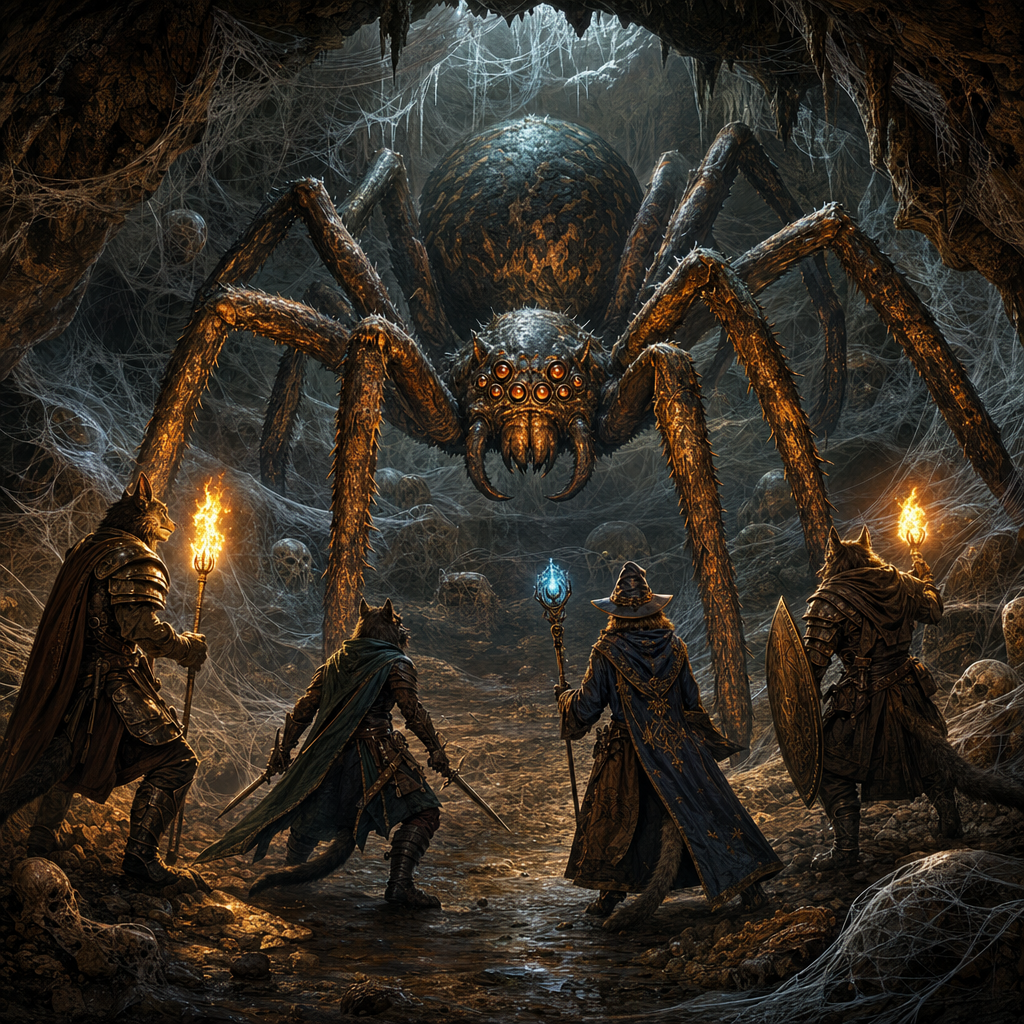
Why Giant Insects 5e Matter More Than You Think
I'll admit something: the first time I threw giant insects 5e at my solo character, I treated them like damage sponges with legs. Random forest encounter. Roll initiative. Swing sword. Repeat. It wasn't until my third or fourth campaign—one where I was playing a ranger who'd spent too much time alone in the swamps—that I realized these creatures are atmospheric gold.
Giant insects in D&D 5e occupy a unique ecological niche. They're not intelligent masterminds. They're not tragic villains. They're alien, primal, and utterly indifferent to your character's heroic journey. That indifference makes them perfect for environmental storytelling, natural hazards, and encounters that feel fundamentally different from bandits or goblins.
The Core Giant Insects 5e Stat Blocks
The Monster Manual gives us a solid foundation of oversized arthropods, each with distinct tactical applications:
Giant Spider (CR 1)
The classic. These eight-legged ambush predators bring web mechanics and poison to low-level encounters. What makes them interesting isn't just the stat block—it's the web terrain they create. Smart DMs turn spider lairs into three-dimensional puzzles where movement itself becomes dangerous.
- Web sense: They detect vibrations, meaning stealth requires more than a good roll
- Web attack: Restrained condition changes action economy dramatically
- Spider climb: Ceiling encounters force players to think vertically
Giant Scorpion (CR 3)
Tougher than spiders and meaner. That stinger attack forcing Constitution saves adds real tension to desert or underground encounters. I've used giant scorpions as desert road hazards and as guardians in ruins where nothing else could survive the heat.
Giant Centipede (CR 1/4)
Low CR but memorable. The poison isn't likely to drop a healthy character, but it chips away at resources. More importantly, centipedes feel wrong—all those legs, that segmented body. Use them in tight spaces where players can hear them skittering in the walls.
Giant Wasp (CR 1/2) and Giant Beetle (Various CRs)
Flying insects change battlefield dynamics entirely. Giant wasps can strafe, retreat to ceiling height, and pick off vulnerable party members. Beetles—whether fire beetles providing natural light sources or giant beetles serving as mounts—add versatility beyond simple combat.
Making Giant Insects 5e Actually Scary
Here's the thing about bugs: we're hardwired to find them unsettling. Even people who aren't phobic get uncomfortable when you describe mandibles the size of shortswords or compound eyes reflecting torchlight. Lean into that sensory detail.
I ran a solo session once where my character—a former farmhand turned cleric, basically me with better armor—tracked something killing livestock outside a village. Turned out to be giant centipedes nesting in an old grain silo. The encounter wasn't mechanically complex, but I described the sound: that dry, chittering scrape of chitin on wood. The way their antennae tested the air. How they moved in that alien, wavelike motion. It worked because I made them feel real.
Sensory Details That Land
- Sound: Clicking mandibles, buzzing wings, the scrape of legs on stone
- Smell: Acidic venom, decay from webbed prey, the dusty scent of chitin
- Movement: Jerky, non-mammalian motion—no warm-blooded smoothness
- Eyes: Compound, multifaceted, utterly emotionless
Tactical Deployment: Environment Is Everything
Giant insects 5e work best when the environment amplifies their abilities. A giant spider in an open field is just a CR 1 punching bag. A giant spider in a narrow canyon filled with webs, poor lighting, and vertical terrain? That's a memorable encounter.
Underground Ecosystems
The Underdark is classic giant insect territory. Darkness, cramped spaces, strange fungi—it's perfect. But don't just drop them in random tunnels. Build ecosystems:
- Giant beetles feed on underground fungus
- Giant spiders hunt the beetles
- Larger predators (hook horrors, umber hulks) hunt the spiders
- Adventurers stumble into the middle of this food chain
Suddenly your giant insects aren't random encounters—they're environmental storytelling showing how this ecosystem functions.
Corrupted Wilderness
A druid gone mad. A fey curse. Ancient magic leaking from a ruin. Whatever the cause, this forest now grows insects to unnatural size. The party finds livestock drained dry, wrapped in silk. They discover wagon-sized carapaces molted beside the road. Eventually they realize they're not hunting a single creature—they're in territory claimed by something that's breeding giant insects.
Desert Ambush Sites
Giant scorpions buried in sand, only their stingers visible. The DC to spot them is high, but perceptive characters might notice the unnatural stillness—no normal insects, no small animals. Smart deployment means the party knows something is wrong before initiative rolls.
Customizing Giant Insects for Your Campaign
The core stat blocks are starting points. The best giant insect encounters come from tweaking abilities to fit your story.
Variant Abilities to Consider
- Swarm tactics: Multiple giant centipedes attacking together, helping each other
- Elemental infusion: Fire beetles that actually explode, frost-touched spiders in winter forests
- Magical mutation: Insects near wild magic zones with unpredictable abilities
- Hive mind: A colony acting with disturbing coordination
- Parasitic horror: Larvae that need living hosts (use sparingly—this gets dark fast)
Scaling for Higher Levels
Giant insects don't need to cap at CR 3. Want a boss-tier arthropod? Start with a giant scorpion and add:
- Legendary resistances
- Multiple attacks (claw/claw/sting becomes claw/claw/claw/sting/tail sweep)
- Lair actions (cave-ins, sudden darkness, tremorsense pulses)
- Regional effects (all insects in the area grow aggressive, natural insects become giant-sized)
A CR 12 Scorpion Empress protecting her breeding pit becomes a legitimate mid-tier boss fight.
When Players Ask "Why Are Bugs So Big?"
Some players will want the in-world explanation. Real insects are limited by oxygen availability and exoskeleton physics. Giant insects in D&D exist because:
- Magic: Druidic ritual gone wrong, wizard experimentation, curse effects
- Planar influence: The Feywild bleeds through here, warping natural growth
- Ancient environments: This cavern has the atmospheric conditions of prehistoric earth
- Divine intervention: A nature deity's punishment or test
- Elemental infusion: Earth nodes causing unnatural growth in all creatures
Pick the explanation that fits your world's logic. Or leave it mysterious—not everything needs a textbook answer.
Building Giant Insect Encounters Players Remember
The difference between "we fought some big bugs" and "remember that spider cave?" comes down to preparation and presentation.
Before the Encounter
Foreshadow. Have NPCs mention livestock disappearing. Show the party massive insect tracks. Let them find a clearing where all the trees are wrapped in silk. Build dread.
During the Encounter
Use dynamic terrain. Webs aren't just flavor—they're difficult terrain with mechanical effects. Cave ceilings collapse. Poison clouds linger. Make the environment part of the threat.
After the Encounter
Giant insects drop interesting materials: venom sacs for poison crafting, chitin plates for armor, silk glands worth gold to the right buyer. Give mechanical rewards that tie to the fiction.
Tools for Building Better Bug Encounters
Sometimes you need a quick NPC to deliver the "something's killing our sheep" quest hook, or you want to customize a giant insect with specific abilities without starting from scratch. That's where Creature Forge AI's monster generator comes in handy—you can tweak challenge ratings, add abilities, and create variant insects that fit your specific campaign needs without spending an hour homebrewing stat blocks.
And here's something genuinely useful: if you've got a pet that would make a hilarious or intimidating giant insect—say, that enormous house spider you photographed once, or your particularly grumpy tarantula—you can actually upload the photo and build a creature that captures that specific look and attitude. It's oddly satisfying to turn Mr. Fuzzybutt the jumper spider into a CR 3 ambush predator.
Final Thoughts: Respect the Arthropod
Giant insects 5e are easy to underestimate. They're not dragons. They're not liches. But they fill an important niche in D&D's ecosystem—both literally and mechanically. They're proof that threats don't need to be intelligent or evil to be dangerous. Sometimes nature itself, scaled up and indifferent, is enough.
Next time you're planning an encounter, consider whether giant insects might serve your story better than another pack of wolves or squad of bandits. Give them the environmental setup they deserve. Describe them with the visceral detail that makes players actually uncomfortable. Use their alien nature to create something that feels genuinely other.
Your players might not thank you in the moment—nobody likes being restrained in spider silk while poison ticks away their hit points—but they'll remember that encounter long after they forget the tenth bandit ambush.
Want to build your own variant giant insects or create memorable encounters without starting from scratch? Try Creature Forge AI's tools and see what crawls out of your imagination. Sometimes the best monsters are the ones that make you check the ceiling before you go to sleep.