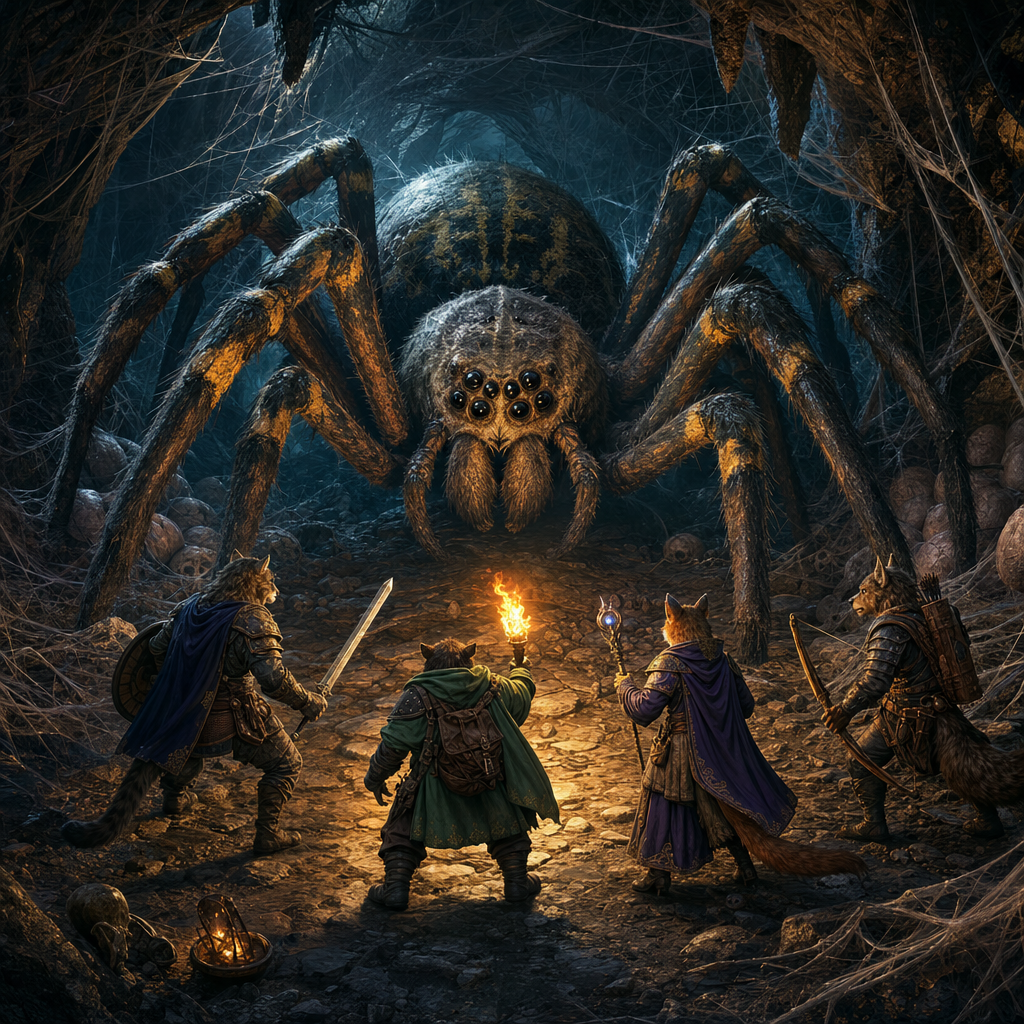
Why Giant Insects Work So Well in D&D 5e
There's something deeply unsettling about giant insect dnd 5e encounters. Take a creature we already find creepy at normal size—a spider, a centipede, a wasp—and scale it up to the size of a horse. Suddenly you've got players who are calm facing down a dragon but genuinely uncomfortable when you describe the clicking mandibles of a giant beetle closing in.
I learned this the hard way during a solo campaign I ran last spring. I'd been experimenting with dungeon crawls after long days on the farm, and I decided my character—a ranger who was absolutely just me with better archery skills—would explore an abandoned granary. I rolled a random encounter. Giant centipede. I'd planned for bandits, maybe some rats. Instead, my ranger spent three rounds in genuine panic, and I realized I was actually leaning away from my notebook as I described its movements.
That's the power of these creatures. They tap into something primal.
The Core Giant Insect Options in 5e
The Monster Manual and supplemental materials give us a solid roster of giant insect stat blocks. Here are the most commonly used:
- Giant Ant (CR 1/2): Straightforward melee attackers with decent hit points. They work best in groups and represent organized hive behavior.
- Giant Spider (CR 1): The classic. Web attacks, spider climb, blindsight, and bite with poison. Versatile and terrifying.
- Giant Wasp (CR 1/2): Flying threat with a painful sting. The mobility makes them excellent ambush predators.
- Giant Centipede (CR 1/4): Small but nasty. That poison bite can drop a low-level character fast. Perfect for tight spaces.
- Giant Scorpion (CR 3): Tougher, with both claw attacks and a poisoned stinger. A legitimate mid-level threat.
- Giant Fire Beetle (CR 0): Combat-wise insignificant, but those glowing glands create fantastic environmental storytelling.
Each of these creatures fills a different tactical niche. The key is matching the insect to the environment and challenge level you're building.
Using the Giant Insect Spell
Beyond naturally occurring giant insects, druids and rangers get access to the giant insect spell (4th level, concentration). This is where things get creative. The spell transforms ordinary bugs into their giant versions for the duration, giving you temporary allies that follow your commands.
The spell lets you create:
- Ten centipedes or three spiders at 4th level
- Three wasps or one scorpion
- Fewer, tougher creatures if you upcast it
What I love about this spell is the flavor. You're not summoning creatures from another plane—you're transforming bugs that are already present. That means you need bugs nearby, which creates interesting strategic considerations. A druid in a dungeon? Limited options. That same druid in a forest or swamp? Suddenly incredibly dangerous.
The creatures use standard giant insect stat blocks, they understand your verbal commands, and they last up to ten minutes. That's a full combat encounter or a short exploration sequence. Just remember: you need concentration, so protect your caster.
Tactical Applications
If you're playing a druid or ranger with this spell, consider these approaches:
- Scouts: Giant wasps have fly speeds and can report back what they see (within the limits of insect intelligence).
- Ambush: Giant spiders can climb walls and ceilings. Position them above a doorway before the fight starts.
- Area denial: Giant centipedes in narrow corridors force enemies to take attacks of opportunity or waste actions dealing with them.
- Tank support: Giant scorpions have good AC and hit points. They can flank alongside your fighter.
Running Giant Insect Encounters as a DM
These creatures shine when you lean into their alien nature. Insects don't think like mammals. They don't retreat when hurt unless their instincts tell them to. They don't negotiate. They're driven by hunger, territory, or hive programming.
Environmental Design
Giant insects demand specific environments. You wouldn't find a giant spider in an open field (well, you could, but why?). Think about where real insects thrive, then make it fantasy:
- Caves and ruins: Perfect for spiders and centipedes. Webs, tight spaces, ambush points.
- Swamps and jungles: Giant mosquitoes (use wasp stats), beetles, and centipedes. High humidity, lots of decay.
- Deserts: Giant scorpions and fire beetles. Sand provides difficult terrain; creatures with tremorsense become deadly.
- Underground hives: Giant ants create sprawling colonies. Multi-level encounters, workers and soldiers, maybe even a queen (beef up the stats).
When you describe these environments, hit the senses. The musty smell of spider silk. The dry rustle of a centipede's legs on stone. The angry buzzing of wasp wings.
Combat Tactics by Insect Type
Giant Spiders are ambush hunters. They hide on ceilings or behind webs (Stealth +7), wait for prey to come close, then drop down. The web attack restrains a target (DC 11 Strength check to escape), then the spider closes in for bite attacks with advantage. If things go badly, they retreat up walls where melee characters can't follow. I once ran an encounter where a giant spider kept retreating, healing wasn't an option, and the party had to decide whether to waste resources chasing it or push forward. Great tension.
Giant Wasps are hit-and-run attackers. That 50-foot fly speed means they can sting and move without provoking opportunity attacks if you're careful. Use them in open areas where they can maneuver. Have them target the same character repeatedly—real wasps do this, and it creates panic. The sting does 3d6 poison damage on a failed save (DC 11 Constitution). Against a party of 2nd-level characters, that's scary.
Giant Centipedes lurk in darkness and strike from hiding. They're only Medium sized, so they fit in spaces your players might not expect. Inside a barrel. Under a staircase. In the bedroll someone left on the ground. The bite attack forces a DC 11 Constitution save or the target takes 3d6 poison damage. These are fragile (13 hit points), but in numbers or as surprises, they're memorable.
Giant Scorpions are front-line fighters. With 52 hit points and AC 15, they can take punishment. They have two claw attacks (each +4 to hit for 1d8+2 damage) and if both claws hit the same target, they can make a bonus sting attack (1d10+2 piercing plus 2d10 poison on a failed DC 12 Constitution save). This isn't automatic—both claws must hit—but when it triggers, it's devastating. Use them as boss encounters for lower-level parties or as elite guards in an underground complex.
Creating Custom Giant Insect Characters
Here's where things get personal. Last year, I uploaded a photo of one of our barn cats—a scrappy tabby named Sergeant who thinks he runs the place—into Creature Forge AI's character generator. I was curious what would happen. The tool created this incredible insect-folk ranger, complete with Sergeant's exact coloring and that same "don't mess with me" expression. Mandibles instead of a mouth, compound eyes, chitinous armor plates. It kept his personality but translated it into something that could exist in a D&D world.
That's when I realized you could use the giant insect concept for player characters or NPCs, not just monsters. Thri-kreen exist as a playable race, but what about other insectoid people? A spider-folk rogue who can climb any surface? A beetle-folk paladin with natural armor? The character generator handles the visual translation perfectly—you upload a photo of anything (a pet, a person, even yourself) and it builds a fantasy version that maintains recognizable features while making it work in the setting.
This is especially useful if you want to create an NPC the party will remember. Generic "giant spider" is fine, but "Widow, the ancient spider-folk queen who speaks in clicking whispers and remembers the old kingdoms" sticks with players. Give them personality. Give them goals beyond "attack the nearest adventurer."
Survival Tips for Players
If you're on the other side of the screen and facing giant insects, here's what you need to know:
General Advice
- Fire works: Most insects have low Dexterity saves and no fire resistance. Burning hands and similar spells are excellent. Even mundane oil and torches matter.
- Poison immunity helps: Many giant insects rely on poison damage. Dwarves, certain subclasses, and protection from poison shut this down.
- Area control beats numbers: Giant insects often attack in groups. Web, entangle, and even grease let you control where they can go.
- Target the spell caster first: If you're fighting summoned giant insects (via the giant insect spell), break the caster's concentration and the whole swarm vanishes.
Specific Counters
Against Giant Spiders: Carry a torch or light source—they rely on hiding. Ranged attacks and spells bypass their climbing advantage. If someone gets webbed, have another party member use their action to help them escape (advantage on the Strength check).
Against Giant Wasps: Force them into enclosed spaces where they can't maneuver. Ready actions to attack when they close in. Protect your back line—wasps target whoever looks squishiest.
Against Giant Centipedes: Watch your feet. Seriously. Check hiding spots before you rest. A single giant centipede isn't scary, but three of them ambushing you while you sleep can end a campaign.
Against Giant Scorpions: Keep your distance and use ranged attacks if possible. If you must go melee, don't clump up—that sting attack is devastating, and you don't want to make it easy for the scorpion to hit the same person twice. Debuffs help; anything that imposes disadvantage on attack rolls reduces the chance of that double-claw trigger.
Flavor and Worldbuilding
Giant insects aren't just combat encounters. They're worldbuilding opportunities.
Why are there giant insects in your world? Magic? Ancient experiments? Natural evolution in a high-magic environment? Maybe they're normal in certain regions, and locals have adapted. A desert town might harvest giant scorpion venom for antitoxins. A jungle community might cultivate giant beetles for their chitin (armor material) or luminescent glands (lighting).
Giant ant colonies could function as almost dungeon-like structures with their own internal logic. Workers, soldiers, a queen. Tunnels that connect to other parts of your world. Maybe there's a whole ecosystem down there—other creatures that prey on or live alongside the ants.
I ran a one-shot where the party had to negotiate with a hive of giant ants (using speak with animals) because a band of goblins had moved in deeper in the tunnels and both groups were suffering. The ants couldn't communicate complex ideas, but they could show the party where the goblins were. It turned a simple "clear the dungeon" quest into something weird and memorable. One of my players still brings up the "ant diplomacy session."
Balancing Challenge and Fun
Giant insects can swing from trivial to overwhelming fast. A CR 1/4 giant centipede is a joke for a 5th-level party. Ten giant centipedes suddenly become interesting. The key is action economy and environment.
Don't throw random giant insects at your party without context. Build encounters where the creatures make sense and where their abilities matter. A giant spider in an open field? It's just a bag of hit points with a bite attack. That same spider in a web-choked ruin where it can hide, climb, and restrain characters? Suddenly dangerous.
Also, remember that not every encounter needs to be balanced for a fair fight. Sometimes giant insects are environmental hazards the party can avoid, negotiate around, or handle with clever thinking instead of combat. Maybe they need to sneak past a sleeping scorpion. Maybe they can collapse a tunnel to seal off a wasp nest. Give players options.
Why These Creatures Stick With Players
Back on the farm, we had a rooster named Hank who terrorized everyone. He'd chase the dogs, go after the goats, and once cornered me by the barn for a solid five minutes. Genuinely aggressive, that bird. When I started playing D&D, I didn't give him a stat block—but I should have. He would've made a better monster than half the things I threw at my characters.
Giant insects work for the same reason Hank worked as a farm villain: they're visceral. We understand what a spider does, how it moves, what it wants. Scale that up and add hit points, and suddenly it's fantasy without losing the grounding in reality. Your players have encountered insects. They know how unsettling they can be. You're just giving them a version where running away might not be enough.
That's the secret. Giant insects aren't dragons or demons—they're familiar fears made manifest. Use them right, and your players will remember the encounter long after they've forgotten the goblin ambush or the bandit camp.
Ready to Build Your Own Encounter?
Whether you're designing a monstrous hive encounter or creating an insectoid NPC the party will never forget, Creature Forge AI can help you