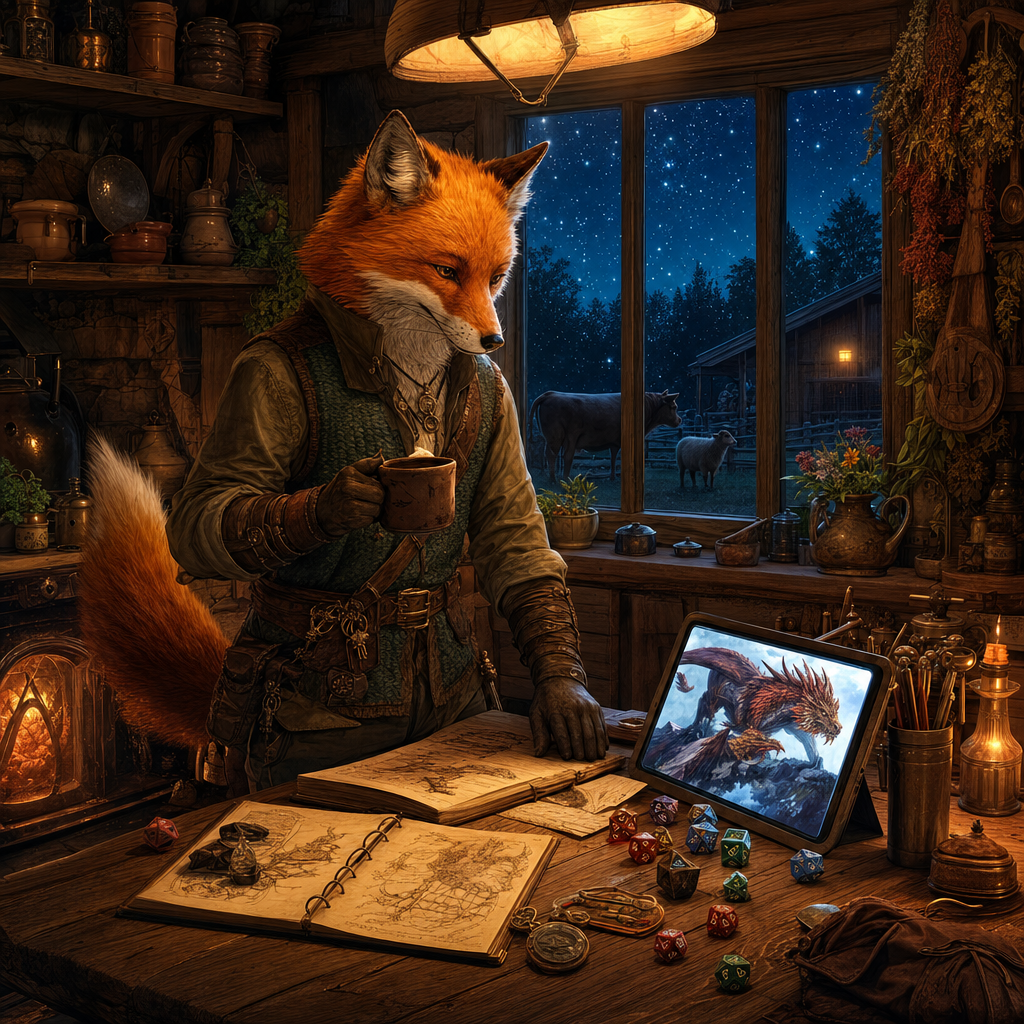
I came to D&D the way most solo players do—out of necessity and a stubborn refusal to let a lack of players stop me from adventuring. Late nights after farm chores, just me, a pot of coffee, and whatever random encounter my dice decided to throw at me. The problem? My imagination could only conjure so many goblins before they all started feeling like the same goblin wearing different hats.
That's when I started hunting for free AI tools for D&D that could actually help. Not replace the experience—never that—but fill in the gaps when my brain was too tired to invent another NPC personality or stat block from scratch.
I've tested a lot of tools. Most were either too generic, too complicated, or locked their best features behind paywalls that made my wallet weep. But some genuinely work. Here's what I've learned.
What Makes a D&D AI Tool Actually Useful
Before we dive into specific tools, let's talk about what "useful" means when you're sitting at a table—solo or otherwise—and need help right now.
A good AI tool should:
- Generate content quickly without seventeen prompts and three page refreshes
- Produce results that fit 5e mechanics (not just fantasy-flavored nonsense)
- Offer enough variety that your tenth skeleton doesn't feel identical to your first
- Actually be free for the core features, not "free" with asterisks
That last point matters. I don't mind supporting developers, but when you're testing tools at 1 AM between checking on a pregnant goat, you need something that works without a credit card.
Monster and Creature Generators
This is where most players start, and honestly, where AI tools shine brightest. Creating balanced, interesting monsters is hard work. Having something else handle the math while you focus on making it terrifying? That's the dream.
What to Look For
The best monster generators understand challenge rating isn't just a number—it's a promise to your players about what they're facing. You want tools that:
- Let you specify CR ranges that match your party level
- Generate proper stat blocks with actions, reactions, and legendary abilities where appropriate
- Include lore or description text you can actually use at the table
- Produce something visually interesting, not just numbers
I've found Creature Forge AI's monster generator hits all these marks. Full disclosure: it's become my go-to specifically because it doesn't just spit out stat blocks—it creates actual illustrations of the creatures. When I'm describing a horror to my imaginary party at midnight, having a visual reference keeps me consistent and honest about what this thing actually looks like.
The tool handles everything from CR 0 critters to endgame terrors, and the descriptions feel specific rather than generic. My favorite recent creation was a corrupted farm dog guardian—definitely not inspired by anything personal—that had this perfect mix of tragic and threatening.
Quick Tips for AI-Generated Monsters
Even the best tools need a human touch:
- Always review the math. AI occasionally gets creative with how damage dice should work.
- Adjust flavor text to match your campaign's tone.
- Don't be afraid to mix and match—take the stats from one generation and the appearance from another.
- Save everything. That "failed" monster might be perfect three sessions from now.
Character and NPC Creation
Here's where things get interesting, and where I've seen the biggest difference between tools that understand D&D and tools that just understand "fantasy character generator."
NPCs need personality. Stats matter, sure, but what you really need at the table is to know how this blacksmith talks, what motivates this merchant, why this quest-giver can't solve their own damn problem.
The Photo Upload Game-Changer
This is going to sound weird, but the feature that changed everything for me was discovering tools that let you upload actual photos to generate characters. Stay with me.
I uploaded a picture of Biscuit, my goat who has more personality than most people I know, into Creature Forge AI's character generator. What came back was a satyr ranger that somehow captured his stubborn independence and surprising grace. The stats were solid 5e, but the character was right there—I knew exactly how this ranger would react to every situation because I'd watched Biscuit navigate the farm hierarchy for years.
Suddenly all my NPCs had faces I recognized. My border collie became a lupine scout. The barn cat turned into a mysterious tabaxi rogue. Even my ornery rooster (may he rest in peace) lives on as an aarakocra cleric with an attitude problem.
It sounds silly until you're three hours into a solo session and you need to improvise how the innkeeper reacts to your character's question, and instead of generic fantasy person #47, you're channeling your neighbor's personality quirks because that's whose photo you used.
Tools for Different Play Styles
For Solo Players
If you play solo like me, you need tools that reduce prep time without reducing quality. Look for:
- Quick generation times (you lose momentum waiting for loading screens)
- Enough randomness that you surprise yourself
- The ability to save and organize your creations
- Export options that work with your preferred note-taking system
For DMs With Groups
When you're running for actual humans, different priorities emerge:
- Consistency across sessions (save those NPCs with their exact stats)
- Speed during gameplay (sometimes you need a shopkeeper right now)
- Visual aids your players can see
- Flexibility to adjust on the fly
What About Name Generators and Lore Tools?
Honestly? Most dedicated name generators are fine but forgettable. The best AI tools integrate name generation with character creation—you get a name that actually fits the character concept, not just a random syllable combination.
For lore and world-building, AI tools are hit-or-miss. They excel at generating individual elements (this tavern, that magic item, one quest hook) but struggle with long-term consistency. Use them for inspiration and specific details, not entire campaign settings.
The Free vs. Paid Question
Here's my honest take after testing everything I could find: truly free tools exist, but they often limit how many generations you get per day or lock certain features. That's fair—developers deserve to eat.
The key is finding tools where the free tier is actually useful, not just a teaser. You want something you can rely on during a session, not something that cuts you off after three monsters when you're in the middle of a dungeon crawl.
Look for tools that offer:
- A reasonable number of free daily generations
- No watermarks or restrictions on using what you create
- Core features available without payment
- Clear information about what's free versus premium
My Current Workflow
After months of experimentation, here's what actually works for me:
Before a session, I generate 2-3 monsters I might need and 4-5 NPCs of varying importance. I use AI tools for the NPCs because getting both appearance and personality simultaneously saves enormous time. During play, I keep one tab open for emergency generation—that moment when players decide to interrogate a random guard you never planned to stat out.
I save everything in a simple folder system: Monsters, NPCs, Characters (for when players want to try new builds), and a "Maybe Later" folder for interesting generations that don't fit the current campaign.
The photo upload feature stays in rotation. Any time I meet someone interesting or see an animal with character, I snap a picture. You never know when you'll need a hedge wizard based on your aunt's Persian cat.
Final Thoughts from the Solo Table
Free AI tools for D&D aren't going to replace imagination, preparation, or the genuine creativity that makes tabletop gaming special. They're not supposed to. What they do—when they work right—is remove friction from the parts of the game that feel like work so you can focus on the parts that feel like magic.
That late-night campaign when you're exhausted but want to keep playing? That's when having a tool that can generate a balanced encounter in thirty seconds makes the difference between another hour of adventure and calling it a night.
The best tools feel less like technology and more like a very efficient, very tireless assistant who never judges your 2 AM creative decisions and doesn't mind when you reject fifteen generations before finding the perfect one.
If you're still hunting for reliable tools, try Creature Forge AI for your next session. Whether you need a monster, a character, or an NPC, the combination of solid 5e mechanics, actual artwork, and that photo-upload feature for bringing real-world inspiration into your fantasy world makes it worth the bookmark. It's what I use, and I've tested enough alternatives to know the difference between "technically functional" and "actually helps me play better D&D."
Now if you'll excuse me, I have a goat to check on and a campaign to prep. My players—imaginary though they may be—are about to meet a suspicious merchant who looks an awful lot like Biscuit, and I'm genuinely curious how that's going to play out.