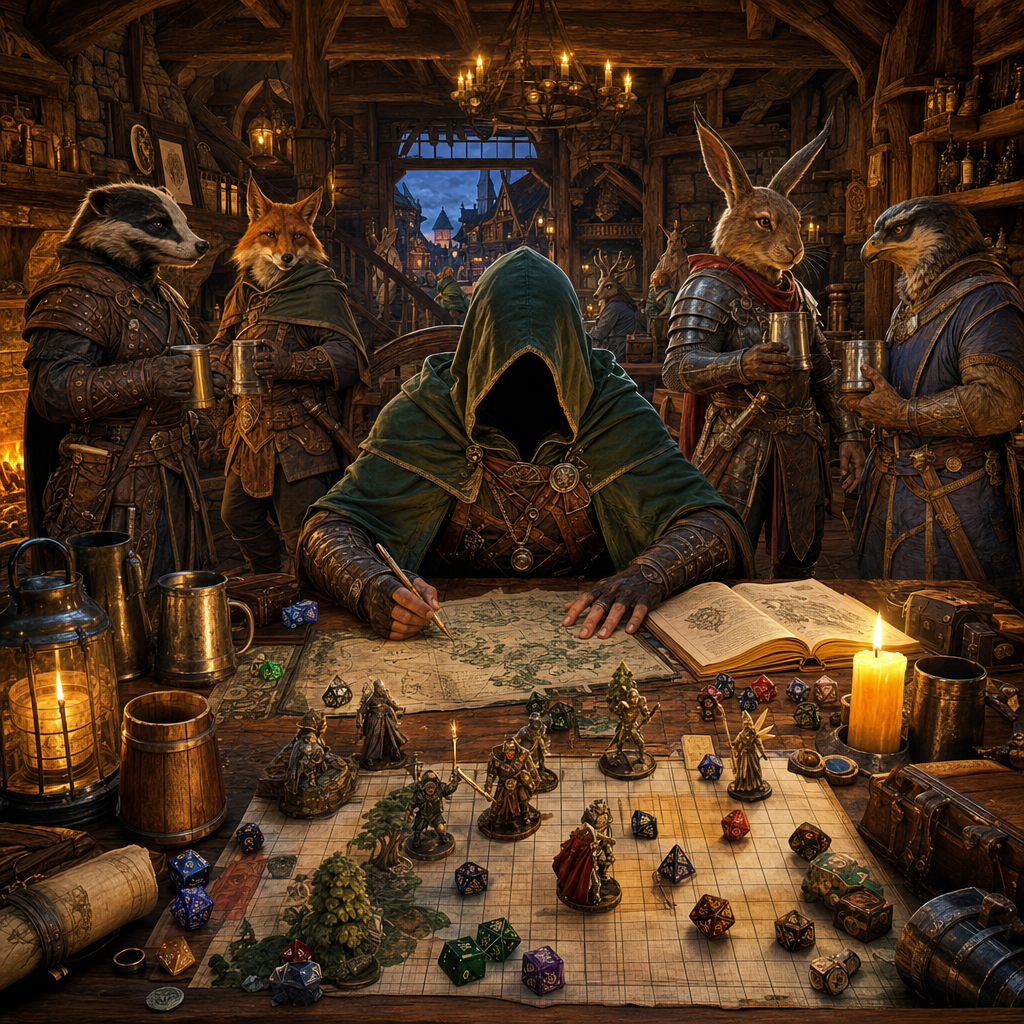
I'll be honest—my first time behind the DM screen, I had three pages of notes, a homebrew encounter I was way too proud of, and approximately zero clue what I was doing. My players spent forty-five minutes arguing about whether to knock on a tavern door or just walk in. I hadn't prepped for that. Nobody preps for that.
But here's the thing: you don't need to be perfect. You need to be ready enough. This first time DM checklist will help you prep the stuff that actually matters, skip the noise, and walk into your first session with confidence instead of a three-ring binder full of panic.
Before You Prep: The Mindset Stuff
Let's start here because it's easy to get lost in the weeds. Your job as a first time DM isn't to be a walking rule encyclopedia or a professional voice actor. Your job is to facilitate a story your players want to be part of. That's it. Everything else is window dressing.
I ran my first solo campaign on a farm in the middle of nowhere, late nights with a cup of coffee and a notebook. No pressure, no audience, just me and the dice. It taught me something crucial: the best sessions happen when you care more about the story than being right. Your players will forgive a forgotten rule. They won't forgive a boring game.
The Essential First Time DM Checklist
1. Know Your System (But Not All of It)
You're probably running D&D 5e. Great. You don't need to memorize the Player's Handbook. You need to know:
- How combat works: initiative, attack rolls, saving throws, death saves
- Ability checks: when to call for them, how to set DCs
- The basics of spellcasting: spell slots, concentration, what happens when a wizard says "I cast Fireball"
- How to look things up fast: bookmark key pages, use a DM screen, keep the index handy
Everything else? You'll learn by doing. I promise the game won't collapse if you rule something wrong in session one. Just stay consistent within your own game.
2. Prep Your Adventure (Lightly)
Here's what you actually need for session one:
- A clear starting scenario (tavern meeting, dungeon entrance, caravan under attack—something immediate)
- Three to five encounters or scenes (mix combat, roleplay, and exploration)
- A simple conflict or mystery to hook your players
- One cool moment you're excited to run
Do not write a novel. Your players will ignore 80% of your prep and fixate on the one throwaway NPC you made up on the spot. Prepare loosely. Build around player choices, not a script.
3. Create (or Steal) Your NPCs
You need a handful of NPCs ready to go—questgivers, shopkeepers, villains, allies. Give each one:
- A name (keep a random name generator handy for the ones you don't prep)
- A personality quirk or voice hook (grumpy, overly polite, talks too fast)
- A motivation (what do they want from the players?)
If you want to skip the busywork and get straight to memorable characters, try the NPC generator at Creature Forge AI. You can even upload a photo—I used a picture of my border collie once and got a lupine scout NPC with her exact energy: scrappy, loyal, way too smart for her own good. Saved me an hour of note-taking and gave me a character my players still talk about.
4. Prepare Your Monsters and Encounters
Pull stat blocks for any creatures you plan to use. Keep them printed or bookmarked. Know approximately how much HP they have and what their signature moves are. You don't need to memorize every ability—just enough to run them without flipping through the Monster Manual mid-combat.
Pro tip: use AI-generated monsters if you want something your players haven't seen before. Custom creatures keep veterans on their toes and make your world feel alive.
5. Gather Your Materials
You'll need physical (or digital) versions of:
- Dice (at least one set; ideally a spare for players who forget)
- Character sheets (printed or shared digitally)
- Your adventure notes (brief, bullet-point style)
- Scratch paper for tracking initiative, HP, and conditions
- A DM screen (optional but helpful for quick reference)
- Miniatures or tokens (also optional—theater of the mind works fine)
Don't overthink this. I've run sessions with a notebook and a handful of d6s borrowed from a Yahtzee set. If the story's good, nobody cares about production value.
6. Set Expectations with Your Players
Before the dice hit the table, have a quick conversation about:
- Tone (heroic fantasy? Dark and gritty? Goofy and chaotic?)
- House rules or safety tools (lines and veils, session zero topics)
- What kind of game they want (combat-heavy, roleplay-focused, exploration-driven)
- Scheduling and commitment (how often do you meet? What happens if someone misses?)
A five-minute alignment conversation prevents hours of table friction later.
The Night Before: Final Checks
Run through this quick list 24 hours before game time:
- Reread your adventure notes (but don't rewrite them—it's too late for that)
- Double-check you have stat blocks and maps ready
- Confirm everyone knows when and where you're playing
- Get a good night's sleep (seriously—tired DMs make sloppy calls)
And here's the big one: accept that something will go sideways. A player will do something baffling. A dice roll will derail your plan. An NPC you meant to kill will become the party's best friend. Roll with it. That's not a bug—it's the whole point of this game.
During the Session: Your In-Game Checklist
Once you're at the table, keep these principles in mind:
- Start strong: drop your players into the action immediately—no thirty-minute backstory dump
- Say yes (and): when a player tries something cool, find a way to make it work
- Track time loosely: initiative, rests, travel—don't let the game bog down in bookkeeping
- Take breaks: every 60–90 minutes, pause for snacks and bathroom runs
- End on a hook: stop mid-tension so players are excited to come back
When You Don't Know a Rule
Make a quick ruling and move on. Write it down. Look it up after the session. This keeps momentum alive and prevents the dreaded "everyone stares at books for ten minutes" dead zone.
When Players Go Off-Script
Let them. Seriously. The best moments in D&D are unscripted. If your players ignore your dungeon to adopt a goblin, lean into it. That goblin is now the most important NPC in your campaign.
After the Session: Debrief and Improve
Once the session wraps, take fifteen minutes to:
- Ask your players what they liked and what felt slow
- Write down any rules you fudged or forgot
- Note which NPCs or plot threads landed
- Prep lightly for next session based on where the story's headed
DMing is a skill you build session by session. Your tenth game will feel radically different from your first. That's growth.
Tools to Make Your Life Easier
You don't need fancy software to DM, but a few tools can save you serious time. Creature Forge AI is my go-to when I need characters, NPCs, or monsters fast. The photo-upload feature is genuinely wild—I've turned my old rooster (rest in peace, you aggressive little dinosaur) into a cockatrice villain and my childhood dog into a paladin. If you're short on prep time or just want something that feels personal, it's worth trying.
You're Ready
Look, your first session won't be perfect. Neither was mine. Neither was anyone's. But if you care enough to read a first time DM checklist, you're already ahead of the curve. Your players aren't expecting a professional performance—they're expecting a good time. Focus on that, trust your instincts, and remember: the story you're building together is bigger than any single fumbled rule or forgotten NPC name.
Now go roll some dice.
And if you need a shortcut on monsters, NPCs, or custom characters, Creature Forge AI has your back. Upload a photo, get a fully-stated character, and spend your prep time on the stuff that actually matters—like figuring out what happens when your players inevitably try to seduce the dragon.