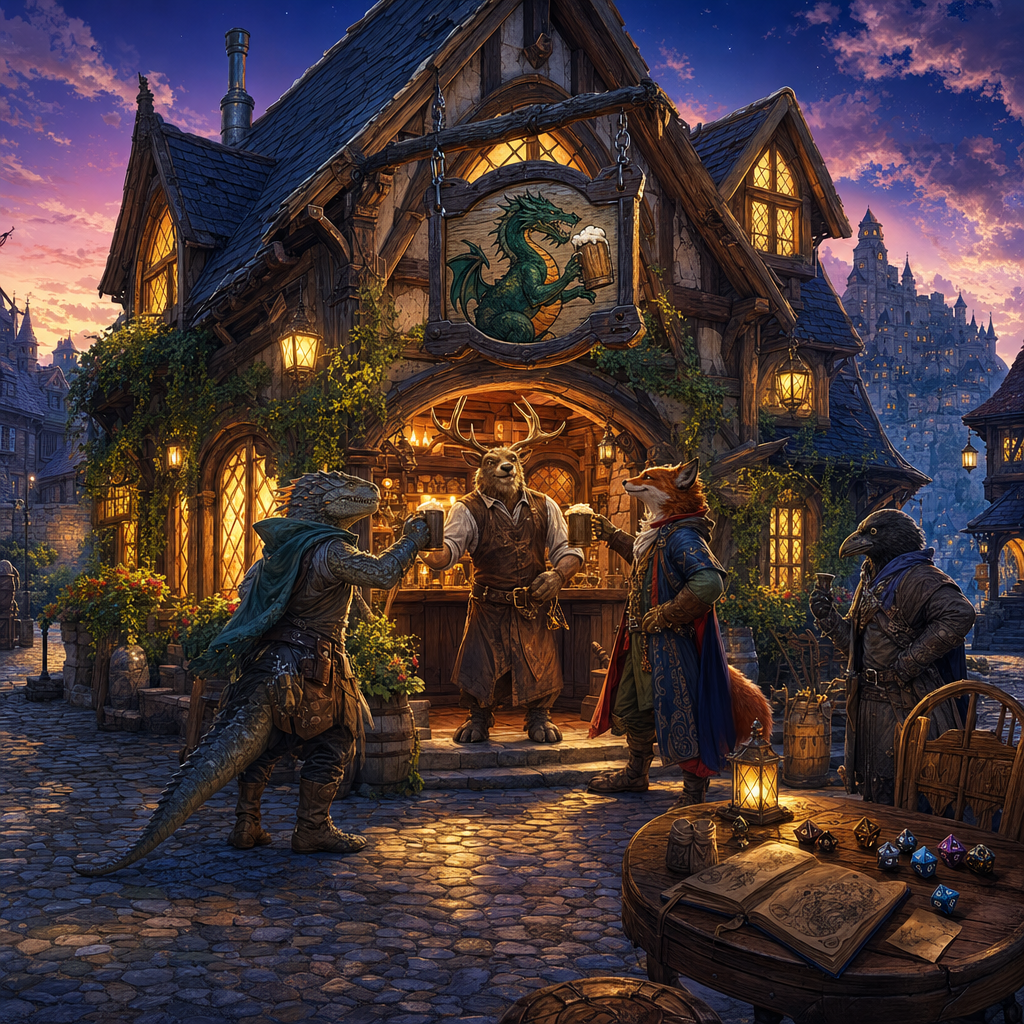
I'll be honest—I've named more taverns than I care to admit. Running solo campaigns late at night with nothing but coffee and dice, you burn through fantasy tavern name ideas faster than a bard burns through gold pieces. My early attempts were... let's say uninspired. "The Rusty Sword." "The Sleeping Giant." Once, in a moment of pure creative bankruptcy, I called one "Steve's Place" and my imaginary party loved it ironically, which somehow made it worse.
But here's what I've learned: a great tavern name does more than fill a blank on your map. It sets tone. It hints at history. It gives your players something to latch onto and remember. And if you're stuck staring at your notebook at midnight wondering what to call the inn where your ranger just walked in soaking wet, you need a system.
The Anatomy of a Good Tavern Name
Most fantasy tavern names follow a simple formula: The [Adjective] [Noun]. But the magic is in the details. The best names tell a micro-story. They make you wonder. Why is the dragon sleeping? What happened to make the horse headless? Who is this prancing pony and what's his deal?
Here's what works:
- Animal + Action: The Prancing Pony, The Leaping Stag, The Coiled Serpent
- Weapon + Condition: The Broken Blade, The Rusty Anchor, The Bent Spear
- Mythical Creature + State: The Sleeping Dragon, The Drowsy Griffin, The Waking Wyrm
- Object + Color: The Golden Flagon, The Silver Chalice, The Brass Lantern
- Profession + Descriptor: The Honest Merchant, The Drunken Sailor, The Singing Bard
The formula gives you structure. The specific words give you personality.
Tavern Names by Setting and Tone
Rural and Roadside Inns
These are the places farmers stop on the way to market. The buildings lean slightly. The ale is cheap and strong. The rooms smell like wet dog because someone definitely brought their wet dog inside.
- The Wayward Mule
- The Crooked Millstone
- The Broken Wagon Wheel
- The Hay Bale and Horn
- The Muddy Boot
- The Rooster's Rest
- The Plowman's Friend
- The Honest Ox
I grew up on a farm, and let me tell you—if there was a tavern within ten miles of our property, it would absolutely be called The Rooster's Rest, because our rooster was a tyrant who controlled the yard with an iron talon and the only rest anyone got from him was at sundown. These names work because they're grounded in the everyday details of rural life.
Port Towns and Coastal Taverns
Salt air. Questionable seafood. Sailors with stories that are definitely lies. These taverns have seen things wash ashore.
- The Rusty Anchor
- The Siren's Pearl
- The Barnacle and Blade
- The Drunken Mermaid
- The Captain's Coin
- The Saltwater Rose
- The Knotted Rope
- The Harbormaster's Daughter
City Taverns and Upscale Establishments
These places have reputations. The furniture matches. Someone polishes the bar. Adventurers come here when they've got gold to spend and reputations to maintain.
- The Golden Griffin
- The Silver Serpent
- The Velvet Glove
- The Crown and Scepter
- The Sapphire Dragon
- The Ivory Tower
- The Gilded Throne
- The Phoenix's Wing
Dive Bars and Rough Establishments
You don't go here for the ambiance. You go here because you're meeting someone who doesn't want to be seen, or because everywhere else banned you, or because the ale is three copper and you've only got four copper total.
- The Bloody Stump
- The Broken Tooth
- The Gutted Fish
- The Black Eye
- The Headless Ogre
- The Mangy Rat
- The Cracked Skull
- The Last Chance
The Secret Naming Technique Nobody Talks About
Here's my actual process when I need a fantasy tavern name on the fly: I look around my room and combine what I see with a fantasy twist. Coffee mug on my desk? The Copper Mug. Book about birds? The Painted Finch. My border collie staring at me? The Loyal Hound.
It sounds ridiculous, but it works because real objects ground your fantasy names in something tangible. Your brain makes the connection instantly. The name feels real because it's built from real pieces.
And if you want to go deeper—if you want tavern characters who feel just as real—that's where tools like Creature Forge AI's NPC generator come in handy. You can create the grizzled tavernkeeper, the mysterious hooded figure in the corner, the bard who won't stop playing Wonderwall. The detail makes the place come alive.
Names with Stories Built In
The best tavern names make your players ask questions. Here are some that beg for backstory:
- The Twice-Drowned Sailor — How did he drown twice? Is he still working here?
- The Honest Thief — That's a contradiction that demands explanation.
- The Headless King — Which king? Why is he headless? Is this a political statement?
- The Three-Legged Mare — There's definitely a story about a horse and possibly a tragic accident.
- The Returned Coin — Someone paid their debt. That matters here.
- The Unbroken Promise — Now I want to know what the promise was.
- The Final Round — Ominous. I love it.
When players ask about the name, you know you've got a good one. Make something up. That's the beauty of solo play and improv DMing—the story becomes real the moment you tell it.
Themed Taverns for Specific Campaigns
Sometimes your tavern needs to fit a particular vibe or plot hook.
Magic-Themed
- The Wandering Wizard
- The Spellbound Sage
- The Enchanted Chalice
- The Mystic's Rest
Dark and Mysterious
- The Shadow's Edge
- The Veiled Raven
- The Moonless Night
- The Whispering Shade
Comedic and Light
- The Tipsy Kobold
- The Confused Wizard
- The Singing Dwarf
- The Backwards Dragon
Putting It All Together
You don't need a perfect tavern name. You need one that feels right for your world and gives your players something to grab onto. Start with the formula. Add a detail from your setting. Let it tell a tiny story. And if you panic and name it something weird like "The Uncomfortable Chair," lean into it. Maybe that's the tavern's whole thing. Maybe the chairs are uncomfortable. Maybe that's why the ale is cheap.
The truth is, your players will remember the moments that happen inside the tavern more than the name itself. But a good name sets the stage. It makes the world feel considered and real. It tells them you care about the details.
And if you're building out a whole roster of tavern NPCs—the cook with the secret past, the barmaid who's actually a retired assassin, the owner who's definitely hiding something—Creature Forge AI makes it absurdly easy. You can even upload a photo of your actual cat and turn them into a catfolk tavernkeeper. I did that once with my farm cat, Biscuit. He became a surly bartender with a tendency to knock mugs off the counter. Absolutely perfect.
Now go forth and name some taverns. Your players are waiting at the door, dripping wet, demanding ale and a warm fire. You've got this.