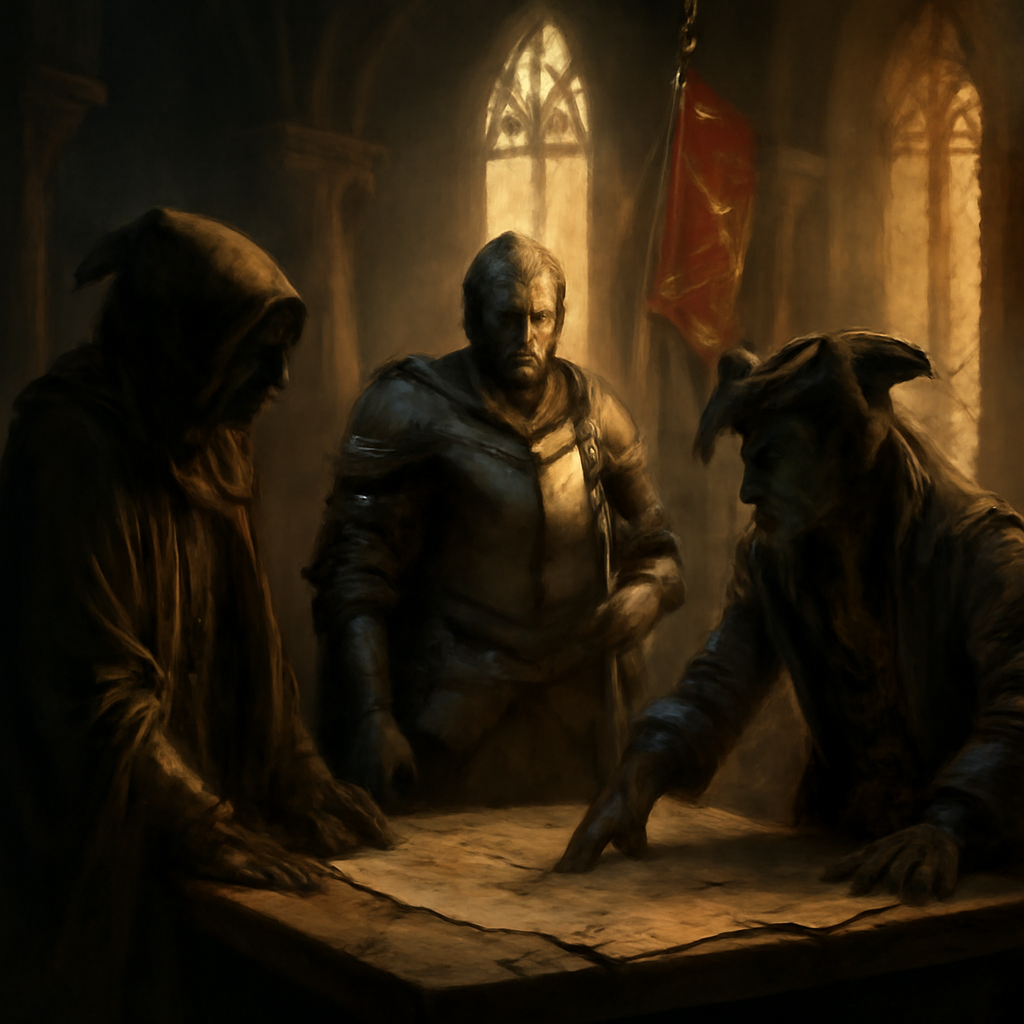
Why Fantasy Faction Ideas Matter
I was three sessions into a solo campaign when I realized something was missing. My character had motivations, the world had geography, but everything felt... flat. Then I created the Thornwatch—a loose network of druids protecting the forest my character grew up in—and suddenly the world had stakes. Someone cared about the land. Someone had enemies. Someone needed help.
That's what good fantasy faction ideas do. They give your world pulse and breath. They create conflict that doesn't require a world-ending villain. They give players (or yourself, if you're running solo) reasons to choose sides, make deals, or start revolutions.
What Makes a Faction Compelling
Before we dive into specific fantasy faction ideas, let's talk about what separates a memorable faction from a forgettable one. The best factions have three things in common:
- Clear goals: They want something specific—territory, knowledge, revenge, reform
- Internal complexity: Not everyone in the faction agrees on methods or priorities
- A distinctive personality: They have their own culture, symbols, and way of doing things
That third point is where I have the most fun. I once uploaded a photo of my border collie, Maggie, into Creature Forge AI's character generator and turned her into a Lupine ranger leading a faction of wilderness scouts. The tool built her stats and backstory, but more importantly, it gave me a visual anchor—I could see her as a character, which made writing her faction's personality so much easier.
Classic Fantasy Faction Ideas with a Twist
The Merchant Guild (But Make It Weird)
Everyone knows merchant guilds. But what if yours specialized in something unexpected? Here are some angles:
- The Quiet Coin: A guild that only trades in secrets, information, and favors—never actual gold
- The Mourner's Market: Merchants who buy and sell items from the dead, operating exclusively in cemeteries at midnight
- The Living Ledger: A guild where every transaction is tattooed onto the skin of designated "memory keepers"
Give them internal drama. Maybe the younger members want to modernize, while the old guard refuses to change. Maybe they're being blackmailed. Maybe their leader just died and three people claim the succession.
The Religious Order (Beyond the Temple)
Religious factions don't have to be about worship services and holy quests. Consider:
- The Archived Faithful: A sect that believes gods are stories we tell, and their job is to preserve every version of every myth—even contradictory ones
- The Scar Pilgrims: Wandering priests who believe suffering is sacred and voluntarily take on others' pain
- The Ember Keepers: A fractured church where each branch worships a different aspect of the same dead god, competing to "resurrect" their version
Religious factions work best when they have doubt. The most interesting faithful are the ones who question, argue, and struggle with belief.
The Criminal Underworld (With Standards)
Thieves' guilds are D&D classics, but the best ones have codes and lines they won't cross:
- The Empty Pockets: A guild that only steals from the wealthy, and even then, only enough to redistribute
- The Lockless Society: Professional thieves who consider locked doors an insult to their craft—they compete to break in and out without taking anything
- The Forgotten Names: A criminal network that specializes in making people disappear (into new lives, not graves), running an underground identity-change operation
Building Factions Around Your Players
Here's where faction design gets personal. Look at what your players (or you, solo) actually care about, then build factions that intersect with those interests.
Player loves animals? Create a faction of beast-speakers who believe animals should have legal rights. Player has a tragic backstory about a destroyed village? Build a faction of refugees from similar disasters, now turned activists or militants.
I keep a notebook of NPCs I've generated, and half of them started as faction representatives. When I need a face for a group, I'll generate a character in Creature Forge AI—sometimes uploading a photo of one of my chickens or goats—and let the character's personality shape how their faction operates. My rooster, Frank, became a Tabaxi monk leading a pacifist monastery. Perfect.
Regional Faction Ideas
Urban Factions
- The Lamplighters' Union: City workers who light and maintain street lamps—but they're also the eyes and ears of the city, knowing everyone's schedules
- The Ratcatchers' Assembly: Pest control workers who've discovered something living in the sewers and are trying to decide whether to report it or protect it
- The Paper Crown: A shadow government of bureaucrats who actually run the city through procedural control
Wilderness Factions
- The Green Accord: A treaty organization between druids, rangers, and fey creatures that governs use of the wild
- The Rootbound: Settlers who've made peace with a sentient forest in exchange for protection—but the forest is getting demanding
- The Windcallers: Nomadic tribes who follow bird migrations and believe they carry messages from the sky
Making Factions Interact
The magic happens when factions collide. Create natural tensions:
- Two factions want the same resource or territory
- One faction's core belief contradicts another's
- Factions that should be allies distrust each other
- A faction is infiltrated by members of another
Keep a relationship map. Draw it out with arrows showing alliances, rivalries, secret connections. Update it as your campaign progresses. I use colored strings on a corkboard like I'm investigating a crime, because that's the level of drama I need in my solo games at midnight with a cup of coffee going cold.
Small Factions Matter Too
Not every faction needs to be a kingdom-spanning power. Some of my favorites are tiny:
- A three-person book club that happens to include a dragon, a lich, and a gnome inventor
- A neighborhood watch in one city district that's incredibly effective (and slightly paranoid)
- A postal service that's remained neutral through every war and knows everyone's secrets
Small factions feel personal. Players remember them because they have faces and locations. They're not abstract—they're the blacksmith's union on Third Street or the fishing cooperative at the docks.
Bringing Your Factions to Life
Once you've got your fantasy faction ideas sketched out, the real work is making them feel present in your world. Give them:
- Visual markers: Symbols, colors, distinctive clothing or tattoos
- Catchphrases or sayings: How members identify each other
- Spaces: Headquarters, meeting places, territories they control
- Faces: At least 2-3 named NPCs players can interact with
That last point is where tools like Creature Forge AI become invaluable. When I need to flesh out faction leadership or create memorable representatives, I'll generate full character sheets—complete with art—so I have something concrete to work from. The photo upload feature means I can turn real inspirations (yes, including my animals) into actual characters that look the part.
Start Small, Build Big
You don't need ten factions planned before session one. Start with two or three that directly intersect with your players' backstories or the campaign's central conflict. Introduce them naturally—an NPC mentions their guild, players see faction symbols around town, a quest giver represents a specific group.
Let the factions grow as your campaign grows. Take notes on which ones your players find interesting. Expand those. Let the boring ones fade into background noise.
The best fantasy faction ideas are the ones that surprise you as they develop—when NPCs start making decisions you didn't plan, when players join a faction you meant to be antagonists, when two minor factions form an unexpected alliance that changes everything.
That's when your world stops being a stage you built and starts being a place that exists whether the players are looking or not. And honestly? That's the feeling I'm chasing every time I sit down with my dice and my notebook at the end of a long day.
Ready to populate your factions with memorable characters? Head over to Creature Forge AI and start building. Upload a photo, generate a character, and let your faction come to life.