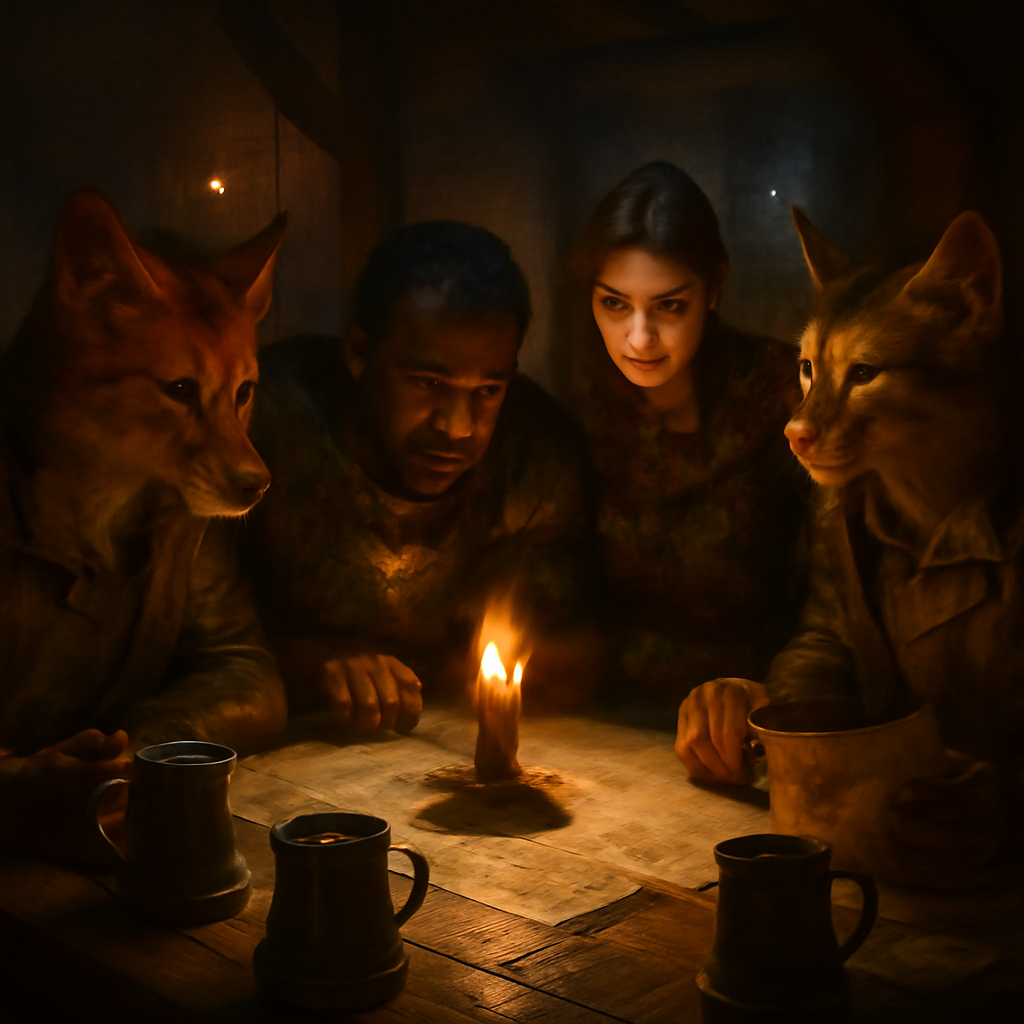
Why Session Zero Actually Matters
I learned about d&d session zero tips the hard way. Three sessions into what I thought was going to be a gritty political intrigue campaign, my friend's paladin—whom he'd lovingly modeled after his pygmy goat—kept trying to headbutt diplomats. We hadn't talked about tone. We hadn't discussed boundaries. We definitely hadn't established whether barnyard animals belonged in the royal court.
Session Zero isn't some bureaucratic formality that gets between you and the fun. It's the foundation that creates the fun. It's where you figure out if everyone's here for the same game, where you learn what makes your players uncomfortable, and where you discover that yes, Dave absolutely wants to play a goat paladin and maybe that's actually perfect for a comedic campaign.
Set the Table Before You Roll the Dice
Start with Campaign Expectations
Before anyone opens a rulebook, talk about what kind of game you're running. Be specific. "High fantasy adventure" could mean anything from Lord of the Rings to Monty Python. I once spent an entire Session Zero just describing the mood I wanted—the dusty frontier feel, the moral ambiguity, the fact that not every problem has a combat solution.
Cover these basics:
- Tone and theme: Serious or silly? Heroic or morally gray? Horror elements or pure adventure?
- Expected gameplay mix: Combat-heavy dungeon crawls, roleplay-focused intrigue, or balanced?
- Campaign length: One-shot, short arc, or epic multi-year saga?
- Lethality level: Are character deaths on the table, or is this a heroic story where protagonists always prevail?
Establish House Rules and Table Conventions
This is where you prevent 90% of future arguments. Cover the mechanical stuff while everyone's still fresh:
- What sourcebooks and homebrew are allowed?
- How do you handle rules disputes at the table?
- What's your policy on phones and distractions?
- How does inspiration work in your game?
- Critical hit and fumble rules (if any)?
I'm a big believer in the "rule of cool"—if something's awesome and doesn't break the game, we'll find a way to make it work. But I also enforce a strict "no arguing with rulings during play" policy. We can discuss it after the session, but at the table, the DM's call stands so we keep momentum.
Build Characters Together
Here's one of the most valuable d&d session zero tips I can give you: don't let players build characters in isolation. When everyone creates their character alone and then shows up to Session One, you end up with a party that has no reason to trust each other and no shared history.
Create Connected Backstories
Have each player connect their character to at least one other party member. Maybe they're siblings. Maybe one saved the other's life. Maybe they're both running from the same crime syndicate. These connections give your party instant chemistry and give you, as DM, built-in plot hooks.
I like the "two truths and a hook" method: each player shares two facts about their character and one unresolved question or mystery. Then the group discusses how these threads might weave together. It's collaborative worldbuilding at its finest.
Balance the Party (But Not Too Much)
You don't need the perfect tactical composition—four rogues can work if everyone's on board with a heist campaign. But you do want to make sure everyone has a defined role and a chance to shine. If three people want to be the "party face," talk through how that works. Maybe you're a troupe of traveling performers. Maybe you're con artists who each handle a different mark.
This is also the time to gently redirect concepts that won't work in your campaign. If someone's heart is set on playing a lawful good paladin in your evil campaign, better to address it now than three sessions in when they're miserable.
Talk About the Uncomfortable Stuff
This is the part that feels awkward, but it's non-negotiable. You need to discuss boundaries and safety tools before you're in the middle of a session dealing with something that makes a player genuinely uncomfortable.
Use Safety Tools
I'm a fan of Lines and Veils. Lines are hard boundaries—topics that don't appear in the game at all. Veils are topics that can exist but happen off-screen and aren't described in detail. Common ones include sexual content, harm to children, torture, and specific phobias like spiders.
Go around the table and let everyone contribute anonymously if they prefer. Write them down. Revisit them periodically—boundaries can change.
During play, I use the X-Card system: anyone can tap the table or hold up their hand in an X to fade to black or rewind without having to explain why. No questions, no judgment.
Logistics Matter More Than You Think
Schedule and Commitment
Be brutally honest about scheduling. How often will you play? What's the minimum number of players to run a session? What happens if someone misses repeatedly?
I run a lot of my games solo when I can't wrangle schedules—late nights with coffee and dice and my notebook—but group play requires structure. Set expectations about attendance and communication. If life happens (and it will), how much notice do you need?
The Practical Details
- Where are you playing? Whose space?
- Who brings snacks and drinks?
- Digital tools: VTT platform, dice rollers, character sheet apps?
- How long are sessions? (I've learned I can't run quality sessions longer than 3-4 hours—your mileage may vary.)
Give Them a Taste of the World
Session Zero isn't just logistics. Give your players a taste of what's coming. Share key lore, describe major factions, paint a picture of the starting location. Let them ask questions about the world.
This is where I like to share NPCs they'll encounter. If you're using tools to generate NPCs, Session Zero is perfect for introducing key figures. I once uploaded a photo of my border collie Scout and turned her into a Tabaxi ranger who became the party's guide—having that visual reference made her immediately memorable and beloved by the group.
If your campaign has unusual creatures or homebrew monsters, tease them. Build anticipation. When players know there's a mysterious beast stalking the borderlands, they're invested before they ever see it.
End with Momentum
Don't let Session Zero fizzle out in logistics. End on a high note that propels you into Session One. Maybe you:
- Play through a quick prologue scene
- Describe the dramatic hook that brings the party together
- Roll for a group patron or shared mission
- Have everyone describe their character's "establishing shot" like the opening of a movie
I like to end by going around the table and asking each player: "What is your character most afraid of?" and "What do they want more than anything?" The answers give me campaign fuel for months.
The Living Document Approach
Here's a d&d session zero tip that's saved my campaigns: treat your Session Zero agreements as a living document. Create a shared document with house rules, safety tools, and key campaign information. Update it as you go. Add NPCs. Track party loot. Note running gags and memorable moments.
Every few sessions, do a quick check-in. Is the game meeting expectations? Does anything need adjusting? Course-correcting early prevents resentment from building.
Build the Foundation for Something Memorable
The best campaigns I've run—the ones where players still bring up that NPC or that twist years later—started with solid Session Zeros. Not because we spent hours on bureaucracy, but because we built alignment and trust. We figured out what kind of story we wanted to tell together.
My solo campaigns taught me that D&D is about creating moments that surprise and delight you, whether you're playing with friends or by yourself late at night. Session Zero is where you align everyone's vision so those moments land the way they're supposed to.
Whether you're building fearsome monsters for your players to face or crafting characters that feel like real people, the prep work matters. And with tools like Creature Forge AI, you can even upload photos of pets or people and turn them into fully-realized fantasy characters—complete with stats, personality, and that ineffable quality that makes them feel real. (Trust me, turning your actual pets into party members hits different when there's a visual that captures their personality.)
Take the time to run a proper Session Zero. Your future self—and your players—will thank you when you're twenty sessions deep into a campaign everyone's genuinely excited about.
Now go forth and build something worth playing. And maybe keep the goat paladin away from the diplomats. Or don't. Sometimes chaos is exactly what the campaign needs.