I learned this lesson the hard way during a solo campaign last winter. I'd spent two hours meticulously detailing the villain's lair, mapping every corridor, balancing every encounter. Then my character needed to buy rope. The merchant I'd mentally labeled "Generic Shop Guy #3" suddenly became the most interesting person in town when I realized I had absolutely nothing to say in his voice.
That's when I started looking for a better way to handle NPCs. Because let's be honest—you can't pre-write every blacksmith, guard, and tavern regular your players might decide to befriend. You need something faster. A D&D NPC personality generator gives you that instant character depth without the prep time.
Why NPC Personality Matters More Than You Think
Here's the thing about memorable campaigns: players don't usually remember the perfectly balanced combat encounters. They remember Gundren the paranoid cartographer who only spoke in whispers. They remember the halfling baker who kept "accidentally" giving them quest hooks wrapped in pastries. They remember personalities.
But creating distinct personalities on the fly is exhausting. You end up with every shopkeeper sounding vaguely Scottish or every guard being gruff and suspicious. Your world starts feeling less like a living place and more like a theme park with three voice actors.
A good NPC personality generator solves this by giving you:
- Instant quirks and mannerisms that make characters memorable
- Believable motivations beyond "sells things" or "guards door"
- Voice consistency if that NPC shows up again later
- Plot hooks you didn't plan but your players will chase anyway
What Makes an NPC Generator Actually Useful
I've tried the random tables. You know the ones—roll a d20 for personality trait, another for flaw, maybe a d100 for backstory. They're fine if you've got time to sit there rolling dice while your players wait. But mid-session? You need something faster and more cohesive.
The best D&D NPC personality generators give you:
Complete Character Profiles, Not Just Lists
Random trait: "nervous." Okay, but nervous how? Does she fidget with her apron? Avoid eye contact? Laugh at inappropriate moments? A quality generator gives you the how, not just the what. It tells you this character is nervous because she's hiding something, and here's what she does with her hands when she lies.
Stat Blocks That Match the Personality
Your sweet, elderly librarian shouldn't have the same stats as the grizzled town guard. Good generators align personality with mechanics. That twitchy rogue informant? Probably has decent Dexterity and proficiency in Stealth. The bombastic retired adventurer running the tavern? Maybe some actual class levels and stories to match.
Visual References
This is where things get interesting. I uploaded a photo of my old border collie, Jip, into Creature Forge AI's NPC generator just to see what would happen. Got back this intense ranger character with Jip's exact black-and-white markings, those same alert eyes, that lean, ready-to-sprint build. Suddenly I wasn't describing "a ranger"—I was describing that ranger, someone I could picture perfectly.
When you can see your NPC, it's infinitely easier to play them.
Building Depth Without Drowning in Details
Here's a trap I've fallen into: generating such detailed NPCs that I can't keep track of them. You don't need every stablehand to have a tragic backstory and seventeen plot-relevant secrets. Sometimes a personality is enough.
The trick is knowing what level of detail you need:
Tier 1: Atmospheric NPCs
These are background characters. The crowd in the market. Guards at the gate. You need just enough personality that they're not invisible, but you'll probably never use them again.
What you need: One distinctive feature, one attitude. "The guard with the crooked nose who's extremely bored." Done.
Tier 2: Functional NPCs
Shopkeepers, quest-givers, local officials. Your players will interact with them multiple times but they're not central to the plot.
What you need: Personality quirk, basic motivation, something that makes them useful or interesting. The blacksmith who hums while she works and is saving up to move to the capital. You can roleplay this. You can bring her back.
Tier 3: Story NPCs
These characters matter. They're allies, rivals, recurring merchants, or villains-in-waiting. They need real depth.
What you need: Full personality profile, stat block, secrets, connections to other NPCs and the larger plot. This is where a robust NPC generator earns its keep.
The Photo Upload Feature That Changes Everything
I mentioned uploading Jip's photo earlier, but let me tell you why this feature is borderline magical for creating NPCs you'll actually remember. Most generators give you text—maybe an AI-generated portrait that looks like every other fantasy art you've seen. But when you upload a real photo?
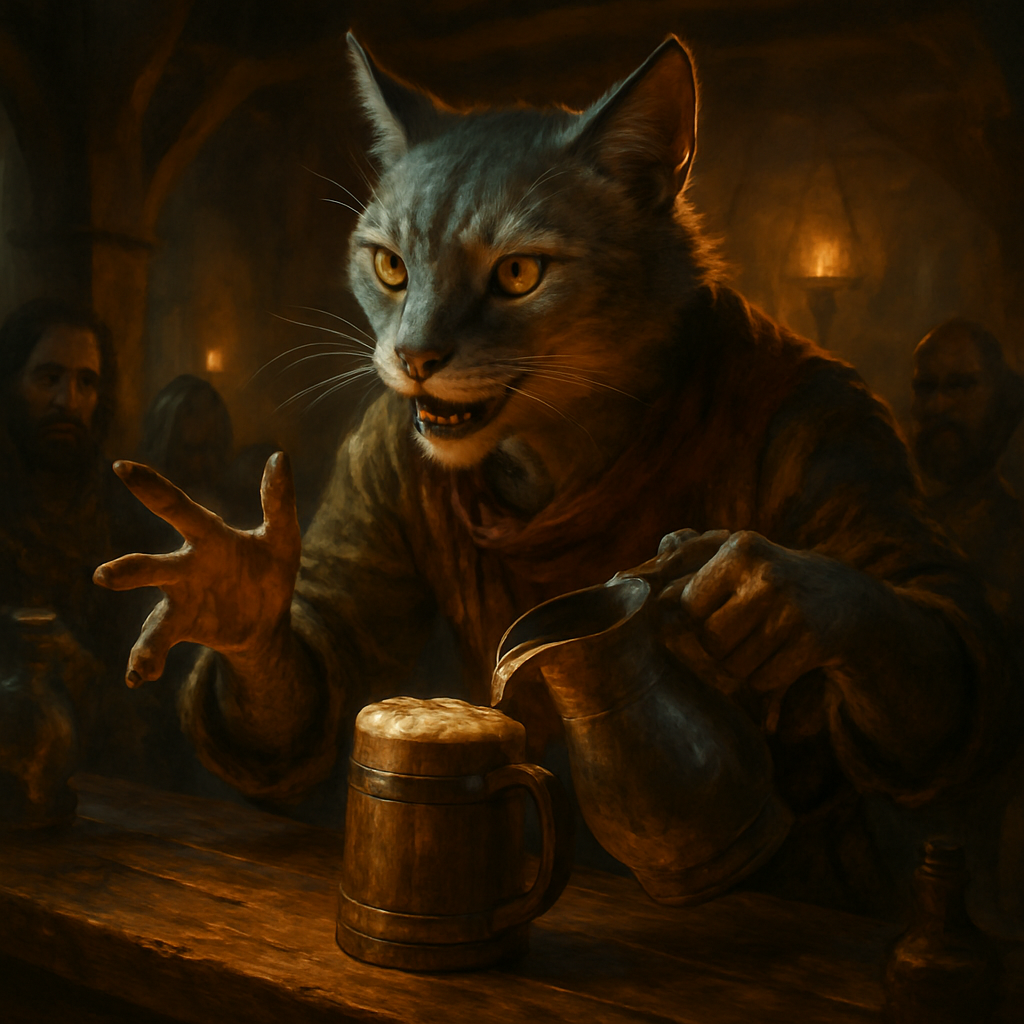
Last month I needed a mysterious merchant for a session. I grabbed a photo of my neighbor's ancient, one-eyed tomcat—this magnificent beast named Rutherford who looks like he's seen some things. Uploaded it to Creature Forge AI, specified tabaxi merchant, and got back this perfect character: grizzled, street-smart, with that exact "I'm too old for your nonsense" expression Rutherford has perfected.
The personality practically wrote itself because I could see him. I knew how he'd move, how he'd size up the party, what kind of sarcastic comment he'd make about their equipment. That's the power of having a real visual reference that's not just Generic Fantasy Person #847.
Practical Tips for Using NPC Generators Mid-Session
Even the best generator is useless if you can't use it smoothly during actual play. Here's my workflow:
Pre-Generate a Handful
Before session, create 3-5 NPCs at different tiers. Don't assign them specific roles—just have them ready. When your players decide to interrogate a random farmer, you've got someone prepared.
Use Tags and Categories
Most generators let you specify NPC type: merchant, guard, noble, criminal, etc. Use this. It's faster than generating completely random and hoping it fits your needs.
Steal Shamelessly
Generated an NPC you didn't use? Save them. That innkeeper you prepped for the coastal town works just fine in the mountain village three sessions later. Your players don't know you recycled them.
Let Players Drive Investment
If your players latch onto an NPC, expand them. Started as a Tier 1 atmospheric character but your rogue wants to recruit them? Go back to the generator, add depth, maybe run their photo through the character creator for a full stat block. Let player interest guide where you invest detail.
Common Personality Generator Pitfalls (And How to Avoid Them)
Everything feels random: This happens when you use purely random generators without any context. Solution? Give the generator something to work with. Specify location, role, and maybe one trait you already have in mind. Build from there rather than accepting pure chaos.
NPCs sound like each other: You've got three different NPCs but they're all "gruff but secretly kind." Diversity matters. Deliberately generate opposing personalities. Make one chatty, one taciturn, one passive-aggressive. Real communities have variety.
Too much information: A twelve-paragraph backstory for a shopkeeper is too much. Use what you need, ignore the rest. If the generator gives you extensive detail, file it away—you might use it later if this character becomes important.
Making NPCs More Than Their Generator Output
Here's the secret: a generator gives you the skeleton. You bring them to life. That stat block and personality description is your foundation, but the magic happens when you add:
- A distinctive voice or speech pattern: Do they talk fast? Use outdated slang? End statements like questions?
- A physical tell: Something they do when nervous, excited, or lying. Real people have these. So should your NPCs.
- An opinion about something irrelevant: Strong feelings about weather, local sports, the best way to brew tea. These tiny opinions make characters feel lived-in.
- A connection: Who else do they know? Even low-tier NPCs know people. The baker's cousin is the guard captain. The merchant used to adventure with the blacksmith. Weave your world together.
Why This Matters for Your Table
I think back to that rope merchant from my solo campaign. In the moment, I fumbled through the interaction, gave him a generic voice, and moved on. But what if I'd had a real personality ready? What if he'd been memorable enough that I'd brought him back later, woven him into the actual plot?
That's what a good D&D NPC personality generator does. It turns the people who should be scenery into the characters who make your players say "wait, can we go back and check on that shopkeeper? I want to know if he's okay."
Your world is only as alive as the people in it. Stats and maps and balanced encounters matter, but personality? That's what players remember. That's what makes them care.
Whether you're running a sprawling campaign or playing solo through a quiet evening with coffee and dice, you deserve NPCs that feel real. Try Creature Forge AI's NPC generator—upload a photo, get a complete personality, and watch your throwaway characters become the ones your players can't stop talking about.
Because every NPC is somebody's favorite character. Make them count.