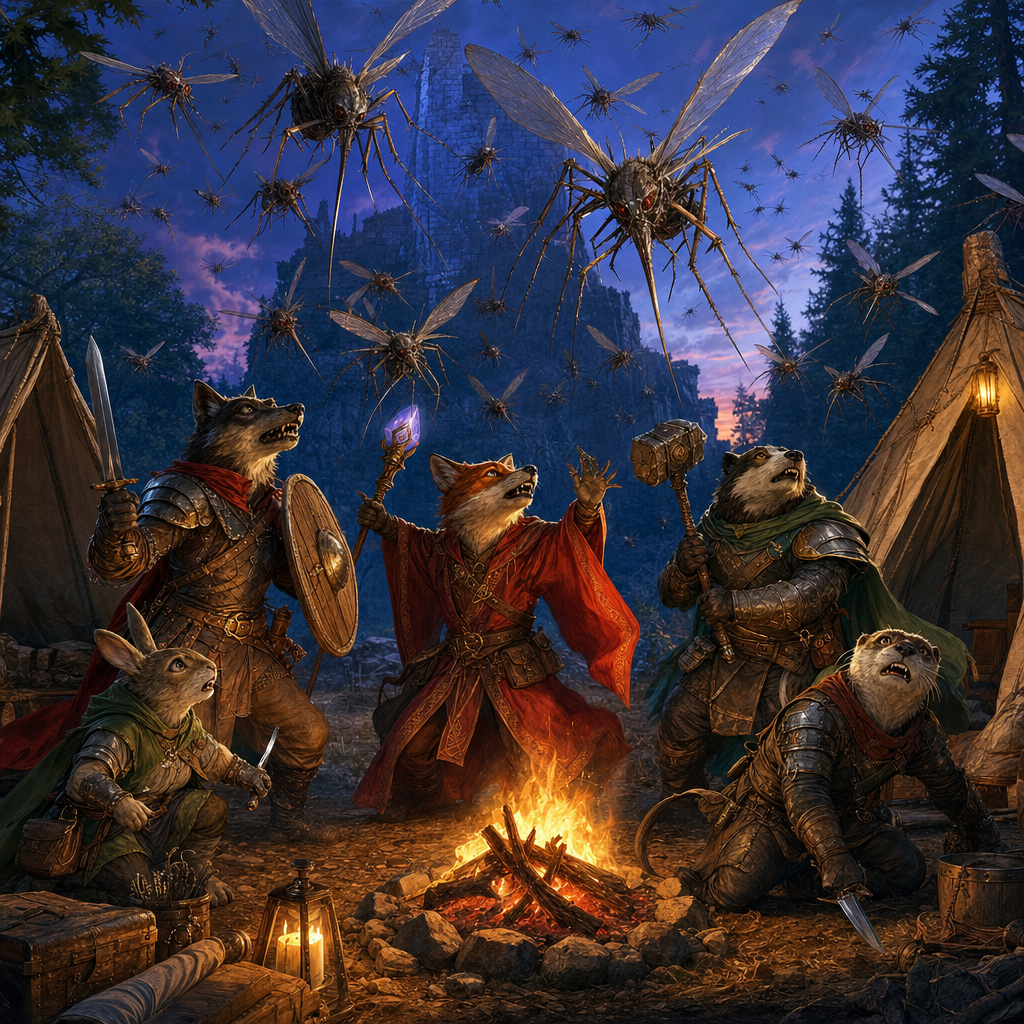
Why Low Level Monsters Matter More Than You Think
I learned this the hard way during a solo campaign I ran for myself one winter. I'd rolled up a level 2 ranger—basically my border collie Murphy if he could hold a bow—and figured I'd breeze through some wolves in the woods outside town. Fifteen minutes later, my character was bleeding out because I'd forgotten that DnD low level monsters aren't about damage output. They're about action economy, terrain, and making you actually think.
That's the thing new DMs miss. A CR 1/4 creature isn't "easy" when there are eight of them, they have pack tactics, and your party of four level 1 characters just used half their spell slots showing off in the tavern. Low level play is where tactics matter most because nobody has enough hit points to tank through bad decisions.
The Hidden Gems: Underrated Low Level Creatures
Every DM knows about goblins and kobolds. But if you want encounters your players will actually talk about afterward, you need to dig deeper into the Monster Manual.
Stirges (CR 1/8)
These bloodsucking nightmares are my personal favorite for a reason. A single stirge is annoying. A swarm of twelve stirges in a dark cave turns into absolute chaos. They attach, they drain, and suddenly your fighter is making Constitution saves while three mosquito-bats are literally drinking his life away. I've seen a stirge swarm create more genuine panic than a CR 5 mini-boss.
Swarms of Insects/Rats/Bats (CR 1/4 to 1/2)
Swarms are criminally underused. They're immune to most single-target effects, they occupy the same space as other creatures, and they make martial characters feel genuinely helpless for once. That wizard who's been hoarding their spell slots? Suddenly burning hands looks pretty good when a swarm of rats is gnawing through everyone's ankles.
Shadows (CR 1/2)
Okay, this one's almost mean for level 2 parties, but hear me out. Shadows don't just do damage—they drain Strength. Permanently, until the target finishes a long rest. I watched a player's barbarian go from Strength 16 to Strength 8 in three hits. The sudden vulnerability, the fear in her voice when she realized she might actually die to this thing—that's the kind of stakes that make early levels memorable.
Animated Armor (CR 1)
Empty suits of armor that walk and fight? Players expect this to be a cakewalk. Then they realize it has resistance to most damage types, doesn't need to breathe, and cannot be charmed or frightened. Suddenly that narrow corridor is a lot more dangerous when your usual tricks don't work.
Building Encounters That Challenge, Not Kill
Here's what I figured out after running too many encounters that ended in either total party kills or total boredom: DnD low level monsters work best when you focus on these principles:
- Action economy wins fights — Three creatures with +4 to hit are more dangerous than one creature with +7, because they get three chances to hurt you every round
- Terrain is your co-DM — Kobolds in an open field are target practice. Kobolds in a trapped, pitch-black mine tunnel are a nightmare
- Mix damage types — If every creature does slashing damage, the party figures out a strategy fast. Throw in some poison, some fire, maybe a spell or two
- Give them a win condition besides "kill everything" — Maybe the goblins are guarding a bridge the party needs to cross, or the wolves are protecting their den. Players love outsmarting encounters
The Creature Forge Approach: When Your Monsters Need Personality
Here's where I got experimental with my solo games. I started using Creature Forge AI's monster generator to build custom variants of standard low-level creatures. The tool lets you describe what you want, and honestly? Some of my best encounters came from slight tweaks to basic stat blocks.
But the game-changer was uploading photos. I took a picture of Biscuit—my goat, who has more charisma than any NPC I've ever rolled—and generated a satyr-like creature based on her actual appearance. Suddenly this wasn't just "random encounter #4." It was a trickster with Biscuit's stubborn streak and mischievous eyes, and when I ran that encounter, I cared about how it played out.
You can do this with anything. Your cat becomes a tabaxi rogue. Your childhood dog becomes a loyal lupine ranger. It turns generic encounters into something personal, and personal always hits harder at the table.
Tactical Tips for Running Low CR Creatures
Use the Environment
I ran an encounter with giant rats (CR 1/8) in a grain storage cellar. The rats could squeeze through gaps in the floor, pop up anywhere, and the party couldn't use area spells without risking a fire that would burn down half the village. Suddenly those rats required actual strategy.
Give Them Objectives
Not every creature fights to the death. Bandits might flee when half their group drops. Wolves might focus on the weakest target, drag them away, and retreat to eat in peace. Animals especially should act like animals—territorial, food-motivated, survival-focused.
Layer Your Encounters
Start with a few weak creatures. When the party thinks they've won, reinforcements arrive. Or the noise attracted something bigger. This teaches players to manage resources and think beyond "kill what's in front of me."
The Numbers: How Many Is Too Many?
General guidelines for party of four characters at levels 1-3:
- CR 1/8 creatures: 6-8 for a medium encounter, 10-12 for hard
- CR 1/4 creatures: 4-6 for medium, 7-9 for hard
- CR 1/2 creatures: 2-3 for medium, 4-5 for hard
- CR 1 creatures: 1-2 for medium, 3-4 for hard
But here's the thing those numbers don't tell you: terrain, surprise, and monster tactics can bump any encounter up a full difficulty tier. Four wolves in daylight on flat ground? Medium encounter. Four wolves at night, in their den, with pack tactics and difficult terrain? That's hard, maybe deadly.
Mistakes I Made (So You Don't Have To)
My first "challenging" low-level encounter was eight skeletons in a crypt. Sounds good, right? CR 1/4 each, party of four level 2 characters, should be fine. Except I forgot skeletons are vulnerable to bludgeoning damage and the party had two clerics with maces. They demolished my carefully planned encounter in three rounds.
Lesson learned: always check vulnerabilities and resistances. And maybe don't put eight creatures with the same weakness in one fight unless you want your players to feel like genius tacticians.
Another time I used shadows against a level 1 party. One character dropped to 0 Strength and literally couldn't move. I had to retcon the encounter into a rescue mission because I'd accidentally created a situation worse than death—permanent helplessness. Check those special abilities, folks.
Making Monsters Memorable
The DnD low level monsters players remember aren't the ones with the biggest stat blocks. They're the ones that felt real. The giant spider that dropped from the ceiling right when they thought they were safe. The swarm of ravens that seemed to be following them, watching. The zombie that turned out to be someone's relative, and suddenly the fighter had to decide if she could actually strike the killing blow.
This is where customization helps. When you can take a standard monster and give it specific quirks, scars, behaviors—when it looks like something from your actual life, twisted into fantasy—that's when encounters stop being random dice rolls and start being stories.
Creature Forge AI has become my go-to for this exact reason. I can generate a whole encounter's worth of custom creatures in the time it used to take me to reskin one stat block by hand. And the photo upload feature means I'm never running out of inspiration—every animal on the farm is a potential monster or character waiting to happen.
Your Low Level Toolkit
If you're building a campaign or one-shot for levels 1-5, bookmark these creature types:
- Swarms — for when single-target damage dealers need humbling
- Pack hunters (wolves, hyenas, raptors) — for teaching action economy
- Sneaky ambushers (giant spiders, stirges) — for environmental danger
- Spellcaster support (goblin shamans, cultist initiates) — mix up damage types
- Undead — because immunity to poison and resistance to non-magical weapons teaches players to diversify
Combine two types in one encounter and you've got genuine tactical depth. Spider swarms plus a giant spider matriarch. Wolf pack plus a goblin boss riding the alpha. Bandits backed up by an animated armor they don't fully understand.
Start Building Better Encounters Today
Low level play is where most campaigns begin, and it's where players decide if your world feels dangerous, interesting, or just another slog through identical combat encounters. The monsters you choose—and how you run them—set the tone for everything that follows.
Stop defaulting to goblins and rats. Start thinking about how creatures behave, what they want, and how they'd actually fight. Use terrain. Use tactics. Use monsters that make your players sweat even when the CR says "easy."
And if you need inspiration, or if you want to turn your actual pets into terrifying (or adorable) fantasy creatures, try Creature Forge AI. Upload a photo, describe what you're imagining, and watch your boring stock monsters transform into something your players will remember long after they hit level 20.
Because at the end of the day, the best DnD low level monsters aren't the ones with the highest CR. They're the ones that make your players lean forward, grip their dice a little tighter, and wonder if this is the fight that finally gets them.