Why Your First Encounters Don't Need to Be Combat Gauntlets
When I started running D&D encounters for my solo campaigns, I thought every session needed a tactical grid, miniatures, and at least three waves of enemies. Turns out I was wrong. My most memorable early d&d encounter ideas for beginners came from a talking goat who knew too much about local politics and a bridge troll who just wanted someone to appreciate his poetry.
The best encounters for new DMs aren't about complexity—they're about giving players a clear choice and making that choice feel like it matters. You don't need a master's degree in game design. You need a situation, some personality, and maybe one good twist.
Start With Encounters That Have a Face
Here's what I learned early: combat is easier to run when there's someone to talk to first. Even if swords eventually get drawn, giving your monster or NPC a personality transforms a random fight into a story moment.
The Reasonable Monster
Pick a creature your party can actually handle in combat (check their CR—Challenge Rating—against your party's level). Then give it a reason to talk before fighting:
- The Hungry Owlbear blocking the road will leave if you give it food—but it's picky and won't accept rations
- The Goblin Lookout who's tired of his boss and might help the party sneak in if they promise to "accidentally" knock said boss unconscious
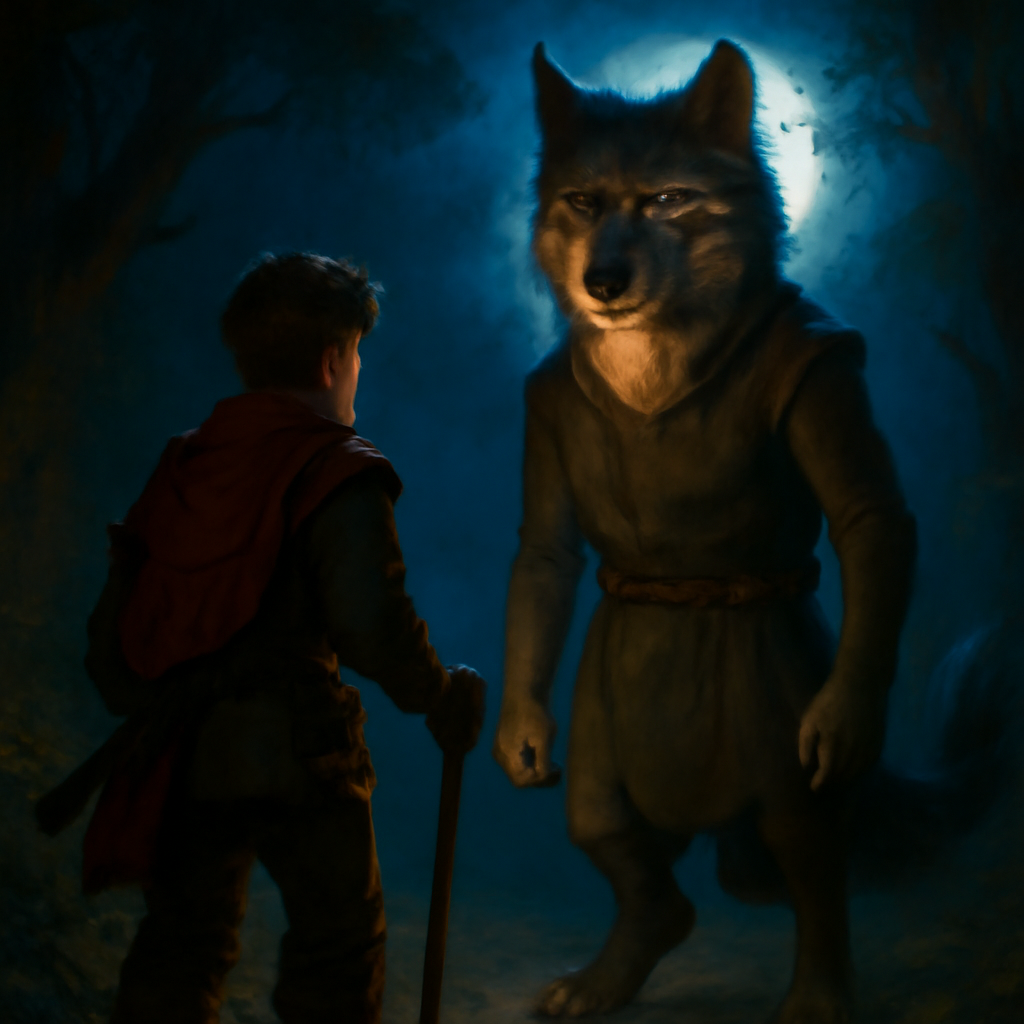
- The Wolf Pack Leader who speaks Common and demands tribute for crossing her forest
I once uploaded a photo of my border collie Scout to Creature Forge AI's character generator and got back this sharp-eyed Lupine ranger with Scout's exact white chest patch and intense stare. Used her as an NPC guardian of an enchanted grove. Players spent twenty minutes negotiating instead of fighting, and it became the session everyone remembered.
The Misunderstood Villain
Someone's doing something that looks evil but has understandable reasons:
- A young wizard stealing spell components because she can't afford the town's inflated prices
- A "bandit" blocking the road who's actually trying to stop people from reaching a cursed area ahead
- An angry ghost haunting the tavern because someone built it on top of her garden and she just wants her roses back
The beauty here: your players might fight, might negotiate, might help. All three outcomes can work, and you don't need to prep for every possibility—just react to what they choose.
Environmental Encounters That Don't Require Monster Math
Sometimes the best d&d encounter ideas for beginners don't have hit points at all.
The Obstacle With Consequences
Put something in the path that requires problem-solving:
- The Flooded Bridge: Rushing water, slippery stones, maybe a skill check to cross safely—but failing doesn't mean death, just getting swept downstream to a different encounter
- The Locked Door With Voices Behind It: Someone's trapped, or pretending to be trapped, or arguing about whether to open the door
- The Mysterious Fog: Vision drops to 10 feet, strange sounds echo, easy to get separated—pure atmosphere, no stat block needed
I ran a session where the party had to cross a rickety rope bridge while an angry farmer shouted at them from below about his missing chickens. The chickens were on the bridge. Physics did most of the work.
The Ticking Clock
Add urgency to any simple situation:
- The tavern's on fire and there's someone on the second floor
- The town guard arrives in five rounds and the party's standing over an unconscious noble
- The antidote must be delivered before sunset or the duke dies
Time pressure makes simple encounters feel high-stakes without adding mechanical complexity. You're just counting rounds or minutes, and your players will do the rest.
Social Encounters That Feel Like Encounters
Not every encounter needs initiative rolls. Some of my best solo-play moments came from treating conversations like tactical challenges.
The NPC With Conflicting Loyalties
Someone wants to help but can't afford to be seen helping:
- The guard who knows the party's innocent but will lose his job if he says so
- The merchant who has information but fears the local crime boss
- The noble's servant who wants to warn the party but risks execution for betraying her house
Give the NPC a clear want (safety, money, revenge, protection for a loved one) and let players figure out how to provide it. If you need a complex NPC fast, the NPC generator at Creature Forge AI builds complete personalities with motivations and secrets—useful when you need someone interesting on short notice.
The Public Argument
Two NPCs in conflict, and the party has to pick a side or find a third option:
- A farmer accusing a merchant of selling him cursed seed
- Two wizards arguing about who owns a particular spell formula
- A parent demanding the town exile a teenager who's showing signs of wild magic
The trick: make both sides partially right. No clear villain. Just people with competing needs. Your players will surprise you with solutions you never considered.
Combat Encounters That Teach Basic Tactics
Eventually you'll want to run straight fights. Here's how to make them educational without being overwhelming.
The Uneven Terrain Fight
Don't run your first combat in an empty room. Add literally anything:
- A campfire in the middle (fire damage if you're pushed in, blocks line of sight)
- Tables and chairs (half cover, can be flipped or thrown)
- A steep hill (movement costs extra going up, grants advantage on attacks going down)
- Thick fog or dim light (everything's harder to see)
These teach players that positioning matters, which is one of the most important tactical lessons in D&D.
The Fight With an Escape Route
Not every battle needs to end with one side dead. Give enemies a reason to flee at half health:
- Bandits who value their lives more than their loot
- Wild animals defending territory—once you leave, they stop chasing
- Cultists who need to report back to their leader
This teaches your players they can win without tracking every last hit point, and it's more realistic. My farm rooster Zeus never fought to the death—he fought until you left his territory, then declared victory and strutted off. Smart.
The Reinforcements Twist
Start with a manageable fight, then add a complication:
- Round 3: the goblin's wolf companion arrives
- Round 4: the cultist's ritual completes and now there's a minor demon
- Round 2: a second group of bandits notices the fight and joins in
This keeps combat from feeling predictable while still staying within your prep. Just add one extra creature, not a whole new encounter.
Mixing Encounter Types in One Session
The best sessions I've run—solo or with others—mixed different encounter styles:
Example session flow: The party investigates strange sounds in the forest (exploration). They find a talking fox who's trapped in a magical snare (social/problem-solving). Freeing the fox triggers a ward that summons two animated suits of armor (combat). The fox, grateful, tells them about the wizard's tower nearby (leads to next session).
That's three different encounter types in maybe 90 minutes. None required complex prep. The fox just needed a personality (I gave her the voice of my aunt who never stops talking). The combat was simple—two enemies, straightforward tactics. But the variety made it feel like a complete adventure.
When to Add Monsters vs. When to Add Personality
Here's my rule: if you're excited about the creature's stat block and abilities, build a combat encounter. If you're excited about what the creature wants or fears, make it a roleplay encounter that might become combat.
The monster generator at Creature Forge AI is great for both—it gives you complete stat blocks but also personality traits and motivations. I've generated creatures, realized their personality was too interesting to just fight, and turned combat encounters into negotiation scenes on the fly.
The photo upload feature is particularly useful here. I've uploaded pictures of my goats, my cats, even my ornery rooster, and gotten back fully-statted characters that look like them. There's something special about fighting (or befriending) a Tabaxi rogue who has your actual cat's facial markings and attitude problem.
Your First Encounter Should Feel Like Yours
The best d&d encounter ideas for beginners aren't the most mechanically perfect ones—they're the ones that feel specific to your world and your story. Did you grow up near a weird old bridge? Put it in your game. Do you know what it sounds like when a barn owl hunts at night? Use that description when your party camps in the forest.
The encounters I remember from my early solo campaigns weren't the ones I copied from modules. They were the talking ravens based on the crows that used to steal my chickens' eggs. The bandit leader who sounded exactly like my stubborn horse refusing to be led. The swamp hag whose cabin smelled like the barn on humid summer days.
You don't need years of experience to run encounters that stick with people. You just need something true in there—a detail from real life, a personality you've observed, a place you've actually been. Build your encounters around those, keep the mechanics simple, and give your players clear choices.
The rest takes care of itself.
Ready to Build Something?
If you want to skip the math and jump straight to the fun part, try generating a few creatures or NPCs with the photo upload feature at Creature Forge AI. Upload a picture of your pet, your friend, yourself—see what kind of D&D character comes back. Sometimes the best encounter ideas start with a face you already know, just translated into fantasy.
Your players won't remember your perfect tactics or balanced CR calculations. They'll remember the wolf who spoke in riddles, the ghost who missed her garden, the NPC who looked suspicious like their own dog. Start there.