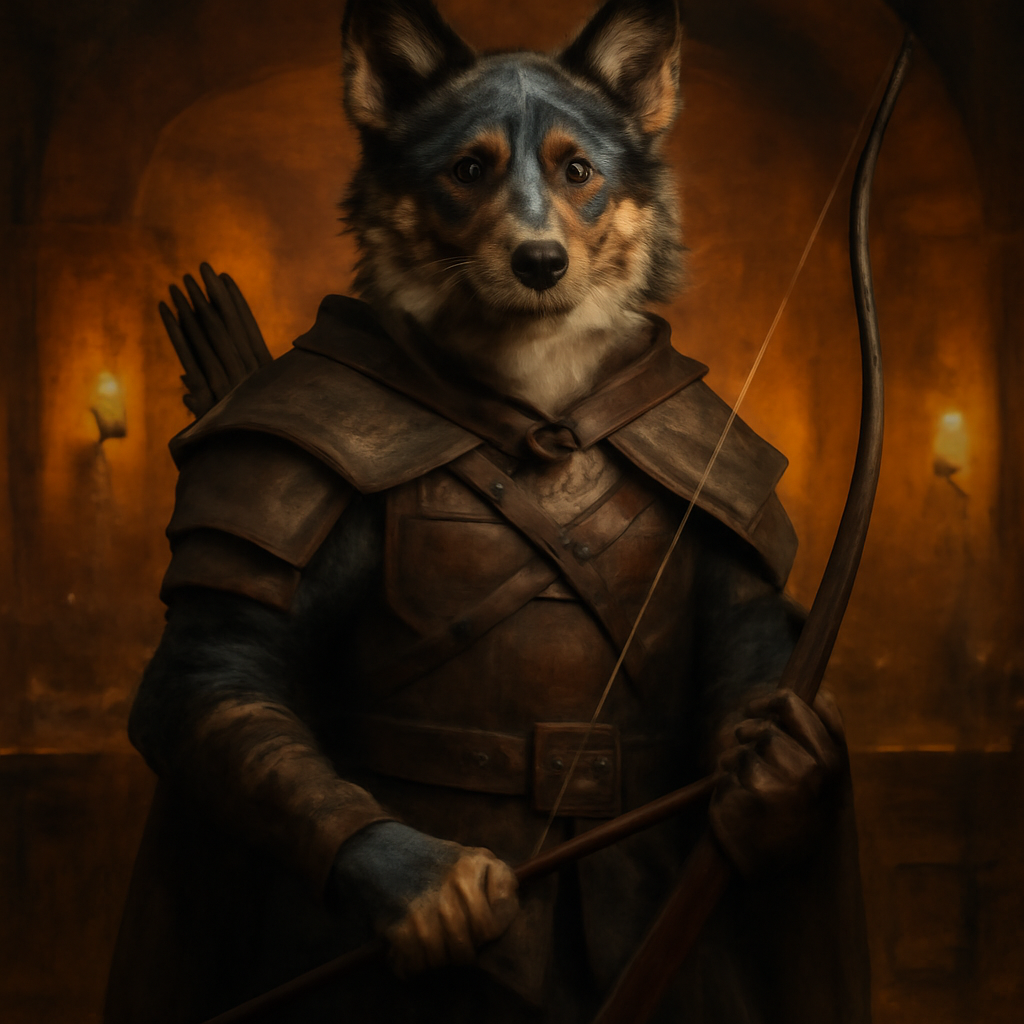
Why Playing a Character That Looks Like You Changes Everything
I spent years creating D&D characters that were nothing like me. Towering dragonborn paladins. Wiry elf wizards with silver hair down to their ankles. Every character was an escape, which is exactly what I thought tabletop RPGs were supposed to be.
Then one night, during a solo campaign at my kitchen table—coffee getting cold, dice scattered everywhere—I wondered: what if I made a D&D character that looks like me? Not my idealized hero self. Just... me. Brown hair, average build, the kind of person who'd rather negotiate than fight. It felt weirdly vulnerable at first, but that character became the most memorable one I've ever played.
Seeing yourself in your character creates a different kind of investment. Your triumphs feel more personal. Your failures sting a little more. And when your party members describe what they see when they look at your character, there's this uncanny moment of recognition—that's actually me, or at least a version of me that knows how to swing a sword.
Start With Your Real Physical Features
The foundation of any character that looks like you is honest observation. Stand in front of a mirror (I know, I know) and take actual notes. This isn't about being critical—it's about capturing details that make you recognizable.
The Basics That Matter
- Hair color and style: Be specific. Not just "brown" but "dark brown with red undertones when the sun hits it" or "constantly falling in my face."
- Eye color and shape: Are they deep-set? Do they crinkle when you smile? These small details separate your character from Generic Human Fighter #47.
- Build and height: You don't need to match your exact weight to a fantasy character, but general proportions matter. Stocky? Lanky? Somewhere comfortably in between?
- Distinctive features: Scars, freckles, that one eyebrow that won't behave, glasses, the way you stand with your weight on one leg.
Write all of this down before you even open your character sheet. You're building a reference guide for yourself and your DM.
Choosing a Race That Works With Your Features
Here's where it gets interesting. You can't play a literal human version of yourself (well, you can, but stay with me). The magic happens when you translate your features into D&D's fantastical races while keeping yourself recognizable.
Humans: The Obvious Choice That Actually Works
Variant Human gives you a feat right away and lets you keep your features exactly as they are. The challenge is making your human character feel distinct in a world full of them. Lean into personality, mannerisms, and background. Maybe you're a human who grew up among elves and picked up their speech patterns. Maybe you're from a coastal town and you're always mentioning the smell of salt air.
Half-Elves: For Those of Us With Sharper Features
If you have prominent cheekbones, angular features, or just want to feel slightly more graceful than you actually are, half-elf works beautifully. You keep human coloring options but add a touch of the otherworldly. I've found half-elves are perfect for people who describe themselves as "fine-boned" or who've been told they have an "intense stare."
Dwarves: Built Sturdy
Shorter stature? Broad shoulders? Thick beard or the facial structure to grow one? Dwarf. Don't let stereotypes fool you—dwarves aren't all gruff miners. A hill dwarf bard or a mountain dwarf wizard can absolutely capture your essence while giving you that fantasy backbone (and honestly, the constitution bonus doesn't hurt).
Other Races Worth Considering
- Halfling: For smaller builds and people who've perfected the art of going unnoticed until they want to be seen.
- Tiefling: If you've got dramatic features or a certain intensity people comment on, those horns and that tail can emphasize what's already there.
- Goliath: For tall, athletic builds. The stone-like markings can mirror tattoos or birthmarks you actually have.
The trick is to pick a race where the fantasy elements enhance rather than hide your real features.
Class Reflects Who You Are, Not What You Wish You Were
This is where most people trip up. They want to create a character that looks like them but acts like their power fantasy. There's nothing wrong with that—but if you want a character that truly feels like you, choose a class that matches your actual personality and skills.
I'm not athletic. I never have been. So when I made a character based on myself, I didn't pick Fighter or Barbarian. I went with Ranger, because I grew up on a farm and I do know animals. My ranger wasn't a wilderness survivalist—she was someone who understood creature behavior and preferred to avoid fights through smart planning. That's me. That's what I actually bring to a table.
Questions to Ask Yourself
- Do you solve problems by talking or by taking action?
- Are you more comfortable supporting others or taking the lead?
- Do you learn by studying or by doing?
- When stressed, do you get creative or methodical?
A Bard isn't just someone who plays music—it's someone who navigates social situations naturally. A Wizard is the person who actually reads instruction manuals. A Rogue is that friend who always has a backup plan. Match the class to your real-world approach.
Background and Personality: The Details That Make It You
Your background should echo your actual life experiences, translated into fantasy terms. This is where you get to have fun with the parallels.
I grew up on a farm with more animals than people—dogs, goats, chickens, one particularly angry rooster named Napoleon who attacked anyone in red. So my ranger's background? Folk Hero, with the Animal Handling proficiency. Her backstory involved protecting her village's livestock from predators. It wasn't dramatic, but it was true to my experience of spending evenings checking on pregnant goats and mornings collecting eggs.
Translating Your Life
- If you're a teacher: Sage background, proficiency in History or Arcana, personality trait about explaining things clearly.
- If you work in hospitality: Guild Artisan or Entertainer, proficiency in Persuasion, always knowing where to find a good meal in any town.
- If you're an artist: Sage or Entertainer, proficiency in Performance or a relevant tool, describing the world in vivid detail.
- If you grew up in a city: Urchin or City Watch, proficiency in Stealth or Investigation, always aware of escape routes.
Your personality traits, ideals, bonds, and flaws should be the ones you'd assign yourself on a brutally honest day. If you're loyal to a fault, write that down. If you have a bad habit of making jokes when you're nervous, give your character that same defense mechanism.
Using Tools to Bring Your Character to Life
Here's where technology becomes your ally. You can describe your character that looks like you in as much detail as you want, but there's something powerful about seeing it visualized—actually seeing your features translated into fantasy form.
Creature Forge AI's character generator has a feature that genuinely surprised me: you can upload a photo of yourself (or anyone) and it generates a D&D character that captures those features. I uploaded a photo of myself from last summer—hair pulled back, working in the garden, squinting in the sun—and got back a half-elf ranger that had my bone structure, my expression, even the way my hair falls.
It wasn't perfect, obviously. The fantasy armor helped. But the eyes were right. The set of the shoulders was right. When I showed it to my sister, she said "that's you" before I explained what it was. That's the test.
The generator also handles all the stat blocks, abilities, and equipment automatically, which means you can focus on the parts that matter—personality, backstory, voice—rather than getting bogged down in mechanical details.
Details That Make the Difference
Once you have the foundation—race, class, background, physical description—the finishing touches are what transform a character sheet into you.
How You Move and Speak
Do you fidget when you're thinking? Does your voice get higher when you're excited? Do you touch your face when you're lying? Do you stand with your arms crossed or your hands in your pockets? These behavioral details are what your fellow players will remember. Write them in your character notes. Remind yourself to play them.
Your Actual Skills
If you're good at cooking in real life, give your character proficiency with cook's utensils and describe the meals they make. If you're awful at math, maybe your character struggles with calculating distances or splitting treasure evenly. If you're a great listener, play up that Insight proficiency.
What You Fear and What You Love
Your character's fears should be yours. Maybe not literally—you probably don't need a phobia of mimics—but the emotional truth should match. If you're afraid of letting people down, your character freezes when asked to make important decisions. If you love the moment when everything comes together, your character lives for that perfect plan execution.
Playing a Character That's Essentially You
The biggest question I get is: isn't it boring to play yourself? Don't you want to escape?
And the answer is no, it's not boring—it's revealing. You learn things about yourself when you face fantasy challenges with your real personality. You discover courage you didn't know you had. You find out where your actual boundaries are. You see which of your traits serve you and which ones you might want to work on.
Also, you're still you in a world with dragons and magic. That's plenty of escape.
The key is giving yourself permission to make different choices than you would in real life. Your character looks like you and thinks like you, but they've trained with weapons or studied magic or grown up in a world where problems are often solved with initiative rolls. They're you with different tools and different stakes.
Ready to See Yourself in Fantasy Form?
Creating a D&D character that looks like you is part self-portrait, part wish fulfillment, and entirely worth the effort. It's a strange kind of mirror—one that reflects not just what you look like, but who you are when the world needs saving.
Start with honest observation. Choose a race and class that enhance rather than hide your real features and personality. Translate your life experience into fantasy terms. And then—this is the important part—give yourself permission to be heroic. You, with all your specific features and personality quirks, can absolutely be the person who saves the village or finds the lost artifact or talks down the dragon.
If you want to see what you'd look like as a fully-realized D&D character, try Creature Forge AI's character generator. Upload your photo, adjust the details to match your vision, and get a character sheet and portrait that actually captures you. It's the fastest way I've found to go from "I wonder what I'd look like with a sword" to "oh, that's definitely me with a sword."
Your character is waiting. They have your eyes, your build, your voice. They're just ready for an adventure you haven't had yet.