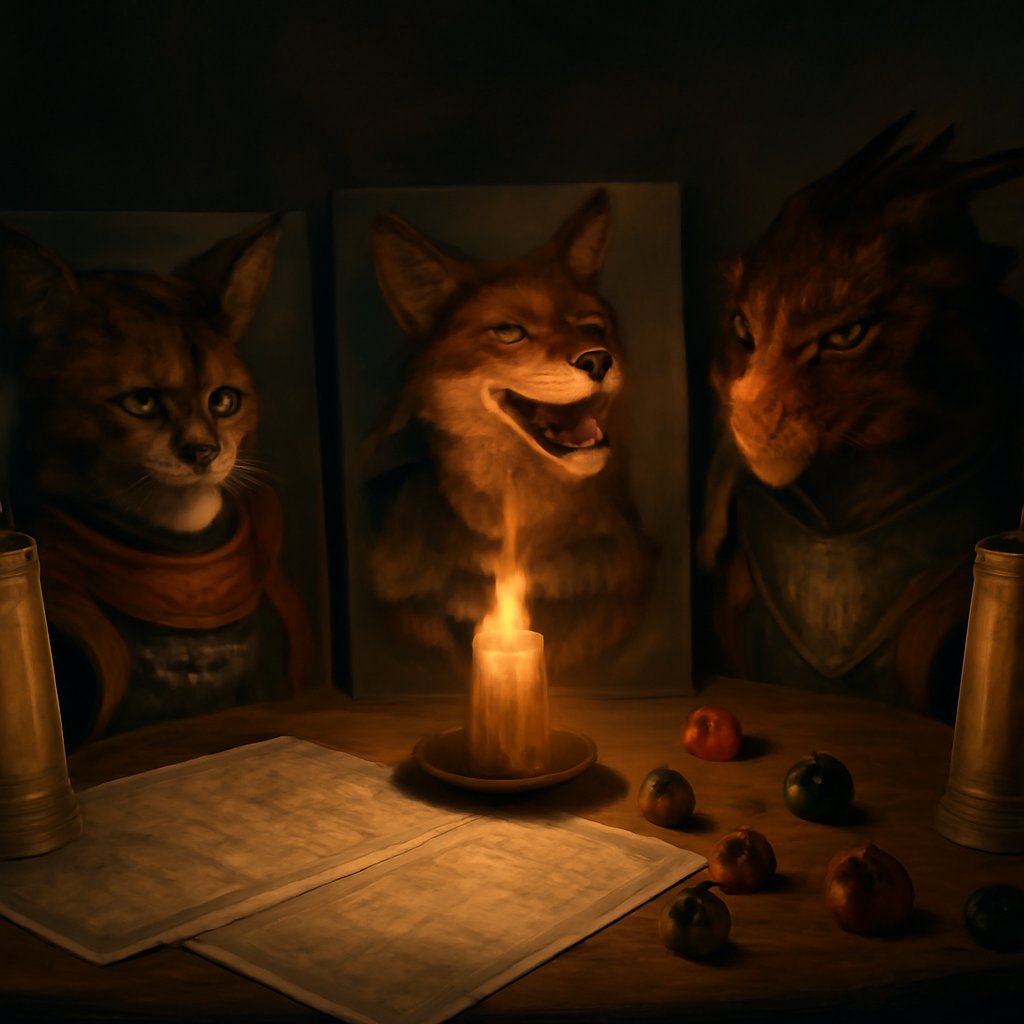
I've rolled a lot of characters over the years. Some I remember vividly—like Copper, the border collie I turned into a Tabaxi ranger who couldn't stop herding the party into formations. Others? I couldn't tell you their names if you paid me. The difference wasn't stats or backstory length. It was d&d character personality traits that actually showed up during play.
Most of us pick two traits from the Player's Handbook during character creation, write them on our sheet, and never look at them again. But the best characters—the ones who feel alive, who make decisions that surprise even you—have traits woven into every choice they make. Here's how to build personality traits that stick, whether you're playing solo at midnight with a cup of coffee or running a full table.
What Personality Traits Actually Do
Mechanically, personality traits in D&D 5e are just flavor text. They don't give you bonuses or penalties. But that's exactly why they matter. They're the difference between "I attack the goblin" and "I attack the goblin because he reminds me of the bully who burned down my family's barn, and I let my rage get the better of me."
Personality traits answer the question: How does your character interact with the world when nothing's on fire?
The PHB gives you sample traits tied to your background—Acolyte, Criminal, Folk Hero, etc. These are fine starting points. But the characters I remember most didn't stick to those lists. They had traits that created friction, humor, and genuine surprise.
The Two-Trait Rule (And Why It Works)
D&D asks for two personality traits. That's not arbitrary. You want:
- One trait that drives action — something that pushes your character toward decisions, conflict, or connection
- One trait that creates texture — a quirk, habit, or belief that makes them memorable in quiet moments
For example, my Tabaxi ranger Copper had: "I always position allies into strategic formations, even when we're just walking down a hallway" (that's the action trait) and "I judge people by their treatment of animals before anything else" (that's the texture). The first one drove party dynamics. The second one gave me a lens for every NPC interaction.
Traits That Drive Action
These are the traits that make you do things. They create hooks for the DM and friction with other players (the good kind). Examples:
- "I can't resist a sob story—I'll help anyone who asks, even if it's obviously a trap"
- "I assume everyone's lying until proven otherwise"
- "I always take the riskiest option if it means a better story"
- "I never leave a door unopened or a chest unchecked"
Notice these aren't vague. "I'm brave" doesn't tell you what to do. "I always volunteer to go first into danger, even when I'm the wizard with 8 hit points" does.
Traits That Create Texture
These are the small things. The mannerisms. The beliefs that don't drive plot but make your character feel real:
- "I collect a small stone from every place I visit"
- "I refuse to sleep indoors if I can avoid it"
- "I'm overly formal with anyone I perceive as higher status"
- "I hum the same tavern song under my breath when I'm nervous"
These are the traits that come up during downtime, that other players remember, that make the character more than a stat block.
How to Write Traits That Work at Your Table
Here's my process, honed over too many solo campaigns and not enough sleep:
Step 1: Start With a Moment
Don't start with abstract words like "loyal" or "curious." Start with a specific memory from your character's past. What's one thing that happened to them that they'll never forget?
For Copper, it was watching my farm dog herd chickens every morning. That became: "I can't help organizing people into efficient groups." For a character I'm running now—a halfling bard named Crumb—it was getting laughed out of a fancy bardic college. That became: "I perform twice as hard for audiences who don't take me seriously."
Step 2: Make It Specific Enough to Roleplay
Vague traits die on the page. "I'm friendly" is meaningless. "I introduce myself to every stranger we meet and ask about their hometown" is something you can actually do at the table.
Test your trait by asking: Could I roleplay this in the next session? If the answer's no, rewrite it.
Step 3: Create One Source of Conflict
The best traits rub against something—other party members, the plot, the character's own goals. My goat Biscuit (yes, I had a goat named Biscuit, and yes, she was a nightmare) once headbutted a feed bucket so hard she got stuck. I gave a dwarven fighter that exact energy: "I solve problems by hitting them, even when that's clearly not going to work."
Conflict doesn't mean your character's annoying. It means they have friction that creates story.
Examples By Class (That Actually Get Used)
Here are traits I've seen work across different playstyles:
For Fighters and Paladins
- "I keep a tally of every enemy I've defeated, carved into my shield"
- "I can't stand bullies and will always step in, even when it's not my fight"
- "I'm terrible at expressing emotions, so I show care through acts of service"
For Rogues and Rangers
- "I assume every conversation is a negotiation"
- "I never enter a room without noting all the exits"
- "I'm more comfortable with animals than people"
For Wizards and Warlocks
- "I correct people's grammar mid-conversation, even during combat"
- "I keep a journal of every spell effect I witness, no matter how minor"
- "I'm convinced my patron/mentor is testing me, so I overthink every decision"
For Bards and Clerics
- "I turn every story into a performance, even bad news"
- "I assume every problem can be solved by talking it out"
- "I pray out loud before every major decision, which annoys my party"
Solo Play vs. Group Play: What Changes
When I'm playing solo—which is most nights, honestly—personality traits do double duty. They're not just for roleplay. They're decision engines. When I hit a fork in the dungeon, Copper's "always check on the animals first" trait tells me which way to go. It turns analysis paralysis into character-driven choice.
In group play, traits are social glue. They give other players something to react to, riff on, or gently mock. The best party dynamics I've seen come from traits that complement or clash in interesting ways.
When to Ignore Your Traits (And Why That's Okay)
Here's the thing nobody tells you: it's fine to break your own traits if the moment's right. If your "I never trust authority" rogue does trust the kindly magistrate, that's not bad roleplay. That's character growth. The trait gave you a default. Breaking it makes the exception meaningful.
I've had characters evolve miles away from their starting traits. That's not failure. That's a campaign doing its job.
Tools That Speed This Up
If you're staring at a blank character sheet at 11 PM and your brain's fried, sometimes you need a shortcut. I've started using Creature Forge AI's character generator when I need a quick NPC or a backup PC. You can upload a photo—like, say, a picture of your dog or your friend who's always late to game night—and it'll build you a full character that actually looks like them, complete with personality hooks you can tweak.
It's not going to write your character for you. But it'll give you a foundation with traits, flaws, and bonds that you can spin into something personal. I uploaded a photo of Biscuit once (the goat, not a person named Biscuit) and got a stubborn Satyr druid with a grudge against fences. Honestly? Pretty accurate.
The Real Test: Session Two
Here's how you know your traits work: you remember them in session two without looking at your sheet. If you find yourself naturally playing into them—making decisions, cracking jokes, reacting to NPCs through that lens—you nailed it.
If you forget them? That's fine. Rewrite them. Traits aren't sacred. They're tools. Use the ones that make your character feel alive, ditch the ones that don't, and don't overthink it.
D&D character personality traits aren't about being original or clever. They're about giving yourself hooks to hang a character on. The best traits are the ones that make you smile when you see an opportunity to use them—or groan when they get you in trouble.
Either way, that's a character worth playing.
Want to skip the blank-page staring contest? Try Creature Forge AI and see what happens when you turn someone (or something) you know into a D&D character. Upload a photo, get a full build, and tweak it until it feels right. It's faster than rolling stats and more fun than scrolling through the PHB for the fifteenth time.