I've rolled a lot of dnd character concepts over the years, most of them at my kitchen table with nobody watching. Solo play does that—you're the player, the DM, the entire world. And when it's just you and your dice at midnight with a mug of something warm, you learn pretty quickly which characters have actual life in them and which ones are just stat blocks wearing a name tag.
The difference isn't about optimization or choosing the right multiclass. It's about building someone you'd actually want to spend time with. Someone whose decisions surprise you. Someone who feels like they existed before the campaign started and will keep existing after it ends.
Here's how to build dnd character concepts that feel real.
Start With a Personality Trait That Creates Friction
Forget alignment for a second. Instead, give your character one specific trait that makes their life harder. Not a tragic flaw that defines their entire existence—just something small and human that creates interesting problems.
- They're pathologically honest in a world where tact saves lives
- They collect things obsessively—buttons, rocks, snippets of conversation
- They're terrified of horses despite being a ranger
- They laugh at inappropriate moments because nerves hit them that way
- They can't remember names and cover it with elaborate nicknames
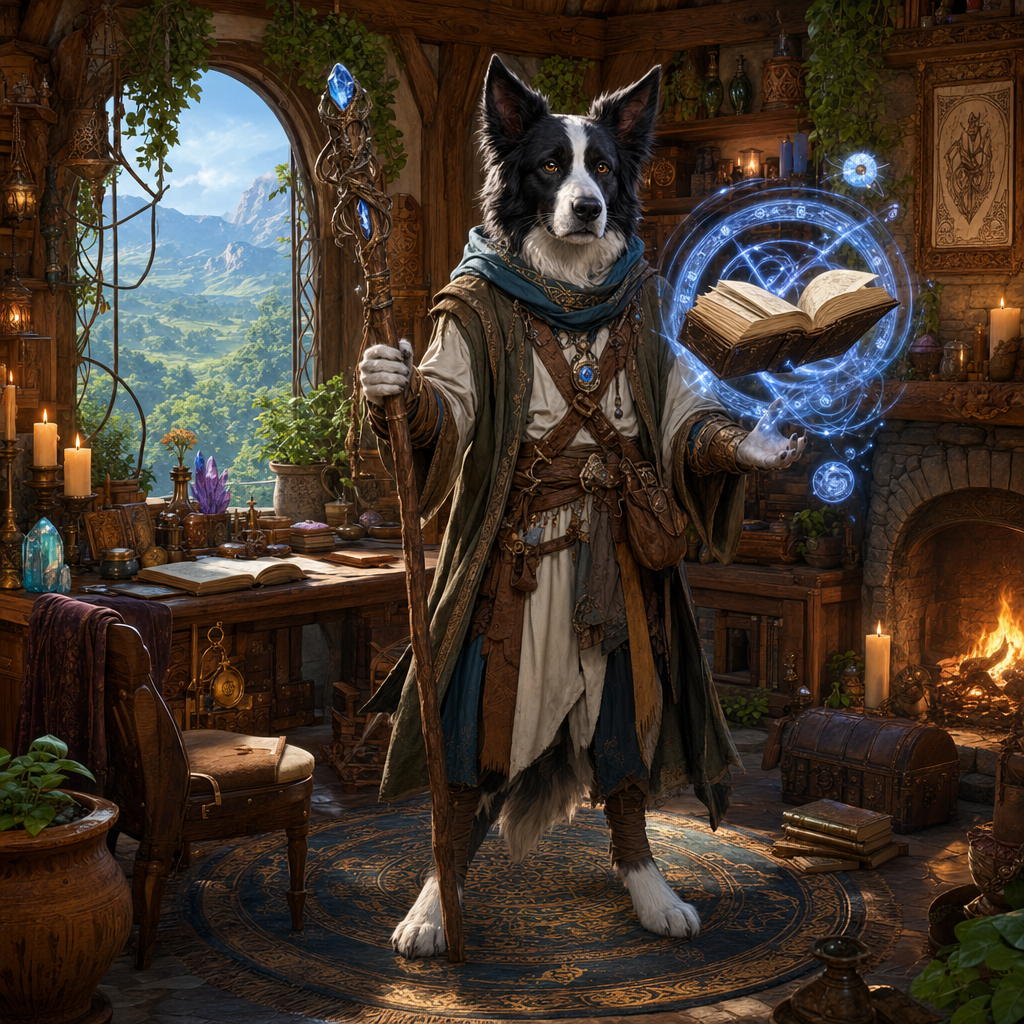
My border collie, Cassie, has this thing where she has to herd everything. Chickens, visiting children, the occasional tumbleweed. She's brilliant and neurotic and completely herself. When I uploaded her photo to Creature Forge AI's character generator, the resulting canine beastfolk druid had that same energy—restless intelligence, protective instincts, and an inability to let chaos go uncorrected. That small personality hook made every choice feel inevitable.
Give Them a Mundane Skill That Has Nothing to Do With Adventuring
Your fighter knows how to swing a sword. Great. What else do they know?
The best characters have skills from their life before the adventure started. These create unexpected solutions, beautiful failures, and moments where your character feels like an actual person instead of a collection of proficiencies.
- Baking—they calm down by kneading dough, they bribe guards with pastries, they judge every tavern by its bread
- Carpentry—they notice structural weaknesses, they're weirdly particular about furniture quality, they can't walk past a wonky shelf
- Animal husbandry—they know every farm animal's temperament, they can birth a calf in a crisis, they get quietly angry at how city folk treat livestock
- Singing—badly, but enthusiastically, and always at the worst possible moment
- Forgery—not for crime, but because they apprenticed as a scribe and learned all the tricks
Growing up on a farm meant everyone had five jobs. You didn't just feed the goats—you learned their moods, you fixed fences, you knew which one would headbutt you for fun and which one was secretly sweet. Those details make characters breathe. Your paladin should know something practical and weird.
Backstory Questions That Actually Matter
Most character questionnaires ask the wrong things. "What's your greatest fear?" Who cares. Your character doesn't know that yet. Ask specific, small questions instead:
- What's the last thing that made them laugh until they cried?
- What do they eat when they're sad?
- What's a promise they regret keeping?
- Who taught them their favorite skill, and are they still alive?
- What do they miss most about home, even if they'd never admit it?
You don't need a novel. You need three specific memories and a sense of what kind of person they were last Tuesday.
Build From a Relationship Instead of a Quest
Here's the thing about solo play: you can't rely on other players to create drama. Your character has to want things beyond "stop the villain." The best dnd character concepts are built around a relationship—someone they're trying to find, protect, prove wrong, or become worthy of.
This works because it gives you immediate, personal stakes in every situation. It's not about saving the world. It's about whether you're becoming the person they believed you could be.
Relationship-Driven Concepts That Work
- The Apprentice Without a Master—your teacher disappeared mid-lesson and you're following their trail, half-trained and improvising everything
- The Sibling Who Left—you walked away from family expectations and now every letter from home is a small knife
- The Rival Who Became a Friend—you competed with them for years, and now that they're gone, you're trying to finish what they started
- The Protector of Someone Fragile—a younger sibling, a rescued animal, someone who needs you to be braver than you feel
- The One They Disappointed—you let someone down badly, and every heroic choice is an apology you can't speak out loud
This approach shifts your character from reactive to active. They're not waiting for the plot. They're chasing something.
Let Your Character Be Bad at Something Important
Competence is boring if it's universal. The most memorable characters are extremely good at one thing and hilariously bad at something they should be good at.
- The bard with stage fright who only performs well when nobody's watching
- The ranger who's brilliant at tracking but can't cook anything without burning it
- The cleric who's deeply devout but cannot remember a single prayer correctly
- The rogue with perfect stealth and absolutely zero sense of direction
- The wizard who's a genius at spellcraft but can't do basic math
I once played a warlock who could manipulate eldritch forces but was deeply, embarrassingly bad at small talk. Every social encounter was a tightrope walk. It made the character fun in a way that pure competence never does.
Use Physical Details as Personality Shortcuts
Your character's appearance should tell a story before they open their mouth. Not "they have a scar"—everyone has a scar. Be specific about the small things:
- They braid their hair when they're thinking and it's always half-undone by the end of the day
- They wear a coat that's two sizes too big because it belonged to someone important
- Their hands are always ink-stained, no matter how much they wash
- They have a nervous habit of counting things—ceiling beams, coins, people in a room
- They smell like woodsmoke and honey because those were the smells of home
When you upload a photo to Creature Forge AI, it captures those kinds of details—the tilt of a head, the set of shoulders, the look in the eyes. It builds a character who looks like someone real, and that visual anchor makes everything else fall into place.
Give Them an Opinion About Something Ridiculous
Real people have strong feelings about weird things. Your character should too.
Maybe they have elaborate theories about the correct way to pack a travel bag. Maybe they're snobby about regional bread varieties. Maybe they think all cats are secretly fey creatures and won't be convinced otherwise. Maybe they refuse to trust anyone who doesn't like dogs.
These opinions don't drive the plot, but they create texture. They're the moments between the big dramatic beats where your character feels lived-in.
The Small Details That Stick
I had a goat named Biscuit who was convinced he was a dog. He followed me everywhere, tried to sleep on the porch, barked—or whatever the goat equivalent is—at strangers. Absolute lunatic. More personality than some NPCs I've created.
That's what your character needs. Not an epic destiny. Just a few bizarre, specific details that make them them. The wizard who hums off-key while copying spells. The barbarian who's precious about their hair routine. The rogue who collects terrible poetry.
Don't Build a Hero—Build a Person Who Might Become One
The best dnd character concepts start as someone ordinary who's been pushed into something extraordinary. They're not confident yet. They're figuring it out. They're scared and brave in the same breath.
Your first session shouldn't introduce a legendary hero. It should introduce someone who's good at a few things, bad at a few others, carrying a couple of relationships that matter, and trying their best. That's a character who can grow. That's a character who can surprise you.
Make Them Yourself (Or Make Them Look Like Your Dog)
If you're staring at a blank character sheet and nothing's clicking, try building from something real. A photo of yourself, your best friend, your pet who has more charisma than most people.
Creature Forge AI lets you upload an actual photo and generates a D&D character that looks like them—stats, personality hooks, the works. It's wild how much easier it is to make choices for a character when you can see them. When they look like someone you know, even if they're a catfolk rogue now, they feel real from the start.
And real characters are the ones you remember. The ones who make decisions that surprise you. The ones who feel like they'd keep adventuring even if you put the dice down.
Build someone you'd want to grab a drink with. Build someone who'd probably annoy you sometimes. Build someone who exists beyond their stat block. That's a character concept worth playing.
Now go roll up someone interesting.