Why Most DnD Character Concepts Fall Flat
I've rolled up dozens of characters over the years — mostly for solo campaigns late at night when the farmhouse was quiet and I had only my coffee and dice for company. And here's what I learned the hard way: a compelling dnd character concept isn't about having the perfect build or the most optimized stats. It's about creating someone you actually care about.
The characters that stick — the ones you think about during your commute, the ones whose voices pop into your head unprompted — those aren't accidents. They come from a few specific ingredients that have nothing to do with your ability scores and everything to do with how you approach character creation from the ground up.
Start With the Person, Not the Class
Most guides tell you to pick your class first. I'm going to suggest the opposite. Start with a person — a personality, a fear, a quirk — and let the mechanics follow.
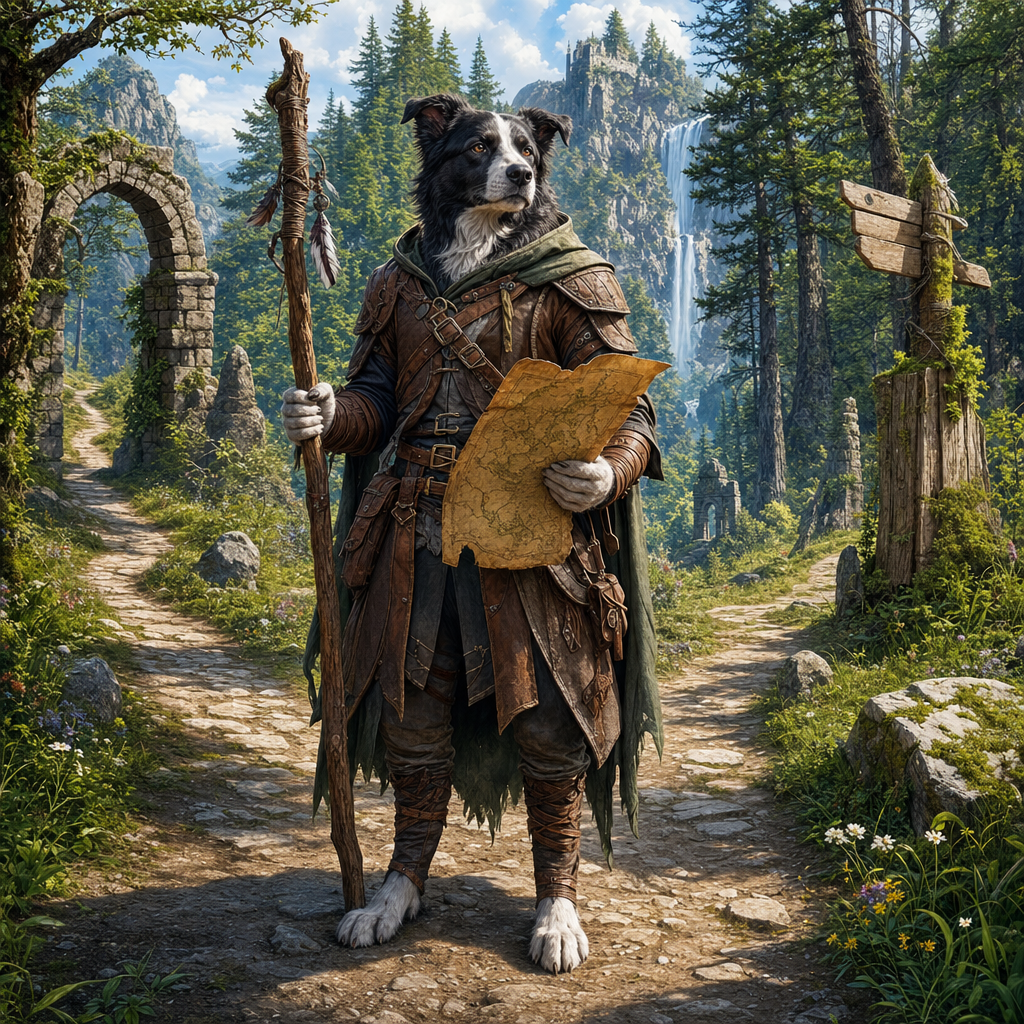
When I built my border collie Rosie into a ranger for a solo campaign, I didn't start with "I want to play a ranger." I started with "Rosie herds everything. Chickens, children, the occasional confused rooster. What would a person like that look like in a fantasy world?" The ranger class came later, naturally, because of who she was.
Try this exercise:
- Think of someone you know — a friend, a pet, a family member
- Pick one defining trait (loyal, curious, stubborn, playful)
- Ask: what would this trait look like under pressure?
- Then build your class and background around that core
This approach gives you a north star when you're making decisions at the table. You're not asking "what would a rogue do?" You're asking "what would this rogue do?"
Give Them One Concrete Goal
Vague motivations kill characters. "I want to be the best" or "I seek redemption" — these are starting points, not goals. A strong dnd character concept needs something specific they're chasing.
Good goals are:
- Specific: Not "find my family," but "find my sister in the port city of Saltmere"
- Actionable: The character can actually do something about it
- Personal: It matters to them emotionally, not just practically
- Flexible: It can evolve as the campaign progresses
My goat Biscuit — who has more charisma than any NPC I've ever rolled, by the way — inspired a bard whose entire deal was collecting songs from every tavern in the realm. Not "become famous." Not "master music." Just... collect the songs. That specific goal gave me something to do in every town, a reason to talk to NPCs, and a built-in character arc.
Build in Conflict
Characters need tension baked in. The best dnd character concepts contain at least one internal contradiction — something that creates friction and forces interesting choices.
Some examples:
- A paladin who doubts their god but can't abandon their oath
- A rogue who's excellent at lying but desperately wants to be trusted
- A wizard who craves knowledge but is terrified of what they might learn
- A barbarian from a peaceful village who rages to protect, not destroy
This internal push-and-pull makes roleplaying easier because you always have something bubbling under the surface. You're not performing a character. You're navigating their contradictions.
The "Why Now?" Question
Here's the question that separates okay concepts from great ones: why is your character adventuring now? Not in general. Not "someday." Why did they leave their old life this week?
The answer doesn't have to be dramatic. It can be small. But it should be specific:
- Their mentor died and left them a cryptic map
- They failed spectacularly at their old job and need a fresh start
- A vision, a letter, a chance encounter changed everything
- They made a promise they can't break
This gives your DM a hook to pull on and gives you a clear "before" and "after" in your character's life. The campaign matters because it represents a break from what came before.
Make the Mechanics Match the Story
Once you have your personality, goal, conflict, and catalyst, then you build the sheet. And suddenly those mechanical choices have weight.
A character who's running from their past? Maybe they're a rogue with the charlatan background — they know how to disappear. A character searching for their lost sister? Probably high Perception and Investigation. A character who rages to protect? That's a barbarian with the sentinel feat and a backstory about failure.
The mechanics should reinforce who they are. When your spell list or feat choices tell the same story as your personality, everything clicks.
Use Real Inspiration
One trick that's never failed me: base your character on something real. Not a fictional archetype — something tangible.
I've based characters on:
- My farm animals (the aforementioned Rosie and Biscuit)
- The way my neighbor's cat stares out the window like she's plotting something
- The old guy at the hardware store who knows everyone's business
- That one college friend who was brilliant but couldn't commit to anything
Real people and animals have quirks that feel authentic because they are authentic. You're not inventing personality traits out of thin air — you're observing and translating.
And if you want to take this literal? Creature Forge AI lets you upload a photo — of your pet, a friend, yourself — and it'll generate a fully statted 5e character that actually looks like them. I uploaded a picture of Rosie once, just to see, and got back a border collie ranger with her exact markings and this intense, focused expression she gets when she's herding. It's wild how much easier it is to roleplay a character when you can see them.
The Small Details Matter
Don't skip the small stuff. In fact, the small stuff is often what makes a character memorable.
Give them:
- A verbal tic or phrase they overuse
- A specific food they love or hate
- A ritual (always sharpens their blade before bed, prays facing east, collects stones)
- An irrational fear (heights, deep water, birds)
- A contradiction in their appearance (heavily armored but wears a delicate necklace)
These details don't go on the character sheet. They live in how you play them. And they're the things your DM will remember and weave back into the story.
Know What You Don't Know
Here's something nobody tells you: you don't need to know everything about your character before you start playing. In fact, you shouldn't.
Leave some blanks. Decide on their personality and goal, but leave their full backstory flexible. Let the campaign fill in details. Did they have siblings? You'll decide when it matters. What was their childhood like? That'll come up naturally.
The best characters evolve in play. You discover them as much as you create them.
Test Drive Your Concept
Before session one, try this: write a paragraph from your character's perspective. Not their backstory — just them thinking about something mundane. What do they notice? How do they phrase things? What matters to them?
If the voice comes easily, you're golden. If it feels forced, you might need to adjust the concept. A good dnd character concept should feel natural to inhabit, not like you're performing a role.
Common Pitfalls to Avoid
I've made all of these mistakes. Learn from my late-night character creation regrets:
- The loner who hates groups: Cool concept, terrible for a party-based game
- The character with no weaknesses: Boring. Give them flaws.
- The tragic backstory that's all tragedy: Grief is powerful, but it can't be the only note
- The joke character: Funny for one session, exhausting for a campaign
- The character who's already the best: Leave room to grow
Your character should have rough edges. They should be incomplete. That's not a flaw in your concept — that's the entire point of the game.
Bringing It All Together
A strong dnd character concept isn't about complexity. It's about clarity. You should be able to describe your character in one sentence that includes their personality, their goal, and their tension:
"A loyal border collie ranger searching for her lost pack, who trusts too easily despite being burned before."
"A curious tiefling wizard who hoards knowledge but is terrified of the power it brings."
"A stubborn goat bard collecting tavern songs, who performs for everyone but trusts no one."
When you can do that — when the core of who they are fits in one breath — you've got a concept that'll carry you through a campaign.
And if you're staring at a blank character sheet right now, wondering where to even start? Try working backward. Think of someone real — a person, a pet, a stranger you passed on the street. Ask what they'd be like with a sword in their hand and a quest to chase. Or upload their photo and see what Creature Forge AI comes up with. Sometimes you need to see the character before you can find their voice.
The heroes that stick aren't the perfectly optimized ones. They're the ones you care about. Build those.