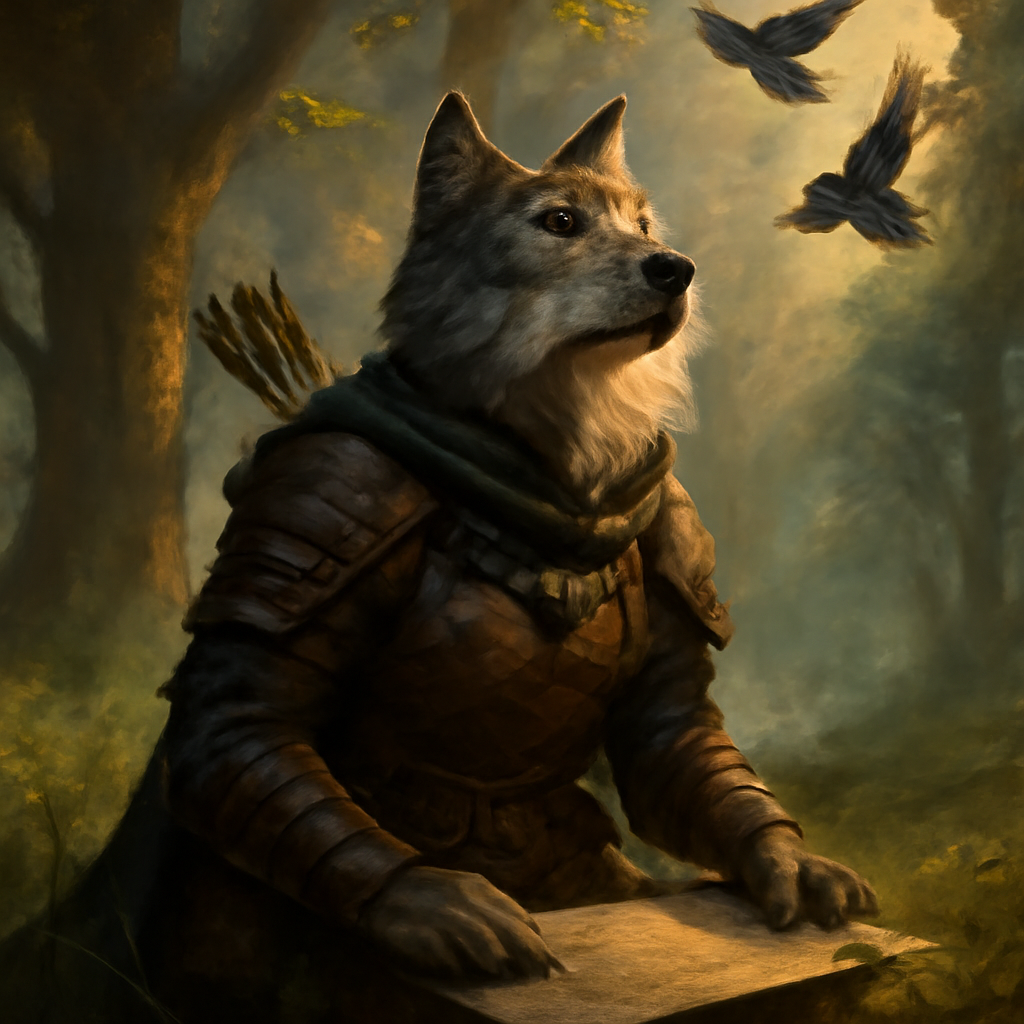
I've rolled a lot of characters. Too many, probably. And for the longest time, every single one of them had basically the same backstory: orphaned at a young age, seeking revenge against [insert evil organization here], conveniently without any living relatives to complicate the adventure.
Then one night, after a particularly uninspired solo session, I looked up from my notebook and saw my border collie Maggie staring at me with those intense, intelligent eyes. She had quirks. She herded the chickens every morning without being asked. She was brilliant with commands but absolutely terrified of the barn owl that nested above the feed shed. She had personality.
That's when it hit me: my d&d character backstory ideas were flat because they weren't specific enough. They weren't real.
Why Most Backstories Feel Generic
Here's the problem with the standard character creation advice: it focuses on big, dramatic plot hooks. Dead parents. Prophecies. Ancient bloodlines. World-ending stakes.
Those things are fine. But they're also everywhere, which means they blur together. What actually makes a character memorable isn't the size of their tragedy—it's the small, specific details that make them feel like a real person who existed before session one.
When I finally uploaded a photo of Maggie to Creature Forge AI's character generator, it built her as a Tabaxi ranger with her exact coloring and those piercing eyes. But the backstory I wrote for her wasn't about revenge or destiny. It was about her compulsive need to keep the party organized, her unexplained fear of owlbears, and how she'd once been a shepherd's dog before the shepherd died of old age—not murder, not conspiracy, just old age—and she'd wandered off to find new purpose.
That felt real.
Start With the Small Stuff
The best d&d character backstory ideas don't start with "what's the big dramatic event?" They start with "what does this person care about on a Tuesday?"
Quirks and Habits
Give your character small, consistent behaviors that have nothing to do with the plot:
- A wizard who arranges their spell components by color, not function
- A barbarian who carved their mother's recipes into the handle of their axe
- A bard who can't sleep unless they've checked on everyone in the party first
- A rogue who leaves coins on every windowsill they pass—offering to a god they don't even worship anymore
These details don't advance the story. That's the point. They make your character feel like they exist when the DM isn't looking.
Mundane Skills
What did your character do before they became an adventurer? Not the inciting incident—the day-to-day.
- A cleric who worked as a midwife and still knows every medicinal herb by smell
- A fighter who was a blacksmith's apprentice and critiques every sword they loot
- A druid who grew up on a fishing boat and gets genuinely excited about good knot work
- A paladin who served as a city guard and still instinctively notices exits and crowd patterns
These aren't flashy. But they give your character texture. They create opportunities for roleplay that don't require a skill check or a plot hook.
Relationships That Aren't Dead
Look, I understand the appeal of the dead mentor trope. It's convenient. No complications, just motivation.
But here's a radical thought: give your character people they still care about who are alive.
Complicated Family
Instead of orphaning your character, try this:
- A rogue whose parents are happily married shopkeepers who don't know their kid is a criminal
- A warlock with six siblings who all became clerics—and family dinners are tense
- A ranger who sends money home every month to support a younger brother's apprenticeship
- A sorcerer whose magic manifested late, and their family spent years thinking they were the "normal" one
Living family creates ongoing story. They can send letters. Get into trouble. Show up at the worst possible moment. They make your character's choices matter beyond the immediate party.
Friends and Rivals
Who did your character know before the campaign started?
- An ex-partner who's also an adventurer and you keep running into them in different towns (it's awkward)
- A childhood friend who became a city guard and definitely does not approve of your life choices
- A rival from your guild who's always one quest ahead of you
- A mentor who's alive, successful, and honestly kind of disappointed in how you turned out
The Weird, Specific Detail
Every memorable character I've ever played or encountered had one thing that made absolutely no sense out of context. One detail so specific that it couldn't belong to anyone else.
My goat Biscuit—who has more charisma than any NPC I've ever rolled—inspired a Satyr bard whose music could only attract rats and chickens. Not useful in combat. Frequently inconvenient. But absolutely unforgettable when he tried to perform in a noble's hall and summoned every mouse in the building.
Try giving your character:
- A collection of something useless (river stones, broken buttons, the last page of every book they finish)
- An irrational fear that has nothing to do with their class (a fighter terrified of butterflies, a rogue who won't cross running water)
- A skill that doesn't match their background (a noble who's incredible at arm wrestling, a hermit druid who can dance any court style perfectly)
- A strong opinion about something trivial (proper boot maintenance, the correct way to fold maps, which type of cheese is acceptable on the road)
Where They're From Matters
Geography shapes people. A character who grew up in a coastal city thinks differently than one raised in a mountain monastery.
Get specific about place:
- What did home smell like?
- What was the local industry?
- What stories did people tell about neighboring towns?
- What food does your character miss most?
- What weather makes them homesick?
When I'm generating NPCs with Creature Forge AI, I'll sometimes upload photos of my own animals and then write in details about where they'd be from. That barn cat who terrorizes the chickens? She became a Tabaxi monk from a desert monastery where discipline meant survival. The setting shaped her personality in ways that felt organic.
What They Want (Beyond the Quest)
Every character needs a goal that has nothing to do with the main plot.
Not a tragic motivation. Just something they want:
- A barbarian saving up to buy a tavern and retire
- A wizard trying to publish a comprehensive guide to regional mushrooms
- A cleric who wants to try every regional beer and rate them in a journal
- A ranger attempting to sketch every type of bird they encounter
- A bard writing a song cycle about their party members (they haven't told the party yet)
These goals give your character something to do during downtime. They create natural reasons to interact with the world beyond combat and quest objectives.
Failure and Embarrassment
Show me a character who's never screwed up, and I'll show you someone I don't believe in.
Give your character a past mistake that wasn't world-ending—just human:
- They once got spectacularly drunk and insulted a local lord (and are banned from that city)
- They failed their apprenticeship because they couldn't wake up on time
- They broke someone's heart badly and still feel guilty about it
- They got lost on what was supposed to be a simple delivery job and accidentally started a rumor they were dead
- They once tried to impress someone by showing off and accidentally set their own cloak on fire
Building It All Together
Here's the process I use now:
First: Pick three small, specific details (a habit, a skill, a quirk).
Second: Name two people who are still alive and matter to them.
Third: Choose one thing they want that has nothing to do with adventuring.
Fourth: Add one embarrassing failure from their past.
Fifth: Get specific about where they're from—the smells, sounds, small details of place.
That framework has given me more interesting characters than any amount of tragic backstory engineering ever did.
Let the Tool Do the Heavy Lifting
Look, I love building characters from scratch. But sometimes you need a jumpstart, or you want to see what your actual pet would look like as a D&D hero.
That's where Creature Forge AI gets interesting. You can upload a photo—your dog, your cat, even yourself—and it generates a character that actually looks like them, complete with stats and abilities. Then you take that foundation and add all these small, specific details that make them feel real.
The tech handles the mechanics and the visual. You handle the personality and the Tuesday-morning quirks. It's a surprisingly good division of labor.
Your Character Existed Before Session One
That's the real secret to good d&d character backstory ideas: treat your character like they had a whole life before the campaign started.
They had favorite foods and annoying neighbors. They had inside jokes with friends and ongoing arguments with siblings. They had a job that sometimes bored them and a hobby they never quite got good at.
The dragon cult or ancient prophecy? That's just what finally made them leave home.
Everything else—the weird habits, the mundane skills, the living relationships, the trivial wants, the embarrassing mistakes—that's what makes them someone worth playing for twenty sessions.
Start small. Get specific. Let them be human.
And if you're stuck, try this: look at someone you know (or something—a pet works great). What makes them specifically them? Now give that to your character. Build from there.
Those details, the ones that have nothing to do with saving the world? Those are the ones your table will remember.
Ready to bring your next character to life? Head over to Creature Forge AI and see what happens when you turn someone real into someone legendary. Upload a photo, generate a character, and then make them unforgettable with the kind of backstory that feels lived-in, messy, and completely, specifically theirs.