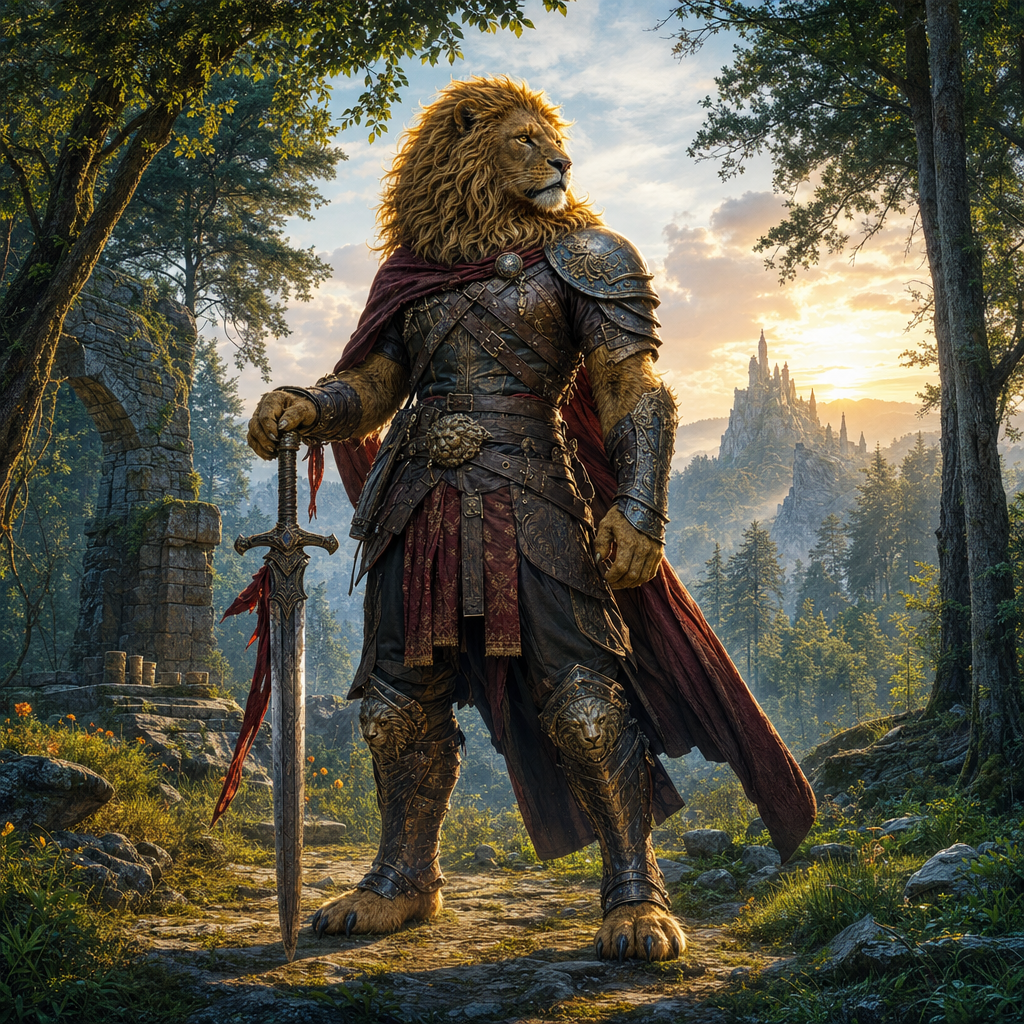
I've been playing D&D solo for years now, and I've learned something important: the characters that stick with you are the ones with personality you can feel. That's why DnD beast races have become some of my favorites. There's something about characters who carry animal instincts—a wolf's pack loyalty, a cat's curiosity, a bird's restlessness—that makes them come alive at the table in ways purely humanoid characters sometimes don't.
My border collie, Maggie, has this intensity when she's working. Eyes locked, every muscle coiled, waiting for the command. When I started building beast race characters, I found myself drawing on that same energy: characters who move differently, who think differently, who bring the wild into civilized spaces and make everyone else a little uncomfortable.
What Makes Beast Races Special in D&D
Beast races aren't just humans with animal heads stapled on (though some players definitely treat them that way, and that's fine). The best ones carry behavioral quirks and instincts that create natural roleplay hooks. A Tabaxi who can't resist investigating every closed door. A Shifter who gets twitchy and protective when the party camps in open spaces. A Kenku who unconsciously mimics the speech patterns of whoever spoke last.
These aren't mechanical advantages—they're personality scaffolding. They give you something to lean on when you're not sure what your character would do, and they create memorable moments that don't require any dice rolls at all.
The Official Options: What's in the Books
If you're working with official D&D material, you've got several beast races to choose from, each with its own flavor:
- Tabaxi: Cat-folk from distant lands, driven by curiosity and wanderlust. Fast, agile, and prone to distraction by shiny objects (literally—their Feline Agility feature is fantastic for hit-and-run tactics).
- Shifters: Descendants of lycanthropes who can briefly enhance their animalistic features. They come in several subraces—Beasthide, Longtooth, Swiftstride, Wildhunt—each evoking different predator archetypes.
- Aarakocra: Bird-folk with a deep connection to the sky. Flight at first level is powerful, but the real magic is in how they see the world: everything from above, always watching the horizon.
- Kenku: Flightless crow-people cursed to only speak in mimicry. This creative constraint produces some of the most interesting roleplay in D&D.
- Leonin: Lion-like warriors from Theros, built for strength and pride. Natural leaders with a roar that can literally frighten enemies.
- Tortle: Turtle-folk with natural armor and a wanderer's philosophy. Slow, steady, and surprisingly wise.
- Harengon: Rabbit-folk from the Feywild, jittery and lucky, always ready to bolt.
Playing Beast Races: More Than Just Mechanics
Here's where a lot of players miss the opportunity: they pick a beast race for the stat bonuses or the cool abilities, then play them like a standard fighter or rogue who just happens to have fur. That works, but you're leaving story on the table.
The magic happens when you let the animal nature inform how your character thinks, not just what they look like. A wolf-inspired Shifter doesn't just get bonuses in combat—they're uncomfortable traveling alone, they establish pack hierarchy without thinking about it, they're loyal to a fault. A Tabaxi doesn't just climb walls—they're genuinely offended by closed doors and will absolutely investigate that suspicious barrel even when the party is trying to stealth.
Instincts as Character Flaws
One trick I've found useful: give your beast race character one animal instinct that sometimes works against them. A bird-folk who hoards shiny objects even when it's tactically stupid. A Shifter who marks territory in ways that embarrass the party. A Kenku who mimics the enemy's voice at exactly the wrong moment.
These aren't debilitating—they're humanizing (ironically). They make your character feel like a real creature navigating a world that wasn't built for them, rather than a perfectly optimized game piece.
Homebrewing Your Own Beast Races
Sometimes the official options don't scratch the itch. Maybe you want to play a bear-folk berserker, or a fox-inspired trickster, or—in my case—a goat-headed paladin based on my actual goat, Biscuit, who has more stubborn charisma than any NPC I've ever rolled.
Homebrewing beast races is easier than you might think. Start with these questions:
- What's the core animal trait? Wolves hunt in packs. Cats are curious and independent. Bears are powerful but territorial. Pick one defining characteristic and build from there.
- What's the fantasy version of that trait? A wolf's pack hunting becomes tactical advantage when flanking. A cat's curiosity becomes a bonus to Investigation. A bear's strength becomes natural weapons and powerful build.
- What's the cultural implication? How does a society of these creatures organize? What do they value? What makes them leave home and become adventurers?
- What's the vulnerability? Every animal has something they struggle with. Cats hate water. Birds have hollow bones. Rabbits are easily spooked. This creates roleplay depth.
Using Tools to Speed Up the Process
I'll be honest: sometimes you have a concept in mind but you're stuck on the details. That's where I've found character creation tools genuinely useful—not to replace your creativity, but to jumpstart it. You can describe the kind of beast race you're imagining, and suddenly you've got stats, abilities, and even backstory hooks you hadn't considered.
The really interesting feature—and this is what sold me—is that you can upload a photo of an actual animal and build a character that looks like them. I did this with Maggie, my border collie, and ended up with a fierce wolf-folk ranger that captured her intensity in a way I hadn't been able to sketch out on my own. It's not about letting the tool do your work; it's about having a collaborator when you're stuck at 2 AM with coffee going cold and a session starting tomorrow.
Behavioral Details That Bring Beast Races to Life
The difference between a forgettable beast race character and one that becomes a table legend often comes down to tiny, consistent details. Here are some I've seen work beautifully:
- Movement quirks: A Tabaxi who stretches like a cat after resting. An Aarakocra who preens their feathers while thinking. A Shifter who paces when anxious.
- Sensory priorities: Cat-folk who investigate by scent first. Bird-folk who notice movement before details. Wolf-folk who can identify party members by sound in darkness.
- Communication styles: A Kenku who uses mimicked phrases like a reference library. A Leonin who uses roars and growls for emphasis. A Harengon who taps their foot when nervous.
- Comfort needs: A Tabaxi who absolutely must find a sunny spot to nap. A Tortle who becomes irritable if they can't swim regularly. An Aarakocra who gets claustrophobic in dungeons.
- Social assumptions: A Shifter who greets by scent. A Leonin who interprets direct eye contact as challenge. A Harengon who assumes everyone is predator until proven otherwise.
None of these need mechanical support. They're pure roleplay, but they make your character memorable. They're the details that other players bring up months later: "Remember when your Tabaxi refused to cross that stream?"
Beast Races in Different Campaign Settings
Context matters. A Tabaxi merchant in Waterdeep is unusual but not shocking—the city sees travelers from everywhere. That same Tabaxi in a small farming village is an event. People stare. Children follow. Guards get twitchy.
Think about how your beast race fits the campaign world:
- Urban settings: How do non-beast races react? Is there prejudice? Fascination? Are there neighborhoods where your character feels safe versus watched?
- Wilderness settings: Does your character feel more at home here? Can they communicate with actual animals? Do they have to resist the urge to go feral?
- Planar adventures: Beast races from the Feywild or other planes might have different cultural expectations entirely. A Harengon expects trickery as normal social interaction.
One of my favorite solo campaigns involved a Shifter ranger who was trying to track her pack through a city where shifting was illegal. Every transformation was a risk, but her wolf instincts kept pulling her toward pack behavior. That tension—between what she was and what she needed to hide—created story without any DM intervention required.
Multiclassing and Beast Race Synergy
Some class combinations just sing with beast races. A Tabaxi Monk using Feline Agility to become an untouchable blur. A Leonin Paladin whose Divine Smite pairs with their Daunting Roar. A Kenku Bard whose mimicry becomes their signature performance style.
But don't sleep on unexpected combinations. A Tortle Barbarian with permanent natural armor who can rage without vulnerability. An Aarakocra Wizard who uses flight for battlefield control. A Shifter Cleric whose temporary transformation becomes a sign of divine favor.
Common Pitfalls (and How to Avoid Them)
I've seen a few mistakes repeated with beast races, both in my own games and watching others:
- Playing them as furry humans: If removing the animal features wouldn't change how you play the character, you're missing opportunities. Let the animal nature matter.
- Going full animal: On the flip side, your character isn't a literal wolf who happens to walk upright. They're a person with wolf traits. They can still use logic, feel complex emotions, and grow beyond their instincts.
- Ignoring setting implications: Talk to your DM about how beast races fit the world. Don't assume everyone treats them normally if you're in a human-dominated setting.
- Using animal traits as excuses: "My character steals because cats are curious" gets old fast. Animal traits should create interesting choices, not justify bad player behavior.
Making Your Beast Race Character Unforgettable
At the end of the day, the best DnD beast races are the ones that feel lived-in. They're not just mechanical choices or aesthetic flourishes—they're characters whose animal nature shapes how they see the world and how the world sees them.
Give them specific details. A Tabaxi who collects rumors like treasures. A Shifter who howls at the moon not because they have to, but because it feels like home. A Kenku who's building a vocabulary of voices from every person they've met, creating a kind of auditory history of their journey.
These are the characters you'll remember years later. The ones that make other players smile when they come up in conversation. The ones that feel like they existed before you rolled them and will continue existing after the campaign ends.
If you're looking to bring a beast race character to life—whether you're starting from scratch or trying to nail down the details of a concept that's been rattling around in your head—Creature Forge AI can help you translate those ideas into fully realized characters complete with stats, art, and backstory hooks. And if you've got a real-world pet who's just begging to become a D&D hero? Upload their photo and see what kind of character emerges. Sometimes the best beast races are the ones who've been with you all along.