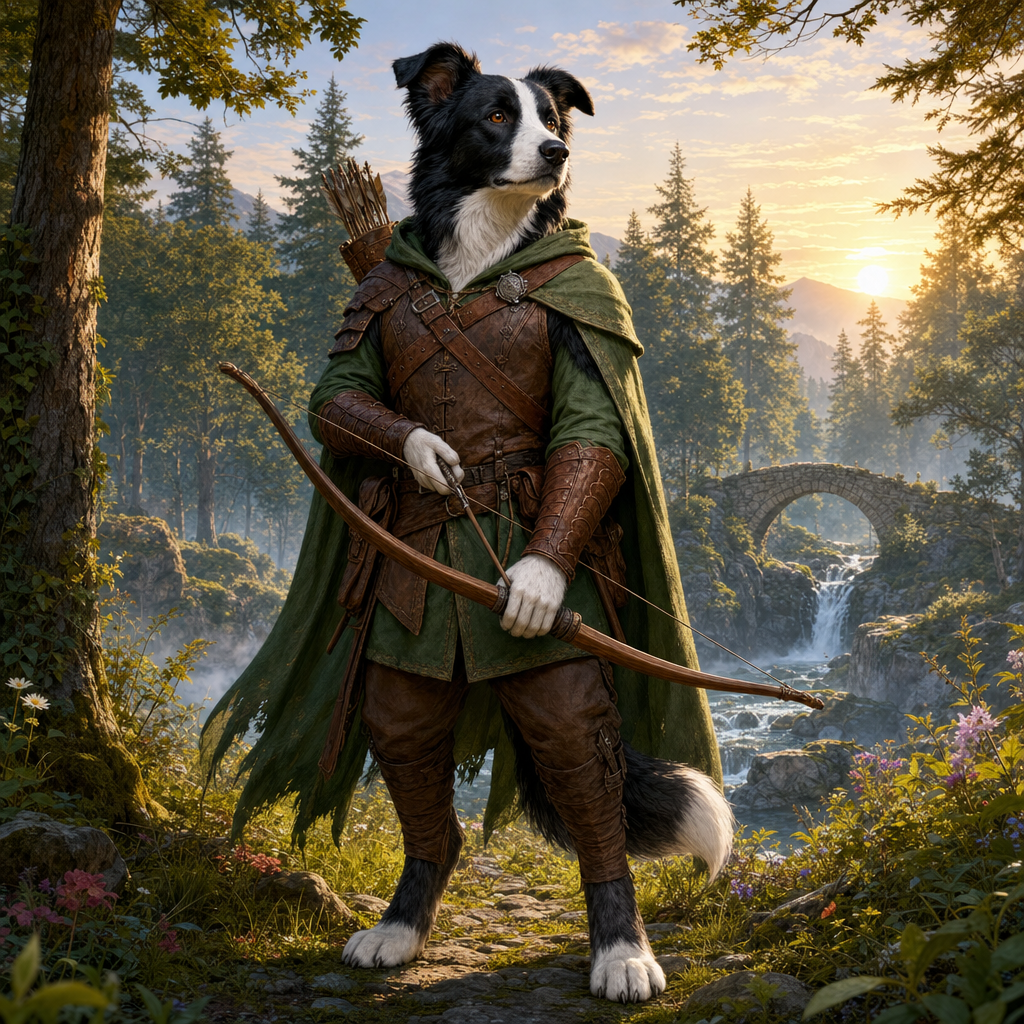
I've spent more time around animals than people for most of my life. Growing up on a farm meant my closest companions were dogs, goats, chickens, and one particularly vindictive rooster named Herbert. So when I started playing D&D solo during those long quiet nights after chores, it felt natural to wonder: what if my border collie Maggie could be a character? Not a familiar or a beast companion, but an actual playable race with her own stats, abilities, and that uncanny intelligence she shows when she's herding chickens.
That curiosity led me down the rabbit hole of creating DnD animal races—and eventually to discovering tools that could turn a simple photo of Maggie into a fully-realized fantasy character. Here's everything I've learned about bringing animal races into your campaigns, whether you're homebrewing from scratch or using modern tools to speed up the process.
What Makes a DnD Animal Race Different from Beast Companions
First, let's clarify something important. When we talk about a dnd animal race, we're not talking about druids wildshaping or rangers getting animal companions. We're talking about creating a playable race—like elves or dwarves—that happens to be based on animal characteristics. Think Tabaxi (cat people) or Aarakocra (bird people), but for the specific animals in your life.
The key differences:
- Player agency: You control the character completely, making decisions as them
- Full class options: Your goat-person can be a wizard, your dog-folk can be a paladin
- Cultural identity: They have societies, beliefs, and motivations beyond instinct
- Anthropomorphic form: They stand upright and have hands capable of wielding weapons and tools
My goat Biscuit has more personality than most NPCs I've written. She's stubborn, food-motivated, and absolutely fearless around anything smaller than a horse. As a character race? She'd make an incredible barbarian with a headbutt attack and advantage on saves against being moved against her will.
Building Animal Race Mechanics That Feel Right
When you're creating a DnD animal race, you want mechanics that capture the essence of the animal without making them overpowered or unplayable. Here's my framework:
Start With Observable Traits
Watch the actual animal. What do they do naturally that could translate to game mechanics?
- Movement: Climb speed for cats, swim speed for otters, burrow speed for badgers
- Senses: Keen smell for dogs, darkvision for nocturnal animals, advantage on Perception checks for alert creatures
- Natural weapons: Claws, antlers, powerful bite—usually 1d4 or 1d6 unarmed strikes
- Behavioral traits: Pack tactics, territorial awareness, food motivation
Balance With Meaningful Drawbacks
Real animals have limitations. A race based on a cat might have disadvantage on Stealth checks in water. A bird-folk might have fragile bones (lower hit point maximum). A cow-person might be slower but incredibly sturdy.
Add Cultural Flavor
This is where it gets fun. What would a society of chicken-folk value? Probably community, vigilance, and early mornings. What about horse-folk? Freedom, open spaces, and running. These cultural elements make your animal race feel like more than just stat blocks.
The Photo-to-Character Method
Here's where I had my breakthrough moment. I was sketching out stats for a border collie race based on Maggie when I stumbled onto Creature Forge AI's character generator. The tool lets you upload an actual photo of your pet and generates a fantasy character that looks like them—not as a quadruped animal, but as an anthropomorphic character with their distinctive markings, features, and personality translated into a playable form.
I uploaded a photo of Maggie mid-herd, tongue out, eyes focused. What came back was a keen-eyed ranger with black and white fur patterns, alert posture, and an expression that absolutely captured her "I'm-working-don't-distract-me" energy. The tool generated:
- A full stat block appropriate for 5e
- Racial traits based on canine characteristics
- Background elements that fit the personality I described
- Even suggested a pack tactics feature and enhanced smell ability
Suddenly I wasn't just homebrewing mechanics—I had a complete character that felt like Maggie translated into D&D terms.
Popular Animal Races and Their Strengths
Through solo campaigns and online oneshots, I've seen certain animal races show up repeatedly. Here's what makes them work:
Canine Races (Dogs, Wolves, Foxes)
Best for: Rangers, fighters, clerics
Key features: Pack tactics, enhanced smell, loyalty mechanics
Playstyle: Team players who excel at tracking and working in groups
Feline Races (Cats, Tigers, Lynx)
Best for: Rogues, monks, rangers
Key features: Climb speed, natural stealth, retractable claws
Playstyle: Independent scouts with excellent reflexes
Avian Races (Ravens, Owls, Hawks)
Best for: Wizards, druids, bards
Key features: Limited flight, keen vision, aerial advantage
Playstyle: Scouts and spellcasters who control battlefield positioning
Livestock Races (Goats, Horses, Cattle)
Best for: Barbarians, paladins, fighters
Key features: Charge attacks, sturdy build, carrying capacity
Playstyle: Front-line tanks with surprising mobility
Making Animal Races Feel Personal
The secret to a great animal race isn't just mechanics—it's bringing in the specific quirks that made you love that animal in the first place.
When I created a character based on my old cat Ophelia, I didn't just give her darkvision and a climb speed. I gave her a trait called "Aloof Observation" that let her spend an action watching a creature to gain insight into their next move. That was pure Ophelia—she'd sit at the window for hours, absolutely still, just watching the yard. It drove the dogs crazy.
Think about:
- What makes your animal unique beyond their species
- Specific memories that capture their personality
- How they interact with other animals or people
- Their quirks, fears, and motivations
These details transform a generic "cat person" into YOUR cat person.
Integrating Animal Races Into Your Campaign World
If you're a DM considering allowing animal races, here are some worldbuilding hooks that make them feel integrated rather than random:
- The Awakening: A magical event granted sapience to certain animal populations generations ago
- Divine creation: Different animal races were created by different nature gods
- Parallel evolution: They developed intelligence alongside humanoids in different regions
- Fey influence: Crossing into the Feywild changed them permanently
In my current solo campaign, all animal races descended from ordinary creatures who were blessed by a forgotten nature deity. It explains why they retain strong connections to their animal cousins and why they tend to cluster in rural areas rather than cities.
Common Pitfalls and How to Avoid Them
I've made every mistake possible when homebrewing animal races. Here's what to watch for:
Don't Make Them Just Humans With Fur
Your animal race should think differently, value different things, and approach problems in ways that reflect their nature. A rabbit-folk shouldn't charge into combat the same way a bear-folk would.
Avoid the "Cute Pet" Trap
These are people. They have agency, opinions, and complex motivations. They're not comic relief unless you want them to be.
Balance Flight Carefully
If you're creating a bird race, either limit flight to short bursts, require concentration, or restrict it until higher levels. Full flight at level 1 breaks too many encounters.
Remember They Need Hands
This sounds obvious, but your animal race needs to be able to hold weapons, cast spells with somatic components, and manipulate objects. They're anthropomorphic, not realistic animals.
Tools and Resources for Creating Animal Races
Beyond traditional homebrewing, several tools can speed up the creation process:
Creature Forge AI handles the heavy lifting of converting pet photos into playable characters. You upload the image, provide some personality notes, and it generates a complete character sheet with appropriate racial traits.
For monsters or creatures that might interact with your animal race characters, the monster generator creates balanced stat blocks for animals that remain quadrupeds—useful for creating non-sapient versions of your character's species.
Traditional resources still matter. The Player's Handbook sections on creating new races provide the mathematical foundation for balance. Online communities like r/UnearthedArcana offer feedback on homebrew mechanics.
Playing an Animal Race: Roleplaying Tips
Once you've built your animal race character, here's how to bring them to life at the table:
- Lean into sensory differences: Describe what your character smells, hears, or sees that others miss
- Use body language: Ears flattening, tail movements, hackles rising—these add flavor
- Remember dietary preferences: Your carnivore and herbivore characters shouldn't eat the same rations
- Play with communication: Maybe your character struggles with certain Common words or uses animal metaphors
In one memorable session, my border collie ranger kept trying to herd the party into tactical positions. The other players found it hilarious and eventually started following her lead because—honestly—her positioning advice was sound.
Why Animal Races Matter
Late at night when I'm rolling solo campaigns, there's something special about having Maggie beside me in two forms—the real dog sleeping at my feet and the character on my sheet. It connects my two worlds: the quiet farm life and the fantasy adventures.
Animal races let us bring the creatures we love into the stories we tell. They add diversity to your world without requiring extensive cultural research. They create immediate emotional connections. And they're just plain fun to play.
Whether you're homebrewing from scratch or using tools like Creature Forge AI to turn your actual pets into D&D characters, animal races offer something unique: a way to honor the animals in our lives by letting them be heroes in our imaginations.
So go ahead. Take a photo of your cat, dog, rabbit, or even that stubborn goat. Turn them into a playable race. Give them a class, a backstory, and a reason to adventure. You might be surprised how much personality shines through when you translate fur and feathers into character sheets.
Your pet's already a character in your life. Might as well make it official.