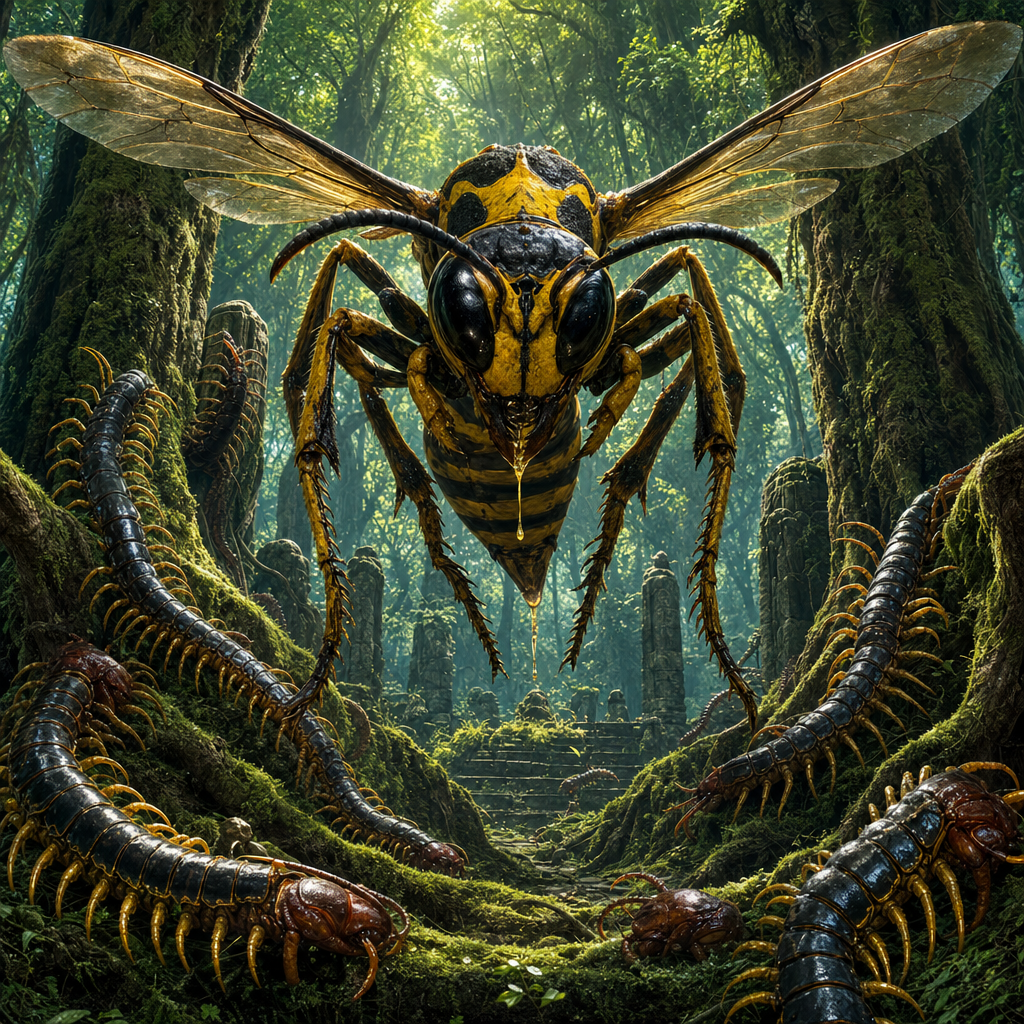
I'll be honest—I didn't fear insects until I ran my first solo campaign in a fungal cavern. I'd spent weeks building this elaborate underground ecosystem, complete with glowing mushrooms and a colony of myconids. Then I added Giant Centipedes as random encounters. What I thought would be simple combat became genuinely unsettling when I described the clicking of dozens of legs echoing through stone tunnels, getting closer. My ranger character spent three sessions paranoid, checking every shadow. That's when I learned: DnD 5e giant insect creatures aren't just bigger bugs—they're atmosphere machines.
If you're looking to inject some visceral horror into your game, giant insects deliver. They're found throughout the Monster Manual and supplemental materials, and they operate on a primal level that few other creatures match. Let's dig into how to use them effectively.
Understanding the Giant Insect Category
Giant insects in DnD 5e span a surprising range of challenge ratings and ecological niches. The term covers everything from the relatively harmless Giant Fire Beetle (CR 0) to the absolutely nightmarish Giant Scorpion (CR 3). What unites them is simple: they're recognizable arthropods blown up to threatening size, and they behave like the mindless predators they are.
Common giant insects you'll encounter include:
- Giant Spider (CR 1) — the classic web-spinner
- Giant Wasp (CR 1/2) — aggressive aerial threat
- Giant Centipede (CR 1/4) — pack hunter with poison
- Giant Scorpion (CR 3) — armored ambush predator
- Giant Fire Beetle (CR 0) — actually harmless, valued for its bioluminescent glands
- Ankheg (CR 2) — technically a monstrosity but fills the giant insect niche
The beauty of these creatures is their predictability. They don't scheme. They don't negotiate. They hunt, they eat, they defend territory. That simplicity makes them perfect for new DMs while giving veterans a reliable toolkit for environmental storytelling.
Why Giant Insects Work as Encounters
Giant insects occupy a sweet spot in encounter design. They're threatening enough to matter but not so complex that you need a flowchart to run combat. More importantly, they tap into something instinctive. Nobody needs to study insect lore to understand "giant spider in the dark = bad news."
Environmental Storytelling
Where you place giant insects tells players everything about the area. Giant Wasps near a ruined tower? Someone or something is being actively hunted. Giant Centipedes in a damp basement? The place has been abandoned long enough for nature to reclaim it. Ankheg tunnels crisscrossing farmland? You've got a genuine agricultural crisis that can't be solved with a sword alone.
I learned this running a campaign where my solo character investigated disappearing livestock on a homestead that felt uncomfortably close to the farm I grew up on. Turned out Ankhegs had moved into the grazing pasture. Suddenly every description—the way the ground felt spongy, the circular depressions in the soil, the eerie silence—built dread. It felt personal in a way dragon attacks never did. That's what good giant insect encounters do.
Scalable Threats
Giant insects work at virtually any tier of play. Low-level parties sweat over a Giant Spider ambush. Mid-tier groups might face a swarm of Giant Wasps defending a hive. High-level campaigns can reskin and upscale—imagine a Huge Giant Scorpion as a set-piece guardian or a colony of magically enhanced Giant Centipedes serving a hag coven.
Tactics: How Giant Insects Actually Hunt
The mistake many DMs make is running giant insects like dumb meat. They're not intelligent, true, but they're optimized predators. Millions of years of evolution made them efficient killers. Lean into that.
Giant Spiders
Use the terrain. Webs aren't just difficult terrain—they're alarm systems. A Giant Spider feels vibrations. It knows exactly where prey is struggling. It doesn't charge in; it waits for prey to tire, then strikes with its venomous bite. Place webs at chokepoints, over pits, across hallways. Make players choose between the slow route and the dangerous shortcut.
Giant Wasps
These are aggressive aerial skirmishers. They dart in, sting, and retreat if hurt. Their instinct is to protect the nest, so they'll swarm the biggest threat first—usually whoever is closest to their hive or larvae. Use their flight speed to divide the party. Nothing creates panic like a Giant Wasp dragging the wizard skyward while its nestmates keep the fighter busy below.
Giant Centipedes
Pack tactics all the way. In my solo games, I treat them like velociraptors—one distracts from the front while others flank. Their climb speed means they attack from walls and ceilings. Describe the skittering, the way they move in coordinated waves. Multiple low-CR creatures are often scarier than one big threat, and Giant Centipedes prove it.
Giant Scorpions
Ambush predators. They bury themselves in sand or rubble, then erupt when prey steps close. That first turn should be devastating—claw grapple, then automatic stinger attack. Once they have prey pinned, they don't let go. Make the party work to free their trapped companion.
Environmental Fit: Where Giant Insects Thrive
Giant insects aren't just random encounters. They reshape their environments. Here's how to embed them naturally:
- Underdark tunnels: Giant Spiders and Centipedes compete for prey. Their territories are marked by warning signs—shed chitin, cocoons, acidic droppings.
- Abandoned structures: Giant Wasps nest in attics, bell towers, anywhere with height and defensible access. The sound of their buzzing becomes ambient horror.
- Dense forests: Giant Spiders claim sections of canopy. Travelers who stick to the forest floor are safe; anyone climbing into the trees is fair game.
- Desert wastes: Giant Scorpions own the sand. Describe the unsettling stillness before an attack—no birds, no lizards, nothing moving.
- Fungal grottos: Giant Fire Beetles are actually useful here. Their glands provide light without fire (which might ignite spores). Smart parties harvest them. Dumb parties kill them and realize too late they needed the light source.
Creating Memorable Giant Insect Encounters
Stats alone don't make encounters memorable. Context does. Here are some tested frameworks:
The Nest Defense
The party isn't hunting the insects—they accidentally wandered into a nest. Now everything is hostile. The goal isn't to kill all the bugs; it's to escape. Time pressure, mounting numbers, and escalating threat. This works especially well with Giant Wasps or Centipedes.
The Contaminated Resource
The party needs something—a magic item, an herb, a specific room in a dungeon—but Giant Spiders have claimed it. Just rushing in means fighting in webbed difficult terrain, possibly restrained. Clever players will use fire, create distractions, or negotiate with something that eats spiders (like a local troll or adventurous blink dog).
The Unexpected Guardian
A villain or faction uses giant insects as security. Druid circles might employ Giant Scorpions to protect sacred groves. A mad wizard breeds magically enhanced Giant Wasps. A drow outpost trains Giant Spiders as mounts and guards. This elevates insects from random encounter to actual threat with tactical deployment.
Homebrewing and Customization
The official stat blocks are starting points, not limits. Want a Giant Mantis? Reskin a Giant Scorpion—replace the stinger with a second claw and boost the claw damage slightly. Need a Giant Moth with hypnotic wing patterns? Take a Giant Wasp, drop the sting, add a charm ability (DC 12 Wisdom save or be stunned for one round as a reaction when it spreads its wings).
When I wanted to create a unique encounter for my ranger's haunted forest arc, I homebrewed a Spectral Giant Spider—incorporeal, immune to nonmagical weapons, leaves glowing ethereal webs. It turned a straightforward fight into a puzzle: how do you trap something that phases through walls?
If you're looking for a faster way to generate custom creatures with full stat blocks and art, Creature Forge AI's monster generator handles exactly this kind of customization. You can dial in the CR, special abilities, and even upload a photo if you want your creation to look like something specific—say, that absolutely massive hornet that lived in your barn growing up (looking at you, Big Gerald, you absolute nightmare).
Integrating Giant Insects Into Ongoing Campaigns
Giant insects work beautifully as secondary complications. The party is investigating a bandit hideout? Turns out the bandits fled because Giant Centipedes moved into the basement. Now you've got two problems that might solve each other if the players are clever. The climactic battle at the villain's fortress? Giant Wasps nest in the outer wall. They don't care who wins—they just attack whoever makes loud noises near their hive.
This layering creates emergent gameplay. I ran a session where my solo paladin had to choose: fight through the Giant Spiders blocking the direct route to the goblin chief, or take the long way around and risk the chief escaping. She chose the spiders. It was brutal. Two failed saves against poison, down to single-digit hit points, and she still barely made it in time. That choice mattered because the obstacle was real.
Descriptions That Land
Generic descriptions kill the vibe. "You see a giant spider" gets a shrug. Try this instead:
"The torchlight catches something above you—too many eyes reflecting red, too many legs folding against a body the size of a hay bale. It doesn't move. It's been watching you since you entered the chamber."
Or for a Giant Wasp:
"The buzzing starts low, almost a vibration in your chest before it becomes sound. Then you see it banking around the corner of the ruined tower—black and yellow chitin gleaming, stinger long as your forearm, wings beating so fast they blur."
Specifics matter. The texture of chitin. The sound of mandibles clicking. The way legs move in unsettling coordination. You're not describing an insect—you're describing why your players should feel their skin crawl.
When Giant Insects Shouldn't Be Used
Real talk: not every campaign needs bugs. If your setting is high-magic urban intrigue, shoehorning Giant Centipedes into the sewers feels forced. If your players have arachnophobia or entomophobia to a degree that it's genuinely distressing, respect that. Session zero conversations matter.
That said, if the tone and setting support it, giant insects are underutilized gold. They're horrifying, versatile, and tactically interesting. They make environments feel lived-in and dangerous. And they give you low-prep, high-impact encounters that players remember.
Final Thoughts
The DnD 5e giant insect category might seem basic at first glance—just bugs, right? But in practice, they're world-building tools, atmosphere generators, and tactical puzzles wrapped in chitin and venom. They scale from CR 0 to custom nightmares. They fit into almost any environment. And they operate on instinct, which makes them simultaneously predictable and terrifying.
Whether you're running a quick random encounter or building a multi-session arc around a Giant Wasp hive threatening a village, these creatures deliver. Describe them vividly. Use their abilities intelligently. Let the environment reflect their presence. And watch your players squirm.
If you want to skip the manual stat-building and generate custom giant insects or any other creatures with unique abilities and professional artwork, try Creature Forge AI. You can even upload a photo—yes, of that horrifying beetle you found in your garden shed—and turn it into a fully statted DnD creature. It's weirdly satisfying to immortalize real-world nightmares in fantasy form.
Now go forth and terrorize your players with the skittering, buzzing, many-legged horrors they absolutely deserve.